

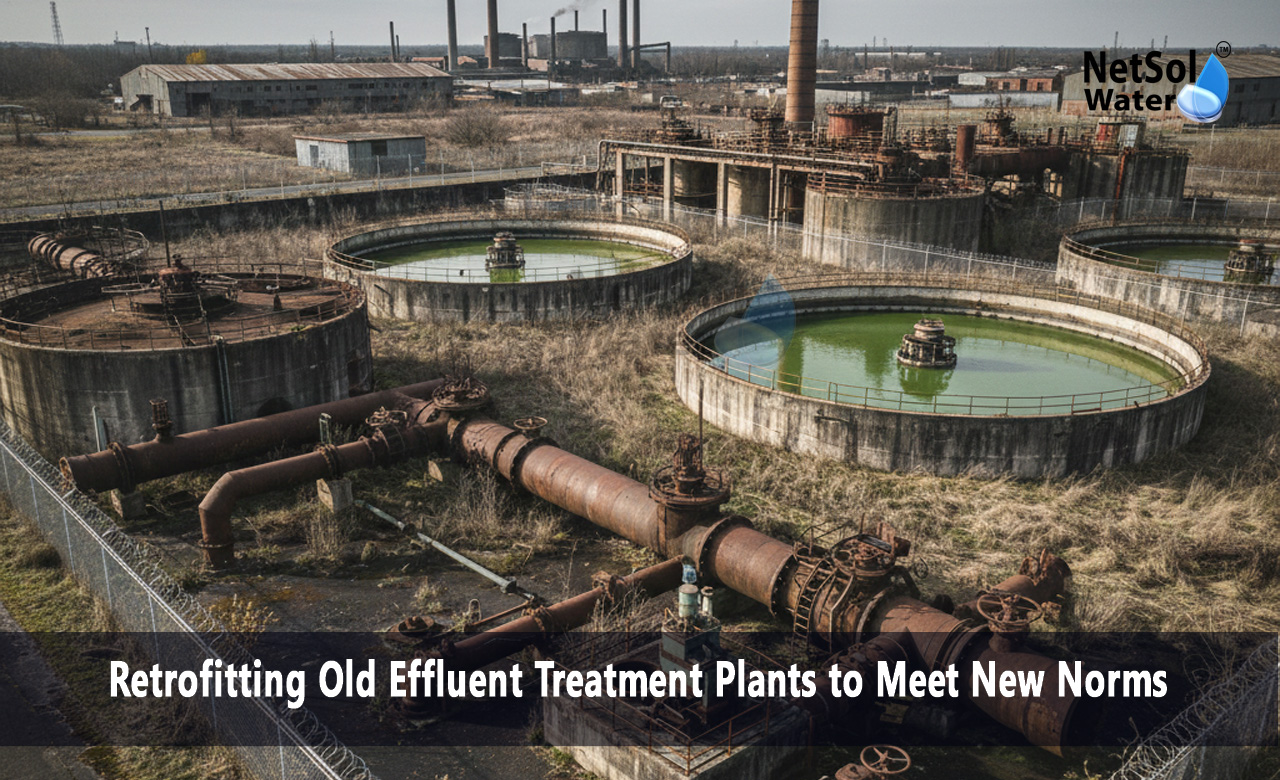
Retrofitting Old Effluent Treatment Plants to Meet New Norms
Effluent Treatment Plant is a necessary facility which is used to treat industrial wastewater, prior to discharge or re-use. Most of the currently available ETP Plants were developed in line with the older environmental requirements as well as functionality demands, as provided by an Effluent Treatment Plant Manufacturer. As more stringent pollution control norms have been introduced, the amount of industrial wastewater has increased, and more and more attention is paid to water reuse, some of the old plants are no longer up to the current expectations of the regulations. Upgrading the existing Effluent Treatment Plants has thus been a viable and cost effective and sustainable method.
Retrofitting effluent treatment plant requirement
The necessity of retrofitting is explained by the fact that the environmental regulations are tightening gradually. Previous Effluent treatment plants were meant to eliminate primitive pollutants like suspended solids and biodegradable organic matter. The contemporary discharge policies place rigid requirements in the area of chemical oxygen demand, total dissolved solids, nutrients, heavy metals, and toxic compounds which the old systems often fail to uphold on a regular basis.
Wastewater quantity and composition is also affected by industrial growth and alteration of raw material and production processes. This can potentially overload or inefficiently biologically treat the current Effluent Treatment Plants. Deteriorating infrastructure, the high rate of the failure of equipment, excessive energy use, and ineffective sludge management further indicate the need to renew the old treatment facilities.
Further, rising water scarcity and reuse and zero liquid discharge policies also require better quality of the effluents. As the older ETP Plants were not built to do more than basic treatment or reuse, retrofitting is necessary to ensure the sustainability in the operation of the industries.
Evaluation of the Existing Effluent Treatment Plants
Prior to retrofitting, technical evaluation of the current Effluent Treatment Plant is conducted in a detailed manner. Such evaluation involves an examination of the properties of the influent wastewater, the treatment rate, the hydraulic capacity, energy usage, and adherence to the present discharge standards.
Process audits are used to recognize inadequacies like poor equalization, poor bio-treatment, poor sludge settling or poor tertiary treatment. The results of such findings are used to come up with a retrofitting plan that enhances performance without interfering with functional units.
1: Primary and Equalization Units Upgrades
In retrofitting, equalization tanks are frequently upgraded to accommodate flow, pH and pollutant concentration variations. Some of the improvements involve the enhancements of mixers, aeration, and automated pH control to stabilize the influent conditions.
Lamella plates or tube settlers can be retrofitted to primary treatment units like clarifiers to enhance the settling rate of the current tank volume. Oil and grease recovery devices are also enhanced so as to cushion the downstream biological processes and improve the overall performance of the plant.
2: Biological Treatment System Modernization
Another important part of an Effluent Treatment Plant is a biological treatment which would need significant upgrading in most cases. The traditional activated sludge systems might not have the capacity to treat the augmented loads of organic matter or fluctuating quality of effluent.
Some methods that can be used to retrofit the current aeration tanks are the conversion of the tanks to Moving Bed Biofilm Reactor or hybrid-based systems through the addition of biofilm carriers. This enhances the biomass concentration and treatment without requiring more land. Modernization also involves aeration systems wherein the old aerators have been replaced by fine-bubble diffusers which enhance better oxygenation and less power consumption.
3: Tertiary and Advanced Treatment Unit Additions
Tertiary treatment units are usually introduced in the course of retrofitting to satisfy new discharge and reuse standards. These are pressure sand filters, activated carbon filters, membrane filtration system and advanced oxidation process.
The membrane-based technologies, including ultrafiltration and reverse osmosis, are becoming more popular to filter the dissolved solids, nutrients, and developing contaminants. They are also equipped with disinfection units with the use of ultraviolet radiation or ozone, which is important to assure the pathogen removal and adherence to the reuse requirements.
4: Better Sludge Handling and Disposal Systems
The plants used to treat effluents are old and the sludge handling system is not efficient. Retrofitting also involves the upgrading of the sludge thickening, stabilization, and dewatering units.
Traditional drying beds are substituted with mechanical dewatering systems, like filter presses or centrifuges, which need less space and better sludge handling. Adequate disposal and adherence to hazardous waste law is achieved through proper sludge treatment.
5: Energy Optimization and Automation
Current environmental standards demand the performance of treatment to be monitored and reported. The retrofitting involves installation of automation systems, online sensors and centralized control panels to check important parameters of pH, flow, dissolved oxygen and pollutant concentrations.
Energy saving equipment, adjustable frequency drives and automatic process control lowers operation costs and enhances reliability and compliance
Conclusion
One of the effective and sustainable strategies of compliance with new environmental norms is retrofitting old Effluent Treatment Plants. By means of critical evaluation, specific improvements, and the introduction of new treatment technologies into practice, industries can enhance the effectiveness of the treatment process to a considerable extent without building new plants.
With the ever-changing environmental regulations and the growing stress of environmental resources, retrofitting old Effluent Treatment Plants will be an important tool in meeting regulatory requirements, encouraging water reuse, as well as the sustainable growth of the industrial sector.
Do you need an advice or assistance on selecting the best water and waste water treatment unit? We have solutions for all your problems!
Let us know your problem, our experts will make sure that it goes away.
For an assistance or related query,
Call on +91-965-060-8473 Or write us at enquiry@netsolwater.com