

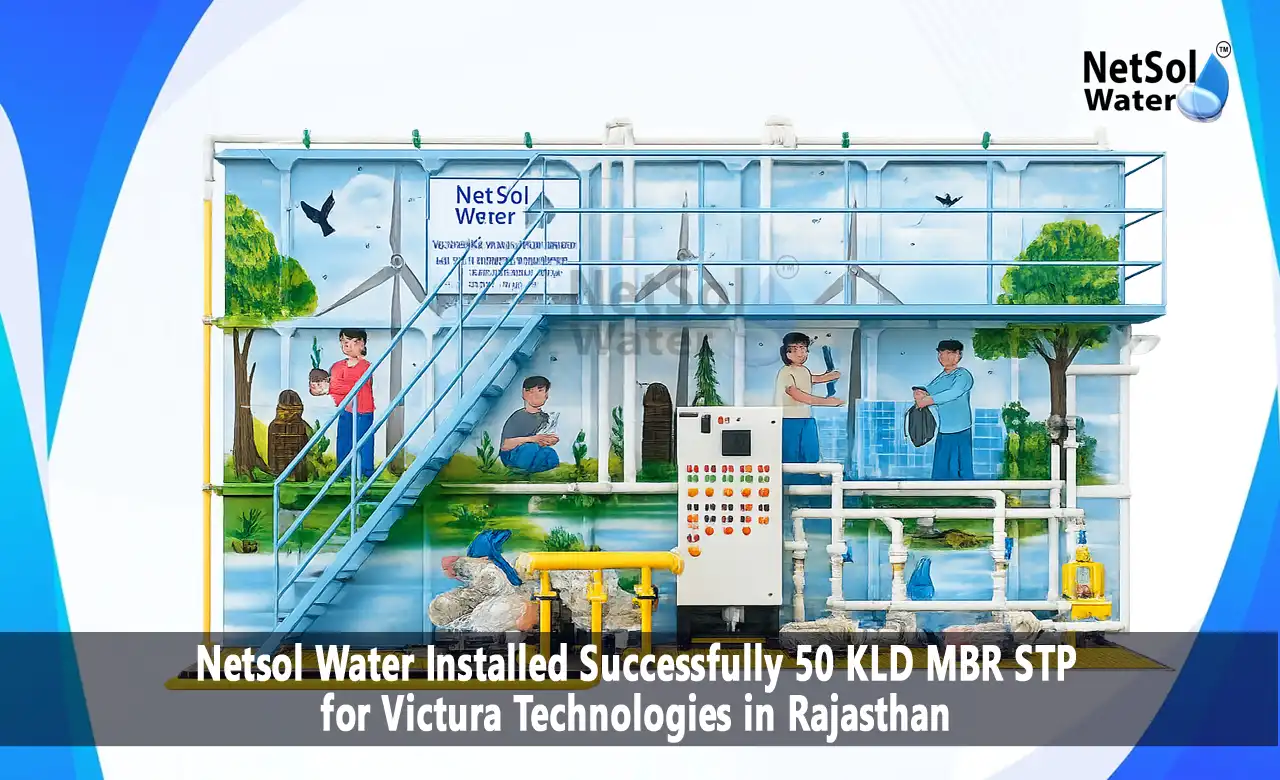
Case Study: 50 KLD MBR STP Installed at Victura Technologies by Netsol Water
India's industrial sector is expanding at a remarkable pace, and with that growth comes one of its most pressing challenges responsible wastewater management. For manufacturing facilities, particularly those operating in the metal industry, managing sewage and industrial effluents is not just an environmental obligation; it is a business necessity. Failure to treat wastewater effectively can lead to regulatory penalties, resource wastage, and long-term environmental damage.
Bhiwadi, located in the Alwar district of Rajasthan, has emerged as one of North India's fastest-growing industrial hubs. Home to hundreds of manufacturing units spanning automotive components, metal fabrication, chemicals and electronics, Bhiwadi generates a significant volume of industrial and domestic sewage daily. As urban industrial zones become denser, the pressure on water resources intensifies making it critical for every industrial facility to adopt sustainable wastewater management systems.
This is precisely the challenge that Victura Technologies is a leading player in the metal industry segment operating out of Bhiwadi faced. Their facility was generating sewage that needed to be treated effectively, economically, and in compliance with prevailing environmental norms. The company sought a reliable, technically advanced solution that could handle 50,000 litres of sewage per day without occupying excessive floor space.
That is where Netsol Water stepped in. As a recognized Sewage Treatment Plant Manufacturer for Metal Industry applications across India, Netsol Water designed, manufactured, supplied, installed, and commissioned a 50 KLD MBR Sewage Treatment Plant at the Victura Technologies facility. The result was a compact, fully automated, high-performance system that now enables the company to treat and reuse treated water while staying firmly within environmental compliance requirements.
This case study takes a detailed look at the project from the initial challenges and technology selection to the installation process and the measurable outcomes achieved.
About Victura Technologies
Victura Technologies is a well-established manufacturing company based in Bhiwadi, Rajasthan, specializing in metal components and precision-engineered products. Serving clients across multiple industrial verticals, the company is known for its commitment to quality, operational efficiency, and technical innovation.
Like most metal fabrication and manufacturing units, Victura Technologies generates sewage from employee welfare facilities, canteens, and general plant operations. Managing this sewage responsibly is not optional it is both a statutory requirement and a corporate sustainability commitment.
The company had long recognized the importance of sustainable water management and was actively looking for an industrial sewage treatment plant that could:
. Effectively treat 50 KLD of sewage generated daily on-site
. Fit within the available installation space without major civil construction
. Produce treated water of sufficient quality for reuse in non-potable applications
. Operate with minimal maintenance and operational hassle
. Comply fully with the pollution control norms set by the Rajasthan State Pollution Control Board (RSPCB)
Victura Technologies approached Netsol Water with a clear brief provide a technically sound, space-efficient, and cost-effective wastewater treatment solution. Their environmental compliance goals and dedication to sustainable operations made them an ideal candidate for an MBR-based sewage treatment system.
About Netsol Water
Netsol Water is one of India's leading manufacturers and solution providers for water and wastewater treatment systems. With a strong presence across industrial, commercial, institutional, and municipal sectors, Netsol Water has earned a reputation for delivering technically superior systems backed by deep domain expertise.
The company specializes in a wide range of treatment technologies including Sewage Treatment Plants (STP), Effluent Treatment Plants (ETP), Reverse Osmosis (RO) systems, Zero Liquid Discharge (ZLD) systems and water recycling solutions. Each system is custom-designed to match the specific wastewater characteristics, capacity requirements, and site conditions of the client.
What sets Netsol Water apart is its integrated approach from initial site surveys and wastewater analysis to engineering, manufacturing, installation, and post-commissioning support. The company's team of experienced engineers, process designers, and project managers ensures that every installation meets performance targets and regulatory requirements.
As a trusted Sewage Treatment Plant Manufacturer for Metal Industry, Netsol Water has successfully executed projects for diverse industrial sectors including automotive, metal fabrication, chemicals, textiles, pharmaceuticals and more. Their PAN India project portfolio and strong technical credentials make them a go-to partner for industrial facilities seeking advanced wastewater management solutions.
Project Overview
Before diving into the technical details and project execution narrative, here is a concise summary of the project:
| Project Overview | |
|---|---|
| Project Name | 50 KLD MBR Sewage Treatment Plant |
| Client Name | Victura Technologies |
| Location | Bhiwadi, Rajasthan, India |
| Plant Capacity | 50 KLD (Kiloliters per Day) |
| Technology Used | Membrane Bioreactor (MBR) |
| Industry Type | Metal Industry / Manufacturing |
| Installed By | Netsol Water Solutions Pvt. Ltd. |
| Application | Sewage Treatment & Water Reuse |
Challenges Faced by Victura Technologies
Every industrial wastewater project comes with its unique set of challenges. In the case of Victura Technologies, Netsol Water's engineering team identified several critical pain points during the initial site assessment:
1. High Sewage Generation with Limited Space
The facility was generating approximately 50,000 litres of sewage daily from various sources including washrooms, canteen outlets, and general operational areas. While 50 KLD may sound manageable, finding a system that could handle this volume within a constrained site footprint was a significant challenge.
2. Requirement for Treated Water Reuse
Victura Technologies was not simply looking to discharge treated water they wanted a system capable of producing treated water good enough for reuse in landscaping, toilet flushing, and cooling tower top-up applications. This set a higher bar for the quality of treatment required.
3. Compliance with Pollution Control Norms
The Rajasthan State Pollution Control Board has strict norms for the quality of treated sewage that can be discharged or reused. Meeting these standards consistently not just at commissioning but throughout the plant's operational life was a non-negotiable requirement.
4. Odor and Sludge Management
Sewage treatment facilities are often plagued by odor issues and the challenges of sludge handling. Victura Technologies needed a system that would operate with minimal odor generation and produce reduced volumes of sludge, making the overall management simpler and more hygienic.
5. Operational Simplicity
The client's operations team did not include dedicated wastewater specialists. The system needed to be user-friendly, requiring minimal manual intervention and offering reliable automated operation to ensure consistent performance without the need for highly skilled operators.
Why MBR Technology Was Selected for This Project?
After thorough wastewater analysis and a detailed assessment of the site conditions, Netsol Water's engineering team recommended Membrane Bioreactor (MBR) technology as the most suitable solution. Here's why:
1: What Is MBR Technology?
Membrane Bioreactor (MBR) technology is an advanced biological wastewater treatment process that combines a conventional activated sludge system with membrane filtration. Instead of relying on gravity-based sedimentation (as in traditional STP systems), MBR uses ultrafiltration or microfiltration membranes to separate treated water from biological solids, producing effluent of significantly higher quality.
2: Key Advantages of MBR Over Conventional STP
. Superior Treated Water Quality: MBR produces treated water with very low Biochemical Oxygen Demand (BOD), Chemical Oxygen Demand (COD), and Total Suspended Solids (TSS), making it suitable for recycling and reuse.
. Compact Footprint: The membrane system eliminates the need for large secondary clarifiers, making MBR plants significantly more compact than conventional STPs ideal for space-constrained industrial sites.
. Better Process Control: MBR systems operate with higher Mixed Liquor Suspended Solids (MLSS) concentrations, enabling better and faster biological treatment.
. Reduced Sludge Generation: Compared to conventional activated sludge systems, MBR generates less excess sludge, reducing handling and disposal costs.
. Consistent Performance: The membrane acts as an absolute barrier against suspended solids, ensuring consistent effluent quality regardless of fluctuations in influent load.
. Water Reuse Capability: The high quality of MBR-treated water makes it directly suitable for reuse in cooling towers, toilet flushing, horticulture, and other non-potable applications.
Given Victura Technologies' specific requirements compact design, high-quality treated water, reuse capability, and ease of operation MBR was the clear and logical choice. It was the technology best positioned to address all of the client's challenges comprehensively.
Solution Provided by Netsol Water
Netsol Water delivered a fully customized, end-to-end industrial wastewater treatment solution for Victura Technologies. Here is how the process unfolded:
1: Site Inspection and Wastewater Analysis
The project commenced with a detailed site visit by Netsol Water's engineering team. The team conducted a comprehensive wastewater characterization study to understand the quality and quantity of sewage being generated. Parameters such as BOD, COD, pH, TSS, and flow rates were analyzed to form the basis of the treatment plant design.
2: Customized Plant Design
Based on the site data and client requirements, Netsol Water's design engineers developed a customized plant layout optimized for the available space. The design incorporated all necessary treatment stages while keeping the system compact, easy to operate, and efficient in energy consumption.
3: Key Plant Components
The 50 KLD MBR Sewage Treatment Plant installed at Victura Technologies incorporates the following key components:
. Bar Screen Chamber: Removes large floating solids and debris from incoming sewage to protect downstream equipment.
. Equalization Tank: Collects and equalizes the flow and strength of sewage before it enters the treatment process, ensuring consistent feed to the biological system.
. Biological Treatment Tank (Aeration Tank): The heart of the system where aerobic microorganisms break down organic pollutants in the sewage through biological oxidation.
. MBR Membrane System: Hollow-fiber ultrafiltration membranes separate treated water from the biological sludge, producing high-quality permeate suitable for reuse.
. Air Blower System: Provides the oxygen required for aerobic biological treatment and membrane scouring to prevent fouling.
. Sludge Holding Tank: Collects and stores excess biological sludge for periodic dewatering and disposal.
. Treated Water Tank: Stores the high-quality treated effluent before it is distributed for reuse applications within the facility.
4: Automation and Control
The system was equipped with a PLC-based automation system enabling continuous monitoring and control of key process parameters. This allows the plant to self-regulate and alert operators in case of any deviation, significantly reducing the need for manual supervision.
5: Energy Efficiency
The entire system was designed with energy efficiency in mind. Variable frequency drives (VFDs) on pumps and blowers ensure that energy is consumed only as per actual operational requirements, keeping running costs to a minimum.
Installation Process:
Netsol Water followed a structured, phased project execution methodology to ensure timely delivery and high-quality installation. Here is how the project was executed from start to finish:
1: Site Survey
A detailed site survey was conducted to assess the available space, existing drainage infrastructure, utility connections, and civil construction requirements. This helped finalize the layout and identify any site-specific challenges early in the project.
2: Engineering and Design
Based on the survey data and wastewater analysis report, detailed engineering drawings, process flow diagrams (PFDs), piping and instrumentation diagrams (P&IDs), and civil layout plans were prepared and approved by the client.
3: Manufacturing
All major equipment including the MBR membrane module, aeration tanks, blowers, pumps, control panels, and piping were manufactured and fabricated at Netsol Water's facility in accordance with the approved design specifications and quality standards.
4: Transportation
Finished equipment and materials were carefully packed and transported to the Victura Technologies site in Bhiwadi, ensuring safe delivery without damage.
5: Civil Work
Civil construction activities including tank construction, pipe trenching, and equipment foundations were executed by the site civil team based on the approved design drawings.
6: Mechanical Installation
All mechanical equipment including pumps, blowers, membrane modules, tanks, and piping was installed as per design specifications. Proper alignment, levelling, and securing of all equipment was ensured.
7: Electrical Integration
Electrical cabling, control panel installation, motor connections, and instrumentation wiring were completed. The PLC-based control system was configured for automated operation.
8: Testing and Commissioning
After mechanical and electrical completion, the system underwent rigorous testing. Each equipment unit was individually tested before the integrated system was commissioned. Performance tests confirmed that the plant met all design parameters and effluent quality targets.
9: Trial Run and Final Handover
A supervised trial run was conducted to ensure stable plant performance under actual operating conditions. Operators were trained by Netsol Water's commissioning team. The plant was formally handed over to Victura Technologies after satisfactory performance demonstration.
Results and Benefits Achieved
The commissioning of the 50 KLD MBR Sewage Treatment Plant at Victura Technologies delivered measurable results across multiple dimensions:
1: Effective and Consistent Sewage Treatment
The plant is now effectively treating 50,000 litres of sewage per day, bringing effluent quality well within the RSPCB discharge and reuse norms. BOD, COD, and TSS levels in the treated water are consistently within acceptable limits.
2: High-Quality Treated Water for Reuse
The treated water produced by the MBR system meets the quality standards required for reuse in toilet flushing, landscaping, and general cleaning activities within the factory premises, significantly reducing the facility's dependence on fresh municipal water supply.
3: Reduction in Freshwater Consumption
By recycling treated water for secondary applications, Victura Technologies has meaningfully reduced its freshwater consumption contributing to both cost savings and responsible resource management.
4: Full Regulatory Compliance
The plant ensures consistent compliance with pollution control norms, eliminating the risk of regulatory penalties and reinforcing the company's standing as an environmentally responsible manufacturer.
5: Low Operational Costs
The energy-efficient design, automated controls, and reduced sludge generation collectively ensure that the plant operates at a low cost making it economically sustainable over the long term.
6: Enhanced Sustainability Performance
The successful implementation of this industrial water recycling system has bolstered Victura Technologies' sustainability profile, supporting their environmental goals and improving their standing with clients, regulators, and stakeholders.
Environmental Impact
The installation of this advanced sewage treatment system at Victura Technologies carries significant environmental benefits that extend beyond the factory boundary:
. Water Conservation: By recycling treated water within the facility, the project directly reduces withdrawal from local water bodies and municipal supply networks.
. Reduced Pollution Load: Effective treatment prevents untreated or poorly treated sewage from entering the local environment, protecting soil and groundwater quality.
. Lower Carbon Footprint: Reduced freshwater pumping and treatment by municipal authorities means a lower overall energy footprint associated with water supply.
. Sustainable Industrial Operations: The project sets a positive example for other industrial units in Bhiwadi's RIICO industrial area, demonstrating that sustainable wastewater management is both achievable and economically viable.
. Contribution to Green Manufacturing: For Victura Technologies, this project aligns with their broader goals of adopting eco-friendly practices and contributing to India's sustainability agenda.
Client Satisfaction and Project Feedback
Victura Technologies expressed strong satisfaction with Netsol Water's professional approach and execution quality throughout the project. Key highlights of client feedback included:
. Smooth and well-coordinated project execution from initial survey through final commissioning
. Timely delivery of equipment and on-schedule project completion
. Excellent treated water quality meeting all specified parameters
. Reliable and trouble-free plant performance since commissioning
. Responsive technical support from Netsol Water's after-sales team
. Comprehensive operator training ensuring confident and competent plant management
The plant continues to perform reliably, and Netsol Water remains available to provide periodic maintenance support and technical assistance reinforcing the long-term partnership approach that has become a hallmark of the company's client relationships.
Why Netsol Water is the Best Sewage Treatment Plant Manufacturer for Metal Industry?
Choosing the right technology partner for an industrial wastewater treatment project is a critical decision. Here is why Netsol Water consistently stands out as the preferred choice for metal industry facilities:
. Deep Industry Expertise: Netsol Water's team brings hands-on experience with wastewater challenges specific to metal manufacturing, including the treatment of sewage generated by large workforces and ancillary operations.
. Advanced MBR Technology: Netsol Water uses the latest generation MBR membrane technology to deliver superior treated water quality and compact system footprints exactly what modern industrial facilities need.
. Fully Customized Solutions: No two projects are the same. Netsol Water designs every system specifically for the client's wastewater characteristics, site conditions, and treatment goals.
. Experienced Engineering Team: A multi-disciplinary team of process engineers, mechanical designers, electrical engineers, and commissioning specialists ensures high-quality project delivery.
. PAN India Track Record: With successful installations across Rajasthan, Delhi NCR, Uttar Pradesh, Haryana, Gujarat, Maharashtra, and beyond, Netsol Water has a proven track record in diverse industrial environments.
. Quality Assurance: All equipment is manufactured to stringent quality standards, backed by rigorous factory testing before dispatch.
. Comprehensive After-Sales Support: From preventive maintenance contracts to emergency technical assistance, Netsol Water provides reliable post-commissioning support to keep plants operating at peak performance.
Conclusion
The successful design, installation, and commissioning of the 50 KLD MBR Sewage Treatment Plant at Victura Technologies, Bhiwadi, Rajasthan stands as a compelling example of what thoughtful engineering and advanced technology can achieve for industrial wastewater management.
For a metal industry facility dealing with daily sewage generation, regulatory compliance requirements, and space limitations, the MBR-based industrial sewage treatment plant delivered by Netsol Water ticked every box compact design, high-quality treated water, easy operation, low running costs, and full compliance with environmental norms.
Victura Technologies can now operate with the confidence of a fully compliant, sustainable water management system one that not only meets today's standards but is built to remain relevant and reliable well into the future.
For industries across Rajasthan and the rest of India looking for a trusted Sewage Treatment Plant Manufacturer for Metal Industry, this project serves as a strong proof of concept. Netsol Water's expertise in advanced sewage treatment technology, their customized approach, and their commitment to long-term client partnerships make them the partner of choice for industrial facilities seeking to turn wastewater challenges into sustainable opportunities.
If your facility is looking for a reliable, advanced, and cost-effective industrial wastewater treatment solution, Netsol Water is ready to help. Get in touch with their expert team today for a detailed site assessment and customized proposal.
Frequently Asked Questions (FAQs)
Q1. What is a 50 KLD MBR Sewage Treatment Plant?
A 50 KLD MBR Sewage Treatment Plant is a compact, advanced wastewater treatment system designed to treat 50,000 litres of sewage per day using Membrane Bioreactor (MBR) technology. It combines biological treatment with membrane filtration to produce high-quality treated water suitable for reuse in industrial operations.
Q2. Why is MBR technology used in metal industries?
MBR technology is highly suitable for metal industries because it delivers superior water quality, handles fluctuating wastewater loads efficiently, occupies minimal space, and produces treated water that can be safely recycled within the plant. It also ensures compliance with stringent pollution control standards.
Q3. What are the benefits of industrial sewage treatment plants?
Industrial sewage treatment plants help manufacturing units manage their wastewater responsibly. Key benefits include regulatory compliance, significant reduction in freshwater consumption through water reuse, lower wastewater disposal costs, improved sustainability credentials, and a reduced environmental footprint.
Q4. How does treated water reuse help industries?
Treated water reuse enables industries to recycle purified water for secondary purposes like cooling, cleaning, gardening, or even process reuse depending on quality levels. This directly reduces dependence on freshwater sources, cuts operational costs, and supports sustainable manufacturing practices.
Q5. Why choose Netsol Water for STP solutions?
Netsol Water brings over a decade of experience in designing and installing industrial wastewater treatment systems across India. Their customized approach, use of advanced MBR technology, complete project execution capabilities, and reliable after-sales support make them a trusted partner for industries seeking sustainable water management solutions.