

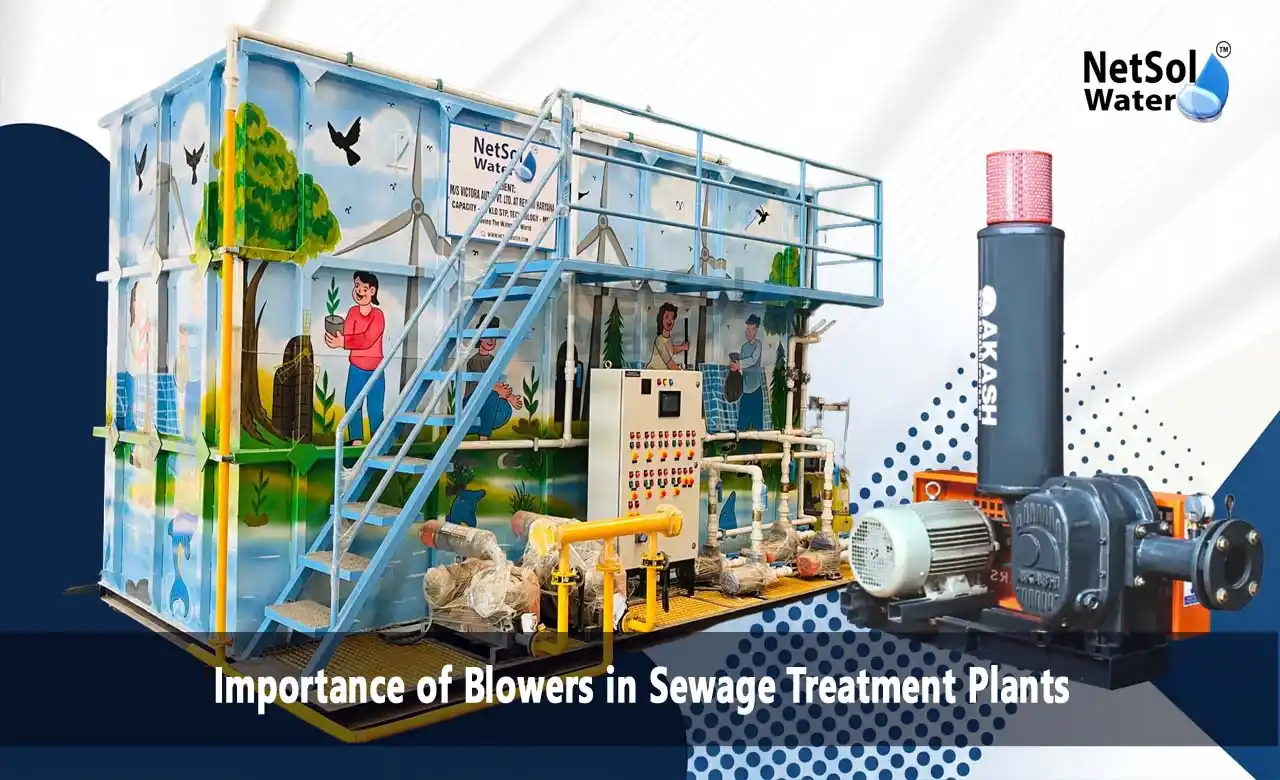
Importance of Blowers in Sewage Treatment Plants
Sewage treatment plants play an important role in keeping cities and communities clean. India is known for its large cities and growing urban areas. This growth also produces a higher volume of sewage every day. Treatment plants need to manage this wastewater before it can be reused or safely discharged. Aeration supports one of the most important stages in many biological treatment systems. Blowers supply the air needed for this process. They help microorganisms get enough oxygen to break down organic matter in wastewater. When a blower does not provide the required airflow the biological process can become unstable. When it supplies too much air the plant can waste energy.
For this reason STP blowers need proper selection and regular control. Netsol Water is a leading water and wastewater treatment company in India. The company works with different sewage treatment technologies and provides air blower solutions for STP applications.
Why Blowers Matter in Sewage Treatment Plants?
Blowers support the biological treatment process by sending air into the aeration tank. This air helps maintain oxygen levels and supports the microorganisms that break down pollutants. A stable aeration process can help a plant achieve better treatment results. It can also support smoother operation of the downstream treatment units. This makes the blower more than a simple mechanical device. It forms an important part of the aeration system.
Let us have a look at some key reasons why blowers matter so much.
. Blowers Supply Oxygen for Biological Treatment
Many sewage treatment systems use microorganisms to remove organic matter from wastewater. These microorganisms need oxygen to carry out aerobic treatment. Blowers push air into the aeration tank through a network of pipes and diffusers. The diffuser breaks the air into bubbles. This allows oxygen to move from the air into the wastewater.
The EPA explains that aeration provides oxygen to the activated sludge process. It also supports mixing within the treatment tank. Good oxygen control helps maintain stable biological activity. Poor control can affect treatment quality.
The blower must therefore supply enough air for the actual treatment demand. Wastewater flow and organic load can change throughout the day. This means the plant may not need the same amount of air at all times. A well-designed system can adjust its air supply to suit changing conditions.
. Blowers Support Proper Mixing in the Aeration Tank
Oxygen supply is not the only function of aeration. Air movement also helps keep the mixed liquor in motion. This prevents solids from settling in areas where they should remain suspended. Proper mixing allows microorganisms and wastewater to remain in contact. A blower that delivers uneven airflow can create dead zones in the tank. Some areas may receive too little oxygen. Other areas may receive more air than needed. Both situations can affect process performance. This is why the blower capacity must match the tank design and the diffuser arrangement. Proper air distribution helps the full aeration tank work as one treatment zone rather than as separate sections with different conditions.
How STP Blowers Affect Treatment Quality?
Good treatment depends on stable biological conditions. The blower directly affects those conditions because it controls the amount of air entering the aeration process. Changes in airflow can change dissolved oxygen levels. These changes can then affect microbial activity and the quality of treated water. Let us have a look at some ways blower performance can influence treatment quality.
. Correct Airflow Helps Maintain Dissolved Oxygen
Dissolved oxygen is an important operating parameter in biological treatment. Microorganisms need enough oxygen to continue their work. Low oxygen conditions can slow aerobic activity and may result in poor effluent quality. The EPA notes that poor dissolved oxygen control can reduce bacterial activity and affect sludge settling.
At the same time excessive aeration can also create problems. It uses more electricity than necessary. It may also make process control more difficult. EPA guidance notes that over-aeration wastes energy and that the correct dissolved oxygen level depends on the treatment process and site conditions.
The blower should therefore operate according to actual process needs. Operators can use dissolved oxygen readings to understand whether the aeration system supplies enough air.
. Good Blower Performance Can Support Stable Effluent Quality
A stable aeration process helps maintain consistent biological treatment. When airflow changes without control the microbial environment can change as well. This can affect the removal of organic pollutants and suspended solids.
Modern aeration systems can use sensors and control systems to adjust airflow. The EPA has described automatic dissolved oxygen control as a method for improving process stability and managing blower output according to air demand.
This approach can make the treatment process more responsive. It can also help operators avoid running every blower at full capacity throughout the day. The result can be better control over the treatment process with more efficient use of electricity.
Choosing the Right Blower for an Aeration System
Selecting a blower requires more than checking the motor size. The designer needs to understand the air demand of the treatment process. The system must also provide enough pressure to overcome resistance from pipes and diffusers. A wrong choice can create operational problems and higher energy use. Let us have a look at some important factors that influence blower selection.
. Airflow and Pressure Requirements
Every aeration system has a specific air demand. The required airflow and pressure depends on the treatment process. It also depends on wastewater characteristics and the size of the aeration tank. The blower must deliver this airflow at the required pressure.
Netsol Water explains that airflow and pressure are key factors when designing air blowers for STPs. The company also notes that blower design needs to consider system resistance and the required oxygen supply.
Operators should avoid selecting a blower based only on maximum capacity. A blower that is much larger than the actual demand may operate inefficiently. A blower that is too small may fail to provide enough oxygen during peak loading. Proper sizing helps create a better balance between treatment needs and operating costs.
. Blower Type and System Layout
Different blower types can suit different treatment systems. Positive displacement blowers and centrifugal blowers are commonly used for diffused air aeration. The choice depends on factors such as airflow range, pressure requirements, and control needs. The overall system layout also matters. Pipes need to carry air with minimum unnecessary pressure loss. Diffusers need to distribute air evenly across the treatment tank. A poorly designed air network can place extra demand on the blower.
Multiple blowers can also improve operating flexibility. One unit can handle the basic load while other units support higher demand. This arrangement can also provide backup during maintenance. Netsol Water highlights the use of multiple blowers in STP applications to maintain continuity when one unit needs service.
How to Improve Blower Efficiency in Sewage Treatment Plants?
Energy use is a major concern for wastewater facilities. Blowers can consume a significant amount of electricity because they often operate for long periods. Improving blower efficiency can therefore help control operating expenses while maintaining good treatment. Let us have a look at some practical ways to improve blower performance.
. Control Air Supply According to Demand
Running a blower continuously at full output can waste energy when wastewater loading is low. Variable airflow control can help match air supply with actual oxygen demand. Sensors can monitor dissolved oxygen and send information to the control system. The system can then adjust blower operation. EPA research has identified automatic dissolved oxygen control as a useful approach for controlling aeration and improving energy performance.
This type of control becomes more useful when wastewater flow changes during the day. The blower can provide more air when demand rises. It can provide less air when demand falls. This helps the plant avoid unnecessary power use.
. Maintain Blowers and Diffusers Regularly
Even a well-selected blower can lose performance when maintenance gets delayed. Dirty filters can restrict airflow. Mechanical wear can affect the blower. Leaks in the air piping can also reduce the amount of air that reaches the aeration tank. Diffuser fouling can increase pressure requirements and make the blower work harder. Routine inspection helps operators find these issues early. They should check pressure readings, motor condition, airflow, and unusual noise. Diffusers should also receive regular inspection based on the plant's operating conditions. A clean and properly maintained air system can support better oxygen transfer. It can also help protect the blower from unnecessary stress. This makes maintenance an important part of long-term aeration performance.
Conclusion
Effective aeration supports reliable wastewater treatment. Blowers provide the air needed for biological activity and mixing in many sewage treatment systems. Their selection and operation can influence treatment quality, energy consumption, and overall plant performance. Good airflow control can help maintain suitable dissolved oxygen conditions. Proper maintenance can also keep the aeration system working efficiently.
For facilities that want to improve their aeration setup or select suitable STP blowers, professional guidance can make the process easier. Netsol Water provides solutions for sewage and wastewater treatment applications and offers technical support for air blower selection and system design. Contact Netsol Water to discuss your treatment requirements and request a consultation for your sewage treatment plants..
Contact Netsol Water at:
Phone: +91-9650608473, Email: enquiry@netsolwater.com