

How to Prevent Solids Settlement in Equalization Tanks?
An equalization tank helps balance wastewater flow and quality before it reaches the main treatment stages. But when flow slows down or mixing is poor, suspended solids drift to the bottom and settle there instead of moving through the system.
Left unchecked, this buildup eats into usable tank capacity, creates foul odours, pushes up cleaning costs, and can disturb downstream treatment performance. Getting the tank design, mixing setup, inlet arrangement and inspection routine right is the real fix for solids settlement.
Ways to Prevent Solids Settlement in Equalization Tanks
1. Get the Mixing Right
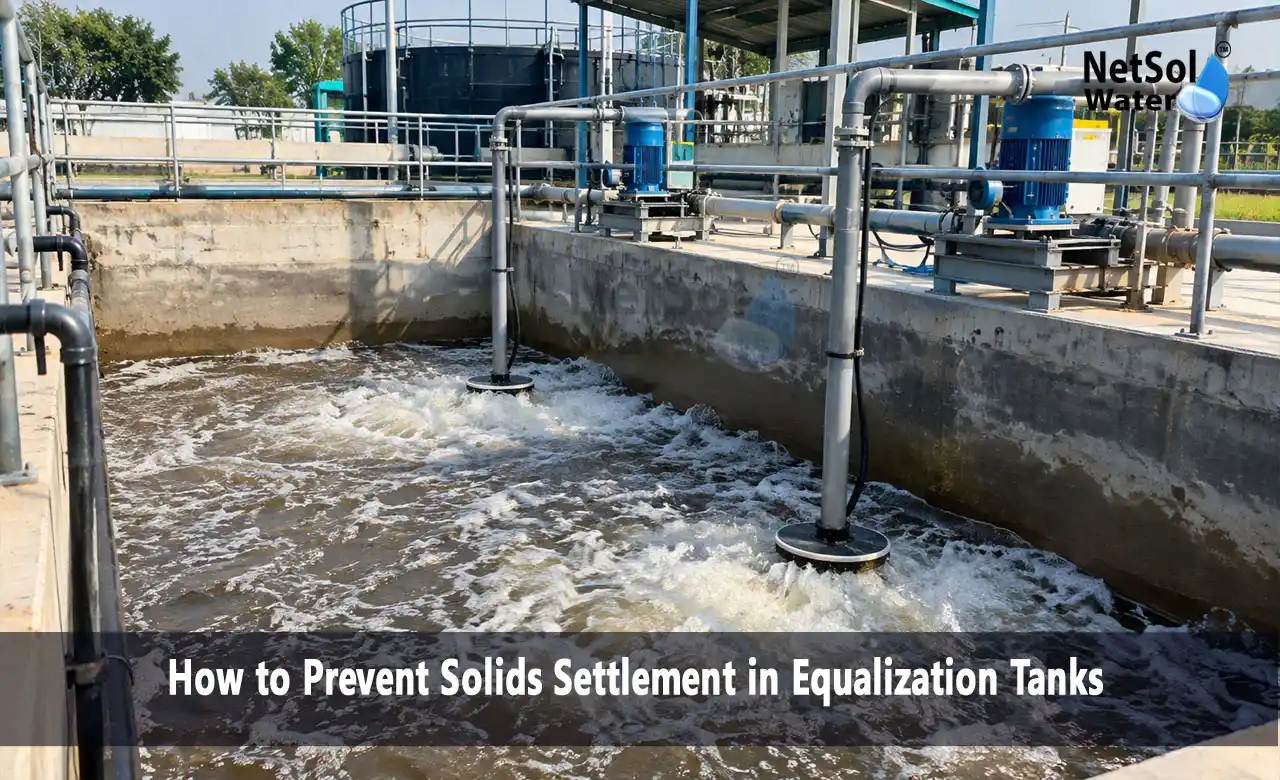
Mechanical mixing remains the most reliable way to stop solids from settling. Mixers keep suspended particles moving and cut down on dead zones inside the tank.
The right mixer depends on tank size, wastewater characteristics, solids load, and tank shape. An undersized mixer won't move enough water; an oversized one just burns extra power without added benefit.
2. Position Mixers Correctly
Where a mixer sits matters as much as its capacity. Corners, edges and low points often get poor circulation, and these low-flow zones turn anaerobic quickly, which is exactly where solids start to pile up.
During commissioning, run the mixers and watch how the water actually circulates. If you spot sedimentation forming anywhere, adjust the mixer's position or settings rather than assuming the original placement was correct.
3. Keep Flow Moving Consistently
Wastewater flow itself provides some natural mixing, but it isn't reliable on its own, especially when flow rates drop.
Batch-based manufacturing plants are a good example: long quiet stretches followed by sudden surges. Solids tend to settle fast during those low-flow periods.
Because of this, size your mixing capacity around the minimum expected flow, not the average. Designing for average flow leaves the tank under-mixed exactly when it needs help most.
4. Choose the Right Tank Geometry
Tank geometry has a direct effect on where solids collect. Sharp corners, uneven floors, or excessive depth can create pockets where solids settle and stay put.
A sloped tank bottom helps direct solids toward a collection or pumping point instead of letting them scatter across the floor. Geometry should be part of the design conversation from the start, not an afterthought once the mixer is chosen.
5. Control Heavy Solids at the Inlet
Removing large particles, grit, fibre and other heavy solids before they enter the tank makes everything downstream easier.
Screens, strainers or grit removal equipment at the inlet reduce the material load reaching the tank, which keeps mixers and pumps running cleanly and lowers the odds of anything settling out.
6. Avoid Excessive Retention Time
An equalization tank should be sized to balance flow and quality, not to hold water far longer than necessary. Excess retention time invites more settlement and stronger odour issues.
Compare actual inflow and outflow against the tank's design capacity periodically. Production patterns shift over time, and a tank sized for older, higher volumes may now be oversized for current loads.
7. Consider Air Mixing Where It Fits
Some equalization tanks rely on air mixing instead of mechanical mixers. A blower and diffuser system pushes water upward and prevents stagnant pockets.
Air mixing does add to electricity costs and isn't the right fit for every wastewater stream. Base the decision on tank depth, solids characteristics, odour concerns, energy costs and downstream treatment needs.
8. Inspect the Tank Regularly
Routine checks catch settlement before it becomes a bigger problem. Look at mixer operation, motor condition, unusual noise or vibration, floating solids, odour, and shifts in tank level.
If the surface appears to be moving while the bottom stays still, mixing likely isn't reaching all the way down, and that's worth investigating right away.
9. Plan for Sludge Removal
Even with good mixing, some solids will accumulate over time. A proper drain, sump, sludge pump or cleaning setup makes sludge removal straightforward without requiring frequent tank entry.
Whenever entry is unavoidable, follow proper confined space procedures. Tank entry should be the exception, not a routine maintenance step.
10. Clean the Tank on a Set Schedule
Preventive cleaning keeps gradual solids buildup from turning into a major issue. Set the cleaning frequency based on wastewater characteristics, solids concentration, tank design and how the system is actually operated.
Waiting until a large share of tank volume is lost makes cleaning harder and hurts treatment performance in the meantime. Keeping cleaning records also helps you evaluate mixer performance and spot the need for better upstream screening.
Common Mistakes to Avoid
One frequent mistake is sizing the mixer purely on tank volume, without accounting for the wastewater's solids content and actual operating conditions.
Another is assuming that steady flow alone will always prevent settlement, when stagnant pockets can still form even during low-flow periods.
Skipping inlet screening, ignoring tank geometry, or letting sludge accumulate unchecked can all cause repeat settlement, even with a larger mixer installed.
Conclusion
Solids settlement in an equalization tank reduces usable capacity and can create operational headaches for the downstream ETP. The right combination of mixing, tank geometry, controlled retention time, inlet screening and regular inspection keeps this risk in check.
Sound tank design paired with proper mixing and consistent solids removal is generally the most reliable approach. Keep an eye on actual operating conditions to know when the mixer setup, cleaning schedule or upstream solids control needs adjusting.
Do you need advice or assistance selecting the right water and wastewater treatment unit? We have solutions for all your problems!
Let us know your problem, and our experts will make sure it goes away.
For assistance or related queries, call on +91-9650608473 or write to us at enquiry@netsolwater.com.