

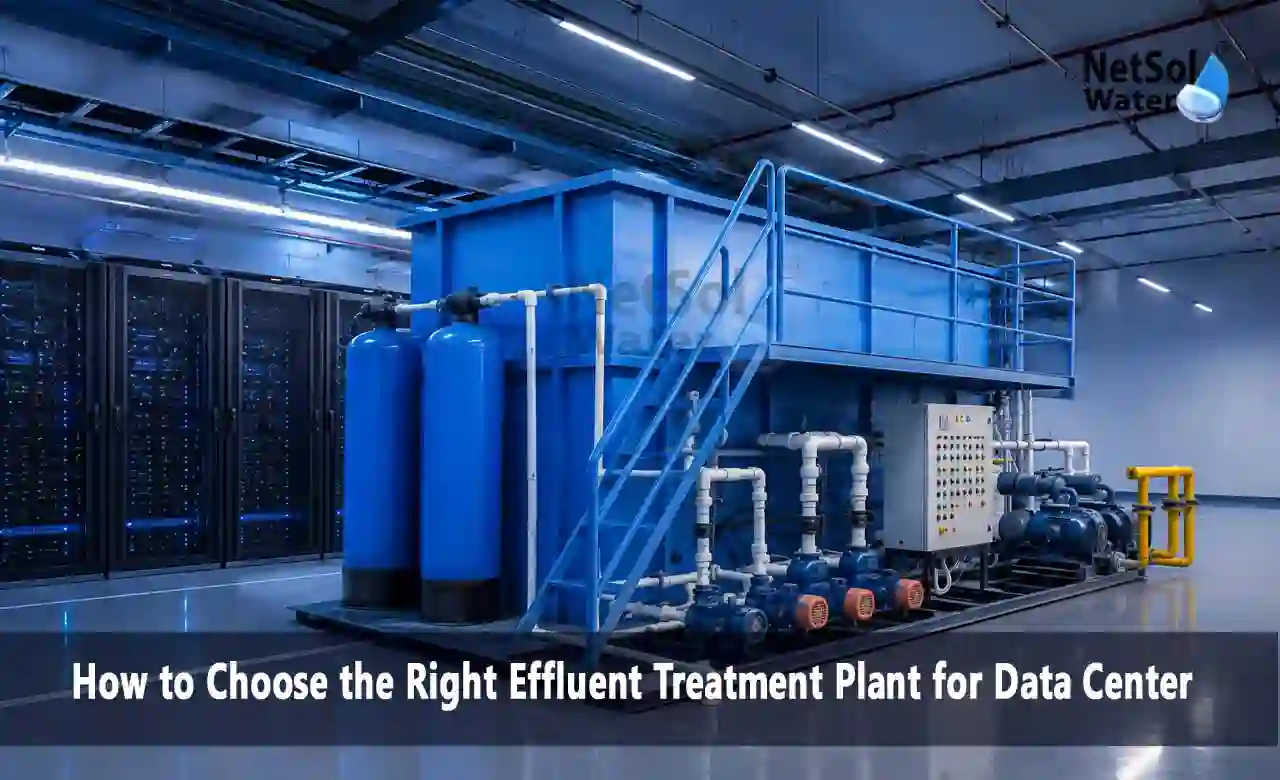
How to Choose the Right Effluent Treatment Plant (ETP) for Data Center?
A data center never really switches off. Servers keep working, cooling systems keep running and along with that constant activity comes a constant flow of used water. This water cannot simply be drained away once it has done its job. It carries heat, minerals and chemical traces that need to be cleaned out before that water goes back into the ground or gets a second life inside the building. That cleaning job falls on the Effluent Treatment Plant and getting this one decision right shapes how smoothly a facility runs for years to come.
What Is Effluent Treatment Plant?
An Effluent Treatment Plant is a setup built to clean used water coming out of commercial or industrial activity. It pulls out pollutants, chemical residue, and floating or suspended particles until the water is safe enough to either be released outside or be brought back into use on site. Cooling towers, HVAC units and storage tanks inside a data center all produce wastewater as part of their daily functioning. This water absorbs dissolved minerals, added heat and leftover chemicals during the cooling process. An ETP steps in to bring this water back to a safe standard before it is discharged or sent for maintenance.
Why Does Data Center Need Effluent Treatment Plant?
1. Water Usage Behind the Scenes
Keeping servers cool takes a serious amount of water. Cooling towers and chiller units release wastewater constantly, simply as a byproduct of doing their job.
2. What Happens Without an ETP
A facility without a working Eeefluent Treatment Plant has only two rough options, either keep pulling in fresh water nonstop or dump untreated wastewater somewhere it should not go. Both choices get expensive fast and put local water sources at risk. An ETP installed on site handles this water right away, which protects the surroundings and keeps costs from spiraling.
What Types of Wastewater Are Generated in Data Center?
1. Cooling Tower Blowdown Water
This stream picks up concentrated minerals and dissolved solids that build up over repeated cooling cycles.
2. HVAC Condensate Water
Condensate output tends to carry fewer contaminants, though it still passes through basic filtration before it can be reused.
3. Domestic Wastewater
Staff using restrooms, break rooms, and pantry areas produce regular household style wastewater that needs its own handling.
4. Backwash Water From Filtration Systems
Any filtration equipment running elsewhere in the facility flushes out backwash water, which also joins the treatment load.
Every one of these streams stacks up and the ETP has to be built to manage all of them together, not just one at a time.
How Do You Determine the Required Effluent Treatment Plant Capacity for Data Center?
Sizing an ETP plant correctly starts with a clear picture of daily water use, worked out from the number of cooling towers running, the HVAC load and how many people work on site.
A small facility with a couple of cooling towers only needs a compact treatment unit. A hyperscale campus running a dozen towers or more needs something built on a much bigger scale. Getting this wrong in either direction causes headaches, either the system chokes during peak demand or the company ends up paying for capacity it never uses.
| Data Center Size | Typical Cooling Towers | Estimated Wastewater Generation | Suggested ETP Capacity |
|---|---|---|---|
| Small (up to 1 MW load) | 1 to 2 towers | 20,000 to 50,000 litres per day | Compact ETP, up to 50 KLD |
| Medium (1 to 5 MW load) | 3 to 6 towers | 50,000 to 1,50,000 litres per day | Mid-range ETP, 50 to 150 KLD |
| Large (5 to 15 MW load) | 6 to 12 towers | 1,50,000 to 4,00,000 litres per day | High-capacity ETP, 150 to 400 KLD |
| Hyperscale (15 MW and above) | 12 or more towers | 400,000+ litres per day | Custom-built modular ETP, 400+ KLD |
These numbers work as a starting reference. Final sizing should always come from a proper water audit of the actual site, since climate, staff counts, and HVAC design can shift real consumption up or down.
How Does ETP Treat Cooling Tower Blowdown Water in Data Center?
1. Removing Solids and Minerals
Blowdown water tends to carry scale-forming minerals along with dissolved salts. The treatment process usually starts with coagulation and flocculation to pull out suspended particles, followed by filtration to trap whatever solids remain.
2. Getting the Water Ready for Reuse
Many setups add an extra stage to bring down hardness and dissolved salt content, which turns this water into something the cooling system can safely take back in.
Can ETP-Treated Water Be Reused Within Data Center?
Treated output from an Effluent Treatment Plant does not have to leave the property at all. It can go straight back into cooling tower makeup, watering green spaces, cleaning floors, or feeding flushing systems around the facility.
This is where the real savings show up. Less reliance on municipal supply or groundwater translates directly into lower water bills and a smaller environmental footprint. A growing number of data centers now aim for zero liquid discharge and a properly designed ETP sits right at the center of making that possible.
What Factors Should You Consider Before Choosing Effluent Treatment Plant for Data Center?
1. Technical Points Worth Checking
. How the wastewater is composed, since the cooling tower discharge behaves nothing like domestic sewage
. What treatment capacity is actually needed, based on both current use and future growth
. How much treated water does the facility want to reuse
. How much physical space is available for the equipment
2. Operational Points Worth Checking
. How much automation the system offers, since this decides how hands-on the monitoring needs to be
. How much power will the treatment process itself consume
. Whether the facility has expansion plans that the ETP needs to accommodate later
. What ongoing maintenance will the system demand over its lifetime
What Are the CPCB and SPCB Discharge Standards for Data Center Wastewater?
1. Parameters That Get Checked
The Central Pollution Control Board (CPCB) along with the respective State Pollution Control Boards (SPCB) set clear limits on Biochemical Oxygen Demand (BOD), Chemical Oxygen Demand (COD), Total Suspended Solids and pH before any water leaves the facility.
. Biochemical Oxygen Demand, which shows how much organic pollution the water still carries
. Chemical Oxygen Demand, which reflects overall chemical contamination levels
. Total Suspended Solids, which tracks leftover particle content after treatment
. pH balance, which needs to stay within a safe neutral range
. Oil and grease traces are checked closely where mechanical or generator waste enters the water stream
2. Staying on the Right Side of Compliance
Ignoring these limits does not end well. Fines, formal notices, or even a forced pause in operations can follow. Partnering with a supplier who genuinely understands these norms means the ETP gets designed to hold these numbers steady, not just meet them once during testing.
3. Keeping Up With State-Level Rules
Regular lab checks on treated water, proper records ready for pollution board reviews, and calibrated monitoring instruments all keep a facility ahead of problems rather than reacting to them. It also helps to remember that SPCB limits are not identical everywhere. Local water bodies and zoning rules shift these numbers slightly from state to state, so a company running facilities across multiple states needs to check each location’s specific requirements rather than assuming one rulebook covers all of them.
| Parameter | Inland Surface Water | Public Sewer | Land for Irrigation | Marine Coastal Areas |
|---|---|---|---|---|
| pH | 5.5–9.0 | 5.5–9.0 | 5.5–9.0 | 5.5–9.0 |
| BOD, mg/L | 30 | 350 | 100 | 100 |
| COD, mg/L | 250 | — | — | 250 |
| TSS, mg/L | 100 | 600 | 200 | — (750 for floatables) |
| Oil & Grease, mg/L | 10 | 20 | 10 | 20 |
| Ammoniacal Nitrogen (as N), mg/L | 50 | 50 | — | 50 |
| Hexavalent Chromium, mg/L | 0.1 | 2.0 | — | 1.0 |
| Total Chromium, mg/L | 2.0 | — | — | 2.0 |
| Lead (as Pb), mg/L | 0.1 | 1.0 | — | 2.0 |
| Mercury (as Hg), mg/L | 0.01 | 0.01 | — | 0.01 |
| Arsenic (as As), mg/L | 0.2 | 0.2 | 0.2 | 0.2 |
| Total Residual Chlorine, mg/L | 1.0 | — | — | 1.0 |
What Is the Difference Between STP and ETP in Data Center?
1. What STP Handles?
A sewage treatment plant deals with domestic wastewater, meaning whatever comes out of restrooms, kitchens, and similar sanitary points inside the building.
2. What ETP Handles?
An ETP takes care of industrial or process wastewater instead, which in a data center mostly means output from cooling systems. Some sites run these as two separate units, while others combine treatment depending on how much wastewater they generate and how the layout allows for it.
| Parameter | STP (Sewage Treatment Plant) | ETP (Effluent Treatment Plant) |
|---|---|---|
| Primary Purpose | Treats domestic sewage from within the facility | Treats industrial and process wastewater from cooling systems |
| Source of Wastewater | Restrooms, kitchens, cafeterias, sanitary areas | Cooling towers, HVAC systems, equipment washdown, RO reject water |
| Type of Pollutants | Organic matter, suspended solids, pathogens, nutrients | Dissolved salts, treatment chemicals, scale and corrosion inhibitors |
| Treatment Process | Mainly biological treatment, followed by clarification and disinfection | Mix of physical, chemical, and biological treatment depending on the waste stream |
| Treated Water Reuse | Suited to landscaping, toilet flushing, non-potable uses | Commonly reused as cooling tower makeup or in industrial processes |
| Typical Installation | Needed wherever domestic sewage is produced | Needed wherever cooling or industrial operations generate wastewater |
| Role in a Data Center | Manages sanitary waste for regulatory compliance | Manages cooling wastewater to cut consumption and enable reuse |
3. When a Facility Needs Both Systems?
Larger campuses with a sizeable workforce and heavy cooling infrastructure usually run a STP and an ETP side by side, each one handling its own wastewater stream on its own terms.
What Factors Affect the Cost of Effluent Treatment Plant for Data Center?
1. What Drives the Price Up or Down
Treatment capacity has the biggest say in the final cost, since bigger systems simply need more equipment and materials. The chosen technology matters too. Automated units with remote monitoring cost more to install but tend to pay that back through lower labor needs down the line.
2. Site-Related Cost Factors
Available space, civil construction requirements, and how complicated the wastewater itself is all shift the final number. A quote from a manufacturer who has actually worked on data center projects before tends to hold up better than a generic industrial estimate.
3. Costs That Often Get Missed
. Chemical dosing expenses, which vary depending on wastewater composition
. Electricity draw, since certain treatment stages pull significant power
. Sludge disposal charges that come up during regular maintenance
. Manpower costs, higher wherever the system leans on manual monitoring instead of automation
4. Looking Beyond the Initial Quote
A cheaper system built on older technology can end up costing far more once five or ten years of maintenance and energy bills are added up. Comparing total lifetime cost, not just the upfront number, gives a far more honest picture.
How Much Space Is Required to Install ETP in Data Center
1. Space Requirements Tied to Capacity
How much room an ETP needs depends directly on its treatment capacity and the technology behind it. Compact, modular units have become popular precisely because they deliver full treatment power while taking up far less floor area.
2. Thinking About Layout Early
A mid-sized system can often fit into a few hundred square feet, while a hyperscale campus might need an entire dedicated treatment yard. Bringing up space constraints early with the supplier saves everyone from redesigning the layout midway through the project.
3. Indoor Versus Outdoor Setup
. Indoor units, which work well where outdoor land is tight or where appearance matters more
. Outdoor units, suited to larger sites that can spare open yard space for treatment tanks
. Rooftop placement, which some urban facilities consider once ground space runs out
4. Ways to Save on Footprint
Vertical tank layouts, skid-mounted equipment, and prefabricated modular systems all help shrink the space needed without cutting into treatment performance.
What Are the Operation and Maintenance Requirements of Data Center ETP?
1. Daily Checks and Cleaning
Keeping an ETP running well means regular water quality testing, routine cleaning of tanks and filters, and periodic checks on pumps and dosing equipment.
2. Alerts and Service Contracts
Many current systems come fitted with automated monitoring panels that flag facility teams the moment any parameter drifts out of range. Signing a maintenance contract with the supplier keeps things running steadily and cuts down on surprise downtime.
3. Tasks Worth Doing Weekly
. Checking and topping up chemical dosing tanks
. Looking over pumps, valves, and pipelines for leaks or wear
. Testing treated water against set discharge limits
. Cleaning filters before they clog and slow the whole system down
3. Keeping the System Healthy Long Term
Yearly equipment audits, a clear plan for sludge management, and timely replacement of worn parts all stretch the working life of an ETP and keep it compliant year after year.
Conclusion
Picking the right effluent treatment plant for a data center is about far more than ticking a compliance box. It means putting in a system that supports genuine water reuse, keeps running costs predictable, and grows alongside the facility instead of holding it back. Done right, an ETP treats every wastewater stream properly while keeping the site fully aligned with CPCB and SPCB requirements.
How Can You Choose the Right ETP Manufacturer and Supplier for Your Data Center?
1. Why NetSol Water Fits This Role
NetSol Water is an ISO 9001:2015 certified Effluent Treatment Plant Manufacturer and Supplier working across India, with solid experience building ETP systems designed specifically for data centers, industrial units and commercial spaces.
2. What Makes Our Approach Different
Our team knows the technical side of cooling tower blowdown treatment, water reuse planning and staying aligned with CPCB and SPCB standards inside and out. We build systems meant to run efficiently, not just pass an inspection, helping data centers cut fresh water use while staying well within regulatory limits.
3. A Partner for the Long Run
From working out the right capacity to installation and ongoing support, NetSol Water stays involved as a long-term partner rather than disappearing after the sale. Whether your data center needs a fresh ETP installation or an upgrade to something already in place, we bring the technical know-how and a service network that reaches across the country to get it done properly.
Frequently Asked Questions (FAQs)
Q1. How long does it take to install ETP in data center?
Most installations wrap up somewhere between a few weeks and a couple of months, depending on the capacity needed and how complex the system is. Facilities with custom requirements should expect a longer timeline.
Q2. Can an existing data center upgrade its ETP capacity?
Yes, most systems can be scaled up later, particularly if the original design left room for it. Talking through future growth plans with the supplier at the start makes any later upgrade far easier to carry out.
Q3. Which treatment technologies are commonly used in data center ETPs?
Coagulation and flocculation, biological treatment, membrane filtration, and reverse osmosis all see regular use, with the right combination depending on the wastewater involved and how much of it needs to be reused.
Q4. How often should ETP be maintained?
Weekly checks generally cover the basics, while deeper maintenance and filter changes are scheduled monthly or quarterly, based on how much the system is used and what the manufacturer recommends.
Q5. What are the benefits of reusing ETP-treated water in data center?
Reusing treated water cuts down fresh water dependency, brings water costs down, and supports the facility’s broader sustainability and zero liquid discharge goals.