

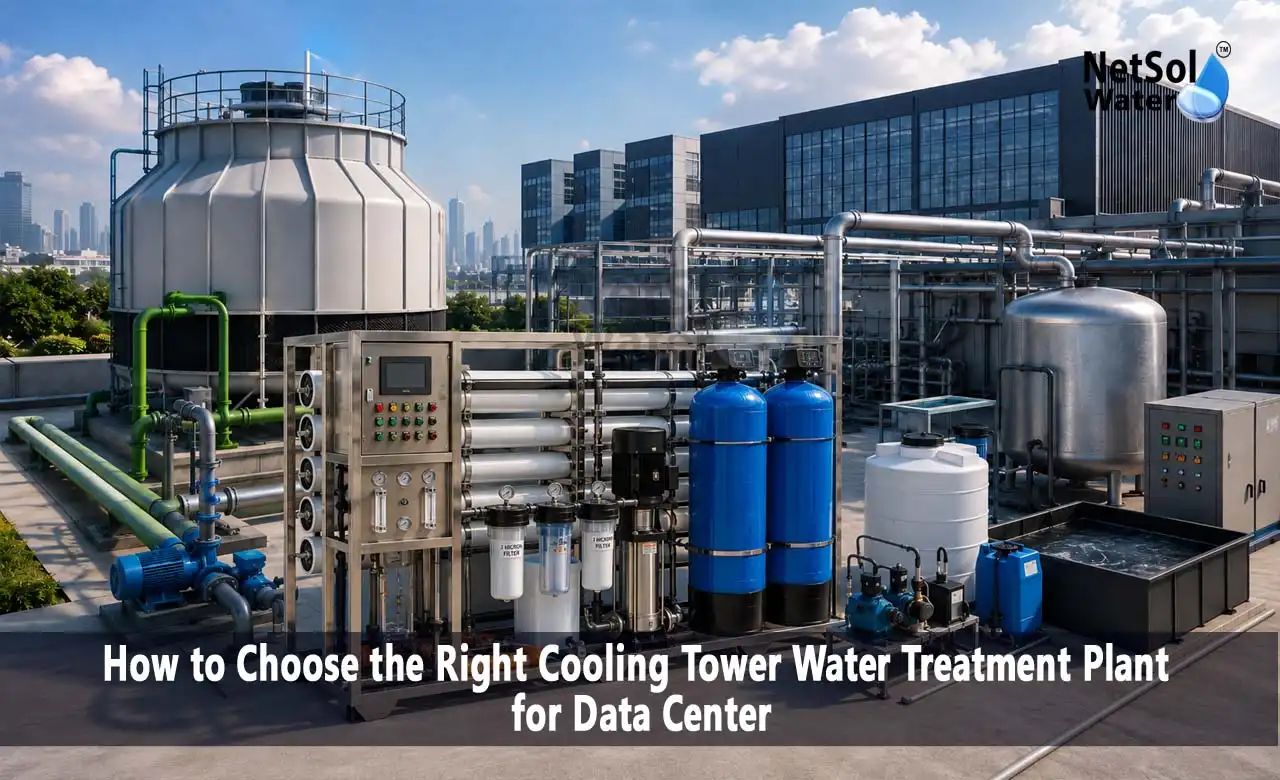
How to Choose the Right Cooling Tower Water Treatment Plant for Data Center?
Step into the mechanical room of any data center and you'll hear it before your eyes even adjust to the noise, that steady hum of cooling towers working nonstop to keep racks of servers from overheating. What most people outside the industry never think about is how much of a facility's uptime actually rides on water quality, not just water volume. Get the treatment wrong, and you're not only risking a call from the pollution board. You're looking at scale creeping into your heat exchangers, corrosion working away at equipment that cost a fortune, and eventually, downtime that's genuinely hard to explain to anyone upstairs.
Why This One Decision Carries So Much Weight?
Cooling efficiency, how long your equipment lasts, even your sustainability numbers, all of it comes back to a single factor. How well is the water in your cooling towers actually being treated? And here's something worth sitting with for a second, bad water treatment rarely fails loudly on day one. It creeps in slowly. Energy bills climb a little each quarter because heat transfer isn't as sharp as it used to be. Equipment wears out faster than the spec sheet promised. Then one day something fails outright, and everyone acts surprised, even though the warning signs were sitting there for months.
Why Do Data Centers Need a Cooling Tower Water Treatment Plant?
Cooling towers do their job through evaporation, pulling heat out of the system as water turns to vapor. But here's the catch, whatever minerals and impurities were sitting in that water don't evaporate along with it. They stay behind and build up, cycle after cycle. Ignore this long enough and you get scale forming on heat exchange surfaces, corrosion chewing into metal parts, and biological growth clogging pipes that are supposed to stay clear. A properly designed cooling tower water treatment plant manages all of this before it turns into a much bigger, much more expensive problem.
How Do You Select a CPCB and SPCB Compliant Cooling Tower Water Treatment Plant?
Compliance can't be something you patch in after the fact. It needs to be part of the design conversation from the very first meeting. When you're comparing vendors, ask pointed questions about whether they actually track current Central Pollution Control Board and State Pollution Control Board norms, not whatever version of the rules they learned years ago. Get documentation, not just a verbal promise that everything's fine. A system that looks compliant in a sales presentation but wasn't engineered around today's actual requirements is a problem quietly waiting for your next inspection to expose it.
What Factors Should You Consider Before Buying a Cooling Tower Water Treatment Plant?
There's quite a bit to weigh here, and missing even one of these tends to come back around eventually.
| Factor | What to Look At |
|---|---|
| Cooling capacity | Matched to your real thermal load rather than a rough ballpark figure. |
| Water quality at the source | Decides just how intensive the treatment process needs to be. |
| Cycles of concentration | The target you set shapes how much makeup water you'll consume. |
| Automation requirements | Depending on how much manual oversight your facility team actually wants. |
| Chemical treatment approach | Covering corrosion inhibitors, biocides, and scale control together. |
| Water reuse goals | Particularly if reducing fresh water dependency matters to your operation. |
| Future expansion | So the system doesn't become outdated the moment your facility grows. |
| Operating cost | Tracked across several years of use, not just the number on the installation invoice. |
Working through this list before signing anything saves a lot of expensive retrofitting later on.
Which Water Quality Parameters Should Be Monitored in a Data Center Cooling Tower?
1: The Numbers Worth Checking Daily
Total dissolved solids, commonly shortened to TDS, gives you a rough sense of how concentrated the minerals in your water actually are. pH needs to sit within a fairly narrow band, since water swinging too acidic or too alkaline causes damage either way, just through different mechanisms. Hardness, driven mostly by calcium and magnesium, has a direct hand in how much scale builds up on your equipment over time.
2: The Numbers That Signal Trouble Brewing
Conductivity moves in step with TDS and gives you a quick read on overall concentration without needing a full lab test. Silica deserves its own separate watch, because once it scales onto a surface, getting rid of it is genuinely difficult. Chlorides matter too, since elevated levels speed up corrosion, particularly on stainless steel parts that people wrongly assume are immune to this kind of damage. And microbial growth, left unchecked, quietly forms biofilm that clogs piping and drags down heat transfer efficiency across the whole loop.
| Parameter | Why It Matters |
|---|---|
| TDS (Total Dissolved Solids) | Shows how concentrated the minerals in your water actually are. |
| pH | Must sit within a narrow band; too acidic or too alkaline causes damage either way. |
| Hardness (Calcium and Magnesium) | Directly drives how much scale builds up on equipment over time. |
| Conductivity | Moves in step with TDS and provides a quick reading of overall concentration without a full lab test. |
| Silica | Once it scales onto a surface, removing it becomes extremely difficult. |
| Chlorides | Elevated levels accelerate corrosion, especially on stainless steel components. |
| Microbial Growth | Forms biofilm that clogs piping and reduces heat transfer efficiency. |
Which Chemicals Are Recommended for Data Center Cooling Tower Water Treatment?
Most treatment programs work through a combination rather than expecting a single chemical to handle everything at once. Corrosion inhibitors protect metal surfaces from slow, ongoing degradation. Scale inhibitors keep dissolved minerals from crystallizing onto equipment. Biocides keep microbial growth from turning into a biofilm problem down the line. That said, the exact mix and dosage really depends on your specific water chemistry, which is exactly why a proper water test needs to happen before locking in any chemical program for your cooling tower water treatment plant, not weeks later once problems have already started showing up.
What Is the Difference Between Cooling Tower Water Treatment and Chilled Water Treatment?
Cooling tower water treatment deals with an open loop, constantly exposed to air, evaporation, and whatever contamination happens to drift in from outside. That exposure is exactly why it demands ongoing dosing and regular monitoring. Chilled water treatment works in a different world entirely, dealing with a closed loop that's largely sealed off from the outside air. Since chilled water systems don't lose water to evaporation the way cooling towers do, the treatment priority shifts toward corrosion control and steady water quality over a much longer cycle, rather than the constant concentration management a cooling tower needs.
| Aspect | Cooling Tower Water Treatment | Chilled Water Treatment |
|---|---|---|
| Loop type | Open loop, constantly exposed to air. | Closed loop, largely sealed off from outside air. |
| Water loss | Loses water through evaporation. | No evaporation loss. |
| Treatment priority | Ongoing chemical dosing and concentration management. | Corrosion control and steady water quality over a longer cycle. |
| Monitoring | Regular, continuous monitoring. | Longer intervals between treatment and monitoring cycles. |
How Much Water Can Be Saved by Installing a Cooling Tower Water Treatment Plant?
Good treatment allows a cooling tower to operate at higher cycles of concentration before it needs a blowdown, which directly cuts down on makeup water consumption. Facilities running poorly treated systems often get stuck operating at lower cycles just to avoid scaling issues, which quietly means they're pulling in a lot more fresh water than they actually need. Stretch that difference across an entire year, and the water savings become substantial, though the exact figure depends on your specific source water and how your cooling towers are designed.
Can Treated STP and RO Water Be Used in Data Center Cooling Towers?
Yes, and this happens more often than people expect. Treated sewage water or RO reject water, once processed to the right quality level, works perfectly well as makeup water for cooling towers instead of relying entirely on fresh municipal or groundwater supply. This kind of reuse fits neatly into broader sustainability targets and shrinks a facility's overall fresh water footprint, though it does mean the treatment system needs to be designed around this reuse pathway from the planning stage, not tacked on as an afterthought once the plant's already running.
What Is the Installation Timeline for a Data Center Cooling Tower Water Treatment Plant?
Timelines shift quite a bit depending on system complexity and how ready the site actually is when installation begins. Most mid sized cooling tower water treatment plant projects take somewhere between a few weeks and a couple of months from start to finish. Larger systems, especially ones layered with automation and multiple treatment stages, naturally take longer to plan, source equipment for, and install properly without rushing anything.
Can an Existing Data Center Upgrade Its Cooling Tower Water Treatment System?
Definitely, and it happens far more often than building from scratch. Facilities regularly add automated dosing controls, upgrade their filtration stages, or work in better monitoring capability into a system that's already in place, rather than tearing everything out. The real trick is finding a manufacturer who can properly evaluate what's already installed and design an upgrade that genuinely fits, instead of bolting on a mismatched addition to a setup that was never built to handle it.
Why Do Hyperscale Data Centers Invest in Advanced Cooling Tower Water Treatment Systems?
At hyperscale volumes, even the smallest inefficiency multiplies into real money fast. A facility running dozens of cooling towers simply cannot absorb the downtime or water waste that a smaller site might shrug off without much trouble. Advanced systems with real time monitoring, automated dosing, and higher cycles of concentration let hyperscale operators claw back efficiency gains that matter enormously at that scale, both for the operating budget and for sustainability reporting that investors and regulators now scrutinize far more closely than they used to.
How Does Cooling Tower Water Treatment Affect Overall Energy Efficiency?
This connection gets overlooked constantly, but it's a big one. Scale acts like an insulating layer on heat exchange surfaces, and even a thin coating forces the system to work harder to move the same amount of heat. That extra effort shows up directly on your power bill, since pumps and cooling equipment end up consuming more energy just to compensate for reduced efficiency. A well maintained cooling tower water treatment plant keeps these surfaces clean, which means your cooling system isn't quietly fighting itself month after month just to hit the same performance numbers it should be reaching effortlessly.
What Mistakes Do Data Centers Commonly Make With Cooling Tower Water Treatment?
A handful of mistakes show up again and again across different facilities. Some sites treat water testing as a one time event during commissioning instead of an ongoing practice, which means the treatment program slowly drifts out of sync with actual water conditions. Others go cheap on chemical dosing equipment, leading to inconsistent treatment that swings between under dosing and overdosing depending on how carefully someone's watching that day. And a surprising number of facilities delay maintenance until something visibly breaks, rather than catching problems early through routine checks that would have cost a fraction of an emergency repair.
How Does Facility Location Affect Cooling Tower Water Treatment Needs?
Where a data center sits geographically actually changes quite a bit about how its cooling tower water treatment plant needs to be designed. Regions with naturally hard groundwater need a treatment approach built around aggressive scale control from the outset. Coastal or humid areas often deal with higher microbial activity, which shifts the chemical program toward stronger biocide management. Facilities in water stressed regions, meanwhile, tend to prioritize higher cycles of concentration and reuse pathways far more aggressively, simply because fresh water isn't something they can take for granted the way a facility near an abundant water source might.
| Facility Location | Treatment Priority |
|---|---|
| Regions with hard groundwater | Aggressive scale control from the outset. |
| Coastal or humid areas | Stronger biocide management to control higher microbial activity. |
| Water-stressed regions | Higher cycles of concentration and greater emphasis on water reuse. |
What Are the Operation and Maintenance Requirements of a Cooling Tower Water Treatment Plant?
Routine maintenance is really what keeps a treatment plant performing the way it was designed to from day one. This covers regular water quality testing, checking chemical dosing levels, inspecting pumps and dosing equipment, and cleaning strainers or filters before they clog up entirely. Facilities that let maintenance slide tend to see a gradual decline that's not obvious on any single day, but eventually surfaces as reduced cooling efficiency or, worse, an equipment failure nobody had budgeted for.
| Maintenance Task | Typical Frequency |
|---|---|
| Water quality testing (TDS, pH, hardness) | Weekly |
| Chemical dosing level checks | Weekly |
| Strainer and filter cleaning | Monthly |
| Pump and equipment inspection | Monthly |
| Full system audit and calibration | Quarterly to annually |
Conclusion
Choosing the right cooling tower water treatment plant for a data center isn't a decision worth rushing through just to save a few rupees upfront. It shapes how efficiently your cooling system runs, how long your equipment holds up, and how much fresh water your facility ends up pulling in year after year. Between compliance demands, constant water quality monitoring, and the scale some data centers now operate at, this is genuinely one area where cutting corners costs more than it ever saves.
How Can You Select the Best Cooling Tower Water Treatment Plant Manufacturer and Supplier for Your Data Center?
Honestly, it comes down to one real question. Does the manufacturer actually understand data centers, or are they handing you a generic industrial template and hoping it happens to fit? NetSol Water is an ISO certified RO Plant Manufacturer and Supplier working across India, and our approach has been built specifically around facilities like yours, where uptime isn't something you can negotiate and cooling water quality directly affects how well your servers perform every single day.
We don't start with a catalog. We start by testing your actual water, understanding your real cooling capacity, and working out your reuse goals before a single component gets designed. That's really the difference between a system that reads well on paper and one that actually holds up running around the clock for years without throwing surprises at you.
Our involvement doesn't stop once installation wraps up either. From that first site assessment through years of ongoing maintenance, NetSol Water stays in the picture, because a cooling tower water treatment plant that performs beautifully for six months and then quietly starts slipping isn't solving your problem, it's just delaying it. If your data center needs a new system built from scratch or wants an existing one fixed properly, we bring the technical depth, the local service reach, and the accountability to get it right and actually keep it that way.
Frequently Asked Questions (FAQs)
Q1. How often should cooling tower water quality be tested?
Core parameters like TDS, pH, and hardness should generally be checked weekly, with a deeper system audit done quarterly or annually depending on how heavily the system gets used.
Q2. What are the common problems in cooling tower water treatment systems?
Scaling from poor pH control, corrosion from unmanaged chloride levels, and biofilm buildup from inadequate biocide treatment are among the issues that show up most often across different facilities.
Q3. How does cooling tower water treatment reduce scaling and corrosion?
Proper treatment keeps mineral concentration under control through scale inhibitors and balanced pH, while corrosion inhibitors protect metal surfaces from degrading due to dissolved salts and continuous chemical exposure.
Q4. What is the operating cost of a cooling tower water treatment plant?
Costs shift depending on system size and chemical treatment needs, generally covering dosing chemicals, energy use, and routine maintenance, and these should be treated as planning ranges rather than fixed figures when budgeting.
Q5. How can automation improve cooling tower water treatment performance?
Automated dosing and monitoring systems track water quality continuously and adjust treatment in real time, catching problems early rather than waiting for someone to notice during a manual check.