

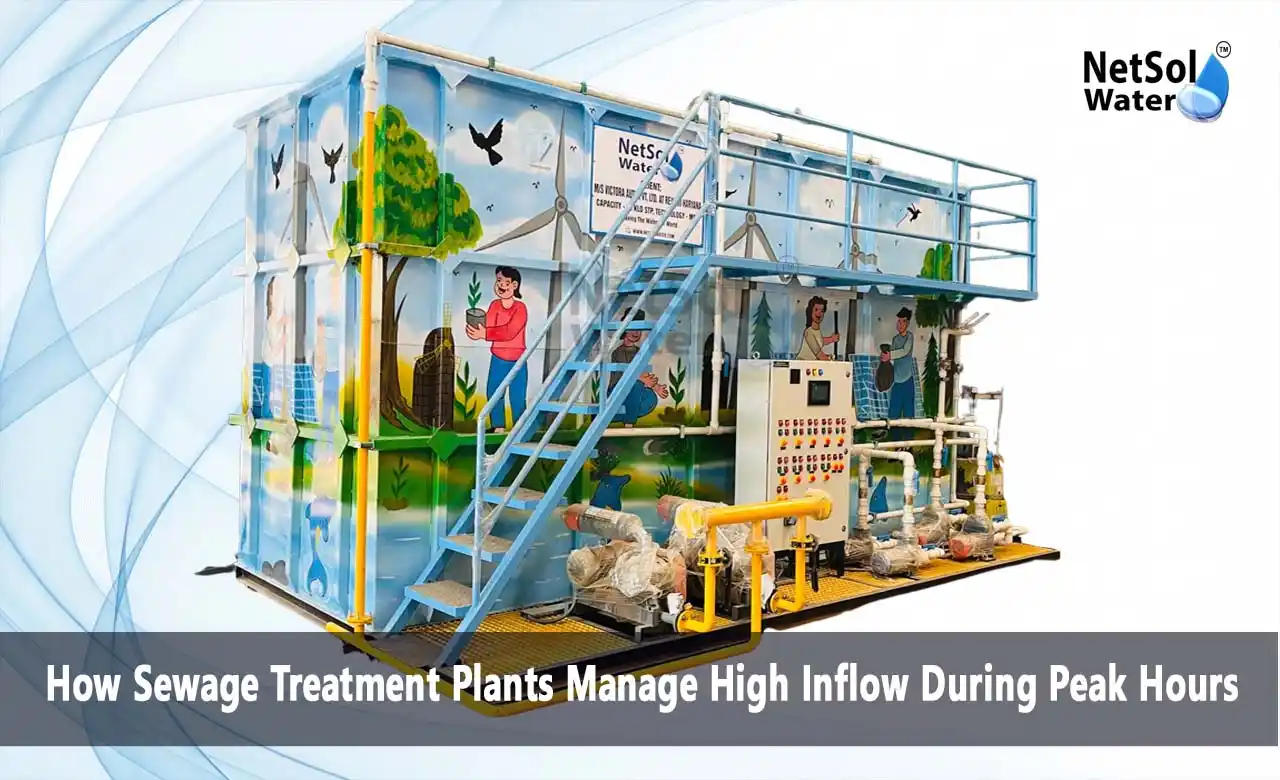
How Sewage Treatment Plants Manage High Inflow During Peak Hours?
Wastewater flow does not remain the same throughout the day. It often rises during morning hours and again during busy working periods. Residential areas create more wastewater when people start their day. Commercial buildings and institutions also send higher volumes into the drainage network when activity increases. This creates what engineers call peak flow wastewater. A treatment system must handle this change without losing control of the treatment process.
Sewage treatment plants play an important role in managing wastewater from homes, businesses, hotels, hospitals, and institutions. Many cities in India are growing at a fast rate, which increases the need for dependable wastewater treatment. Good flow control helps treatment units work smoothly during periods of high inflow and protects equipment from sudden hydraulic pressure. Netsol Water is a leading name in wastewater treatment solutions and helps industries and communities select systems that match their flow needs. Understanding how plants manage peak inflow can help users choose and operate an STP with greater confidence.
Understanding Peak Inflow in Sewage Treatment Plants
High inflow can affect every stage of wastewater treatment. A sudden increase in wastewater may send more water into the plant than the system can process at its normal rate. This can reduce treatment contact time and place extra pressure on pumps and biological units. It can also disturb the normal balance inside the treatment process. Good flow planning therefore forms an important part of STP design.
Before selecting control methods, it helps to understand why flow rises and what happens when the plant receives more wastewater than usual. Below is a look at some common reasons behind peak inflow and the problems it can create.
Why Wastewater Flow Increases?
Wastewater generation often follows daily activity patterns. Residential systems may experience high flow in the morning when people use bathrooms and kitchens. Commercial buildings may see higher volumes during office hours. Hotels can experience changes based on guest activity, and restaurants can also produce higher wastewater volumes during meal periods. Heavy rainfall adds another challenge, since drainage networks can allow rainwater to mix with wastewater. Industrial sites may also release larger volumes during certain production cycles.
These changes make flow control necessary. A treatment plant that receives a steady average flow may still face short periods of very high inflow. Engineers therefore study flow patterns before they size treatment units. This helps them plan the required storage capacity and pumping rate, and decide how the plant should respond when inflow rises above normal operating levels.
Problems Caused by Sudden High Flow
A rapid flow increase can shorten the time wastewater stays inside a treatment unit, which can affect screening and settling performance. It can also disturb biological treatment because microorganisms may receive wastewater at a much faster rate. Pumps may also need to work harder during these periods. Excessive hydraulic loading can create stress across the plant. If operators do not control the flow correctly, then untreated or partly treated water may pass through the system too quickly. These problems show why STP flow management must start before the wastewater reaches the main treatment stages. A planned approach allows the plant to absorb changes instead of reacting to them at the last moment.
Common Triggers of Peak Inflow and Their Impact
| Trigger | Typical Cause | Impact on Treatment Process |
|---|---|---|
| Morning residential use | Bathroom and kitchen activity | Sudden surge in flow entering the system |
| Commercial and office hours | Increased business activity | Higher volumes during working hours |
| Hotel and restaurant activity | Guest and meal-time usage | Variable flow throughout the day |
| Heavy rainfall | Rainwater mixing with sewer lines | Sharp, short-term volume spikes |
| Industrial production cycles | Batch discharges | Large, irregular volume increases |
How Equalization Helps Control High Inflow?
Equalization provides one of the main methods for handling changing wastewater flow. An equalization tank stores wastewater for a short period before controlled pumping sends it to the next treatment stage. This process helps smooth the difference between low flow and high flow periods. The importance of equalization becomes clear during peak hours, since instead of sending every litre into the process at the same moment, the system can hold part of the inflow and release it at a planned rate.
. Buffering Excess Wastewater
An equalization tank works as a buffer between the incoming sewer line and the treatment process. During normal periods the tank may receive wastewater and pass it forward at a controlled rate. During peak periods it can temporarily store the extra volume. This approach prevents a sudden surge from reaching downstream units, so pumps can transfer wastewater at a steady rate and the biological section can receive a more even load. Tank capacity must match the expected flow pattern. Engineers study the highest expected inflow and the duration of that increase, along with the average daily flow. Proper sizing helps ensure that the tank has enough space when peak conditions occur and prevents unnecessary oversizing that can create extra cost and maintenance needs.
. Mixing and Flow Control Inside the Tank
Storage alone does not solve every problem. Wastewater can contain solids and organic matter that may settle when it remains still for too long. Proper mixing keeps the contents moving and helps create a more uniform wastewater stream. Controlled pumping also matters, since operators can use level sensors and automatic controls to adjust the transfer rate. This keeps the downstream units within their planned flow range and reduces the impact of changing wastewater strength. When different wastewater streams mix inside the tank, the resulting feed can become more even, creating better conditions for the treatment stages that follow.
Process Changes That Help During Peak Hours
Equalization forms an important part of the solution. However, the rest of the plant must also support stable operation during high inflow. Operators need to monitor levels and flow rates and make sure that pumps and treatment units can handle the expected hydraulic load. A strong system combines equipment design with proper operation. Below is a look at the main ways plants maintain control after wastewater enters the treatment process.
. Using Controlled Pumping
Controlled pumping helps maintain a steady feed from the equalization stage. Instead of sending wastewater forward as soon as it enters the tank, the plant can transfer it according to the capacity of the next treatment unit. Variable speed pumps can support this approach, and the control system can adjust pumping speed based on tank level and process demand. This reduces sudden changes in flow and helps the treatment stages work under more stable conditions. Pump selection also matters, since the pump must handle the required flow without creating unnecessary stress on the system. Backup pumps can provide support when one unit requires maintenance or when inflow rises above normal expectations. Proper pumping design can make sewage treatment plants more prepared for changing daily conditions.
. Monitoring Flow and Tank Levels
Monitoring provides operators with the information they need to make timely decisions. Flow meters can show how much wastewater enters the plant, and level sensors can show how much water remains in the equalization tank. Operators can use this information to adjust pump operation and identify unusual flow patterns before they become serious problems. Modern control systems can automate many of these actions and send alerts when the tank level moves outside the normal range. Regular monitoring also helps during long-term plant operation, since recorded data can show when peak inflow occurs and how often it happens. This information can guide future capacity planning and help operators improve daily STP flow management based on actual plant behaviour.
Designing an STP for Reliable Peak Flow Performance
A plant should not only manage average wastewater flow. It should also prepare for the highest expected inflow. This requires proper planning during the design stage. Engineers need to study flow patterns and process limits before selecting tank sizes and equipment. This part of planning can prevent many operating problems later. Below is a look at some design areas that influence performance during high inflow periods.
. Planning for Future Flow Growth
Wastewater flow can increase when a building expands or when a city grows. A treatment system that works well today may face a higher load in the future. Engineers should therefore consider expected growth during the design process and include suitable storage and pumping capacity based on future requirements. This approach can reduce the need for major modifications later. The same principle applies when companies compare different types of water treatment equipment. A commercial RO plants buying guide may focus on capacity and water quality, and RO system selection may also compare recovery and operating requirements. These factors differ from STP design, yet both systems need accurate flow planning before buyers select water purification equipment.
. Maintaining Safety and Process Stability
Peak inflow can increase pressure across the complete treatment line. Screening units must remove solids without creating a blockage. Pumps must move wastewater without excessive strain. Settling units must maintain suitable conditions, and biological units must receive a controlled load. Good design connects all these stages, and engineers should not size one unit without checking how it affects the next unit. The complete flow path must work as one system. This approach helps sewage treatment plants maintain stable performance during busy periods and gives operators more control when flow patterns change unexpectedly.
Conclusion
Reliable wastewater treatment depends on more than average flow capacity. High inflow can challenge pumps, biological units, and settling systems. It can also affect treated water quality when operators do not control the flow properly. Equalization storage and controlled pumping help the plant absorb sudden changes and maintain a steady treatment rate. A well-designed system gives operators better control over daily flow changes and future growth. The right capacity also helps avoid unnecessary stress on equipment and treatment units. Netsol Water provides wastewater treatment solutions based on site conditions and flow requirements. Get in touch with Netsol Water to discuss your requirements and request a consultation for suitable sewage treatment plants and flow management solutions.
Contact Netsol Water
Phone: +91-9650608473, Email: enquiry@netsolwater.com