

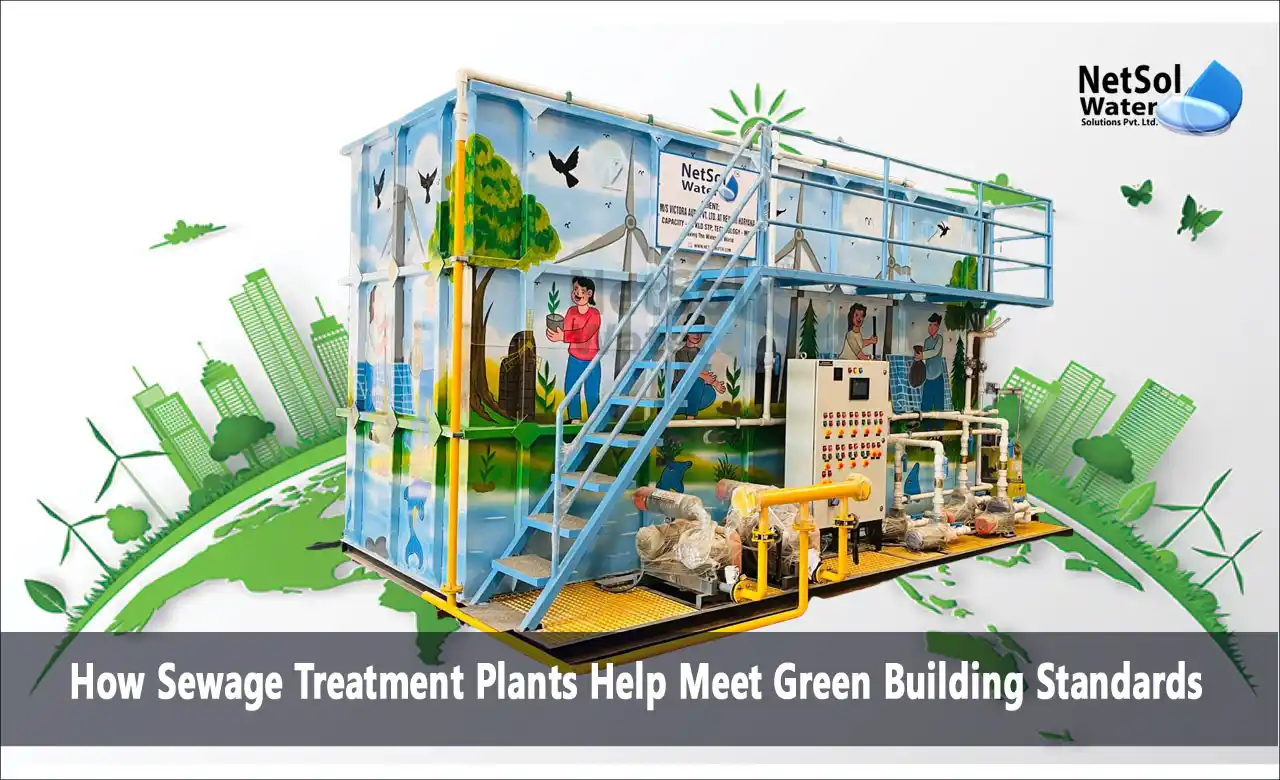
How Sewage Treatment Plants Help Meet Green Building Standards?
Green buildings focus on more than energy savings. They also aim to manage water in a better way. This makes wastewater treatment an important part of sustainable building design. Modern buildings generate wastewater every day from toilets and kitchens and other activities. Sending all this wastewater away without treatment can increase pressure on local water resources. A well planned treatment system can clean this water and make it suitable for safe reuse.
In India the demand for green buildings continues to grow as developers look for better ways to manage natural resources. Green building certification systems such as IGBC and LEED include water related requirements and recognize practices that improve water efficiency and support water reuse. This is where sewage treatment plants become useful. They can help buildings treat wastewater on site and reuse the treated water for suitable non-potable needs. Netsol Water is the leading name in water treatment solutions and helps businesses plan systems around their actual water needs.
Water Conservation Through Wastewater Treatment
Water conservation is one of the main goals of a green building. A building can use less fresh water when it treats wastewater and sends the treated water back into suitable applications. This approach helps create a more efficient water cycle within the property. It can also lower the amount of wastewater that leaves the site. This is useful for offices and hotels and residential projects and large commercial spaces.
Let us have a look at some ways this approach supports better water management.
. Reducing Freshwater Demand
Buildings use fresh water for many daily needs. Yet not every activity requires drinking water quality. Flushing toilets and watering gardens and some cleaning operations can often use properly treated non-potable water. A treatment system can process wastewater and prepare it for these uses when the water meets the required quality.
This approach helps reduce the need for fresh water. It also gives the building another usable water source. IGBC notes that wastewater treatment and reuse can help reduce dependence on raw and potable water. Its rating systems include water conservation measures that encourage treated wastewater reuse.
Creating a Better Water Cycle
A green building should not treat water as a resource that enters the property and leaves it after one use. The building can instead create a cycle where water gets used and treated and reused for suitable purposes. This approach supports sustainable wastewater management and can make water planning more effective.
LEED also gives strong importance to water efficiency and recognizes the use of non-potable and alternative water sources. Current LEED guidance treats water as a wider building resource rather than looking only at indoor consumption. This makes wastewater reuse an important part of a wider green building strategy.
Supporting Green Building Certification
Green building certification gives projects a clear framework for better environmental performance. Water management forms an important part of these systems. A project may need to show how it treats wastewater and how it uses the treated water. Proper planning can therefore help a building improve its performance while also supporting certification goals.
Let us have a look at some areas that connect wastewater treatment with certification.
. Meeting Water Related Criteria
Certification systems often use prerequisites and credits to evaluate water performance. A building may need to show improvements in water use and wastewater management. The exact requirements depend on the rating system and building type. This means the treatment system should match the certification path selected by the project.
IGBC Green Factory Building criteria include on-site wastewater treatment for reuse and require treated water to meet applicable quality standards. The documentation can include water balance details and system information and test reports. LEED also includes water efficiency requirements and credits that recognize alternative water sources and water reuse.
. Helping With Documentation
Installing a treatment system alone does not guarantee certification. The project team must also show that the system works as planned. This means the project should track water use and treated water output. It should also maintain test records and operational data where required.
A proper water balance can make this process easier. IGBC guidance for wastewater treatment can ask for daily and annual water balance information along with details of treatment capacity and treated water quality. Good documentation can therefore support both plant operation and the certification process.
Improving Sustainable Wastewater Management
Sustainable wastewater management looks beyond simple treatment. It focuses on safe reuse and proper control of water resources. A building can gain more value from its treatment system when it uses the treated water in a planned way. This can also help reduce the environmental impact linked with fresh water supply and wastewater discharge.
Let us have a look at some ways sustainable management can improve building performance.
. Reusing Treated Water
Treated wastewater can serve several non-potable applications when it meets the required quality. Landscaping is a common use. Toilet flushing is another useful application. Some buildings can also use treated water for cooling related needs when the quality and system design allow it.
IGBC healthcare guidance provides an example of this approach. It recognizes wastewater treatment and reuse for applications such as landscaping and flushing and cooling tower make-up water. This shows how treatment can connect directly with daily building water demand. When a project plans reuse from the design stage it becomes easier to create separate lines and storage areas for treated water.
. Lowering Environmental Pressure
Untreated wastewater can harm the surrounding environment. Proper treatment helps control pollutants before discharge or reuse. A building can also reduce its freshwater demand by using treated water for suitable purposes. These changes can support a more balanced approach to water management.
LEED guidance explains that water conservation and wastewater reuse can help protect freshwater sources and lower pressure on wastewater systems. This gives wastewater treatment a wider role in green building design. It supports the building itself while also helping manage the impact that the property can have on nearby water resources.
Designing the Right Treatment System for Green Buildings
A treatment system should match the building. There is no single design that works equally well for every property. An office has a different wastewater pattern than a hotel. A residential campus may generate a different load than a hospital or factory. The treatment process should therefore match the quantity and quality of wastewater and the intended reuse applications.
Let us have a look at some important design considerations.
. Matching Plant Capacity With Demand
Plant capacity should match the expected wastewater generation. Designers should study the number of occupants and water use patterns and daily operating hours. They should also consider future expansion. An undersized system may struggle during peak flow. An oversized system may increase installation and operating costs.
The reuse plan should also guide the design. A building that plans to reuse water for flushing and landscaping needs suitable storage and distribution arrangements. This makes the treatment system part of the wider water management plan instead of treating it as a separate utility.
. Maintaining Treated Water Quality
Water reuse works only when the treated water meets the required quality for its intended application. The project should define the target quality before selecting the treatment process. It should also include monitoring and maintenance procedures to keep performance stable.
IGBC requirements refer to treated wastewater quality standards that apply to the intended reuse purpose and may involve Central or State Pollution Control Board requirements. This makes testing an important part of responsible system operation. A well maintained treatment plant can support safe reuse and better long term performance.
Conclusion
Sustainable buildings need practical water management methods that work throughout the life of the property. Proper wastewater treatment can help save fresh water and support reuse and improve overall resource management. It can also contribute to the water goals used in green building certification systems.
Choosing suitable sewage treatment plants can help a project build a better water cycle and meet its planned sustainability targets. The right design should match the building size and wastewater load and reuse needs. Netsol Water can help you understand your treatment requirements and select a suitable solution for your project. Get in touch with Netsol Water for more information or to request a consultation for your wastewater treatment needs.
Contact Netsol Water at:
Phone: +91-9650608473, Email: enquiry@netsolwater.com