

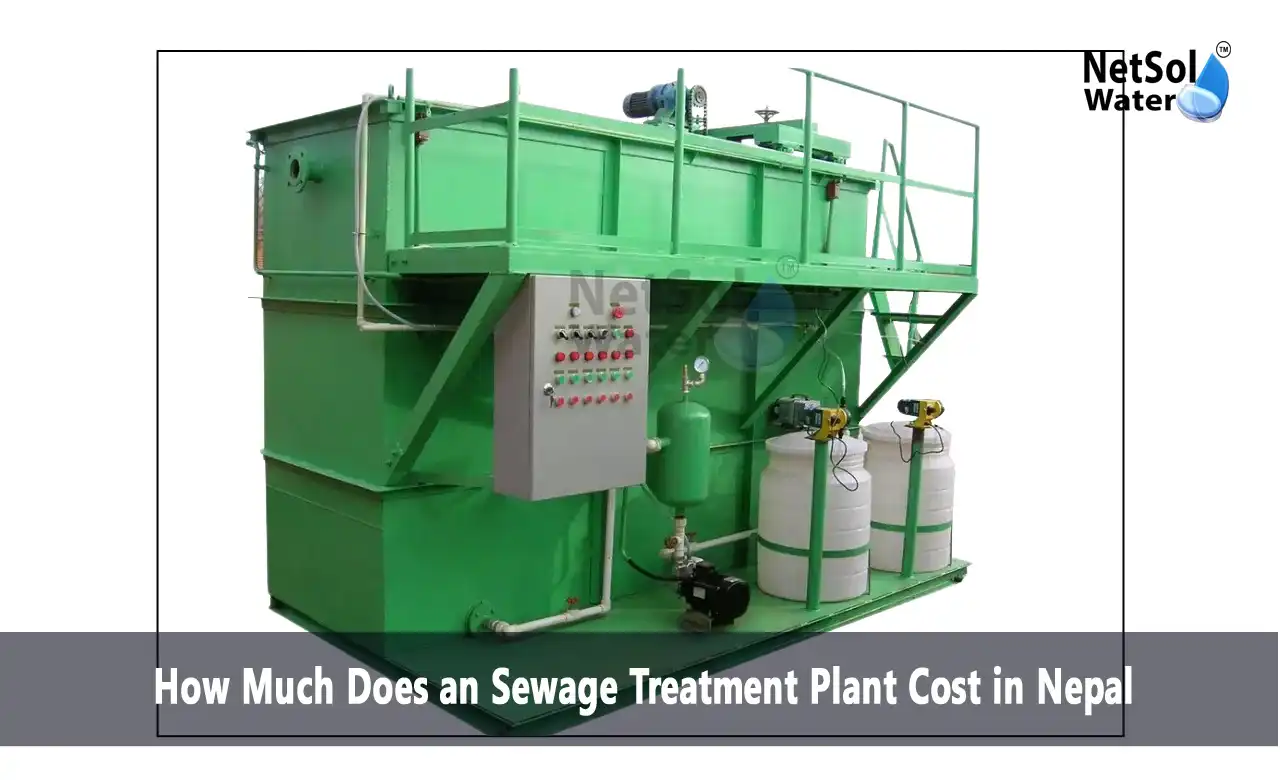
How Much Does an STP Cost in Nepal?
If you are planning a residential project, hotel, hospital, or industrial unit in Nepal, one of the first environmental questions you will face is wastewater management. The question about the actual STP cost in Nepal keeps arising because people need to know the answer but they do not ask the question directly.
The fixed price for this product does not exist according to honest business practices. The price varies according to five factors which include capacity and technology and location and discharge standards and operational goals throughout time. However you can derive a reliable estimate for the expenses.
Let’s break it down in a way that makes sense from both a technical and financial perspective.
Why STPs Are Becoming Essential in Nepal?
The cities of Kathmandu and Pokhara and Bharatpur experience rapid growth because their urban areas expand at high rates. The increasing population density combined with commercial development has resulted in a substantial rise in wastewater production.
Untreated sewage continues to contaminate rivers in many regions. The resulting contamination affects water quality and public health and tourism activities. The installation of sewage treatment plants has become a requirement for large buildings and commercial establishments because of increasing environmental awareness and stricter regulatory oversight.
You should include STP cost for Nepal in your initial project budget when you construct apartments or resorts or factories.
What Determines the STP Cost in Nepal?
Several technical and site-specific factors influence pricing. Let’s look at the most important ones.
1: What Exactly Are You Paying For?
An STP is not just a tank with some pipes. It is a complete system that treats wastewater so it can be safely discharged or reused.
When you install an STP, you are paying for:
. Tanks and civil construction
. Pumps and blowers
. Treatment media or membranes
. Electrical panels and wiring
. Piping and fittings
. Installation and testing
In some cases, automation systems are also included. So the final cost depends on how advanced and how large the system needs to be.
2: The Biggest Factor: Plant Size
The size of the plant plays the biggest role in deciding the STP cost in Nepal.
STP capacity is measured in KLD, which means kiloliters per day. In simple terms, it shows how much wastewater the system can treat daily.
Here is a rough idea:
. Small building or guest house, 10 to 20 KLD
. Medium apartment or small hotel, 50 to 100 KLD
. Large hotel or hospital, 100 to 300 KLD
. Industrial plant, 500 KLD or more
A small 20 KLD system may cost around NPR 15 to 25 lakhs. A 100 KLD plant can range between NPR 40 to 80 lakhs depending on technology and site conditions. Larger industrial systems can go into crores.
As capacity increases, the total cost increases, but the cost per KLD usually becomes lower.
3: Technology Also Changes the Price
Not all STPs are built the same way. Different treatment technologies have different price levels.
Common systems include:
. MBBR
. SBR
. MBR
So when discussing STP cost in Nepal, technology choice matters a lot.
4: Civil Work Can Add to the Budget
Many people forget to include civil construction in their initial estimate. In some projects, civil work alone can make up 30 to 40 percent of the total budget.
That is why early planning is important.
What About Running Costs?
Installation is only one part of the story. You also need to think about operation and maintenance.
Monthly expenses may include:
. Electricity
. Chemicals
. Operator salary
. Routine servicing
For small plants, monthly operating costs may start from around NPR 20,000. Larger systems will naturally cost more.
An energy-efficient design can help you save money in the long run.
Is It Worth the Investment?
At first, the STP cost in Nepal may feel high. But think about the alternative.
Without proper treatment:
. You may face penalties
. You may not get project approvals
. Your property value may drop
. You risk harming the environment
On the other hand, treated water can be reused for flushing and landscaping. This reduces your freshwater consumption and water bills.
In many cases, the long-term benefits balance out the initial cost.
Final Thoughts
So, how much is the STP cost in Nepal? For small projects, it may start from around 15 lakhs. For medium and large projects, it can range from 40 lakhs to several crores depending on size and design.
If you are looking for expert guidance, NetSol Water offers customized Sewage Treatment Plants designed for Nepal’s conditions. From design to installation and maintenance, NetSol Water helps you manage STP cost in Nepal while ensuring quality, compliance, and long-term performance.
A well-designed STP is not just an expense. It is an investment in your project and in a cleaner future.