

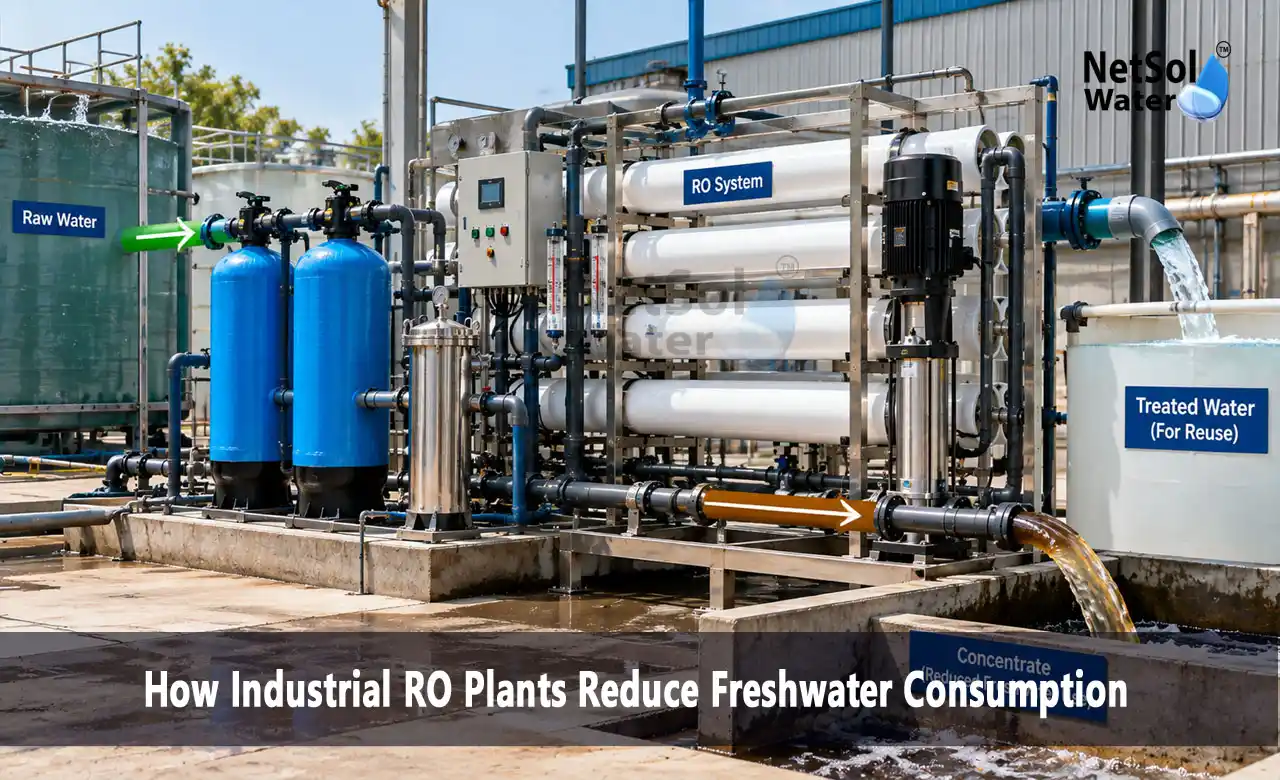
How Industrial RO Plants Reduce Freshwater Consumption?
Freshwater supports homes, farms and communities, and it also sits at the center of almost every industrial activity. Factories use water for processing, cooling, cleaning and steam generation. As production grows, the pressure on freshwater sources grows with it. This is where an industrial RO plant becomes a practical tool and not just a purification unit.
Reverse osmosis (RO) pushes water through a semi-permeable membrane that holds back dissolved salts and many other impurities. Industries use this process in two ways. They use it to purify incoming water, and they use it to treat their own wastewater so it can go back into operations. When treated water replaces fresh water in suitable applications, the plant draws less from rivers, groundwater and municipal supply.
Short answer: an industrial RO plant reduces freshwater consumption by turning wastewater into reusable water for cooling, cleaning and selected process needs. The saving depends on how well the plant is designed, how the feed water is pretreated and how closely the recovery is monitored.
Netsol Water designs and manufactures industrial water treatment systems built around the actual water profile of each site. In this guide we explain how RO supports water conservation, where reuse works best inside a factory, and what to get right while planning the system.
Why Industrial Freshwater Demand Needs Attention?
Many plants still use fresh water for tasks that do not need drinking-quality water. Washing floors, topping up cooling towers and rinsing equipment are common examples. When that water leaves the site after a single use, the facility pays twice: once for the intake and once for the disposal.
A better approach starts with a simple map. Know where water enters the plant, where it is used, where it becomes wastewater and where it leaves. Once this map exists, it becomes clear which streams can be recovered and which processes can accept recovered water.
How RO Treatment Supports Water Conservation?
RO removes dissolved impurities that ordinary filtration cannot touch. That makes it useful wherever a plant needs a lower level of dissolved solids than a basic treatment stage can deliver. The more wastewater a plant can bring back to the required quality, the less fresh water it needs to buy or extract. Two mechanisms matter most.
Wastewater Treatment for Reuse
Industrial wastewater usually carries suspended solids, organic matter and dissolved salts. Standard treatment, such as the stages in an effluent treatment plant, handles much of the suspended and organic load. Some processes, however, need water with far fewer dissolved solids. RO covers this gap by separating many dissolved substances from the treated stream and leaving cleaner water that can be used again.
This recovered water can feed cooling systems, washing operations and certain process lines. Each liter that is reused is a liter that does not have to be drawn from an external source, and over a year the volume adds up to a meaningful reduction in intake.
Supporting Multiple Water Cycles
Not every task in a factory needs the same water quality. A well planned system matches quality to purpose. Processes with strict limits receive high quality RO permeate. Applications that can tolerate slightly lower quality receive recovered water that has been treated to a suitable level. Water can pass through several of these cycles before it finally leaves the plant.
RO makes this cascade reliable because its output quality is consistent and measurable. That consistency is what allows engineers to trust recovered water in places where it once seemed risky.
How Industrial Water Reuse Lowers Freshwater Demand?
When a plant uses municipal or raw water for jobs that recovered water could do, freshwater consumption rises without any real need. Single use water also increases the load on the discharge side. Reuse changes this pattern. It pulls water back from waste streams and feeds it into valuable operations, which links wastewater treatment directly to production planning.
A detailed look at this link is available in our article on how industrial RO plants achieve ZLD and water reuse. Below are the two areas where reuse usually delivers the clearest gains.
Reuse in Cooling Systems
Cooling towers are among the largest water users in many factories. Water is lost through evaporation and through blowdown, so the plant needs steady makeup water. Treated wastewater can supply part of this demand when its quality is brought to the right level.
RO helps by lowering dissolved solids before the water enters the cooling loop. Lower dissolved solids reduce scaling and corrosion risk, and they allow the tower to run at higher cycles of concentration. Fewer blowdown events mean less water wasted. The result is lower freshwater intake and a more predictable wastewater volume, which also makes discharge planning easier.
Reuse in Process Operations
Some industries need water for cleaning equipment, rinsing materials or preparing products. The wastewater from these steps is often polluted, but it does not have to be lost. A selected stream can be treated through an RO based system and returned to the same process or to another one with similar needs.
This approach only works when the recovered water matches what the process requires. Regular water testing and the right treatment stages are essential. Water quality should meet the specification of each individual process so that the reuse loop stays safe, stable and acceptable to quality teams.
Designing a Plant to Optimise Water Use
An RO unit by itself solves only part of the problem. Industries also need a clear path for collection, treatment, final discharge and reuse. When these stages are linked in one design, water loss is avoided and the real recovery potential becomes visible. A good design also helps the facility size equipment correctly and choose where reuse will pay off first.
Selecting the Right Treatment System
Every wastewater stream is different. One factory may deal with high salts, another with oil or organic matter. These conditions decide what must happen before the water reaches the membrane. RO performs best as part of a larger treatment train, and not as a standalone machine.
Proper pretreatment protects membranes from fouling and scaling and keeps performance steady. When treatment is chosen according to the real water quality, recovery improves and reuse becomes dependable. Our guide on the advantages of industrial RO plants explains how this design thinking supports long term operation.
Monitoring Recovery and Reuse
Efficiency improves when a plant measures its flows. Operators can track how much water enters the facility, how much the RO system recovers and where that water goes. Regular monitoring exposes losses and shows whether reuse targets are being met.
With this data, operators can adjust treatment settings and reuse patterns. Over time, the plant can raise recovery where conditions allow and cut unnecessary freshwater use in areas where recovered water meets the process need. This is what makes water management practical, and not just a goal on paper.
Where Zero Liquid Discharge Fits In?
Plants that want to go one step beyond reuse can look at zero liquid discharge. In a ZLD setup, RO recovers as much water as possible and the concentrated reject goes to further stages such as evaporation and crystallization, so that no liquid effluent leaves the site. If you are exploring this route, read about ZLD in industrial RO plants, ZLD strategies for RO plants and how to choose the best ZLD system for your industry.
Checklist Before Planning RO Based Water Reuse
. Map all water inlets, uses and discharge points in the plant.
. Test each wastewater stream for dissolved solids, organics, oil and hardness.
. List the quality each process or cooling loop actually needs.
. Plan pretreatment to protect membranes from fouling and scaling.
. Decide how the concentrated reject will be handled.
. Install flow meters and quality sensors to track recovery and reuse.
. Review the numbers regularly and adjust the system as production changes.
Frequently Asked Questions (FAQs)
Q1. Can industrial RO plants really reduce freshwater consumption?
Yes. When treated wastewater replaces fresh water in suitable uses such as cooling makeup, washing and some process needs, the plant draws less water from external sources. The exact saving depends on feed water quality, pretreatment and plant design.
Q2. Is RO alone enough for industrial wastewater reuse?
Usually not. RO works best after proper pretreatment. Wastewater with oil, high organic load or suspended solids needs earlier stages so that the membrane is protected. Many sites combine an ETP with an RO system.
Q3. What happens to the reject water from RO?
RO produces a concentrated reject stream. It can be reused in low grade applications where possible, or sent to additional treatment such as evaporation in a ZLD system, depending on site rules and economics.
Q4. How do I know how much water my plant can recover?
Start with a water audit and a feed water analysis. These two steps show the real recovery potential and help engineers size the RO system correctly. Netsol Water can guide you through both.
Conclusion
Freshwater has a direct link with industrial growth and resource management. Industries can protect this resource by treating used water and bringing it back into useful cycles. RO treatment removes dissolved impurities and creates a dependable source of recovered water for suitable applications. This makes the industrial RO plant an important part of modern water management.
A planned reuse system lowers freshwater intake, improves control over wastewater and helps a facility build a more efficient water cycle. Netsol Water provides industrial water treatment solutions designed around specific plant needs. Contact Netsol Water to learn more about suitable industrial RO plants or to request a consultation for your water reuse requirements.
Contact Netsol Water at:
Phone: +91-9650608473, Email: enquiry@netsolwater.com