

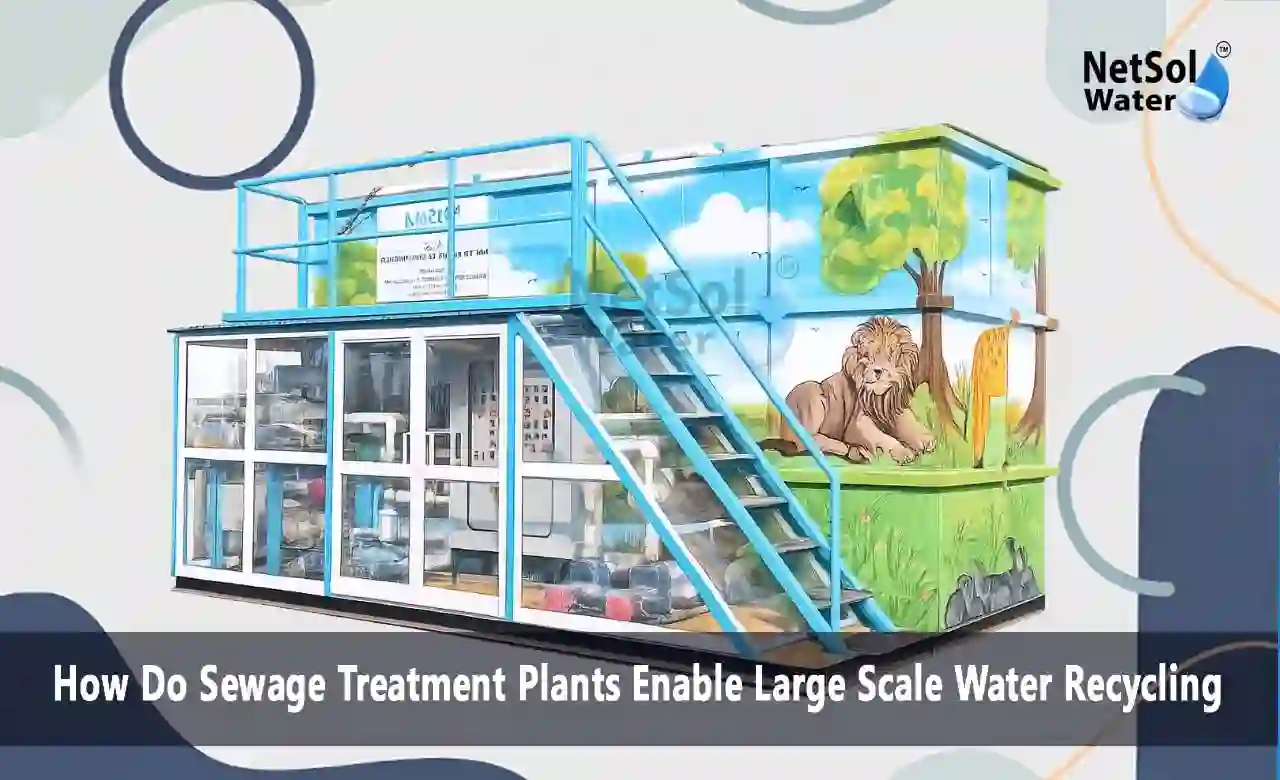
How Do Sewage Treatment Plants Enable Large-Scale Water Recycling?
Water demand is increasing due to population growth, migration to cities and expanding industries. At the same time, the water resources are facing greater pressure from freshwater, and water conservation is emerging as a major issue for governments, industries and communities. Along with freshwater treatment, one of the most effective treatments to this challenge is wastewater recycling.
In the case of large-scale water recycling, Sewage Treatment Plants are necessary in treating domestic wastewater and transforming it into a useful resource. Modern STPs are designed to remove contaminants, to enhance the quality of water and to make treated water suitable for various non-potable applications. Such systems can be used on a large scale to recycle water, helping to conserve water resources, reduce pollution and promote sustainable water use.
Sewage Treatment Plants Enable Large-Scale Water Recycling
1. The transformation of wastewater to a reusable resource
The sewage is considered aswaste but it contains water which can be recovered by treating the sewage properly. The modern Sewage Treatment Plants work on the principle of removal of the suspended solids, organic matter, nutrients or harmful microorganisms present in the sewage through physical, biological and chemical process.
Treated water can be used for other applications before discarded. This will allow the communities and industries to better utilize the water resources at their disposal and will help reduce the strain on natural water resources.
2. Reducing the use of fresh water resources
Rivers, lakes, reservoirs and groundwater are vital to many cities for supplying their water requirements for a daily basis. These sources are growing stressed with the continuous increase in demand.
The large scale water recycling by Sewage Treatment Plant is an alternate source of water for non-potable purposes. Reuse of treated wastewater reduces the need for freshwater, which would otherwise impact future generations and especially reduce the strain on freshwater resources.
3. Supporting the Urban Water Management
A lot of wastewater is produced daily in urban areas. If untreated this wastewater can turn into an environmental problem and a water conservation opportunity.
Sewage Treatment Plant can be used to treat and recycle wastewater efficiently in cities. The recycled water can be used in irrigation, cultural landscape irrigation, road flushing, municipal construction and other uses. This helps in good water resource management in urban areas and reduces water consumption.
4. Providing water for industry
Water is needed in huge quantities in industries for cooling, cleaning, processingand for various other utilities. The water that is used in these activities is treated wastewater which can reduce the need for potable water.
For the use of industry, STPs can be a great source of recycled water, if the quality requirements can be satisfied. Not only is it water saving, but also water efficient for industries.
5. Improving Agricultural Irrigation
The use of fresh water for agriculture is the highest. In many regions treated wastewater is a new source of water used for irrigation.
Effluent from Sewage Treatment Plants could be used for irrigation, subject to local regulations and standards for use in gardens, parks and green spaces and crops. This will reduce fresh water usage for irrigation, and will help to maximise the use of scarce water resources.
Large scale recycling encourages sustainable agriculture, especially in water-limited areas.
6. Reducing Environmental Pollution
The untreated wastewater may pollute rivers, lakes and groundwater that will affect both the environment and human health. If wastewater is treated properly, it will not pollute the environment.
The Sewage Treatment Plant provides treatment to sewage and reuses the treated water for non-potable applications thereby reducing pollution level and consequently improving the natural water quality. There will be fresher rivers and lakes, which will result in a healthier ecosystem and long-term environmental improvements.
7. Supporting Sustainable Cities
The management of natural resources, like water, is an important part of sustainable cities, and also a challenge.Water management is a challenge for efficient management of natural resources in sustainable cities. By recycling water on a large scale, cities of the world can save water and utilise it more effectively.
Sewage Treatment Plants have an important role in sustainable urban development which offers a continuous cycle of collection, treatment, and reuse of sewage. This round-the-round solution has reduced the demand for fresh water and will contribute to water security in the future due to the growing number of people.
8. Improving Water Security
Because of climate change, increasing population, water demand, it is becoming difficult with the reliable supply of water. Water recycling is another source of water which is less dependent of rainfall or seasonal changes.
Sewage Treatment Plants can enhance water security by providing water treated effluent as an additional resource for appropriate uses. This allows the plants to withstand drought and higher water requirements better.
9. Supporting Environmental Sustainability
Water recycling has environmental and economic benefits at the large-scale. It saves water resources, minimises wastewater discharge and encourages responsible usage of water resources.
Today, even the modern Sewage Treatment Plant has been improved to make better use of the water for better treatment efficiencies with a minimum energy and operational cost. These improvements help to encourage sustainability and water stewardship in the communities and industries.
Conclusion
Sewage Treatment Plant is essential for the large scale water recycling. They treat wastewater and allow it to be used for other purposes, which decreases reliance on fresh water, helps to limit the impact on natural water bodies, provides both industrial and municipal water requirements, and enhances water security. They’ve been getting more involved, as communities develop strategies to address water problems that are more and more sustainable.
As water is considered as a global issue, investing in efficient Sewage Treatment Plants will help establish cities and industries that have reliable water recycling systems. These facilities not only clean wastewater, but also make it a resource for the future sustainable development and responsible use of water.
Do you need an advice or assistance on selecting the best water and waste water treatment unit? We have solutions for all your problems!
Let us know your problem, our experts will make sure that it goes away.
For an assistance or related query,
Call on +91-9650608473 Or write us at enquiry@netsolwater.com