

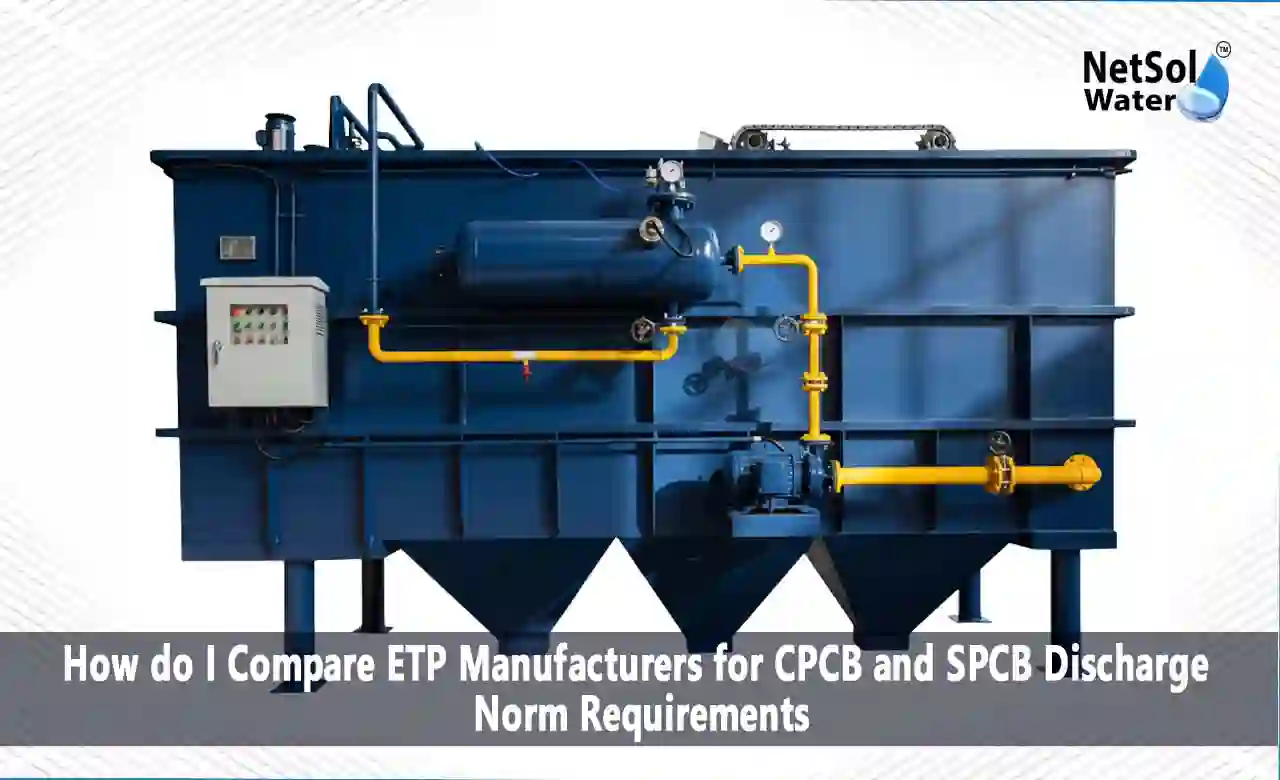
How to Compare ETP Manufacturers for CPCB & SPCB Discharge Norms?
A huge amount of water is generated as waste by industries throughout India every day. Many chemicals, oils, suspended solids and other pollutants are present in this wastewater that can harm rivers, lakes and groundwater. This has created severe discharge norms for industries by the Central Pollution Control Board and the State Pollution Control Boards. All the factories need to clean their wastewater prior to discharge into the environment.
An Effluent Treatment Plant aids industries in discharging wastewater that adheres to these environmental regulations without harming the environment. However selecting the right manufacturer is not an easy task. Different manufacturers have a variety of technologies designs and services. What is successful for one industry may not be for another. Hence industry should take precautions while choosing the manufacturer so as to compare them carefully.
CPCB and SPCB Discharge Norm Requirements
Environmental rules are important for the operation of industries because they safeguard natural water resources and health of the public. Industries subject to discharge standards may be liable to fines or restrictions if they do not meet these. So it's important to know both the need of CPCB and the SPCB prior to the option of choosing a manufacturer.
Let us have a look on some important aspects that industries should understand before comparing manufacturers.
1. Importance of Discharge Standards
The Central Pollution Control Board creates guidelines for wastewater management across the country. State Pollution Control Boards use these guidelines and may also add local requirements according to regional conditions. These standards control the amount of pollutants such as Biological Oxygen Demand, Chemical Oxygen Demand, Total Suspended Solids and oil content in discharged water.
An industry should first study its specific discharge limits because these limits differ from one industry to another. Textile units, chemical factories, food processing plants and pharmaceutical companies often have different requirements. When industries understand these limits they can select a manufacturer that can design a suitable treatment system.
2. Importance of Compliance Support
Meeting discharge standards is not only about installing a treatment plant. Industries also need regular testing monitoring and documentation. A good manufacturer guides the customer during approvals and provides support during inspections. This support helps industries maintain compliance for many years.
Manufacturers that understand environmental regulations can design systems that continue to perform even when wastewater quality changes. Therefore regulatory knowledge should become one of the main factors during comparison.
Comparing Technical Design and Treatment Technology
The design of an effluent treatment system determines its long term performance. A well designed plant treats wastewater efficiently and keeps operational costs under control. Therefore industries should carefully study the technology offered by different manufacturers.
Let us have a look on some important points related to technical design.
1. Selection of Treatment Processes
Every wastewater stream has different characteristics. Some industries generate wastewater with high organic content while others produce wastewater with chemicals and heavy metals. Therefore manufacturers should study the wastewater before proposing a treatment process.
A good manufacturer provides proper combinations of physical, chemical and biological treatment methods. The design should also consider future expansion and changes in production capacity. A manufacturer that simply offers standard designs without understanding wastewater characteristics may not deliver the desired results.
2. Automation and Monitoring Features
Modern treatment plants use automation systems to improve performance and reduce human error. Automated dosing systems online monitoring and control panels help operators manage the plant efficiently.
Manufacturers that provide advanced monitoring systems make compliance easier because industries can track important parameters continuously. Such systems also help industries detect problems quickly and avoid environmental violations.
Evaluating Experience and Industry Expertise
Experience plays an important role when selecting a treatment plant manufacturer. Wastewater treatment is a specialized field and practical knowledge often makes a major difference in project success. Therefore industries should examine the experience and capabilities of manufacturers before making a decision.
Let us have a look on some important areas of expertise.
1. Experience in Different Industries
A manufacturer that has worked with many industries usually understands different wastewater challenges. Experience in textile, chemical, pharmaceutical and food industries shows that the company can handle complex treatment requirements.
Netsol Water is the leading Effluent Treatment Plant Manufacturer and has experience in providing treatment solutions for different industries. The company offers customized designs and focuses on helping industries meet environmental standards.
2. Project Execution and Service Support
A treatment plant requires proper installation and regular maintenance after commissioning. Manufacturers that provide strong service support can quickly solve operational issues and improve plant performance.
Industries should ask about previous projects and customer references before making a final decision. Companies with successful project records usually offer better confidence and long term support.
Assessing Cost Efficiency and Long Term Performance
Cost remains an important factor during the selection process. However industries should not choose a manufacturer only because of a lower price. A cheaper system may create high operating expenses in the future. Therefore companies should examine the complete life cycle cost of the treatment plant.
Let us have a look on some important cost considerations.
1. Initial Investment and Operating Cost
The total cost of an effluent treatment system includes equipment installation, chemicals, electricity and maintenance. Some plants require high energy consumption while others use efficient technologies that reduce expenses.
Manufacturers should provide clear information about operating costs and expected maintenance requirements. This information helps industries compare proposals properly and make informed decisions.
2. Plant Durability and Future Expansion
Industries often increase their production capacity over time. A treatment plant should have the flexibility to handle future expansion without major modifications.
Manufacturers that design scalable systems offer greater value because industries can increase capacity without replacing the entire plant. Durable equipment also reduces maintenance expenses and improves operational efficiency.
Comparing Manufacturers Based on Compliance and Reputation
The reputation of a manufacturer reflects its quality and commitment to customers. Industries should study the background of manufacturers before making an investment.
Let us have a look on some important factors that help in evaluating reputation.
1. Certifications and Quality Standards
Manufacturers that follow quality standards usually maintain better engineering practices. Certifications and compliance records show that the company takes environmental responsibilities seriously.
Apart from Netsol Water industries may also evaluate companies such as VA Tech Wabag Limited and SUEZ India because these companies have experience in handling large water and wastewater treatment projects.
2. Customer Feedback and Market Presence
Customer feedback provides valuable information about a manufacturer's performance and service quality. Positive reviews and successful installations indicate strong technical capabilities.
Industries should speak with existing customers whenever possible. Direct feedback often provides a better understanding of how the manufacturer performs after project completion.
Conclusion
Selecting the right Effluent Treatment Plant manufacturer requires careful study of technical design industry experience, compliance, knowledge and long term costs. Industries should compare manufacturers based on their ability to meet CPCB and SPCB discharge norms and their commitment to after sales support. A properly designed Effluent Treatment Plant not only protects the environment but also helps industries avoid regulatory issues and maintain smooth operations.
Netsol Water is the leading Effluent Treatment Plant Manufacturer and offers customized solutions for different industries. Businesses that are planning a new project or upgrading an existing plant can contact experienced manufacturers and request a detailed consultation to choose the most suitable treatment solution for their requirements.
Contact Netsol Water at:
Phone: +91-9650608473, Email: enquiry@netsolwater.com