

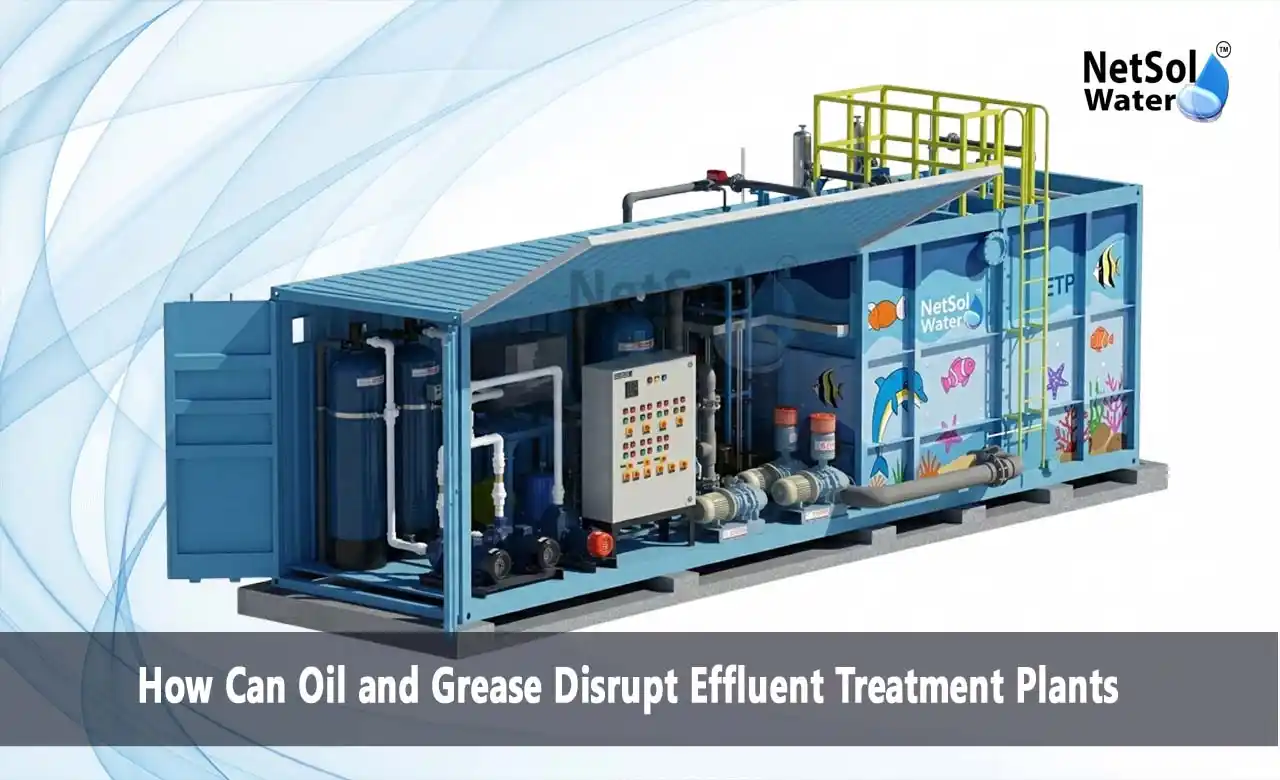
How Can Oil and Grease Disrupt Effluent Treatment Plants?
Industrial wastewater can carry many pollutants that change how a treatment system performs. Oil and grease can create serious problems when they enter in high amounts. These materials can come from machinery use and equipment cleaning. They can also enter through food processing and manufacturing activities. Once they enter wastewater they may spread across tanks and stick to pipes or equipment. This can make later treatment harder.
For industries in Noida and the wider Delhi NCR region, wastewater treatment supports responsible industrial operations. Netsol Water is a leading water and wastewater treatment company in the Noida area. It provides industrial wastewater treatment and water reuse solutions. The company also designs and supplies treatment systems for different industrial needs. Good control of oil and grease therefore deserves attention during treatment planning.
Why Oil and Grease Become a Problem in Industrial Wastewater?
Oil and grease can enter wastewater through many production activities. Their effect depends on the amount and type of material involved. A larger load can disturb several treatment stages. Understanding the source helps plant teams control the problem before it reaches sensitive units. Let us have a look at some common sources and early warning signs.
. Common Sources of Oil and Grease
Factories use oils and greases for lubrication and equipment maintenance. Cutting operations can also release oily waste. Food processing units may discharge fats during production and cleaning. Workshops can send used lubricants into drains when workers do not manage spills correctly. Refineries and chemical plants can produce wastewater with hydrocarbons.
| Source | How Oil and Grease Enters Wastewater |
|---|---|
| Machinery & Lubrication | Equipment maintenance and cutting operations release oily waste |
| Food Processing | Fats discharged during production and cleaning |
| Workshops | Used lubricants enter drains through spills |
| Refineries & Chemical Plants | Hydrocarbons present in process wastewater |
| Cleaning Agents | Move oil from floors and machines into drains, breaking it into fine droplets |
Cleaning agents can move oil from floors and machines into drains. They can also break large oil patches into smaller droplets. These droplets may stay mixed with water for longer periods. That makes separation more difficult. Plants should contain spills quickly and keep oily waste away from normal drains. This can lower the load that enters the treatment system.
. Early Signs of Trouble
The first warning signs may appear before a major treatment problem develops. Operators may notice an oily film on the water surface. They may find floating solids that carry oily material. Odours can also increase when waste remains trapped in tanks. Oil can coat sensors and moving parts. This can affect readings and increase maintenance needs.
When these signs appear the plant team should test incoming wastewater and trace the source. Regular sampling can show whether oil levels rise during a specific production period. Operators can then adjust pretreatment before the problem moves into later stages. Early action can protect plant performance and stop a small issue from becoming an expensive operating problem.
How Oil and Grease Disrupt Treatment Processes?
Oil and grease can affect more than the appearance of wastewater. They can change conditions inside different treatment units. They may interfere with biological activity and affect pumps and pipes. Sludge handling equipment can face problems too. These effects can move from one stage to the next. Effluent treatment plants can then need more cleaning and operator attention. Let us have a look at the main ways this disruption occurs.
. Impact on Biological Treatment
Biological treatment depends on healthy microorganisms that break down organic pollutants. A heavy oil load can cover microbial surfaces and limit contact between wastewater and the organisms. Oil can also affect oxygen transfer in an aeration tank. When this happens bacteria may not work as efficiently as expected.
A weak biological stage can lead to higher BOD and COD in treated water. Operators may notice poor settling or unwanted foam. The system may then need process changes or extra chemical use. These actions can raise operating costs. Good pretreatment protects the biological stage and gives microorganisms better conditions. This helps the treatment process stay stable when wastewater quality changes.
. Effects on Equipment and Sludge
Oil can stick to pipes and pumps. It can also build up on screens and inside tanks. These deposits can restrict flow and increase cleaning work. They may shorten equipment life. When oily material mixes with suspended solids it can form thick sludge. This sludge can become harder to dewater and handle.
The problem may continue after primary treatment when the system does not remove enough oil at the start. Oily sludge can affect filter performance and increase maintenance work. It can also create disposal concerns because contaminated sludge needs careful handling. Strong pretreatment helps stop this chain of problems. It also protects later treatment units from excess oily material.
How Effective Oil and Grease Removal Protects Treatment Performance?
Well-planned effluent treatment plants remove oil and grease before these pollutants can reach sensitive stages. This improves process stability and helps the plant handle changing wastewater loads. The best approach depends on the type of wastewater and the amount of oil entering the plant. Let us have a look at practical methods that can improve separation and support steady operation.
. Primary Separation Methods
Physical separation often forms the first line of control. Screens can remove larger solids before wastewater enters an oil separation unit. Grease traps and oil separators can collect floating oils for safe removal. Equalization tanks can smooth changes in flow and pollutant strength. This gives downstream units a more consistent feed.
Some wastewater contains fine oil droplets that do not separate well through gravity alone. Chemical treatment can help smaller droplets join together. Dissolved air flotation can also lift oil and suspended solids to the surface. The right method depends on wastewater quality and operating conditions. A wastewater study helps engineers select a suitable combination and size units for the expected load.
| Method | Function |
|---|---|
| Screens | Remove larger solids before oil separation |
| Grease Traps / Oil Separators | Collect floating oil for safe removal |
| Equalization Tanks | Smooth flow and pollutant strength variations |
| Chemical Treatment | Coagulates fine oil droplets so they separate |
| Dissolved Air Flotation | Lifts oil and suspended solids to the surface |
. Routine Control and Monitoring
Good treatment performance needs regular operation and maintenance after installation. Operators should inspect separators and remove collected oil before it builds up. They should also check flow conditions and monitor wastewater quality at key points. Clean equipment and timely maintenance can prevent many avoidable failures.
Plants should measure oil and grease levels before and after pretreatment. This data shows whether the separation stage works as expected. It can also reveal production changes that increase the pollutant load. Netsol Water states that its treatment solutions can be designed around wastewater characteristics and industrial needs. The company supports design, manufacturing, installation and maintenance. This approach can help industries select a system that matches their treatment goals.
Conclusion
Oil and grease can create problems across a treatment system when industries do not control them at the source. Good housekeeping can prevent much of the oily load from entering drains. Effective pretreatment can protect biological units and keep equipment working more smoothly.