

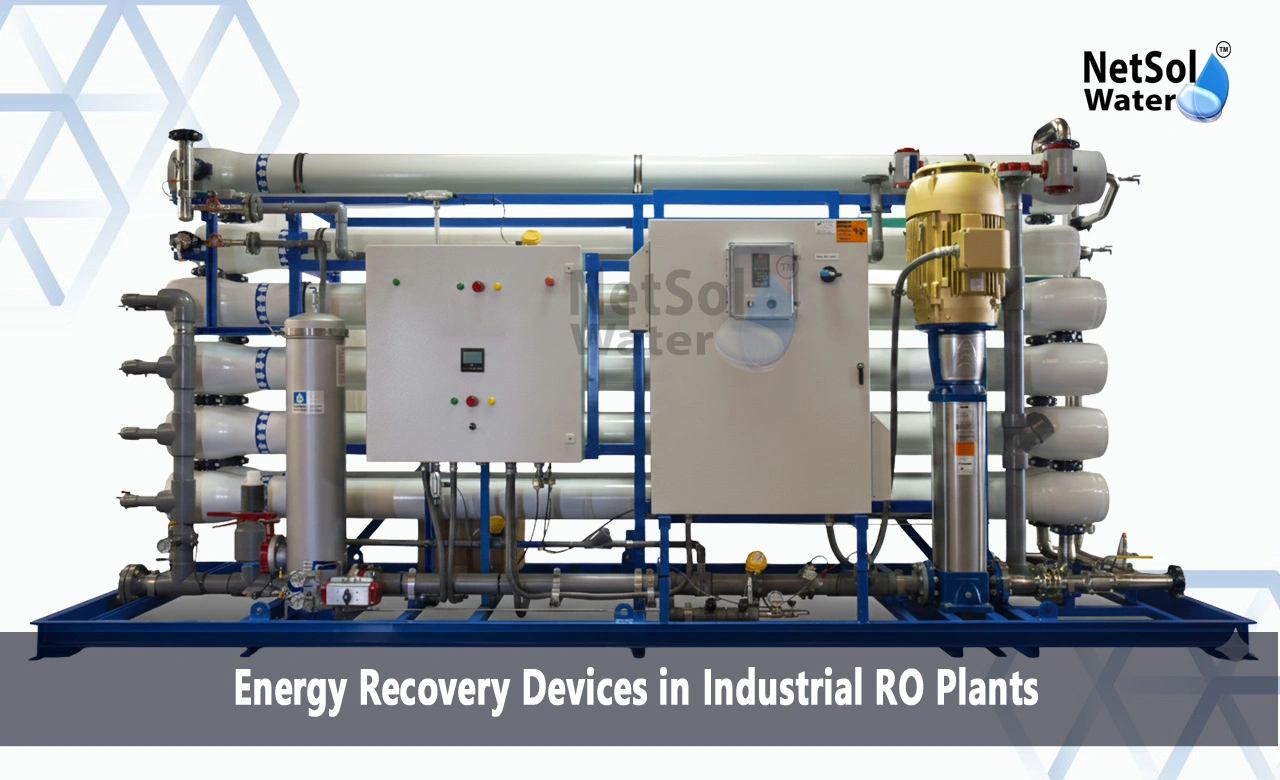
Energy Recovery Devices (ERDs) in Industrial RO Plants
Industrial Reverse Osmosis plants are characterized by a high and continuous consumption of energy, primarily because of high-pressure pumps that might be needed to drive water through RO membranes. With the ever-increasing cost of energy, industries are seeking more intelligent methods of lowering the cost of operation without compromising on the quality of water or the performance of the plant. This is where Energy Recovery Devices (ERDs) play a crucial role. ERDs assist in reusing and reclamation of energy that could otherwise be lost and industrial RO plants become more efficient, economical, and sustainable.
What Are Energy Recovery Devices (ERDs)?
Energy Recovery Devices are mechanical or hydraulic systems installed in RO plants to recover energy from the high-pressure reject or concentrate stream. ERDs convert the energy contained in this pressurized water back into the system instead of letting it go to waste, which would reduce the demand on high-pressure pumps.
In simple terms, ERDs utilize pressure energy used on rejected water to help in pumping fresh feed water hence the total power consumption is reduced.
The importance of ERDs in Industrial RO Plants
RO plants used in industries are usually a continuous process that takes considerable quantities of water. A minor decrease in energy consumption can cause a considerable savings of cost in the long run. The significance of ERDs is that they:
· Minimize the use of electricity.
· Lower operational costs
· Reduce the load on high pressure pumps.
· Enhance the general efficiency of the system.
· Sustainability and energy-saving objective.
Working Principle of ERDs
The fundamental principle of working of an ERD is energy transfer. Even when high-pressure reject water is discharging out of the RO membranes, it carries with it a high concentration of pressure energy. ERDs harness this pressure and make it go back to the feed water entering or directly help the pump. This causes the main pump not to work so hard in order to create the necessary pressure.
This pressure exchange is continuous, and this smooth running of the plants does not cause any quality change in the permeate.
Types of Energy Recovery Devices Used in Industrial RO Plants
Pressure Exchanger Devices
They are extremely efficient ERDs in which pressure of the reject stream is directly passed on to the incoming feed water. They are mostly applied in the large industrial and desalination RO plants.
Key features:
· Very high energy efficiency
· Minimal energy loss
· Appropriate inhigh capacity systems.
Turbochargers
The energy of the reject water is utilized to propel a turbine attached to the feed pump shaft by the Turbochargers.
Key features:
· Moderate energy recovery
· Mechanical operation
· It is appropriate in medium-sized RO plants.
Hydraulic Turbines
Hydraulic turbines put pressure energy into the mechanical energy which is utilized to aid pumping.
Key features:
· Simple design
· Less efficient than pressure exchangers.
· Often used in older systems
Advantages of ERDs in RO Industry plants
1: Reduced Power Consumption
Compared to high-pressure pumps, ERDs reduce the amount of energy consumed by high-pressure pumps by a significant margin resulting in a recognizable decrease in electricity cost.
2: Lower Operating Costs
Maintenance and operating costs are reduced with the use of less energy and the strain on the pump is minimized.
3: Extended Equipment Life
ERDs can be used to prolong the lifespan of pumps and other components by minimizing pump load and operating pressure demands.
4: Improved System Efficiency
ERDs enable RO plants to work with increased efficiency particularly in high-recovery and high-pressure applications.
5: Environmental Benefits
Reduced energy use implies a smaller footprint of carbon, and ERD is a cost-effective environmental solution.
ERDs uses in Industrial RO Plants
Energy Recovery Devices are widely used in:
· Power plants
· Dyeing and textile industries.
· Pharmaceutical manufacturing
· Food and beverage processing.
· Chemical industries
· Zero Liquid Discharge systems.
· Plants of high TDS and seawater RO.
Considerations When choosing ERDs
In selecting an ERD to be used in an industrial RO plant, the following elements should be looked at:
· System operating pressure.
· Flow rate of reject water
· Recovery percentage
· Feed water quality
· Capacity and pattern of use of plants.
· Maintenance requirements
The selection will be done properly to guarantee the maximum energy saving and credible performance.
Challenges and Limitations
In spite of the numerous advantages of ERDs they have certain limitations such as:
· Increased cost of initial investment.
· Mandatory need to be properly designed.
· Experienced installation and service.
Nevertheless, these challenges are normally overridden by the long-term energy saving.
Conclusion
Energy Recovery Devices play a key role in improving the efficiency and sustainability of industrial RO plants. ERDs greatly lower the cost of power, cost of operation, and environmental impact by recovering and reusing pressure energy contained in the reject stream. To the industries intending to optimize their performance and save cost in the long term, incorporation of ERDs in the industrial RO plants becomes not only viable but highly intelligent and future oriented.
Do you need an advice or assistance on selecting the best water and waste water treatment unit? We have solutions for all your problems!
Let us know your problem, our experts will make sure that it goes away.
For an assistance or related query,
Call on +91-9650608473 Or write us at enquiry@netsolwater.com