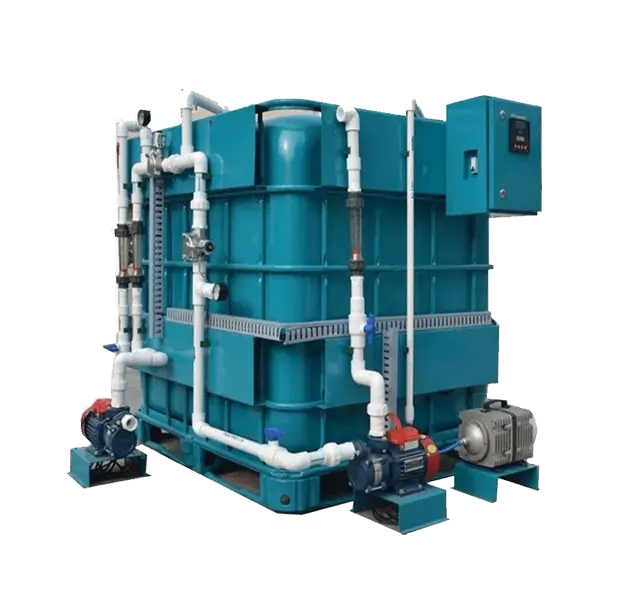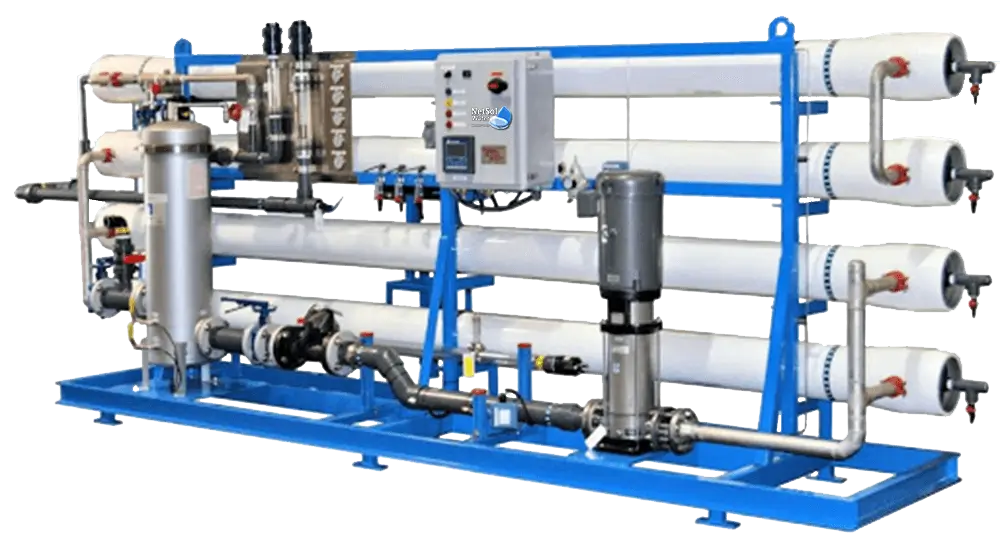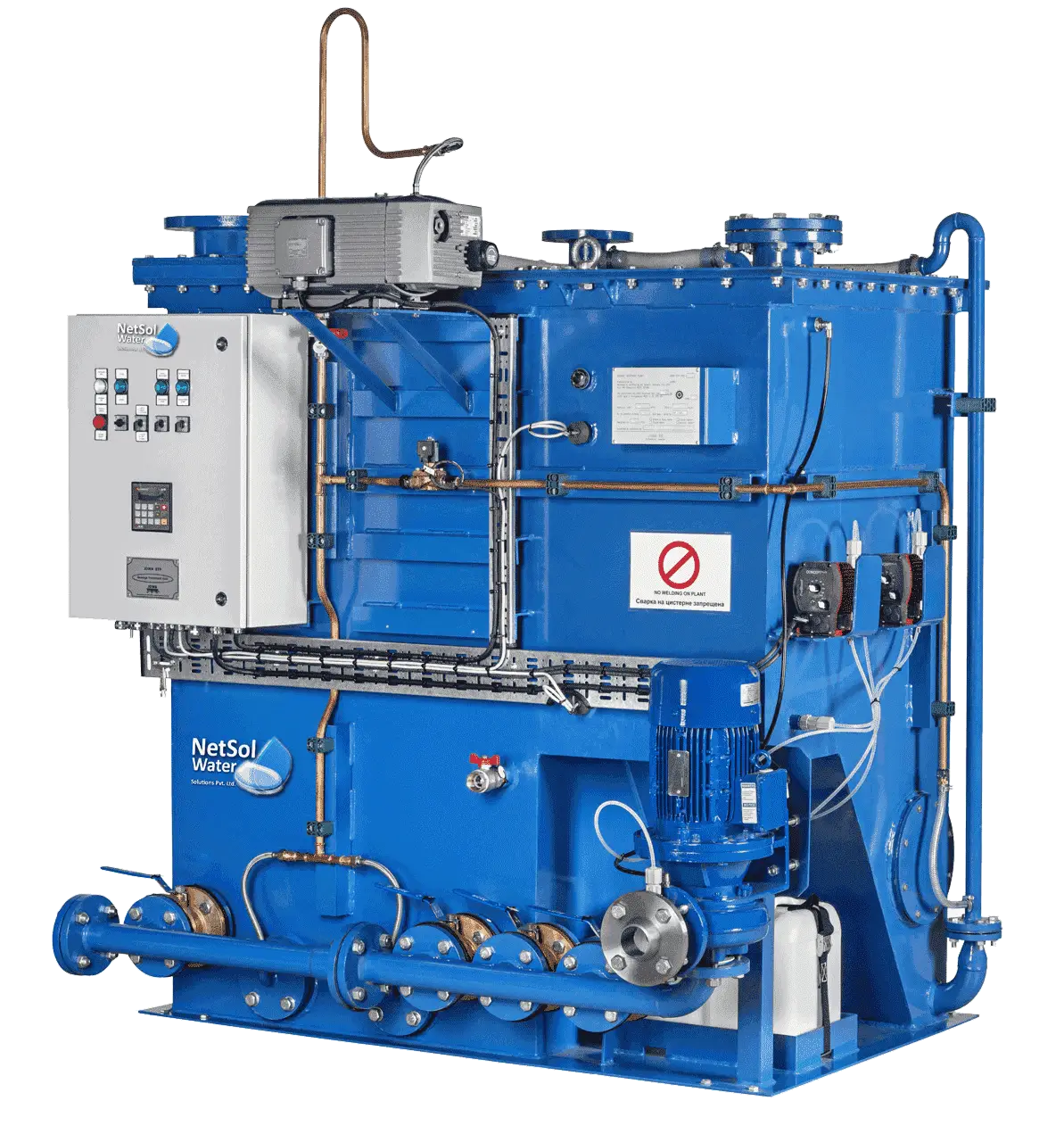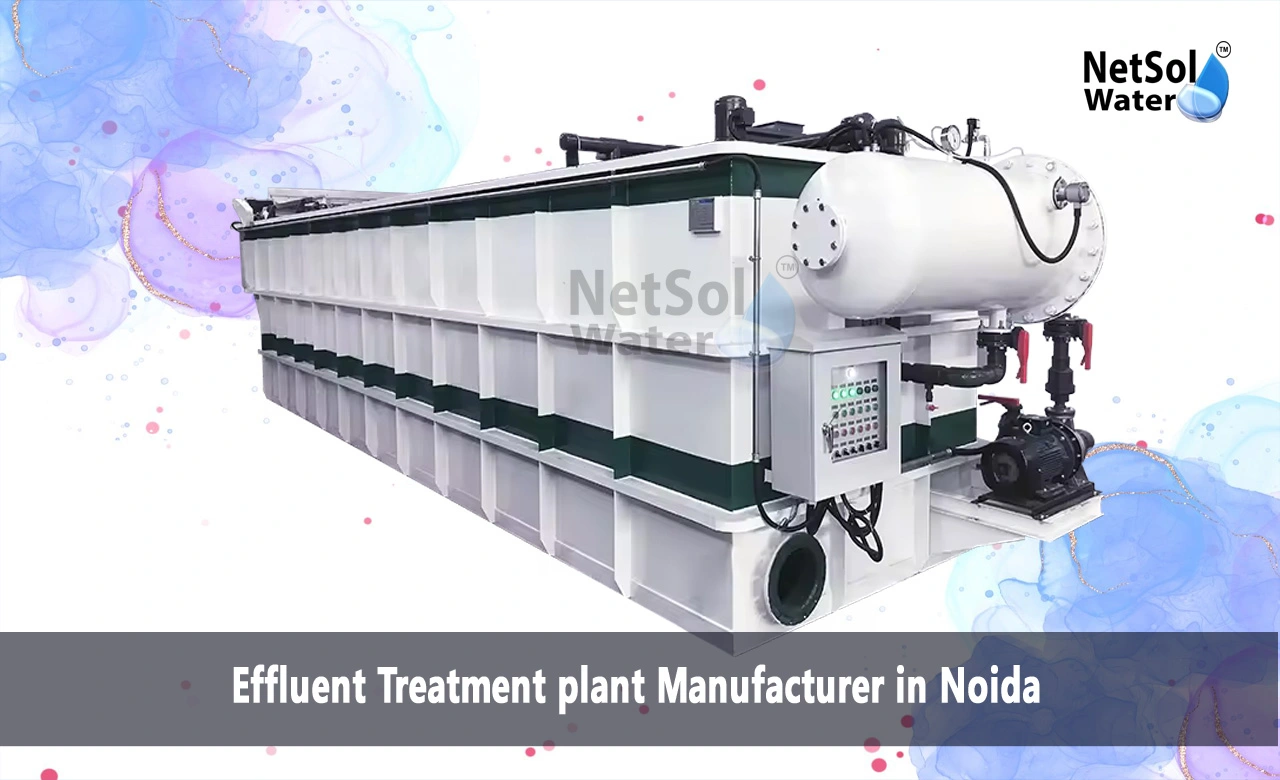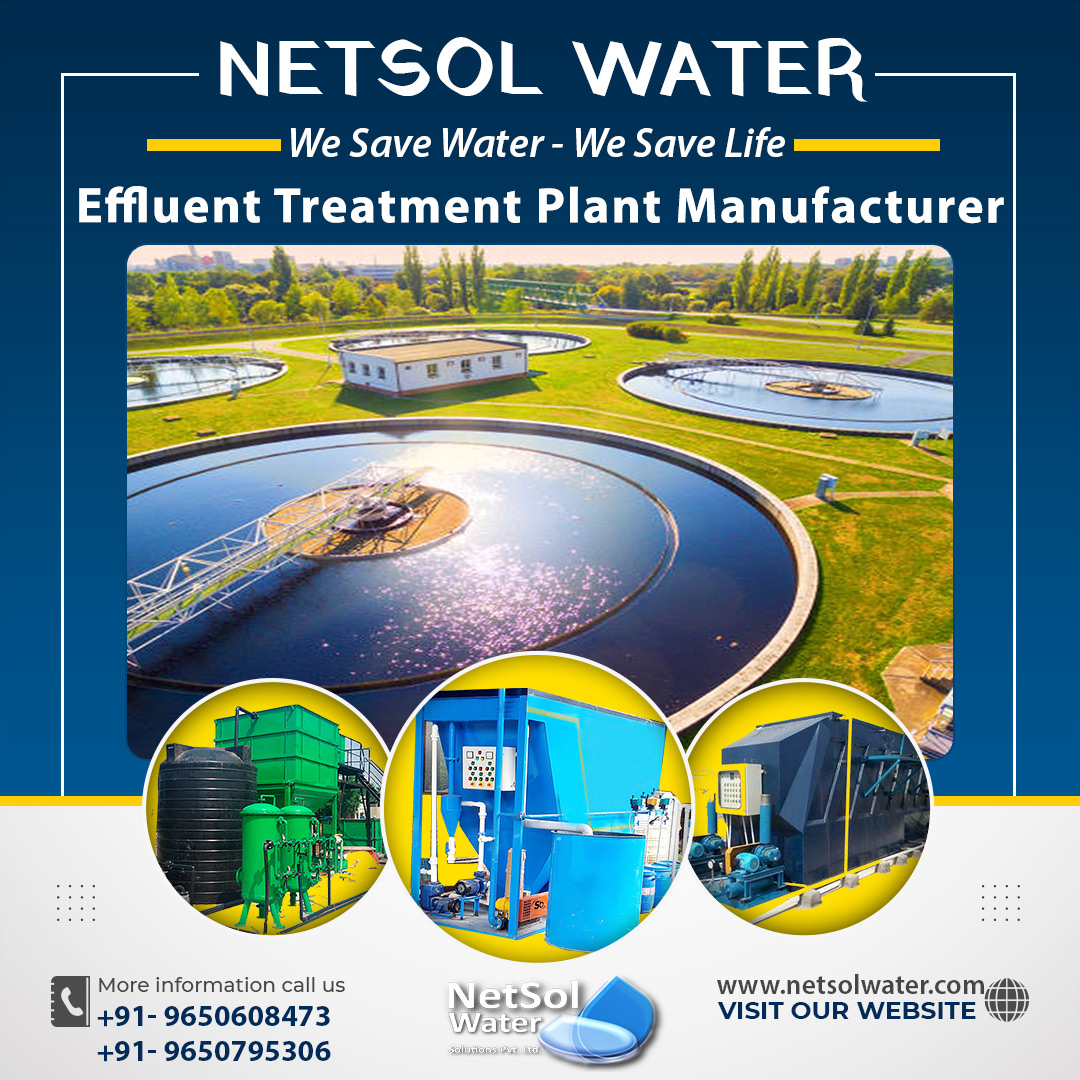



















Factories, pharma units, dye houses and food plants in Noida all produce wastewater that has to be treated before it leaves the site. Netsol Water is an effluent treatment plant manufacturer in Noida that designs, builds, installs and commissions ETP plants for industries in Noida and Greater Noida. Each plant is built to meet CPCB and UPPCB discharge norms and sized for your actual effluent, not a catalogue model.
. Scope: effluent testing, design, fabrication, installation, commissioning, operator training and AMC
. Technologies: MBBR, SBR, MBR, DAF, chemical treatment, RO polishing and Zero Liquid Discharge (ZLD)
. Industries: pharma, chemicals, textile and dyeing, food and dairy, electronics, automobile and engineering
. Service area: Noida, Greater Noida and Delhi NCR
. Head office: Udyog Vihar Extension, Ecotech-II, Greater Noida
Noida and Greater Noida host pharma, chemical, electronics, textile, food processing and engineering units. Their wastewater carries organic pollutants, oils, dyes, acids, heavy metals and suspended solids. Discharging it untreated harms groundwater and drains, and it puts your business at risk.
Industries in Uttar Pradesh need Consent to Establish and Consent to Operate from the Uttar Pradesh Pollution Control Board (UPPCB) under the Water (Prevention and Control of Pollution) Act, 1974. They must also keep treated effluent within the prescribed limits. Non-compliance can bring notices, penalties, closure directions or environmental compensation.
A properly designed ETP helps you:
. meet CPCB and UPPCB discharge standards and renew your consent without trouble
. avoid penalties and production stoppages
. reuse treated water for cooling, gardening, washing and flushing, which cuts your freshwater bill
. protect groundwater, your workers and your brand
We do not start with a plant size. We start with your effluent. Every industrial ETP plant we build begins with sampling and tests for BOD, COD, TDS, TSS, pH, oil and grease, and heavy metals. We then match the treatment train to your flow (KLD), your load variations and your goal: safe discharge, reuse or Zero Liquid Discharge.
Whether you need an MBBR ETP plant, an SBR system or a ZLD plant, we select the technology from your effluent data and available space, not from a fixed catalogue.
| Technology | Best suited for | Why it is chosen |
|---|---|---|
| MBBR (Moving Bed Biofilm Reactor) | Food, dairy, pharma and textile effluent with moderate to high organic load | Compact, handles load fluctuations well, easy to expand later |
| SBR (Sequencing Batch Reactor) | Units with batch or variable discharge | Aeration, settling and decanting happen in one automated tank |
| MBR (Membrane Bioreactor) | Sites with little space or high-quality reuse needs | Best treated-water quality in the smallest footprint |
| DAF (Dissolved Air Flotation) | Oil, grease, fats and suspended solids | Removes what settling tanks cannot |
| Chemical treatment (coagulation, flocculation, precipitation) | Heavy metals, colour and acidic or alkaline effluent | Removes metals and colour before biological treatment |
| RO polishing with evaporation (ZLD) | High-TDS effluent and no-discharge requirements | Recovers water for reuse and reduces liquid waste to solids |
1. Screening and oil removal: bar screens and an oil and grease trap take out large solids and floating oil.
2. Equalisation: a holding tank blends the flow so later stages receive a steady load.
3. pH correction and chemical dosing: neutralisation, coagulation and flocculation bind fine particles, metals and colour into settleable flocs.
4. Primary clarification: flocs and suspended solids settle out as sludge.
5. Biological treatment: MBBR, SBR or MBR breaks down dissolved organic matter and cuts BOD and COD.
6. Secondary clarification: biomass separates from the treated water.
7. Tertiary treatment: pressure sand filter, activated carbon filter or ultrafiltration polish the water.
8. Disinfection: chlorine dosing or another method makes the water safe for reuse or discharge.
9. Sludge handling: a filter press or drying system dewaters sludge for safe disposal.
For high-TDS effluent, we add RO and multiple-effect evaporation to build a ZLD plant.
| Industry | Typical effluent challenge | Our approach |
|---|---|---|
| Pharma and chemicals | High COD, hard-to-degrade organics, swinging pH, sometimes high TDS | Equalisation, chemical pre-treatment, biological stage, tertiary polishing, ZLD where needed |
| Textile and dyeing | Colour, high TDS, alkalinity | Coagulation and flocculation, biological treatment, carbon filtration, RO for reuse |
| Food, beverage and dairy | High BOD, fats and oil, seasonal load | DAF, equalisation, MBBR or SBR, disinfection |
| Electronics, PCB and electroplating | Heavy metals such as chromium, nickel and copper, plus acids | pH control, chemical precipitation, filter press, polishing filters |
| Automobile and engineering | Oil, emulsions, metals, phosphates | Oil separation, emulsion breaking, chemical treatment, filtration |
If you also need domestic wastewater treatment on the same site, see our sewage treatment plants.
As an ETP manufacturer in Greater Noida with our head office at Udyog Vihar Extension, Ecotech-II, we install and service ETPs across Noida Sector 63, 65, 80, 81 and 83, Noida Phase-1 and Phase-2, and Greater Noida areas including Ecotech I to III, Udyog Vihar, Surajpur and Kasna. Our team also serves Delhi, Ghaziabad, Gurugram and the rest of NCR. See our ETP manufacturer in Delhi page or browse our installation locations.
1. Site visit and effluent sampling: we study your process, flow and wastewater quality.
2. Design and quotation: you receive a treatment scheme, drawings and an itemised price.
3. Fabrication: tanks, pumps, blowers, dosing systems and control panels are built to the approved design.
4. Installation and commissioning: we install, run trials and tune the plant until treated water meets the target.
5. Training and handover: your operators learn daily operation and safety.
6. AMC and support: routine servicing, sampling and quick breakdown support.
. Design from your data: every plant starts with effluent testing, so you do not pay for capacity or technology you do not need.
. One team from design to service: engineering, fabrication, installation and maintenance stay under one roof, so nobody passes the blame when something goes wrong.
. Working in water and wastewater treatment since 2012: we have handled industrial, commercial and institutional projects across NCR.
. Trusted by known brands: our client list includes names such as HUL, Parle, Country Delight, Jubilant and NTPC.
. Reuse-first thinking: we design so that treated water goes back to work in your plant instead of down the drain.
ETP plant cost in Noida depends on more than the size of the plant. Two plants of the same capacity can differ a lot in price. These factors make the difference:
. Daily flow (KLD): the volume you treat every day
. Effluent quality: BOD, COD, TDS, oil, metals and toxic compounds
. Technology: MBBR, SBR, MBR, DAF, RO or ZLD
. Treatment goal: safe discharge, reuse or zero discharge
. Tank material: MS with epoxy coating, FRP or RCC
. Automation: manual, PLC or SCADA control
. Site conditions: available space, civil work and power
Send us your flow and effluent details and we will give you an itemised quotation.
An Effluent Treatment Plant (ETP) treats industrial wastewater that carries chemicals, oils, dyes, metals or high organic load. A Sewage Treatment Plant (STP) treats domestic sewage from toilets, kitchens and bathrooms. The two need different designs because the pollutants are different. Read our detailed guide on the difference between ETP and STP.
Industries in Uttar Pradesh that generate trade effluent need Consent to Establish and Consent to Operate from the Uttar Pradesh Pollution Control Board (UPPCB) under the Water (Prevention and Control of Pollution) Act, 1974, and must keep treated water within the prescribed limits. For most wastewater-generating units this means an ETP. The exact requirement depends on your industry category, so confirm it with UPPCB or ask our team to review your case.
The cost depends on daily flow (KLD), the pollutant load of your effluent, the treatment technology, whether you want discharge, reuse or Zero Liquid Discharge, the tank material, the level of automation and the civil work at your site. We give a fixed, itemised quotation after we study your effluent, so you know what you are paying for.
There is no single best option. MBBR suits units with moderate to high organic load and limited space. SBR suits batch or variable discharge. MBR gives the highest treated water quality in the smallest footprint but costs more to run. We choose based on your effluent tests, space and reuse target.
Packaged plants for smaller capacities are ready sooner than large, customised plants that need civil work. The timeline depends on capacity, technology and site readiness. We share a project schedule with the quotation.
Yes. With tertiary treatment, treated effluent can be reused for cooling tower make-up, gardening, floor washing, flushing and other non-potable uses. If you need it for process use, we add RO polishing to bring the quality up.
ZLD means no liquid effluent leaves your premises. Water is recovered and reused, and the remaining salts are separated as solids. It is used for high-TDS effluent or where the regulator or your own policy requires no discharge. It typically combines biological treatment, RO and evaporation systems.
Yes. We provide operator training, routine servicing and Annual Maintenance Contracts (AMC), so your ETP keeps meeting discharge norms after commissioning.
Tell us about your effluent and your discharge or reuse target. We will suggest the right treatment scheme and share a clear quotation.
Get a Free ETP Quote | Call +91 96506 08473 | Email enquiry@netsolwater.com
Netsol Water Solutions Pvt. Ltd., Plot No. 164, Udyog Vihar Extension, Ecotech-II, Greater Noida, Uttar Pradesh 201306
. Effluent Treatment Plant Manufacturer in India
. ETP plant details and specifications
. Sewage Treatment Plant (STP) Manufacturer