

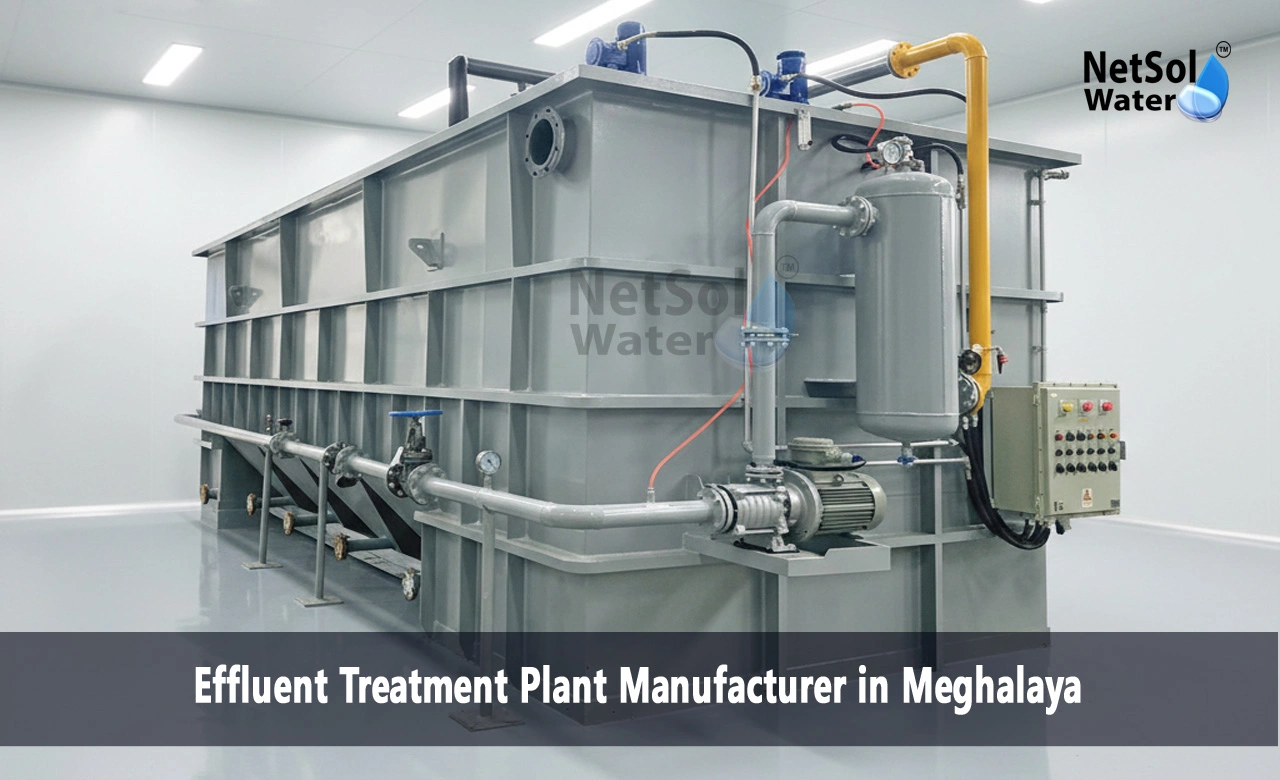
Effluent Treatment Plant Manufacturer in Meghalaya
Effluent treatment plays a key role in protecting water bodies and in keeping industry running. Choosing an Effluent treatment plant Manufacturer in Meghalaya shapes how a plant will perform and how the site will meet rules. A good manufacturer tests the effluent provides a clear design and installs the plant with care. The right partner also trains operators and offers long term service so the plant stays within limits.
About Netsol Water
Understanding the company gives buyers confidence before they sign any contract. Let us have a look on the background and on the services that Netsol Water provides.
Netsol Water began as a team that handled water and wastewater projects for industry and for commercial clients. The engineers test incoming effluent and then they prepare designs that match measured load and available space. This method reduces surprises during installation and it keeps running cost under control. The firm documents each stage so the client gets clear operation and maintenance guides.
The company manages fabrication site installation, commissioning and operator training. Being an experienced Effluent Treatment Plant Manufacturer in Meghalaya, Skilled technicians train local crews on routine checks safe handling and on simple troubleshooting steps. Netsol Water also supplies spare parts and service plans with scheduled visits and with emergency response. This steady support helps clients keep treated water within the permitted limits across the life of the plant.
Why Choose Netsol Water for Effluent treatment plants in Meghalaya?
Selecting a supplier sets the tone for project delivery and for long term operation. Let us have a look on the main reasons to choose Netsol Water for projects in Meghalaya.
1: Local testing and tailored design
Netsol Water begins with sampling and with a site study so the design reflects the real load. Engineers size tanks select pumps and choose treatment routes based on test data. This care leads to systems that run well from first start up.
2: Smooth installation and clear handover
The technical team handles civil fit-out, piping and electrical integration at site. Technicians then run performance checks and hand over operation manuals. Training helps the client perform daily checks and to spot issues early.
3: Ongoing service and spare parts support
The firm offers preventive visits spare parts and fast response for breakdowns. Service records help plan spare replacement and they reduce downtime. This ongoing help keeps treatment quality steady and supports audit readiness.
Effluent treatment plants offered by Netsol Water
Choosing the right treatment route depends on the effluent profile and on reuse goals. Let us have a look on the technologies that Netsol Water supplies and on how each one serves common needs.
1: Physical and chemical pretreatment
Initial units remove large solids grit and oil. Screens and grit traps protect pumps and mixers. Chemical dosing provides coagulation and pH adjustment to remove metals and to settle fine particles. Proper pretreatment reduces load on the biological stage and it protects membranes where used.
2: Biological treatment systems
The firm supplies aerobic systems such as activated sludge units and moving bed biofilm reactors. Netsol Water also offers sequencing batch reactors for flows that vary. These systems use microbes to reduce organic load and to lower biochemical oxygen demand. Good biological design helps reach discharge targets and it supports reuse.
3: Anaerobic systems and energy recovery
For high strength waste the company offers anaerobic reactors that reduce organics and that produce biogas. Pairing anaerobic treatment with sludge digestion reduces disposal cost. Energy recovery helps offset part of the site energy demand.
4: Advanced tertiary polishing
When standards require higher clarity Netsol Water fits sand filters activated carbon units and membrane polishing. Disinfection by UV or safe dosing removes microbes. These steps prepare water for irrigation cooling or for selected process reuse.
5: Zero liquid discharge and recycle solutions
For sites that aim to minimize discharge the firm combines membranes, evaporation and recovery trains. These systems lower liquid waste and they help save fresh water. An integrated design balances capital and operating cost so the plant meets the site goals.
How Effluent Treatment Plants Work?
Knowing the process flow helps operators run the plant and helps managers check the design. Let us have a look on the key stages and on the purpose of each stage.
1: Preliminary cleaning and equalization
The plant first removes large debris and then it evens out flow in an equalization tank. This step prevents shock loads and it stabilizes conditions for biological units.
2: Biological treatment for organic removal
Microorganisms in aerated tanks or on media break down organic matter. Aerobic tanks supply oxygen to speed the process while anaerobic tanks treat high strength streams. The result is much lower biological oxygen demand and clearer water for polishing.
3: Separation and polishing
Clarifiers settle biological solids and filters remove fine particles. Activated carbon and membrane polishing lower the colour and trace organics. Disinfection then reduces microbial risk and helps meet discharge rules.
4: Sludge handling and disposal
The plant concentrates solids into sludge and then treats them with digestion dewatering and safe disposal. Proper sludge work lowers volume and reduces transport cost while it limits odour.
Applications of Effluent Treatment Plant
Matching the plant to the industry helps to set technology and monitoring needs. Let us have a look on common applications and on how each one shapes the design.
1: Food and beverage units
These sites produce high organic load and grease. Treatment focuses on fat oil and grease removal followed by strong biological reduction so the water becomes safe to discharge or reuse.
2: Textile and dyeing mills
Textile effluent carries colour and chemical residues. Advanced dosing and tertiary polishing reduce colour and toxicity and help meet consent limits.
3: Chemical and mixed manufacturing
Certain factories make mixed effluent with metals organics and solids. Strong equalization and phased treatment protect biology and prevent upset conditions.
4: Institutional campuses and parks
Large campuses benefit from centralized plants that treat combined flows. Central plants use flexible stages and strong monitoring to handle varied inputs while enabling reuse for landscaping or flushing.
Effluent treatment plant Capacity Range Offered by Netsol Water
Correct capacity selection keeps operation efficient and it keeps cost in control. Let us have a look on the capacity bands that the firm supplies and on the fit for each band.
1: Small capacity systems
Plants up to fifty cubic meters per day suit small hotels clinics and small factories. These systems use compact tanks simple controls and easy maintenance routines.
2: Medium capacity systems
Units from fifty to five hundred cubic meters per day fit schools medium hotels multi block complexes and mid sized factories. Designers use modular tanks and standard pumps so service remains simple.
3: Large capacity systems
Plants above five hundred cubic meters per day serve industrial parks municipal clusters and large manufacturing hubs. These designs include redundancy strong instrumentation and efficient sludge handling to support continuous operation.
Cost of the effluent treatment plant in Meghalaya
Budget planning needs realistic numbers and clear scoping. Let us have a look on typical price bands and on the items that affect the final cost.
Typical price bands
Raw effluent strength sets the need for pretreatment and for reactor size. Desired reuse quality determines polishing steps and the investment needed. Material grade and control sophistication also change the capital figure. Installation civil work and testing add to the total. Netsol Water carries out a site survey and a sample test before it issues a firm quotation so clients get a clear price that matches the actual need.
Small packaged plants may start near INR 400000 depending on features and on automation level. Medium systems commonly range from INR 1000000 to INR 5000000. Large custom plants with advanced polishing and with robust sludge systems can exceed INR 10000000. Each quote changes with the measured load and with site access.
Top 3 Effluent treatment plant Manufacturers in Meghalaya
1: Netsol water:
Netsol Water leads the list for its full range of packaged modular and custom plants and for its focus on local service training and spare parts. The company matches plant design to local water load and offers clear installation plans and post install support.
2: Sewage Treatment Plants:
Sewage Treatment Plants offers a wide range of technologies and it supports medium and large projects through a nationwide service network. The company brings proven engineering standards and quick response from regional offices.
3: Urban STP Plant:
Urban STP Plant supplies engineered solutions for larger sites and for projects that need integration with other utilities. The firm works with consultants and with facility teams to coordinate complex scope and to deliver multi discipline projects.
Conclusion
Selecting an Effluent treatment plant Manufacturer in Meghalaya sets your project success and the local environmental outcome. Proper testing matched design and steady service keep the plant effective and they lower operating cost. Netsol Water offers sampling design, fabrication, installation and after sales support for a wide range of sectors. Contact the team for a site survey and for a tailored quotation. Request a consultation to discuss how an Effluent treatment plant Manufacturer in Meghalaya can meet your needs and help your operation run cleaner.
Contact Netsol Water at:
Phone: +91-9650608473, Email: enquiry@netsolwater.com