

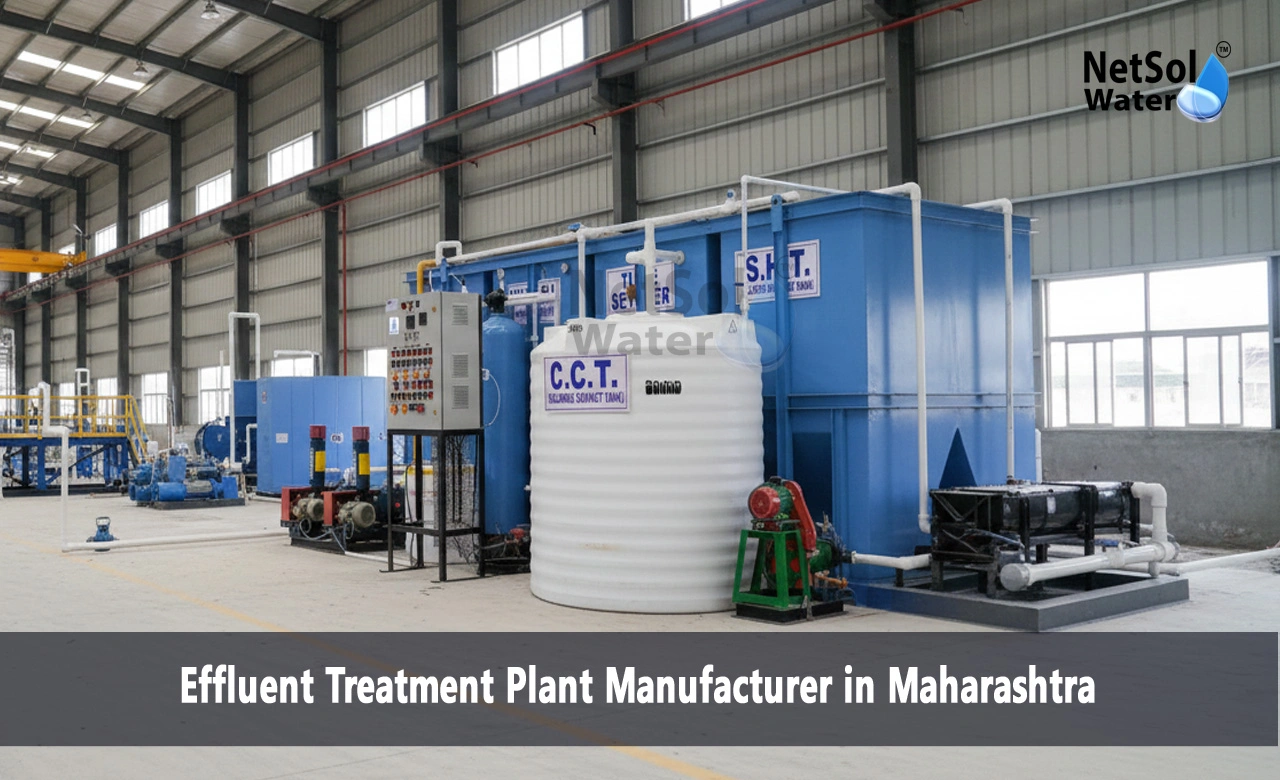
Effluent Treatment Plant Manufacturer in Maharashtra
Maharashtra is among the most industrialized areas in India that has a high concentration of pharmaceuticals, chemicals, textile, food processing, automobiles, engineering, and sugar businesses. This high rate of industrial growth has come with a great challenge and that is how to manage the industrial wastewater. Industrial effluent is usually interred with large quantities of chemicals, oils, heavy metals, organic matter and toxic substances which cannot be released fully into the environment.
The aim of the Effluent Treatment Plant is to treat the wastewater of an industry prior to it being discharged into water bodies or recycled internally. These plants guarantee the fulfillment of environmental requirements, safeguarding of the natural resources, and also make industries work in a responsible manner. Selecting a reliable Effluent Treatment Plant Manufacturer in Maharashtra ensures that industries receive efficient, compliant, and long-lasting wastewater treatment solutions.
Why Maharashtra should have Effluent Treatment Plants?
· Extreme Industrial Concentration: Maharashtra has some of the largest industrial belt and manufacturing centers. Chemical processing, pharmaceuticals, textile, food production industries among others produce volumes of effluents that should be treated and then disposed accordingly.
· Tough Environmental laws: Maharashtra Pollution Control Board (MPCB) has stringent standards to discharge norms in terms of BOD, COD, TSS, pH values and chemical pollutants. To comply with these requirements and to evade fines, industries are required to install ETPs.
· Protection of Water Bodies: When untreated, industrial effluent may pollute water bodies such as rivers, lakes, and ground water. ETPs are important in conserving ecosystems and the ecology.
· Reuse of Water and its Sustainability: As the water scarcity becomes an issue, reuse of treated effluent can be done as cooling, gardening, and process. ETPs assist industries to save on freshwater consumption and facilitate sustainable operations.
Successful operation of Netsol Water in Maharashtra
Netsol Water has gained good reputation in Maharashtra through providing tailor made effluent treatment services to diverse industrial units. The company has also been able to manage to undertake projects in chemical industries, pharmaceutical units, food processing plants, and textile manufacturers, over the years.
1: Industry-Specific Expertise
Netsol Water realizes that the nature of effluent among industries differ. As an illustration, pharmaceutical wastewater does not have the same treatment needs and composition as textile effluent. The company comes up with elaborate wastewater analysis prior to the designing of the treatment system.
2: Individualized Engineering Style
Every ETP project is created depending on the flow rate, contaminant load, the discharge norms, and the site conditions. Netsol Water also provides best selection of treatment process including primary clarification, biological treatment, chemical dosing, filtration and sludge treatment.
3: High-tech Treatment Methods
The modern technologies incorporated by the company are:
· Physico-chemical treatment systems.
· MBBR (Moving Bed Biofilm Reactor).
· Sequencing Batch Receptor (SBR).
· Activated Sludge Process (ASP)
· Senior filters and polishing units.
These technologies guarantee great treatment productivity and regular adherence to the regulations.
4: Effective Project Implementation and Support
Since installation and commissioning, to operator training and maintenance guidance, Netsol Water offers the end-to-end support. This would guarantee efficient running of the plant and durability.
Services and Strengths offered by Netsol Water
· High Treatment Efficiency: Netsol Water develops ETPs to realize good BOD, COD, TSS, oil and grease reduction as well as chemical contamination reduction. The systems have been designed to achieve or surpass discharge requirements.
· Energy-Efficient Design: High efficient pumps, optimized aeration systems, and automated controls are used to minimize the use of energy and the operation cost.
· Small and Space-Saving Design: In industries that have a small space, they can be designed in modular and skid-mounted designs. Such systems are easily installed and scalable.
· Durable Construction: Corrosion-resistant coats and other industrial grade components are high-quality materials that enhance the life of plants and also minimize the maintenance needs.
· Automation and Monitoring: PLC-based monitoring systems and control panels offer real-time performance monitoring, which reduces human error, and enhances operational stability.
· Water Reuse Capability: The effluent that has been treated can be used in non-drinking purposes, which will lead to dependence on freshwater being minimized, and the cost of operations to be reduced.
Effluent treatment plants cost Analysis
The price of installation of ETP in Maharashtra is subject to various technical and operational factors. Instead of having a fixed price structure, the investment depends on the capacity, effluent nature and choice of technology.
· Small ETPs (5-20 KLD), which are applicable to small manufactories, normally cost between 4 lakh and 18 lakh.
· Medium-capacity plants (25-100 KLD) in medium size industries can range between 28 and 45 lakh depending on the complexity.
· ETPs used in heavy industry (100-1000 KLD and above) are large scale (1-5 crore and above) and may have different degrees of automation, civil work, and various steps of treatment, depending on the complexity of the industry.
Factors Affecting ETP Cost
· Nature of Effluent: Chemical pollutants, heavy metals, or toxic effluent is highly contaminated and needs further systems to be treated thus adding to the cost of the system.
· Technology Selection: Greater complexity MBBR or SBR Advanced biological systems might be more expensive to capitalize on but provide better efficiency and lower overall operating costs.
· Civil Construction requirements: Tanks, foundations and structural work are commonly necessary in ETPs. The area of civil construction is a big factor in the cost of the entire project.
· Automation Level: Manual systems are also cheaper and fully automated PLC based systems make capital investment costly but yields greater control of operations.
· Sludge Handling/ Disposal: The process of adding sludge dewatering unit, filter press, or drying bed influence the general pricing.
· Expansion Provisions in the Future: Industries that are strategizing to expand capacity can use scalable design that adds extra expenditure marginally but saves on the cost of modifications in the future.
Conclusion
Growth in industries has to be coupled with being environmentally responsible. The importance of Effluent Treatment Plants is to control industrial wastewater, save the naturalresources and enforce regulations. The necessity of the effective and stable ETP solutions in an industrial dynamic region such as Maharashtra is more serious than ever before.
Choosing a trusted Effluent Treatment Plant Manufacturer in Maharashtra ensures that industries receive customized, technologically advanced, and cost-effective wastewater treatment systems. NetsolWater with its established expertise, well developed treatment technologies and solid project execution capabilities has supported industry to develop sustainable and compliant wastewater management solutions.
Do you need an advice or assistance on selecting the best water and waste water treatment unit? We have solutions for all your problems!
Let us know your problem, our experts will make sure that it goes away.
For an assistance or related query,
Call on +91-9650608473 Or write us at enquiry@netsolwater.com