

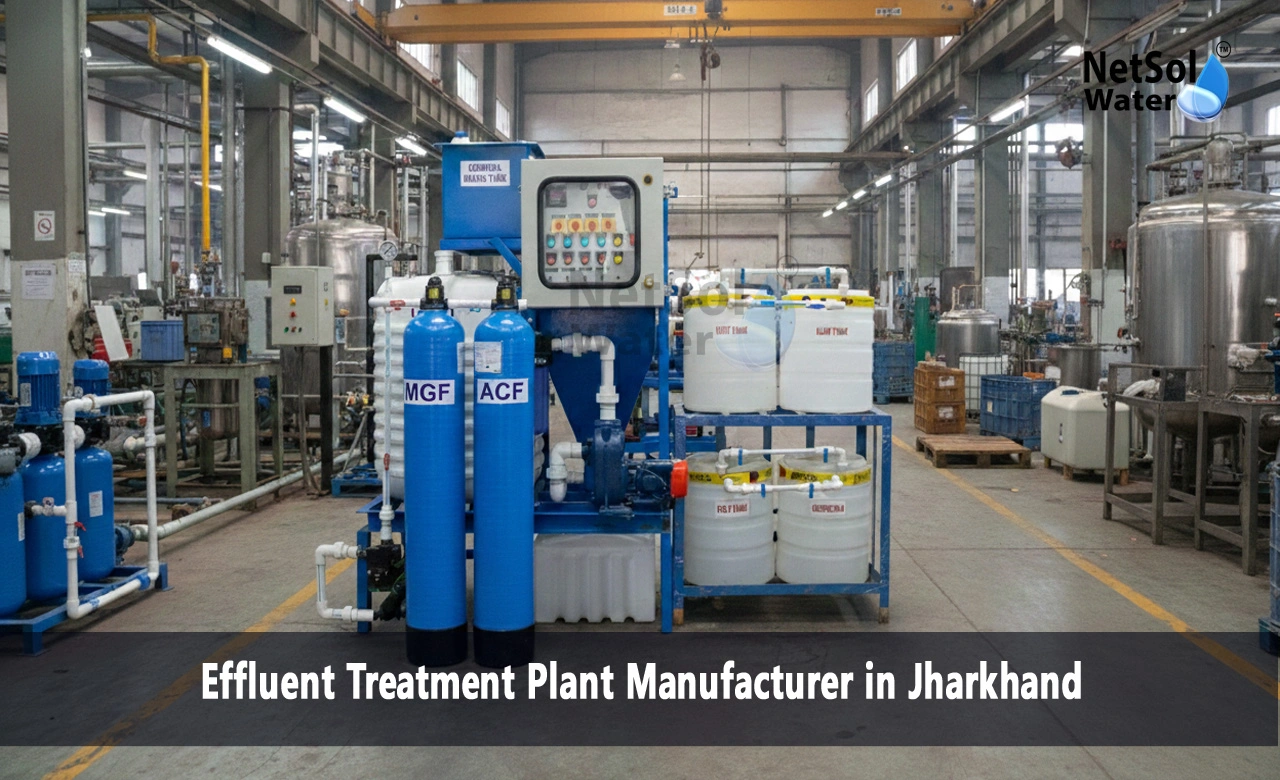
Effluent Treatment Plant Manufacturer in Jharkhand
Many towns face more waste water than they can treat. Rapid growth in industry and farms raises the need for good effluent treatment plants. A company that makes and installs effluent treatmentplants can change this. It can protect rivers and farms. It can cut water use and lower pollution. Here we show how an Effluent Treatment Plant Manufacturer in Jharkhand can help local towns and industry.
About Netsol Water
Netsol Water test and build plants. They supply parts and train staff. They also give service after start up.
Netsol Water works on many local projects. The team studies the site and the waste type. They design plants that fit the land and the budget. They add reuse options for farms and industry.
Why Choose Netsol Water for Effluent Treatment Plants in Jharkhand?
Netsol Water offers local teams and fast support. They know Jharkhand rules and the common waste streams. They match the plant to the real load and to reuse needs.Netsol Water also focuses on low energy and low sludge designs. They offer training and spare part supply. They help clients plan for long term cost and low down time.
Effluent Treatment Plant Solutions Offered by Netsol
Small factories often need compact packaged plants. These fit the yard and need low staff. Larger units use modular or built in civil works. These serve big complexes and clusters.
Netsol Water supplies both skid mounted units and full civil built plants. They also provide hybrid options that mix biological treatment with membrane systems. They tailor each plant to local reuse for irrigation and industrial make up water.
How Effluent Treatment Plants Work?
1: Preliminary Treatment
This step picks out big waste. Screens and grit chambers remove stones, rags and coarse solids. This step protects pumps and machines downstream.
2: Primary Treatment
This step removes settleable solids. The flow slows in a tank. Heavier matter sinks and light matter floats. The plant removes these solids before biological steps.
3: Secondary Biological Treatment
This step reduces dissolved organic matter. It uses microbes that eat waste. Methods include activated sludge moving bed biofilm reactor or sequencing batch reactor. Each method uses a bed or tank where bacteria break down the organics.
4: Tertiary Treatment
This step polishes the water. It removes nutrients, colour, and fine particles. It may use sand filters, membrane filters or UV. This makes water safe for reuse or safe to release.
5: Sludge Treatment and Disposal
This step manages the solids from earlier steps. The plant thickens and then dries the sludge. The plant may compost dry sludge or send it for safe disposal. Proper sludge work reduces odour and risk.
6: Advanced Options and Add Ons
This step adds special units when needed. Examples include membrane bioreactor or RO for reuse. Disinfection or nutrient removal may be needed for farms or sensitive discharge. Netsol Water can add these units to meet the reuse plan.
Applications of ETP Plant
1: Textile and Dyeing Units
These units produce colored water and strong organics. ETPs remove colour and organics so the water meets discharge limits. They often need extra steps to remove dyes and heavy chemicals.
2: Tanneries and Leather Units
These units produce tannery waste that has salts and organics. ETPs use special chemical and biological steps to lower toxicity. Proper systems protect the soil and nearby farmland.
3: Pharma and Chemical Plants
These sites need strict control on toxicity and on solvents. ETPs for these sites use robust pre treatment and advanced oxidation or adsorption to meet norms.
4: Food Processing and Dairy Units
These plants produce high organic load that feeds microbes fast. ETPs use biological steps that handle fat and high organics. Proper screening and grease traps help the plant run well.
ETP Capacity Range Offered by Netsol Water
1: Small Package Plants
Small units serve single small factories or hotels. These range from 1 KLD to 10 KLD. They come skid mounted and need little civil work. They need small staff and low power.
2: Medium Modular Plants
Medium plants serve cluster estates and medium factories. These range from 15 KLD to 50 KLD. They may use MBBR or SBR based systems. They balance cost and performance for steady flow.
3: Large Civil Built Plants
Large plants serve big industrial estates or towns. These range above 100 KLD to many MLD. These plants include strong sludge handling and full automation.
4: Custom and Hybrid Plants
Netsol Water also makes custom plants. They mix biological MBR and membrane steps based on the waste type. Custom design matches local needs and reuse targets.
Top 3 Effluent Treatment Plant Manufacturers in Jharkhand
1. Netsol Water
Netsol Water leads local projects in Jharkhand. They design, build and support ETPs for many industries. They work with textile, pharma, dairy and chemical units. Their strength is local support and strong service after installation. They also tailor plants for reuse in irrigation and industrial make up water.
2. Sewage Treatment Plants
Sewage Treatment Plants is a known manufacturer that serves mid size units. They focus on packaged and modular plants. Their team tests site water before design. They often work with food and beverage units. They show clear data on performance and help with O&M training.
3. Urban STP Plant
Urban STP Plant works on large ETP plants. They serve big estates, clusters and municipal bodies. They include strong sludge handling and automation. They offer digital monitoring and yearly support plans.
Conclusion
Good effluent treatment protects people, land and future crops. A reliable Effluent Treatment Plant Manufacturer in Jharkhand will match the plant to your waste and to your reuse plan. Pick a manufacturer who shows clear design data, test results and who offers local service. This choice lowers long term cost and keeps your site compliant and safe.
Contact Netsol Water at:
Phone: +91-9650608473, Email: enquiry@netsolwater.com