
What is the Definition of Water Pollution?
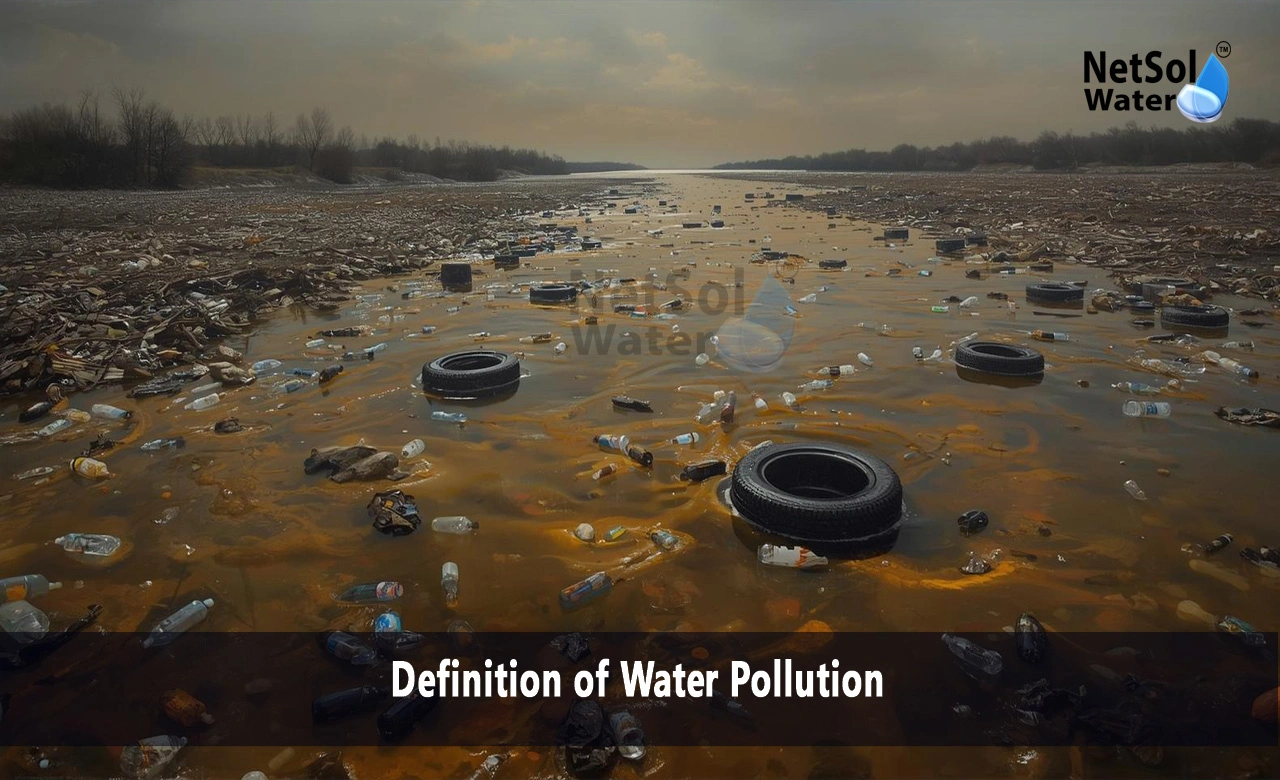
Water pollution means the presence of harmful substances in water that reduce its quality and make it unsafe. These substances enter water bodies such as rivers, lakes, oceans and groundwater through human activities and natural processes. When unwanted materials mix with water they change its physical, chemical and biological nature. This change affects how water supports life and how people use it in daily activities. Clean water should support drinking,the farming industry and aquatic life. Polluted water fails to serve these purposes and instead creates health and environmental problems.
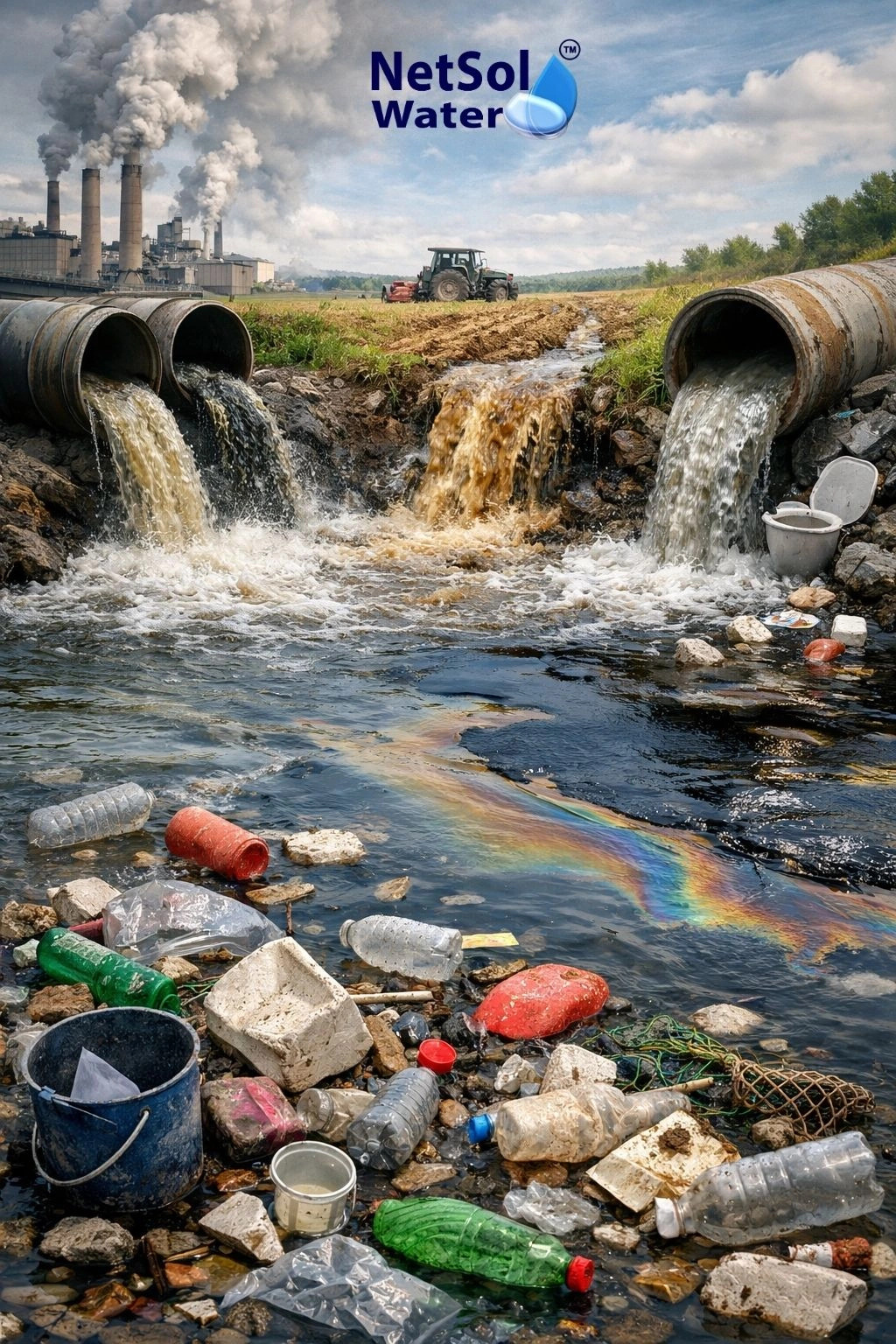
Understanding water pollution begins with knowing how clean water turns unsafe. Waste from homes, farms, industries and cities often flows into water sources without proper treatment. Over time this buildup increases pollution levels and spreads across large areas. Water pollution does not stay in one place. It moves through rivers, soil and the food chain and reaches people plants and animals. Learning about water pollution helps readers recognize its presence and understand its seriousness. Clear knowledge creates awareness and supports better decisions that protect water resources. Let us have a look on some common sources that add harmful materials to water.
1: Industrial Discharge
Factories send liquid waste into water in many places. They pour chemicals, metals and other material into drains that end in rivers or the sea. These wastes change the balance of water. Fish and plants struggle to live in water with harsh chemicals. Treatment at the source reduces the load that reaches natural water bodies.
2: Agricultural Runoff
Farms use fertilizer and pesticides to grow food fast. Rain carries these materials from fields into streams and lakes. Excess nutrients cause algae to grow rapidly. Algae covers the surface and stops sunlight from reaching other water plants. When algae dies bacteria use up oxygen and fish can die. Soil particles also wash away and make water cloudy. This change harms plants that need clear light to live.
3: Domestic Wastewater
Homes add soaps, food scraps and human waste to the water system. In places without proper pipes or treatment this wastewater reaches rivers and wells. Bacteria from waste can make people sick. Simple systems that treat wastewater at the community level cut down on this problem. People who use less harmful cleaning products reduce the risk as well.
4: Oil Spills
Oil enters water from ship leaks and accidents at sea. Oil spreads in a thin layer on the surface. This layer blocks air and light from reaching animals below. Birds and mammals that touch oil lose their ability to stay warm and to move. Cleanup takes time and costs much money. Prevention through better ship control and quick response saves many lives.
5: Plastic Pollution
Plastic sits in water for many years. It breaks into tiny pieces that fish eat by mistake. These pieces move up the food chain and reach people. Plastic also traps small animals and blocks light. Reducing plastic use and collecting waste before it reaches water helps reduce this harm.
Types of Water Pollution
Water pollution comes in many forms. Each form changes water in a different way. Let us have a look on some common types and what each one means.
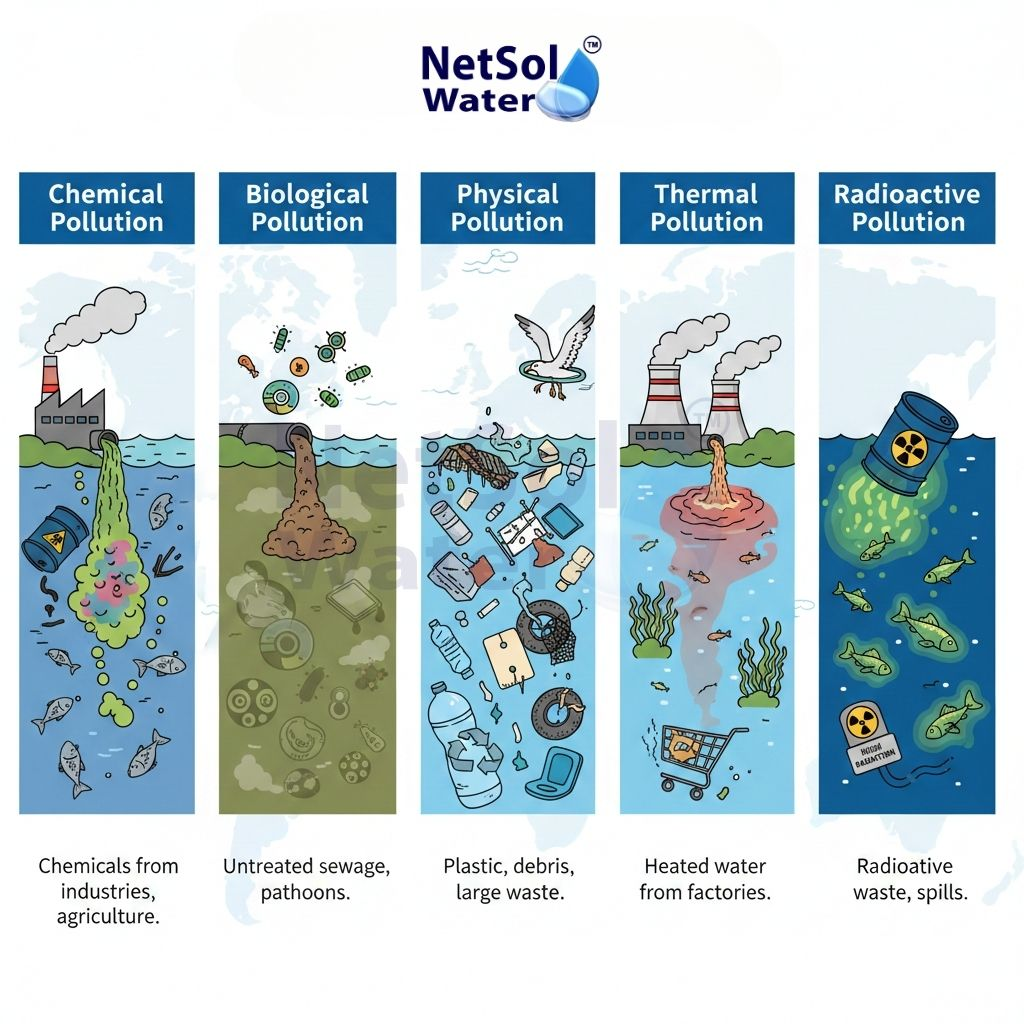
1: Chemical Pollution
Chemicals from factories, farms and homes change the makeup of water. Heavy metals, acids and industrial solvents fit this group. These chemicals poison plants and animals. They also make water unsafe for people who drink it. Simple tests show the presence of many chemicals.
2: Biological Pollution
Biological pollution means living things cause harm. Harmful bacteria, viruses and parasites belong to this type. They come from sewage animal waste and poorly treated water. These agents cause disease in people and in fish. Clean water treatment stops their spread.
3: Physical Pollution
Particles such as soil, sand and plastic make water cloudy. This change is physical rather than chemical. Cloudy water blocks light and fills the gills of fish. Dams and construction work can add many particles to rivers. Careful planning reduces the amount of loose soil that reaches water.
4: Thermal Pollution
Warm water from power plants and factories flows into natural water. Warmer water holds less oxygen. Fish that need cool water move away or die. Plants and animals that thrive in warm water may grow too much. This change breaks the natural balance of the system.
5: Radioactive Pollution
Radioactive waste enters water from nuclear plants and medical sources in rare cases. Even small amounts can harm life over time. Strict controls and secure storage keep this risk low. Monitoring finds any increase and helps protect people and nature.
Effects on Ecosystem and Human Health
Polluted water changes life on land and in the sea. It also affects people who drink use or live near water. Let us have a look on some impacts and how they reach far beyond the water itself.
1: Impact on Aquatic Life
Fish, insects and plants lose their home when water becomes polluted. Low oxygen kills many animals. Poison weakens others and makes them less able to grow and to reproduce. A loss of one species changes the whole community. The result can be a clear drop in the number of animals that people depend on for food.
2: Food Chain Disruption
Small animals eat polluted material and then larger animals eat those small animals. Harmful material moves up each step of the chain. People who eat seafood may receive a large dose of those pollutants. This process makes it hard to predict who will be safe and who will not be safe to eat.
3: Drinking Water Safety
Many cities treat water before people drink it. In places with weak systems people use well water or surface water. Polluted water can carry disease and heavy metals that harm health over time. Children often suffer the most. Clean water and safe storage stop many health problems.
4: Economic Consequences
Fishing, farming and tourism fall when water loses its quality. People lose jobs and income when fish die or crops fail due to poor irrigation water. Cleaning polluted water costs a great deal. Investing in prevention saves money in the long run.
5: Social and Cultural Effects
Water plays a role in many local customs and daily life. When water suffers, people lose a part of their culture and their way of life. Recreation areas disappear and community health drops. Protecting water helps protect these social values.
Measuring and Indicators of Water Quality
People must measure water qualities to know when it goes wrong. Measurement gives clear facts that guide action. Let us have a look on some common indicators and how experts use them to judge water health.
1: Physical Indicators
These measures look at how water feels and looks. Tests check for cloudiness, temperature and colour. Clear cold water likely holds more oxygen than warm cloudy water. Simple tools show these traits quickly.
2: Chemical Indicators
Chemical testing measures nutrients, metals and other dissolved molecules. High levels of nutrients suggest too much fertilizer or sewage. Metal tests find lead, mercury and other poisons. These tests give clear numbers that show change over time.
3: Biological Indicators
Living organisms tell a story about water health. Certain insects and plants only live where water stays clean. Finding those species means the water may still be healthy. Finding only pollution tolerant species means the water faces stress.
4: Monitoring Methods
People measure water at set places and at set times. Simple stations send data to labs. New tools use sensors that give live readings. This real time data helps managers respond faster to sudden changes.
5: Water Quality Standards
Governments set limits for many pollutants. The standards guide what counts as safe for drinking, swimming and farming. These rules differ by country. They serve as a clear goal for managers and for the public.
Prevention and Control Measures
Stopping pollution works better than cleaning it up. Many tools and actions reduce the flow of harmful material into water. Let us have a look on some practical ways to prevent and to control water pollution.
1: Wastewater Treatment
Treatment plants remove many harmful things from water before release. Simple systems use natural processes in ponds and plants. Advanced systems use tank filters and chemicals. Choosing the right system depends on local money and the size of the problem.
2: Best Agricultural Practices
Farmers can use less fertilizer and fewer chemicals. They can plant cover crops and create grass buffers near streams. These methods slow the flow of soil and chemicals into water. Farmers gain healthier soil and steady yields when they work with nature.
3: Industrial Treatment and Cleaner Production
Industries change how they make products to cut waste. They reuse water and recover materials. Treating waste before it leaves the factory stops most harm. Cleaner methods also reduce the cost of waste handling.
4: Urban Planning and Sanitation
Cities that plan drainage and sewer systems protect water. Simple design keeps storm water from washing raw waste into streams. Safe toilets and sewer treatment protect the ground and surface water that supply homes.
5: Community Action and Education
People learn how their choices affect water. Schools and local groups run clean up days and teach safe habits. Small steps by many people add up and make a strong change.
Laws, Regulations and Policy
Rules guide what people and firms may do with water. Good law provides clear duties and protects the public. Let us have a look on some legal tools and how they shape action.
1: National Laws
Each country sets rules for water quality and for waste disposal. These laws set limits and penalties. They also provide funds and direction for cleanup efforts. Strong law limits damage and gives agencies power to act.
2: International Agreements
Rivers and seas cross borders. Countries agree to control pollution that moves between them. Shared plans help protect fish and trade. International talks also share technology and funding.
3: Enforcement Challenges
Rules need inspectors and labs to work. Some places lack staff or funds. Weak enforcement allows pollution to continue. Building capacity and making rules fair helps close this gap.
4: Role of Local Governments
Local leaders manage day to day services and connect with communities. Local plans match national goals to the place. They decide on street drainage toilets and local treatment plants. Their action makes a big difference.
5: Policy Innovations
Policies that charge for pollution and that reward clean production change behaviour. Grants that support green methods and taxes that discourage waste bring new options. Smart policy combines many tools.
Role of Technology and Innovation
New tools change how people find, treat and prevent pollution. This field grows quickly and offers many solutions. Let us have a look on some technologies that help clean and protect water.
1: Treatment Technologies
New filter membranes and bio systems remove many pollutants. These systems can be small for villages or large for cities. Choosing the right size and type keeps costs low and results high.
2: Monitoring Technology
Sensors, robots and satellites give new views of water health. They spot spills and changes faster than old methods. Faster detection means faster response and less harm.
3: Nature-Based Solutions
Wetlands and green spaces act as living filters. These systems absorb and break down many pollutants. They also provide habitat and reduce flood risk. Nature based solutions often cost less and provide wider benefits.
4: Circular Economy Approaches
Turning waste into resources keeps materials out of water. Reusing water in industry and recovering nutrients from waste helps farms and firms. This approach closes loops and reduces the need for new inputs.
Conclusion
Clean water serves life and growth. Understanding the definition of water pollution helps people see the problem and take clear steps to stop it. Many causes bring pollution to water. Many tools measure its strength. Many methods prevent and treat it with support from a Wastewater Treatment Plant Manufacturer. Governments communities and businesses must act together. If you want more detail or help with a local water issue please get in touch for more information or request a consultation. Together we can protect water for people plants and future generations.
Contact Netsol Water at:
Phone: +91-9650608473, Email: enquiry@netsolwater.com