

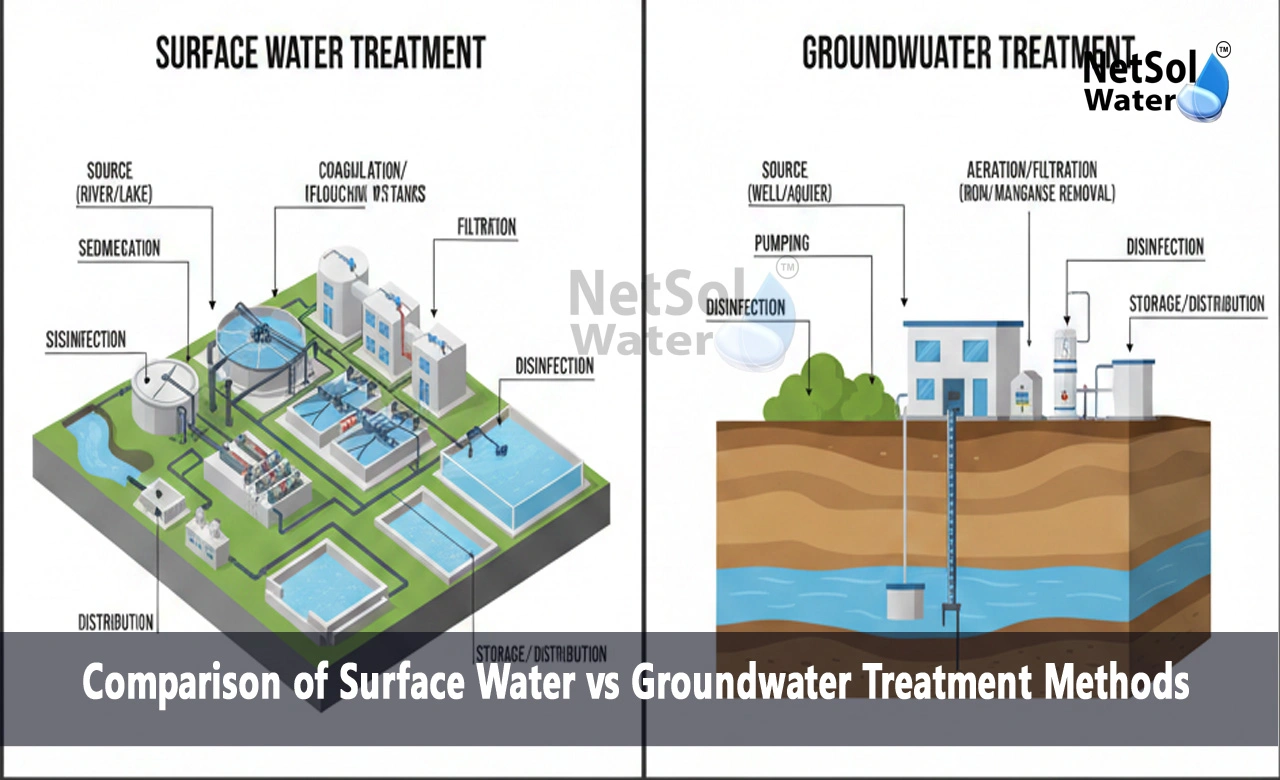
Comparison of Surface Water vs Groundwater Treatment Methods
Clean water supports health and growth. People must choose the right treatment path to keep water safe for homes and businesses. This Comparison of Surface Water vs Groundwater Treatment Methods shows the main differences and what each source needs. Surface water comes from lakes and rivers. Groundwater comes from wells and aquifers. Each source brings a different mix of particles, chemicals and microbes. Treatment plants change to match the source and the goal for finished water. Planners who know these differences save money and they protect public health.
Surface Water Treatment Methods
Surface water can carry visible particles, organic matter and microbes that change with the seasons. Treating this water protects public health and keeps equipment working well. Let us have a look on some common surface water methods and how each one works.
1: Coagulation and Flocculation
Coagulation keeps tiny particles from passing through filters. Operators add a chemical that changes particle charge. The change causes small pieces to group together into larger flakes. Flocculation follows. The plant stirs the water gently to let flakes grow bigger. These flakes settle faster in the next step. The action reduces the load on filters and it makes disinfection more effective.
2: Sedimentation
Sedimentation removes the heavier flakes and particles. Water flows into slow basins. Gravity pulls the flakes to the bottom. Staff remove the settled material from the basin floor. This step cuts down on solids that could clog filters. Lower solids mean less backwash and lower energy use in the plant.
3: Filtration
Filtration stops the remaining particles that escape sedimentation. Water passes through layers of sand, gravel or special media. The media trap particles on their surface and in their pores. Plants clean filters by backwashing to restore flow. Filtration also helps remove organisms that attach to particles.
4: Disinfection
Disinfection kills or inactivates microbes that remain after filtration. Plants use chlorine, UV or ozone to treat the water. Disinfection reduces disease risk and it protects water in the distribution network. Surface water often needs a higher disinfection dose because it carries organic matter that can protect microbes.
Also Read: Commercial RO Plant Manufacturer
Groundwater Treatment Methods
Groundwater tends to enter the supply cleaner in terms of visible solids. It may still contain dissolved minerals, gases and certain chemicals. Treating groundwater protects pipes and it meets drinking water standards. Let us have a look on some common groundwater methods and how they adapt to what the source brings.
1: Aeration
Aeration removes gases such as hydrogen sulfide and it can help strip volatile organics. Water moves through a contact tank or falls over a packed column. Air moves through the water and the gas transfers to the air stream. Plants then vent or treat the exhausted air. Aeration also helps to oxidize iron and manganese making them easier to remove in the next steps.
2: Filtration and Softening
Filtration for groundwater focuses on removing iron, manganese and suspended particles that form after aeration. Media like green sand or manganese oxide work well for these metals. Some systems use ion exchange to soften water and lower hardness. Softening exchanges calcium and magnesium for sodium or potassium on a resin bed. The process protects pipes and appliances from scale.
3: Activated Carbon and Adsorption
Groundwater can contain organic compounds or traces of chemicals that affect taste and safety. Activated carbon adsorbs these compounds on its surface. The carbon bed captures organics until the bed needs regeneration or replacement. This step helps meet odour and taste goals and it can reduce precursors that might form disinfection by products later.
4: Disinfection
Even though groundwater has lower microbial loads many systems still use disinfection to guard the distribution network. Chlorine and chloramine provide a lasting residual through pipes. UV serves as a chemical free kill step where distribution residual is not needed. The choice depends on the network layout and water quality targets.
Comparison and Key Differences
Knowing the differences guides the choice of treatment steps and the design of plants. This Comparison of Surface Water vs Groundwater Treatment Methods highlights the trade offs and the common choices that each source brings. Let us have a look on some key points that matter to planners and operators.
1: Source Quality and Typical Contaminants
Surface water often shows higher turbidity, organic matter and seasonal changes. Groundwater shows more dissolved minerals and some specific chemicals that come from rocks or soil. The starting quality shapes the treatment chain and the budget.
2: Treatment Complexity and Cost
Surface water treatment needs more steps to remove particles and organics. Coagulation and sedimentation add cost and space. Groundwater systems can be simpler but they may need softening or advanced adsorption steps that raise operating cost. Designers weigh capital cost against long term operation.
3: Chemical Use and By Products
Surface water often needs more coagulant and disinfectant. The added chemicals can form by products when they react with natural organics. Groundwater may need fewer disinfectants but it can need regeneration chemicals for resins and carbon. Managing chemical handling and waste matters for both sources.
4: Operational Needs and Monitoring
Surface water requires close monitoring of turbidity, organics and algal events. Operators tune chemical doses and cleaning cycles to match changing source conditions. Groundwater demands monitoring for minerals and traces of industrial chemicals and it needs treatment steps that keep media in good shape.
5: Resilience and Reliability
Groundwater tends to provide a steady flow and a stable quality over time. Surface water can shift quickly during storms or drought. That means operators plan for surge capacity extra treatment and flexible control systems when they work with surface sources.
Conclusion
Choosing the right approach depends on the source, the end use and the budget. This Comparison of Surface Water vs Groundwater Treatment Methods shows that surface water needs strong particle and organic removal while groundwater asks for mineral control and targeted adsorption. Each source calls for a tailored plan that balances cost operation and long term goals. If you want help evaluating a site or if you need a clear plan for water treatment get in touch for more information or request a consultation. Our team can review your source outline options and propose a practical path forward.
Contact Netsol Water at:
Phone: +91-9650608473, Email: enquiry@netsolwater.com