

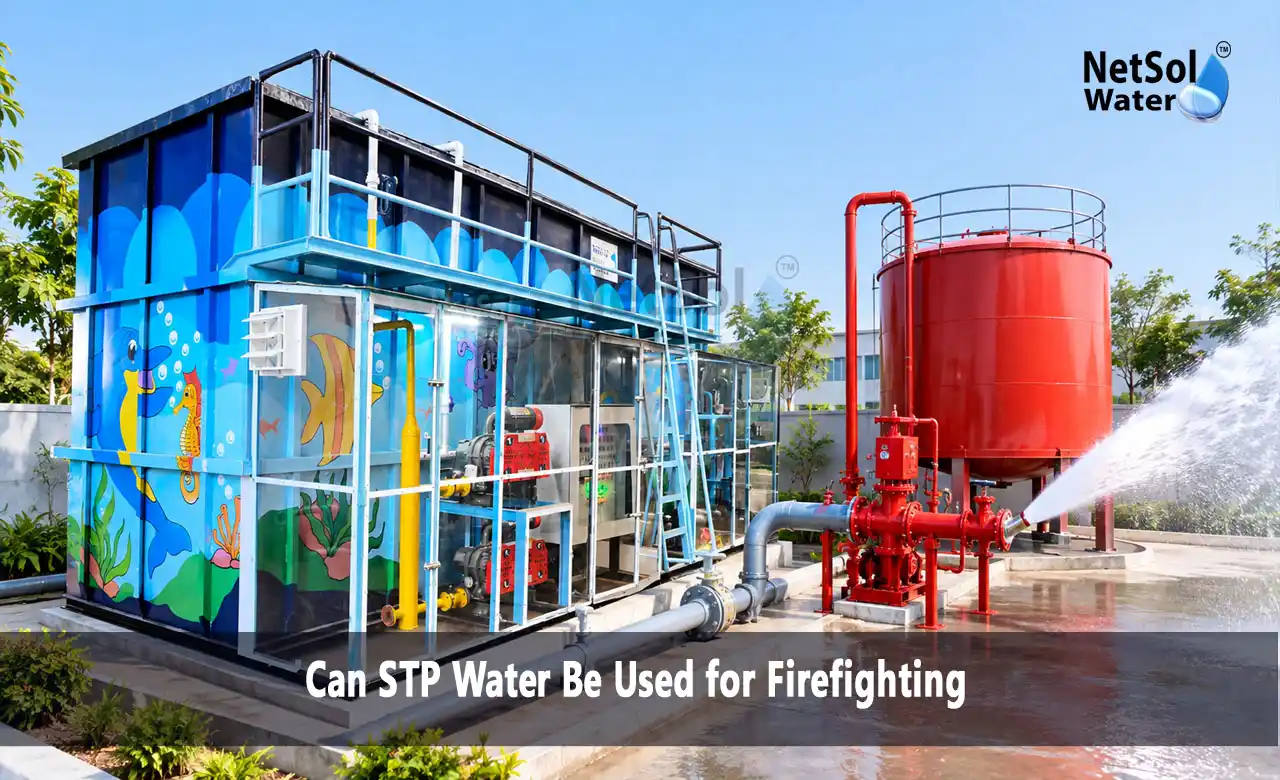
Can STP Water Be Used for Firefighting?
Yes, treated water from a sewage treatment plant can be used for firefighting in many cases, but it is not a plug-and-play option. Because this water starts as sewage, its quality must be checked before it goes anywhere near a fire-protection system. A fire system needs a dependable supply with the right quality, quantity, pressure and flow, and treated STP water can only be used when it meets all of these.
For large buildings, industrial sites, commercial campuses, hotels and hospitals, using recycled water this way can cut fresh water consumption in a big way. The catch is simple: the water must be tested against the needs of the specific fire-protection system before it is approved for use.
If you are still planning your wastewater setup, you can read about our sewage treatment plant range to understand what kind of treated water quality is possible.
Can Fire Systems Use Treated STP Water?
Yes. Treated STP water can serve as a dedicated source for fire protection as long as it satisfies the requirements of the fire system and the applicable standards.
Fire water does not need to be drinking quality. That is why recycled water can work, provided it does not harm pumps, pipelines, valves, sprinklers or storage equipment. The system must also deliver enough water at sufficient pressure during an emergency, because reuse should never come at the cost of safety.
Where Can STP Water Be Used for Firefighting?
Treated wastewater is commonly considered for these fire-protection uses:
. Fire hydrant systems
. Dedicated fire-water storage tanks
. Some sprinkler systems, depending on equipment and water quality
Whether it suits your site depends on the equipment installed and the quality of the water. Always review the design with your fire-system consultant and follow the applicable fire-safety rules. A separate fire-water network is also essential so that recycled water never enters the potable water system.
What Should Be Tested for Water Quality?
STP water quality changes with the nature of the sewage and the efficiency of the treatment process. Before using it for firefighting, these parameters should be monitored:
. TSS (total suspended solids)
. TDS (total dissolved solids)
. pH
. Chlorides
. Sulphates
. Hardness
. Microbiological quality
. Oil and grease
. Corrosive or scale-forming materials
High suspended solids can cause blockages and deposits in the system. High dissolved salts can lead to corrosion or scaling over time. Regular testing helps you catch both problems early.
Does STP Water Need RO for Firefighting?
No, RO is not mandatory just because you are using STP water for firefighting. Reverse osmosis removes dissolved salts and produces low-TDS water, but fire systems do not usually demand the purity of drinking water or high-purity industrial process water.
If the treated water already suits your fire-protection equipment, adding RO may bring very little practical benefit. Depending on the water quality and system design, though, filtration, disinfection or other polishing treatment may still be needed. If your site does require high-quality water for other uses, you can explore our commercial RO plant solutions separately.
How to Store Fire Water Properly?
Recycled STP water meant for fire protection should be kept in a dedicated storage tank. The tank must hold the required emergency reserve and should not be used for any other purpose by mistake. Water level monitoring helps confirm that enough water is always available.
The storage system also needs regular checks for sediment build-up, corrosion, leakage and similar issues.
Can STP Water Damage Firefighting Equipment?
It can, if the water quality is poor and not managed. Over time, recycled water can affect firefighting equipment in these ways:
. High suspended solids can clog pipelines and strainers
. Hardness can cause scaling
. Wrong pH and excess chlorides can trigger corrosion
Frequent water testing and routine maintenance keep these risks under control. Where needed, filters and additional treatment can protect pumps, valves, sprinklers and pipelines.
What Precautions Must Be Taken?
. Do not depend on an unreliable STP outlet as the only source for the fire-water system.
. Make sure the STP consistently delivers adequate quality, and keep enough storage available even during plant maintenance.
. Clearly identify the recycled-water network so it is never accidentally connected to the potable-water network.
. Design the fire-protection system according to applicable fire-safety codes and project needs.
Most importantly, water reuse must never weaken emergency preparedness.
Benefits of Using STP Water for Firefighting
Using treated wastewater for fire protection lowers the demand for fresh water in non-potable applications. It also lets large facilities make better use of their own treated water and depend less on municipal or groundwater supply.
At sites with high STP capacity and large fire-water storage needs, this can be built into a wider water-reuse plan. If you are setting up a new plant, our team can guide you on the right STP manufacturer solutions for your capacity. Industrial sites that generate process wastewater can also look at our effluent treatment plant options for reuse-ready water.
Conclusion
STP-treated water can be used for firefighting when its quality, storage, pressure and reliability match the needs of the fire-protection system. RO is usually not required only for this purpose, but filtration, disinfection or other treatment may be necessary to protect equipment and maintain water quality.
To use recycled STP water safely in a fire system, remember four things: test the water, confirm equipment compatibility, use a dedicated storage tank, and design everything as per the applicable fire-safety requirements.
Need advice on choosing the right water and wastewater treatment unit? Netsol Water has solutions for every requirement, from STP plants to ETP plants. Tell us your problem and our experts will help you solve it.
For assistance or related queries, call +91-9650608473 or write to us at enquiry@netsolwater.com.