

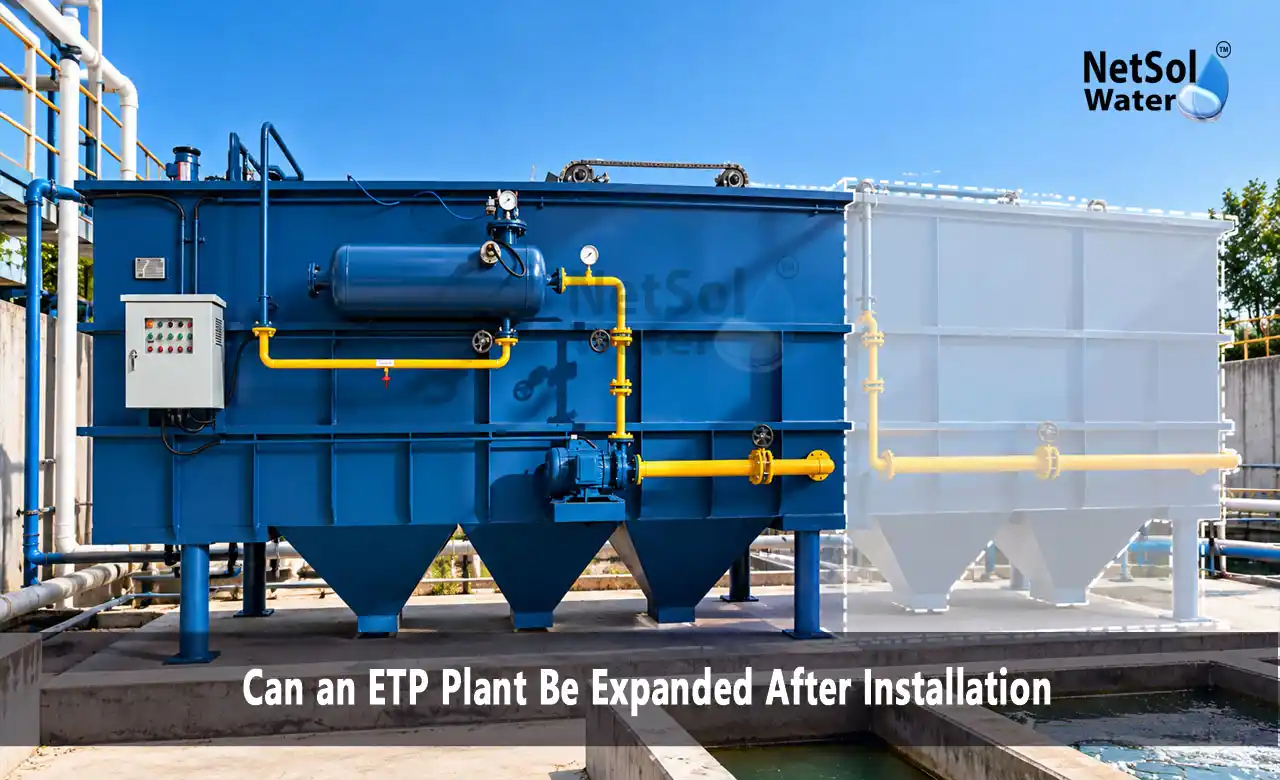
Can an ETP Plant Be Expanded After Installation?
An Effluent Treatment Plant (ETP) is designed around a specific wastewater flow and pollutant load. That design works well on day one. But factories grow. A new production line, a second shift or a change in raw material can push wastewater generation well beyond what the plant was built to handle.
So the question many plant owners ask is simple: can an ETP be expanded after installation? In most cases, yes. Whether it makes sense depends on the existing design, available space, equipment condition, treatment technology and the nature of your wastewater. This guide explains how expansion works, what to check before you start and when it is smarter to build a new plant.
Signs Your ETP Needs Expansion
Do not wait for a compliance notice. These warning signs usually appear first:
. Treated water quality is drifting close to, or beyond, discharge limits.
. The equalization tank overflows or runs near full during peak production.
. Sludge is carrying over from the clarifier.
. Pumps, blowers or dosing systems run continuously with no spare capacity.
. Chemical and power consumption have risen sharply without a clear reason.
If you notice two or more of these, a capacity review is a good next step.
How Can an ETP Be Expanded After Installation?
1. Determine the Current ETP Capacity
Start by finding out how much the existing plant can really treat. Compare the designed flow with the average daily flow, peak flow, inlet pollutant load (such as COD, BOD, TSS and pH) and treated water quality. Also review pumps, tanks, blowers, clarifiers, filters and chemical dosing systems.
If the plant is running close to its design limit, additional treatment units will probably be needed. If some equipment has spare capacity, a partial expansion may be possible without replacing everything.
2. Increase Equalization and Storage Capacity
When wastewater volume rises, the equalization tank is often the first unit to struggle. Overflow causes sudden changes in flow and load, and that makes the whole treatment train unstable.
You can fix this by adding a second equalization tank, increasing storage volume or changing the tank layout. Size the solution using both the average and the peak flow. Good equalization gives every downstream unit a steady, predictable feed.
3. Add Parallel Treatment Units
Parallel expansion is one of the most popular methods. A new aeration tank, clarifier, filter or other treatment unit is installed next to the existing one, and both share the load. The old units keep running during the work, so production does not need to stop.
Remember that inlet and outlet pipelines, valves, pumps and control systems must also handle the additional flow. A new tank connected to an undersized pipe will not deliver the capacity you paid for. Working with an experienced effluent treatment plant manufacturer helps you get this hydraulic balance right the first time.
4. Upgrade Existing Equipment
Sometimes it is better to upgrade a component than to add a new unit. Larger pumps, stronger aeration or higher-grade filters may be enough as flow increases. Blowers must supply enough air for the biological load, and clarifiers must cope with the new hydraulic and solids loading.
One caution: upgrading a single pump without checking the stages after it can create a process imbalance. Always review the plant as one connected system.
5. Recheck Chemical Dosing Requirements
A change in flow or pollutant concentration changes chemical demand. Coagulants, flocculants and neutralizing chemicals may need new dosing rates. Dosing pumps, storage tanks, mixers and pipelines should be checked for the higher demand.
Set dosing based on jar tests and actual process performance. Simply increasing chemical quantity wastes money and can create more sludge.
6. Evaluate Space and Civil Infrastructure
Space is a deciding factor. New tanks, equipment, pipelines, electrical panels and maintenance access all need room. Existing tanks and foundations should be checked for structural suitability before any modification. Electrical supply, drainage and ventilation may also need upgrades.
If the site is already crowded or the layout is poor, expansion can become difficult and costly.
7. Plan Automation and Control Changes
A bigger ETP usually needs more sensors, alarms and control logic. Check whether the existing control panel has enough capacity and is compatible with new equipment. The PLC or HMI may need reprogramming to run extra pumps, blowers, valves or treatment units.
Good integration between old and new equipment keeps the plant running smoothly without constant manual intervention.
Approvals to Check Before Expanding
Capacity expansion is not only a technical decision. In India, increasing the wastewater load or changing the treatment process usually needs an update to your consent with the State Pollution Control Board. Discharge norms, ZLD requirements and inspection conditions may also apply to your industry. Confirm these requirements early, so approvals do not delay commissioning.
When Is a New ETP More Suitable?
Expansion is not always the right answer. A new plant may be the better choice when:
. The existing structure is old, damaged or obsolete.
. There is not enough space for additional units.
. Treatment performance was already poor before the capacity increase.
. The wastewater characteristics have changed so much that the process itself needs redesign.
A technical feasibility study can compare the cost, performance and future flexibility of both options. If you are comparing suppliers for a new system, you can review the range offered by leading ETP plant manufacturers in India before deciding.
Frequently Asked Questions (FAQs)
Q1. Can any ETP be expanded?
Not always. Expansion depends on structural condition, available space, treatment technology and how well the current equipment is performing. A site assessment gives the clear answer.
Q2. Will production stop during ETP expansion?
Often it will not. With parallel expansion, new units are built and connected while the existing plant keeps operating. A short shutdown may still be needed for final tie-ins.
Q3. Is expansion cheaper than a new ETP?
Usually, when the existing plant is in good condition and has space for new units. If major repairs, redesign or relocation are required, a new plant may give better long-term value.
Q4. What data is needed to plan an expansion?
Keep recent flow records, wastewater test reports, the original design basis, equipment details and your future production plan ready. These allow accurate sizing.
Conclusion
An ETP can be expanded after installation when the design, structure, equipment and available space support it. Expansion can take the form of parallel treatment units, equipment upgrades, larger equalization capacity or better automation.
Before starting work, assess wastewater flow, pollutant load, current equipment performance and future production needs. A well-planned expansion increases treatment capacity, keeps performance stable and controls extra operating cost.
Do you need advice or assistance on selecting the best water and wastewater treatment unit? We have solutions for all your problems!
Let us know your problem, and our experts will make sure it goes away.
For assistance or related queries,
Call on: +91-9650608473 Or write to us at: enquiry@netsolwater.com