

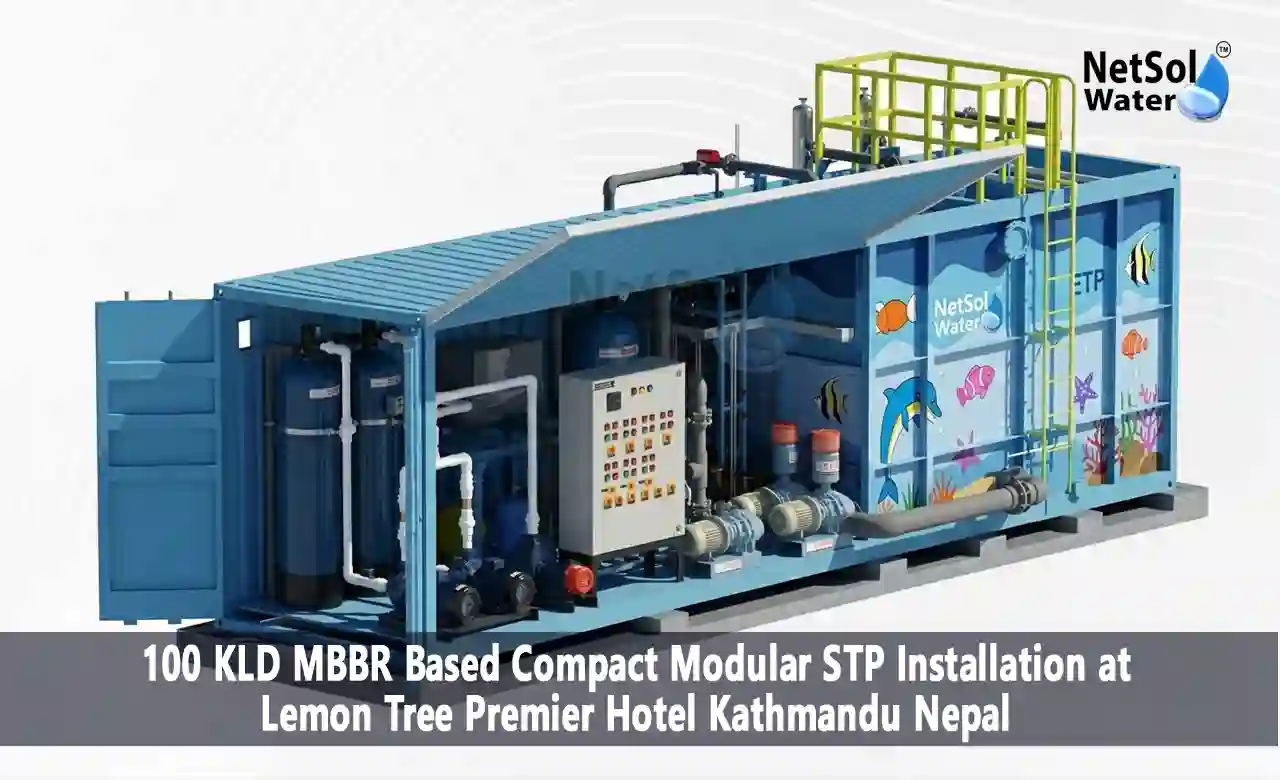
100 KLD MBBR Based Compact Modular STP
In today's era of rapid urbanization and growing environmental consciousness, responsible water management is no longer optional for the hospitality industry - it is a strategic imperative. Lemon Tree Premier Hotel, one of Nepal's premier upscale hospitality destinations located in the heart of Kathmandu, faced a critical challenge: managing the daily generation of sewage and wastewater from its extensive guest operations in a manner that was both environmentally compliant and operationally sustainable.
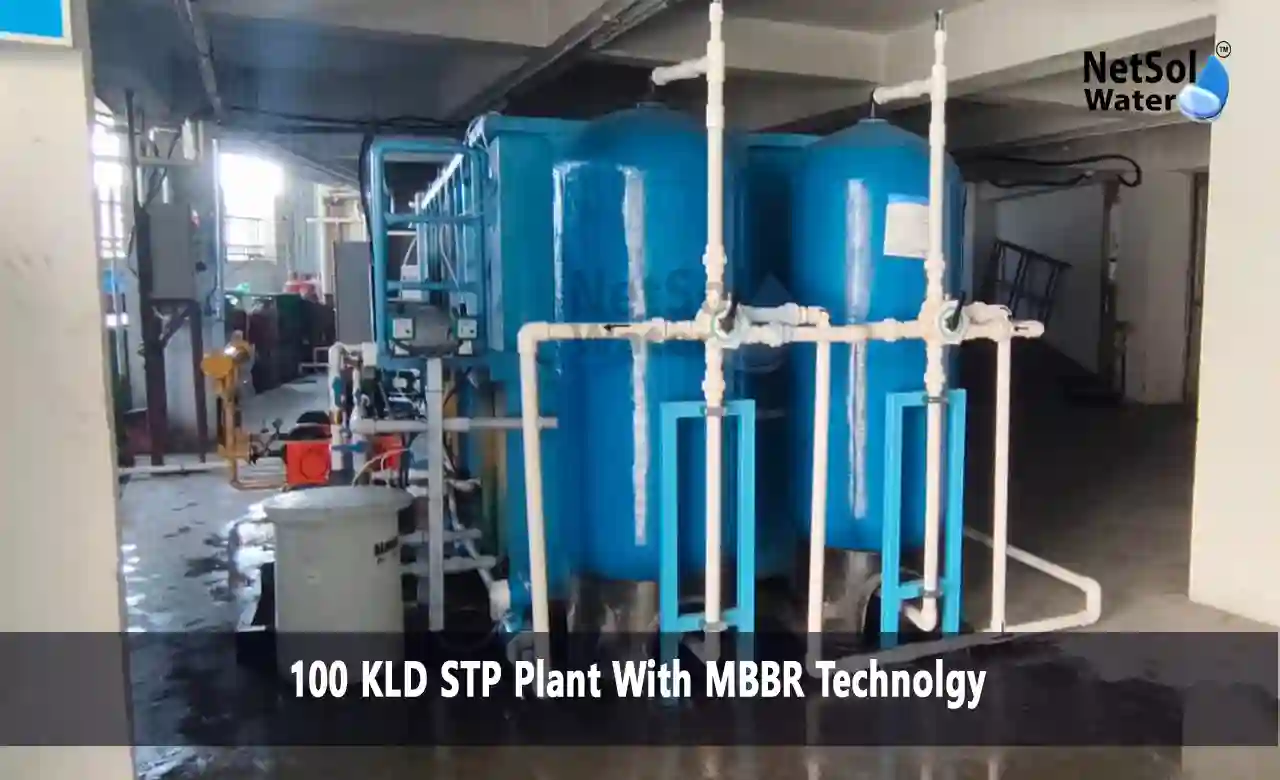
Netsol Water, a leading manufacturer and solution provider for water and wastewater treatment systems in South Asia, was entrusted with designing, supplying and commissioning a 100 KLD (Kilolitres Per Day) Compact Modular Sewage Treatment Plant (STP) based on state-of-the-art MBBR (Moving Bed Biofilm Reactor) technology.
The outcome was transformative. The installed STP not only ensured full compliance with Nepal's environmental discharge standards but also enabled the hotel to recycle treated water for non-potable uses - reducing freshwater consumption, lowering operational costs, and significantly shrinking the property's ecological footprint. This case study presents a detailed account of the project's background, challenges, technical solution, implementation methodology, performance data, and environmental outcomes.
About Netsol Water
Netsol Water is a Greater Noida, India-based company that has established itself as a trusted name in the water and wastewater treatment industry across South Asia. With over a decade of expertise, Netsol Water specializes in:
1. Design and manufacturing of Sewage Treatment Plants (STP) using MBBR, SBR, MBR, and Extended Aeration technologies
2. Effluent Treatment Plants (ETP) for industrial applications
3. Water Treatment Plants (WTP) including Reverse Osmosis (RO), Ultra Filtration (UF), and softening systems
4. Zero Liquid Discharge (ZLD) systems for industrial and commercial clients
5. Turnkey project execution for the hospitality, residential, commercial, and industrial sectors
Netsol Water has successfully executed projects across India, Nepal, Bangladesh, and other South Asian nations. The company is recognized for its commitment to quality, innovation, and after-sales service. Its modular and compact STP systems are specifically engineered for space-constrained environments such as hotels, hospitals, residential complexes, and commercial establishments.
Client Background: Lemon Tree Premier Hotel, Kathmandu
Lemon Tree Hotels is one of India's leading hospitality brands, having successfully expanded its footprint into the South Asian market, including Nepal. The Lemon Tree Premier Hotel in Kathmandu stands as a distinguished property offering world-class facilities, including upscale guest rooms, multi-cuisine restaurants, banquet and conference spaces, a swimming pool, a gymnasium, and a spa.
Kathmandu, Nepal's capital city, is a thriving urban centre with a growing demand for premium hospitality services. However, the city also faces mounting pressures related to water scarcity, inadequate sewage infrastructure, and environmental regulation enforcement. As a responsible brand committed to sustainability, Lemon Tree Hotels recognized the urgent need to deploy an advanced on-site wastewater treatment solution.
The property generates a substantial volume of wastewater daily from guest rooms, restaurants, kitchens, laundry facilities, and housekeeping operations. This wastewater - which includes sewage from toilets, greywater from wash basins, kitchen effluent, and laundry discharge - requires proper treatment before it can be safely disposed of or reused.
Challenges Identified
1. High Daily Wastewater Generation
With hundreds of guest rooms, multiple dining outlets, banqueting facilities, and back-of-house operations, the hotel generates a substantial quantum of mixed sewage and wastewater daily. Inadequate treatment risked environmental non-compliance and public health hazards.
2. Space Constraints
Like most urban hotels in Kathmandu, the property has a compact built-up footprint with limited land area available for infrastructure installation. A compact, modular system was essential to fit within the available plant room or basement utility space.
3. Regulatory Compliance
Nepal's Department of Environment (DoE) mandates strict standards for wastewater effluent quality before discharge into public drains or water bodies. The hotel urgently needed a system capable of consistently meeting prescribed standards for BOD, COD, TSS and coliform levels.
4. Water Scarcity and Rising Freshwater Costs
Kathmandu experiences seasonal water scarcity and significant freshwater tariffs. The hotel recognized an opportunity to reduce freshwater consumption by treating sewage on-site and reusing treated water for non-potable applications.
5. Ease of Operations and Maintenance
The hotel management sought an automated, low-maintenance solution that would not place a heavy burden on the hotel's engineering team, ensuring consistent performance with minimal specialized manpower requirements.
Proposed Solution: 100 KLD Compact Modular MBBR-Based STP
After a thorough site assessment, analysis of wastewater characteristics, and evaluation of available space, Netsol Water proposed the installation of a 100 KLD Compact Modular Sewage Treatment Plant based on MBBR technology.
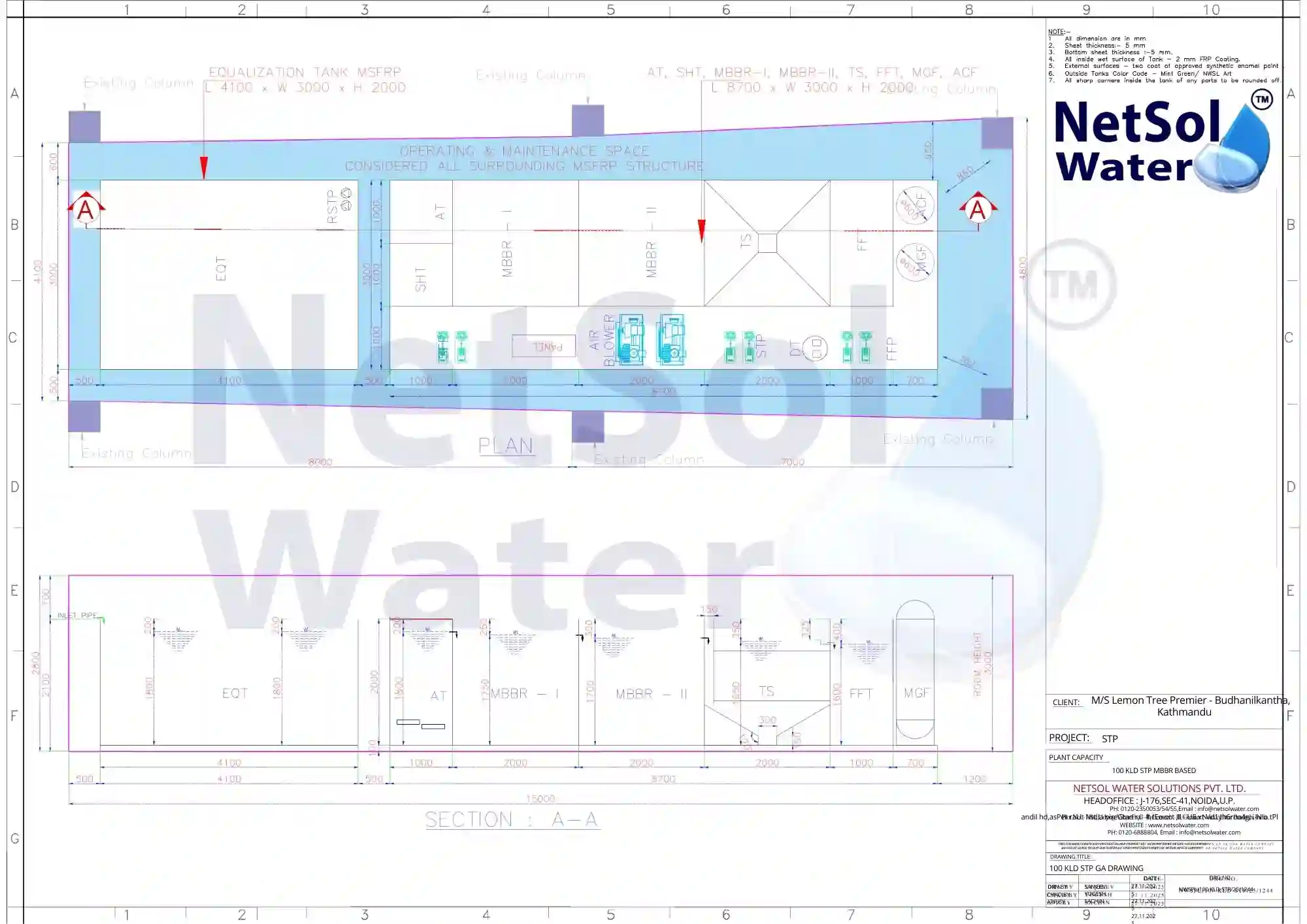
This solution was specifically tailored to address all identified challenges while ensuring long-term operational sustainability.
Why MBBR Technology?
Moving Bed Biofilm Reactor (MBBR) technology is globally recognized as one of the most efficient and versatile biological wastewater treatment technologies. It is particularly well-suited for hospitality applications due to the following key advantages:
1. High Organic Load Removal: MBBR achieves BOD removal efficiencies of over 95%, making treated effluent suitable for reuse.
2. Compact Footprint: High-surface-area biofilm carriers allow smaller reactor volumes compared to conventional activated sludge systems.
3. Resilience to Load Variations: MBBR handles fluctuating hydraulic and organic loads efficiently - ideal for hotels with variable occupancy.
4. Low Sludge Generation: Significantly less biological sludge is produced compared to conventional systems, reducing disposal costs.
5. Easy Upgradability: Modular design allows capacity expansion by adding reactor modules without significant civil work.
Technical Specifications
The following table outlines the key technical parameters of the 100 KLD MBBR STP installed at Lemon Tree Premier Hotel, Kathmandu:
| Technical Parameter | Specification / Value |
|---|---|
| Plant Capacity | 100 KLD (Kilolitres Per Day) |
| Technology | MBBR (Moving Bed Biofilm Reactor) |
| Configuration | Compact Modular Design |
| Design Inlet BOD | 200 – 250 mg/L |
| Design Inlet COD | 400 – 500 mg/L |
| Design Inlet TSS | 200 – 250 mg/L |
| Treated Effluent BOD | < 10 mg/L |
| Treated Effluent COD | < 50 mg/L |
| Treated Effluent TSS | < 10 mg/L |
| Treated Water pH | 6.5 – 8.5 |
| MBBR Media Fill Ratio | 50% (High-Density Polyethylene Carriers) |
| Dissolved Oxygen in MBBR | > 2.0 mg/L |
| HRT (Hydraulic Retention Time) | 12 – 16 Hours |
| Sludge Treatment | Sludge Drying Bed / Mechanical Thickener |
| Disinfection Stage | UV Disinfection + Chlorination |
| Final Treated Water Use | Toilet Flushing, Landscaping, Cooling Tower Make-up |
| Automation | PLC-Based Control Panel with Alarm System |
| Power Consumption (Approx.) | 8 – 12 kWh per day per 100 KLD |
| Construction Type | Civil + FRP / MS Epoxy Coated Tanks |
Process Description and Treatment Train
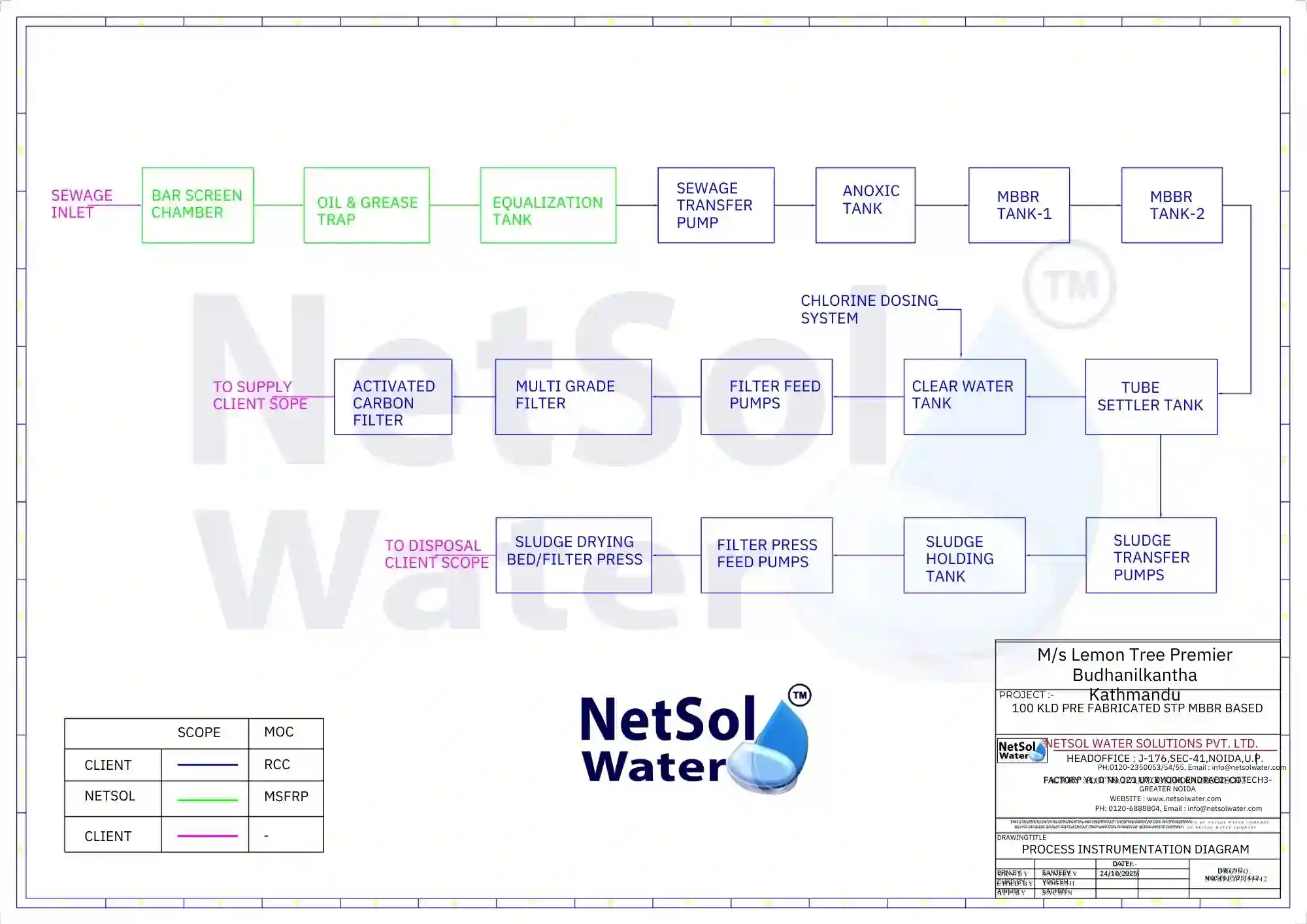
The STP at Lemon Tree Premier Hotel follows a carefully engineered multi-stage treatment process to ensure consistent production of high-quality treated effluent. The treatment train is described below:
Stage 1: Screening and Collection
Raw sewage from all hotel plumbing outlets is channelled into a collection sump through underground drainage pipelines. At the inlet, a bar screen removes large solids such as rags, paper, and debris that could damage downstream equipment.
Stage 2: Equalization Tank (EQ Tank)
Wastewater flows into the Equalization Tank to buffer fluctuating flows typical of hotel operations. The EQ tank is equipped with coarse bubble diffuser aeration to prevent septicity and maintain a uniform organic load entering the biological stage.
Stage 3: MBBR Bioreactor
This is the core treatment stage. The MBBR reactor is filled with HDPE biofilm carrier media at a 50% fill ratio. These carriers provide protected surface area for the growth of aerobic microorganisms that degrade dissolved organic matter. Fine bubble membrane diffusers supply dissolved oxygen and keep carriers in continuous motion. BOD removal exceeds 95% in this stage.
Stage 4: Secondary Clarifier
Treated wastewater from the MBBR flows into a secondary clarifier where residual suspended solids settle under gravity. A tube deck module enhances settling efficiency in a compact footprint. Clarified supernatant overflows to the next stage while settled sludge is returned or drawn off to the sludge handling system.
Stage 5: Tertiary Filtration (Dual Media Filter)
Clarified effluent passes through a Dual Media Pressure Filter (sand and anthracite layers) to remove residual fine suspended solids, turbidity, and trace organic matter. This stage polishes the effluent to near-potable clarity.
Stage 6: Disinfection (UV + Chlorination)
Filtered effluent passes through a UV disinfection unit to destroy pathogenic microorganisms without chemicals. A chlorination dose is also applied for residual disinfection protection. The treated water meets WHO and Nepal EPA standards for non-potable water reuse.
Stage 7: Treated Water Storage and Reuse
Disinfected treated water is stored in a dedicated treated water storage tank (TWST) and pumped to designated reuse points - toilet flushing, landscape irrigation, and cooling tower make-up water.
Stage 8: Sludge Management
Biological sludge from the MBBR and clarifier stages is periodically drawn off and transferred to sludge drying beds or a mechanical thickener. After dewatering, the dried sludge cake can be used as a soil conditioner or disposed of through authorized channels.
Implementation and Project Execution
Project Phases
| Phase | Key Activities |
|---|---|
| Phase 1: Site Survey & Design | Site assessment, wastewater characterization, hydraulic profiling, layout planning, P&ID preparation, and equipment sizing |
| Phase 2: Civil Construction | Construction of reactor tanks, EQ tank, sludge drying beds, treated water storage tank, and associated civil infrastructure |
| Phase 3: Equipment Supply | Procurement and supply of MBBR media, blowers, pumps, diffusers, UV units, pressure filters, PLC panel, and instrumentation |
| Phase 4: Installation & Piping | Mechanical installation of all equipment, interconnecting piping (CPVC/UPVC/MS-EP coated), electrical wiring, and control panel integration |
| Phase 5: Commissioning & Start-up | Seeding of MBBR media with activated sludge, gradual load increase, biofilm development monitoring, and performance optimization |
| Phase 6: Training & Handover | On-site training of hotel engineering staff on operation, maintenance procedures, record-keeping, and troubleshooting |
Challenges During Execution
1. Space Optimization: The restricted plant area required engineers to adopt a vertical stacking configuration for certain units and optimize the layout for maximum space efficiency without compromising performance.
2. Supply Chain Logistics: Transporting equipment from India to Nepal required careful coordination of customs documentation, logistics routing through border checkpoints, and timely delivery scheduling.
3. Biofilm Establishment: The MBBR biofilm takes 4 to 6 weeks to fully establish. Netsol Water's engineers remained on-site to monitor DO levels, MLSS concentrations, and effluent quality, making real-time adjustments to accelerate biofilm growth.
Performance Results and Effluent Quality
After successful commissioning and stabilization, the 100 KLD MBBR STP consistently delivers the following treated effluent quality:
| Quality Parameter | Inlet (Raw Sewage) | Outlet (Treated Effluent) |
|---|---|---|
| BOD (mg/L) | 200 – 250 | < 10 |
| COD (mg/L) | 400 – 500 | < 50 |
| TSS (mg/L) | 200 – 250 | < 10 |
| pH | 6.5 – 7.5 | 6.8 – 7.8 |
| Turbidity (NTU) | 150 – 200 | < 5 |
| Total Coliform (MPN/100 ml) | > 10^6 | Not Detectable |
| Dissolved Oxygen (mg/L) | < 0.5 | > 5.0 |
| Total Nitrogen (mg/L) | 35 – 50 | < 15 |
The STP consistently achieves treated water quality that exceeds Nepal EPA discharge standards across all monitored parameters. The treated effluent is clear, odour-free, and suitable for recycling within the hotel premises.
Water Reuse and Conservation Impact
| Reuse Application | Approximate Daily Volume |
|---|---|
| Toilet Flushing (Rooms & Public Areas) | 35 – 40 KL/day |
| Landscape Irrigation & Gardening | 20 – 25 KL/day |
| Cooling Tower Make-up Water | 25 – 30 KL/day |
| Miscellaneous (Car Washing, Cleaning) | 5 – 10 KL/day |
| Total Treated Water Reused | 85 – 100 KL/day |
1. Freshwater Savings: Approximately 85–100 KL of freshwater is saved every day, translating to over 30,000 KL per year.
2. Operational Cost Reduction: Annual freshwater procurement cost savings are estimated at NPR 15–20 lakhs per year, depending on prevailing municipal water tariffs.
3. Zero Discharge to Drains: The hotel now operates a near zero liquid discharge (ZLD) model for sewage, with no untreated wastewater discharged into public drains or water bodies.
Environmental Impact Assessment
1. Protection of Local Water Bodies
Kathmandu's river systems, particularly the Bagmati River and its tributaries, have historically been subjected to pollution from untreated sewage discharge. By treating 100% of its wastewater on-site, Lemon Tree Premier Hotel has eliminated its contribution to this pollution burden. The project aligns with the Government of Nepal's ongoing Bagmati River cleanup initiative.
2. Reduction in Carbon Footprint
By reducing freshwater extraction and associated energy consumption for pumping and distribution, the hotel's overall carbon footprint is measurably reduced. The low energy consumption design of the MBBR system, using blower-based aeration with variable frequency drives, minimizes electricity usage compared to other biological treatment technologies.
3. Sustainable Hospitality Leadership
The implementation of the STP reinforces Lemon Tree Hotel's position as a leader in sustainable hospitality within the South Asian market. The project demonstrates that luxury hospitality and environmental responsibility are not mutually exclusive.
4. Compliance with Environmental Standards
The treated effluent consistently meets Nepal's Environment Protection Act standards as well as WHO guidelines for water reuse in non-potable applications.
Sustainability Highlights
| Sustainability Indicator | Achievement |
|---|---|
| Daily Wastewater Treated | 100 KL/day (100%) |
| Annual Freshwater Saved | ~30,000 – 36,500 KL/year |
| BOD Removal Efficiency | >95% |
| COD Removal Efficiency | >88% |
| TSS Removal Efficiency | >95% |
| Coliform Removal | 99.99%+ (Non-Detectable) |
| Treated Water Reuse Rate | >90% of Treated Effluent |
| Untreated Sewage Discharge | Zero |
| Annual Cost Savings (Approx.) | NPR 15 – 20 Lakhs/year |
| Carbon Emission Reduction | ~25 Tonnes CO?/year (estimated) |
Client Feedback
“The 100 KLD MBBR-based STP installed by Netsol Water has been a game-changer for our property in Kathmandu. The system runs with minimal operator intervention, the treated water quality consistently exceeds our expectations, and we have significantly reduced our freshwater procurement costs. Netsol Water’s team was professional, responsive, and deeply knowledgeable throughout the project. We highly recommend their services to any hospitality property looking for a reliable and sustainable wastewater management solution.”
- Chief Engineer, Lemon Tree Premier Hotel, Kathmandu, Nepal
Frequently Asked Questions (FAQs)
The following FAQs are designed to address common queries about MBBR-based STP systems for the hospitality sector - optimized for search engines and AI answer engines.
Q1. What is MBBR technology and why is it suitable for hotels?
MBBR stands for Moving Bed Biofilm Reactor. It is a biological wastewater treatment technology that uses plastic biofilm carrier media inside an aerated reactor tank to grow and sustain a high concentration of wastewater-degrading microorganisms. MBBR technology is highly suitable for hotels because it offers a compact footprint, high treatment efficiency, resilience to variable wastewater loads, low sludge generation, easy maintenance, and cost-effective operation.
Q2. What is the capacity of the STP installed at Lemon Tree Premier Hotel, Kathmandu?
The STP installed by Netsol Water has a design capacity of 100 KLD (Kilolitres Per Day), equivalent to 100,000 litres of sewage treatment per day. This capacity handles the hotel's complete daily sewage generation from guest rooms, restaurants, kitchens, laundry, and housekeeping operations.
Q3. What quality of treated water does the MBBR STP produce?
The 100 KLD MBBR STP consistently produces treated effluent with BOD less than 10 mg/L, COD less than 50 mg/L, TSS less than 10 mg/L, and non-detectable coliform levels after UV disinfection. This quality exceeds Nepal's Environmental Protection Act discharge standards and meets WHO guidelines for non-potable water reuse.
Q4. How does the hotel reuse the treated water from the STP?
The treated water is recycled for toilet flushing in guest rooms and public restrooms, landscape irrigation and gardening, cooling tower make-up water, and miscellaneous cleaning operations. This reuse strategy saves approximately 30,000 to 36,500 kilolitres of freshwater every year.
Q5. Is the compact modular STP suitable for space-constrained hotel properties?
Yes, the compact modular STP design is specifically engineered for space-constrained environments. The system can be installed in basement utility rooms, rooftops, or dedicated plant rooms with a much smaller footprint. The modular configuration also allows future capacity expansion by adding reactor modules without requiring significant additional civil construction.
Q6. What is the maintenance requirement for the MBBR STP?
The system is designed for minimal maintenance operation. The PLC-based automated control panel monitors key parameters and triggers alarms for deviations. Routine maintenance involves daily visual inspection, weekly pump and blower checks, monthly filter backwashing, UV lamp replacement every 8,000–10,000 operating hours, and periodic sludge removal. Netsol Water also provides Annual Maintenance Contracts (AMC) for long-term performance assurance.
Q7. How does Netsol Water's MBBR STP help hotels comply with Nepal's environmental regulations?
Netsol Water's MBBR STP systems are designed to produce treated effluent that meets or exceeds Nepal's Environmental Protection Act (EPA) standards. By treating all on-site sewage to the required quality, hotels can avoid penalties for non-compliance, maintain environmental clearance certificates, and demonstrate responsible environmental stewardship to regulators, investors, and eco-conscious guests.
Conclusion
The successful installation and commissioning of a 100 KLD Compact Modular MBBR-based Sewage Treatment Plant at Lemon Tree Premier Hotel, Kathmandu, Nepal, by Netsol Water Solutions stands as an exemplary model of how the hospitality industry can integrate advanced wastewater treatment technology to achieve environmental sustainability, regulatory compliance, and operational cost efficiency simultaneously.
This project demonstrates the effectiveness of MBBR technology in delivering high-quality treated effluent in a compact, modular, and easy-to-operate system - perfectly aligned with the needs of modern hotel properties operating in space-constrained urban environments. The treated water reuse system has transformed what was previously a waste disposal challenge into a valuable operational resource.
Netsol Water's end-to-end project execution - from design and supply to installation, commissioning, and training - ensured a seamless project experience for the client, with the plant consistently delivering performance that exceeds regulatory benchmarks from the day of commissioning.
As Nepal's hospitality sector continues to grow and environmental regulations become increasingly stringent, projects like this underscore the critical importance of proactive investment in sustainable water and wastewater management infrastructure. Netsol Water remains committed to delivering innovative, reliable, and cost-effective solutions that help clients across South Asia manage their water resources responsibly.
Contact Netsol Water Solutions
| Detail | Information |
|---|---|
| Company Name | Netsol Water Solutions Pvt. Ltd. |
| Head Office | Greater Noida, Uttar Pradesh, India |
| Website | www.netsolwater.com |
| enquiry@netsolwater.com | |
| Phone / WhatsApp | +91-9650608473 |
| Products | STP (MBBR, SBR, MBR), ETP, WTP, RO Plants, ZLD Systems |
| Export Markets | India, Nepal, Bangladesh, Bhutan, Sri Lanka |
| Certifications | ISO 9001:2015 Certified |