

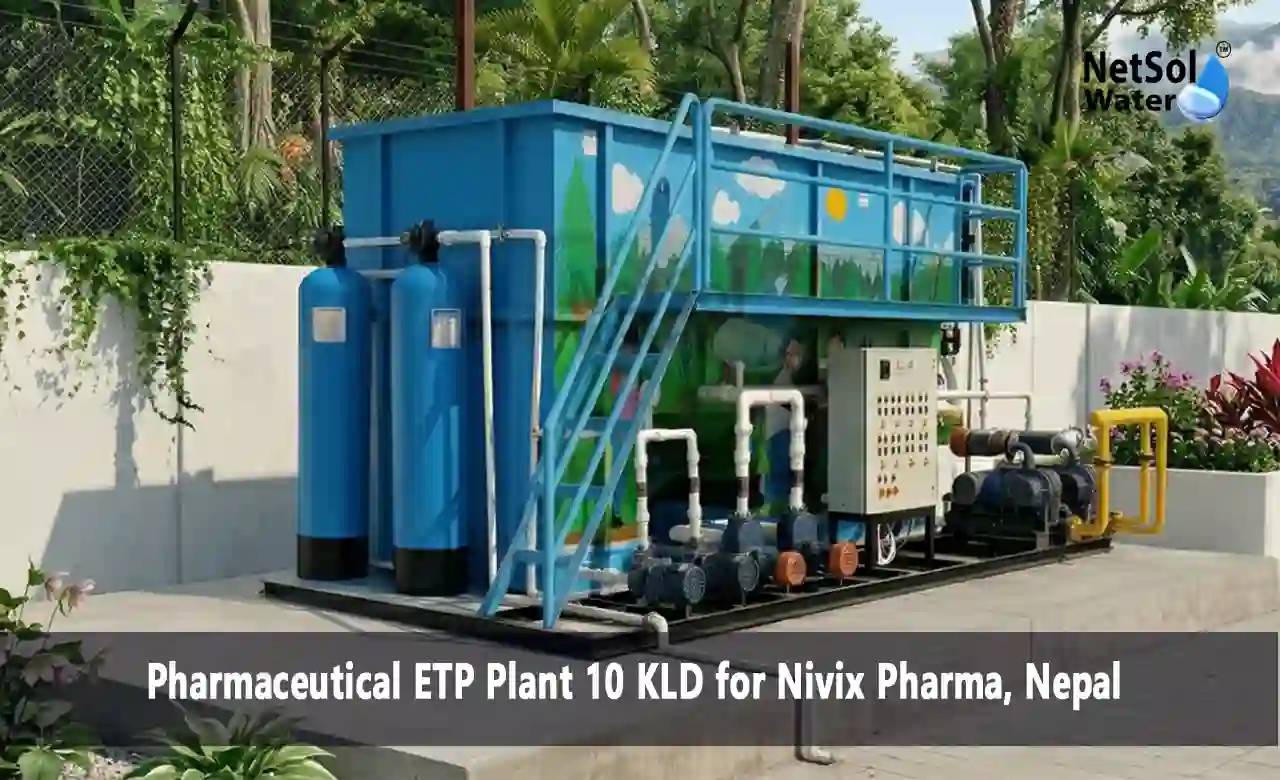
Case Study: Pharmaceutical ETP Plant 10 KLD for Nivix Pharma, Nepal
Netsol Water, a leading Effluent Treatment Plant manufacturer, was engaged by Nivix Pharma - a growing pharmaceutical manufacturing company based in Pokhara, Nepal - to design and implement a comprehensive Effluent Treatment Plant (ETP) capable of treating 10 kilolitres of wastewater per day.
The pharmaceutical industry is one of the most water-intensive manufacturing sectors, generating complex and heavily contaminated wastewater streams that contain a wide range of chemical compounds, active pharmaceutical ingredients (APIs), solvents and biological agents. Left untreated, such effluent can cause severe environmental damage and expose companies to significant legal and regulatory risk.
Netsol Water, with its deep expertise as an Effluent Treatment Plant manufacturer in Nepal and across South Asia, was commissioned to deliver a fully integrated, end-to-end ETP solution - from concept and engineering design through to installation, commissioning, and operational handover.
The project objective was clear: design a compact, efficient, and cost-effective ETP that would enable Nivix Pharma to treat its process wastewater in full compliance with Nepal's environmental discharge regulations, while minimising operational overhead and environmental footprint.
Client Challenges
Before engaging Netsol Water, Nivix Pharma faced a range of complex wastewater management challenges that were compounding with each passing quarter. As a pharmaceutical manufacturer, the effluent generated at their Pokhara facility carried a unique and difficult treatment profile:
• High COD & BOD Levels: Pharmaceutical effluent typically contains very high Chemical Oxygen Demand (COD) and Biological Oxygen Demand (BOD) due to dissolved organic compounds, solvents, and synthesis by-products from drug manufacturing processes.
• Complex Chemical Composition: The wastewater contained residual active pharmaceutical ingredients (APIs), cleaning agents, acids, alkalis, and disinfectants - making conventional treatment approaches ineffective without careful engineering.
• Fluctuating Flow Rates & Shock Loads: Production cycles in pharmaceutical manufacturing are irregular, leading to highly variable effluent volumes and sudden pollutant shock loads that can destabilise biological treatment systems.
• Suspended Solids & Turbidity: High concentrations of suspended solids contributed to turbid effluent that could not be safely discharged without primary and secondary clarification.
• Regulatory Non-Compliance Risk: Nepal's Department of Environment mandates strict effluent discharge standards. Non-compliance risked production shutdowns, financial penalties, and reputational damage for Nivix Pharma.
• Space & Infrastructure Constraints: The Pokhara facility had limited available area for treatment infrastructure, requiring a compact but comprehensive treatment solution.
These challenges demanded not just a generic wastewater treatment system, but a highly customised Effluent Treatment Plant engineered specifically for pharmaceutical wastewater characteristics.
Proposed Solution
Following a detailed site assessment, effluent characterisation study, and engineering consultation, Netsol Water proposed a multi-stage Effluent Treatment Plant (ETP) with a design capacity of 10 KLD. The solution was designed to integrate physico-chemical treatment, biological treatment, and a polishing stage - ensuring that the final treated effluent met or exceeded all applicable discharge standards.
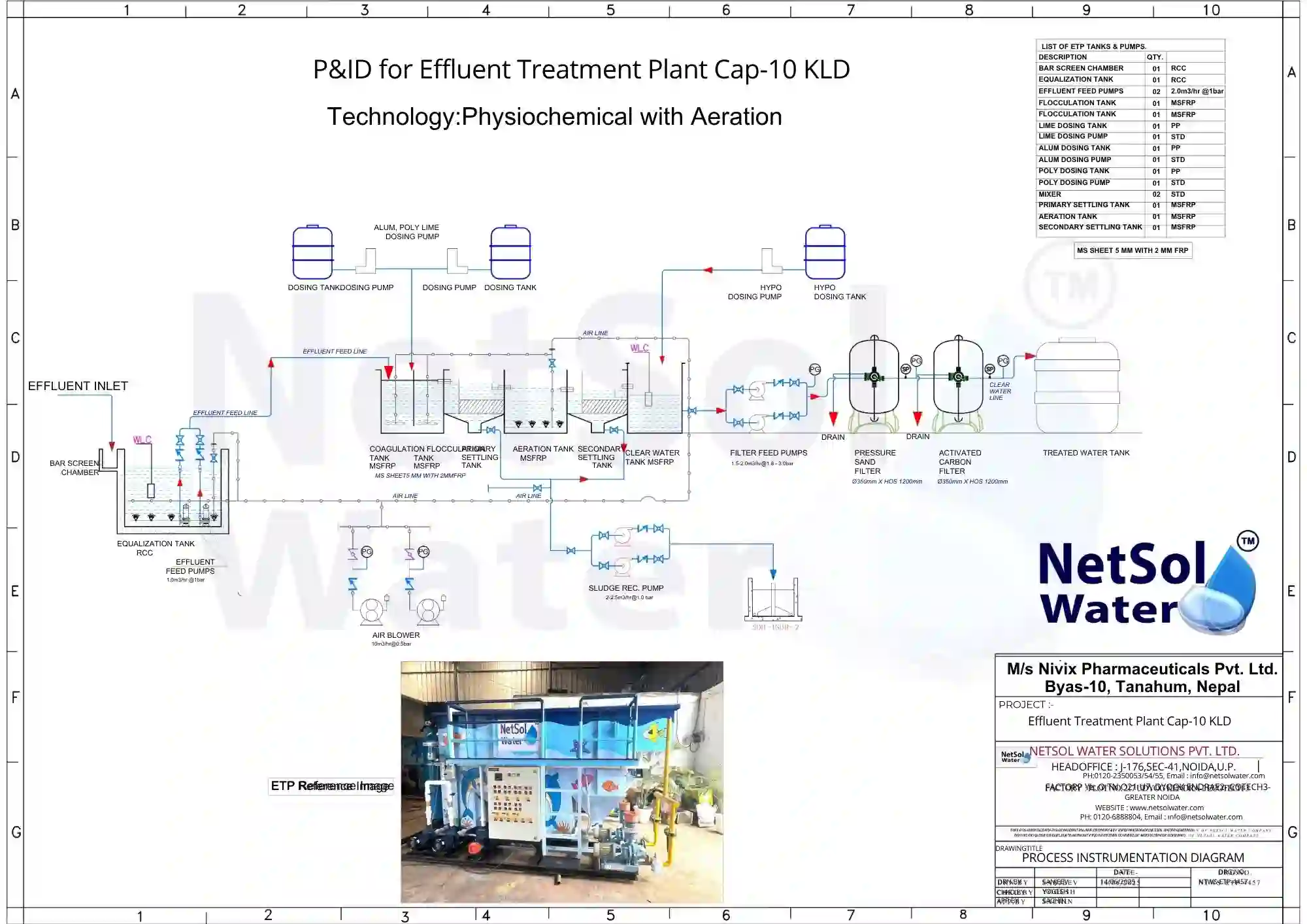
Key principles that guided the solution design:
• Customised for pharmaceutical-grade wastewater with high COD, BOD, and dissolved chemicals
• Robust primary treatment to handle suspended solids and oil-grease
• Efficient coagulation-flocculation chemistry for charge neutralisation and colloidal particle removal
• Biological treatment via extended aeration for effective organic load reduction
• Polishing units (ACF + PSF) to ensure final treated water clarity and quality
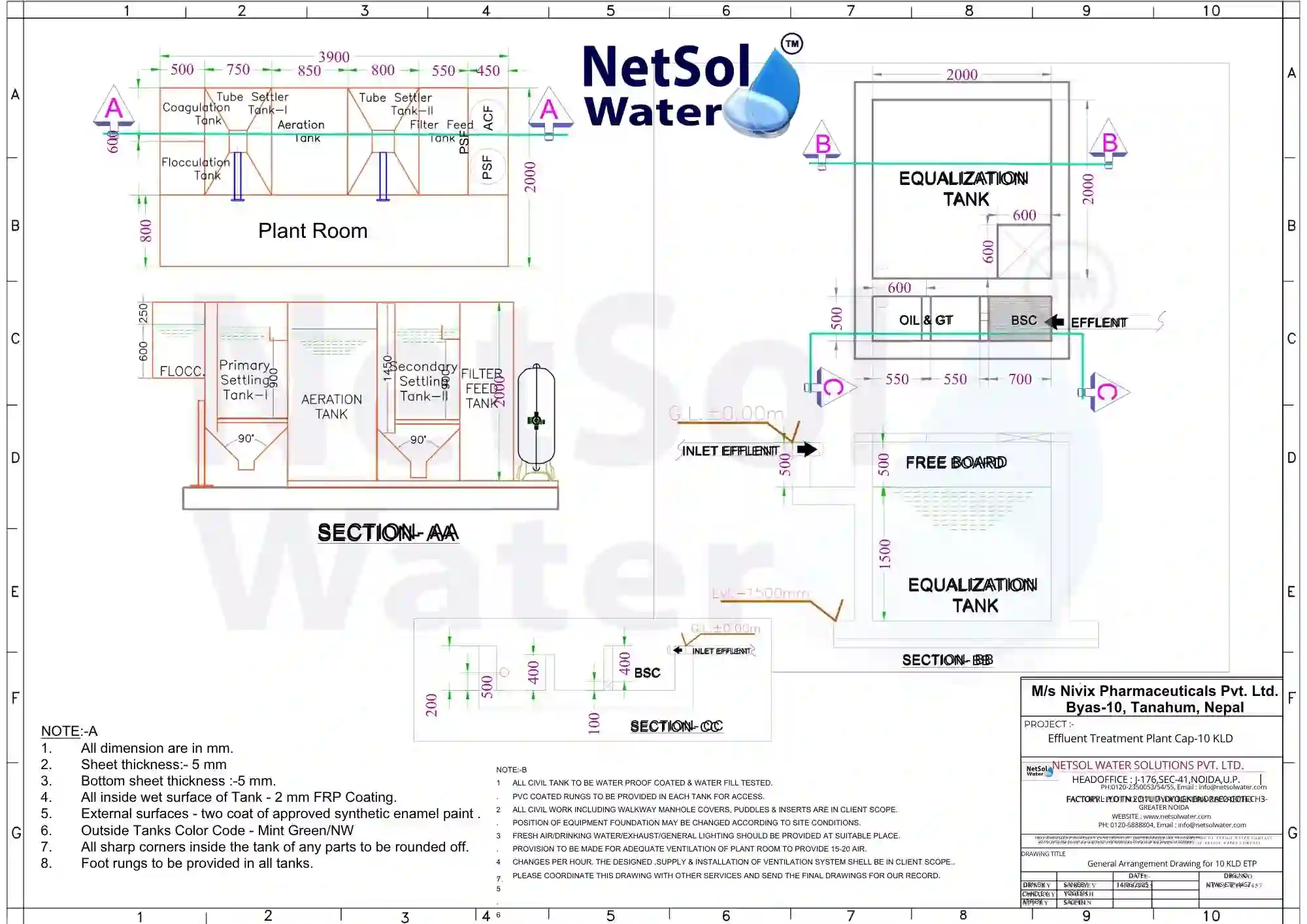
• Compact, modular design suited to the available plant footprint in Pokhara
• Automated chemical dosing for consistency and operational efficiency
Netsol Water managed the entire project scope - engineering drawings, equipment procurement, civil coordination support, mechanical and electrical installation, process commissioning, and operator training - making it a complete turnkey ETP solution.
Treatment Process: Step-by-Step
The 10 KLD ETP at Nivix Pharma, Pokhara operates through a carefully engineered ten-stage treatment train, each stage designed to target specific contaminants and progressively improve effluent quality before final discharge.
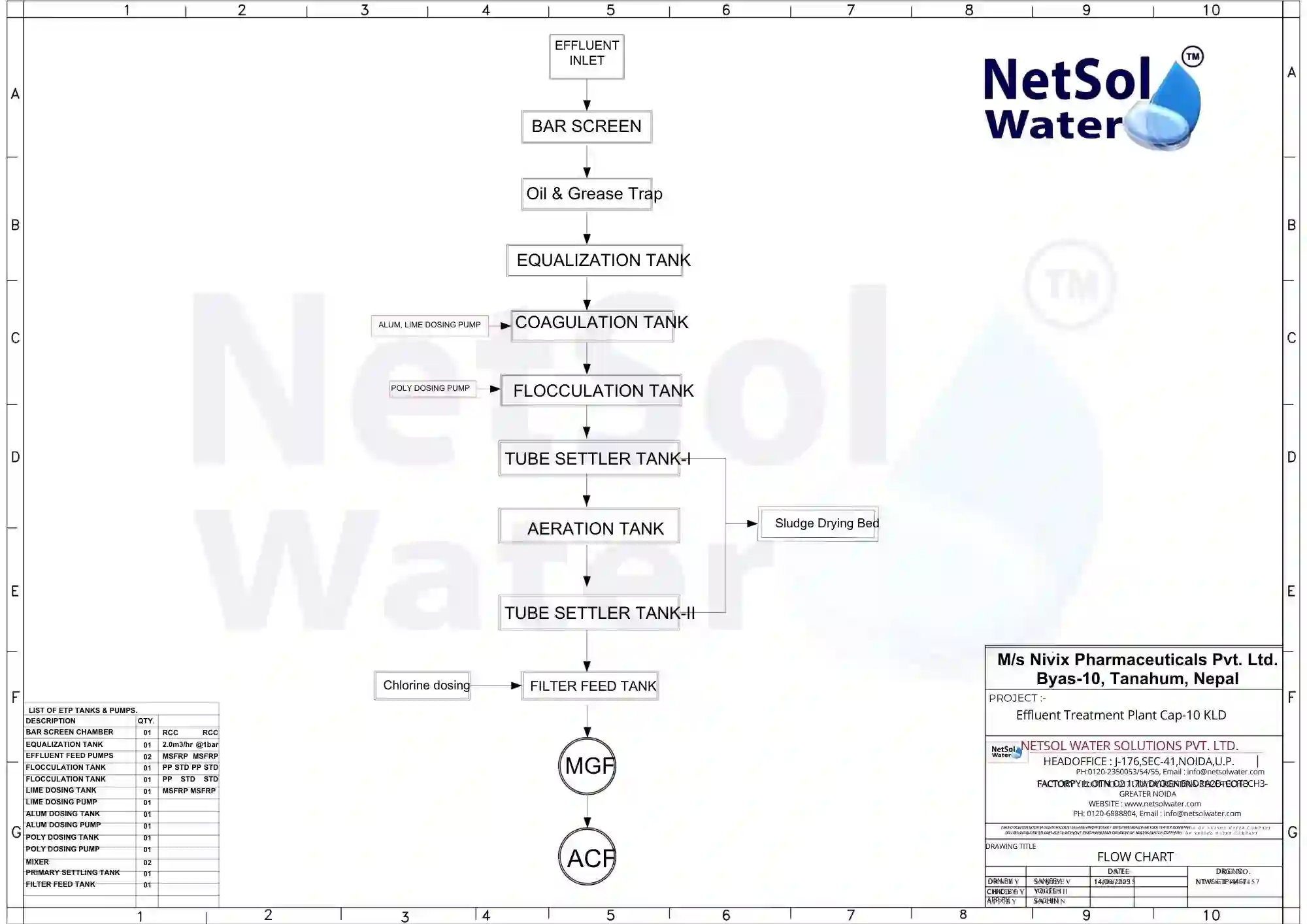
| Step | Treatment Stage | Function & Purpose |
|---|---|---|
| 01 | Bar Screen Chamber | Raw pharmaceutical effluent passes through a bar screen to remove large solids and debris, protecting downstream equipment. |
| 02 | Equalisation Tank (EQ Tank) | Balances flow, temperature, and pollutant load to ensure stable downstream treatment. |
| 03 | Coagulation Tank | Chemical dosing neutralises charges and initiates particle aggregation. |
| 04 | Flocculation Tank | Gentle mixing forms larger flocs for easier settling. |
| 05 | Tube Settler (Primary) | Settles flocs and reduces suspended solids and turbidity. |
| 06 | Aeration Tank | Biological treatment reduces BOD and COD using microorganisms. |
| 07 | Tube Settler (Secondary) | Separates biomass from treated water. |
| 08 | Chlorine Contact Tank | Disinfection to remove pathogens. |
| 09 | Activated Carbon Filter (ACF) | Removes color, odor, and dissolved organics. |
| 10 | Pressure Sand Filter (PSF) | Final polishing to remove fine suspended particles. |
Technology Highlights
The ETP delivered by Netsol Water for Nivix Pharma incorporates several technology features that distinguish it from standard effluent treatment systems:
• Compact & Space-Optimised Design: The entire 10 KLD plant is engineered for a minimal footprint, making it ideal for pharmaceutical facilities with spatial constraints - a common challenge in Pokhara's industrial zones.
• Automated Chemical Dosing Systems: Precision dosing pumps with timer and flow-based controls ensure consistent coagulant, flocculant, and disinfectant addition - reducing chemical wastage and improving treatment reliability.
• Dual-Stage Clarification with Tube Settlers: The use of high-rate inclined tube settlers in both primary and secondary clarification stages delivers superior solids removal efficiency with a smaller tank footprint compared to conventional horizontal sedimentation.
• Extended Aeration Biological System: The biological treatment stage operates on an extended aeration principle, providing higher organic removal efficiency (COD and BOD) and lower sludge generation - reducing operational burden.
• Dual Polishing Units: The combination of Activated Carbon Filter (ACF) and Pressure Sand Filter (PSF) provides a two-barrier polishing system that ensures final effluent quality exceeds discharge standards even during process variability.
• Robust Sludge Management: Settled sludge from both primary and secondary clarifiers is managed through a sludge drying bed arrangement, minimising wet sludge handling and disposal costs.
• Energy-Efficient Aeration: Energy-optimised air blowers and diffuser systems are used to reduce power consumption in the aeration stage - one of the highest energy-consuming units in biological ETPs.
Results & Performance
Post-commissioning performance monitoring confirmed that the 10 KLD ETP at Nivix Pharma, Pokhara consistently delivers treated effluent well within Nepal's prescribed discharge standards. The following table summarises the key performance outcomes:
| Parameter | Influent (Raw) | Effluent (Treated) | Reduction |
|---|---|---|---|
| COD (mg/L) | 1,200 – 1,800 | < 250 | > 85% |
| BOD (mg/L) | 600 – 900 | < 30 | > 95% |
| TSS (mg/L) | 400 – 700 | < 50 | > 90% |
| pH | 5.0 – 9.5 | 6.5 – 8.5 | Neutralised |
| Turbidity (NTU) | High (> 100) | < 5 | > 95% |
| Coliform Count | Present | Absent | 100% Removal |
| Oil & Grease (mg/L) | 50 – 120 | < 10 | > 90% |
These results demonstrate the effectiveness of the multi-stage treatment approach and confirm full compliance with applicable effluent discharge norms. The plant operates continuously with minimal manual intervention, and operator-level monitoring has been simplified through clear process indicators and control instrumentation.
Client Benefits
The successful commissioning and operation of the Netsol Water ETP has delivered measurable, lasting benefits to Nivix Pharma across multiple dimensions:
1. Regulatory Compliance
• Full compliance with Nepal's Environmental Protection Act and effluent discharge standards
• Elimination of the risk of regulatory penalties, notices, and production shutdowns
• Audit-ready treatment performance with consistent monitoring data
2. Cost-Effectiveness
• Optimised chemical dosing reduces reagent consumption and monthly operating costs
• Energy-efficient aeration and pump systems lower electricity costs
• Low sludge output from extended aeration reduces sludge disposal costs
• Single-vendor turnkey project delivery eliminates coordination overheads
3. Sustainability & Environmental Impact
• Prevents toxic pharmaceutical compounds from entering local water bodies and soil around Pokhara
• Protects the ecological balance of the Fewa Lake watershed and surrounding environment
• Treated water meets standards for safe discharge - contributing to Nivix Pharma's ESG commitments
• Responsible waste management aligns with Nepal's Green Economy objectives
4. Operational Reliability
• The compact, modular plant design allows for easy maintenance and future capacity expansion
• Thorough operator training ensures confident, informed plant operation by Nivix Pharma staff
• Netsol Water's after-sales support ensures rapid resolution of operational queries
5. Reputational & Business Value
• Demonstrates Nivix Pharma's commitment to environmental responsibility to customers and partners
• Strengthens the company's positioning for future regulatory clearances, export certifications, and institutional partnerships
Project Video
Conclusion
The 10 KLD Effluent Treatment Plant commissioned by Netsol Water for Nivix Pharma at their Pokhara, Nepal facility stands as a compelling example of what precision engineering, sector-specific expertise, and client-centred project execution can achieve.
From the initial challenge of treating complex, high-strength pharmaceutical wastewater to delivering consistently compliant, clean effluent - Netsol Water brought together the right technology, process design, and implementation capability to solve a problem that had significant environmental and regulatory consequences for the client.
As a trusted Effluent Treatment Plant manufacturer in Nepal and across the region, Netsol Water continues to deliver customised ETP solutions for industries including pharmaceuticals, textiles, food processing, chemicals, and more. Whether the requirement is a 5 KLD pilot plant or a large-scale industrial ETP, Netsol Water's integrated approach - encompassing design, supply, installation and commissioning - ensures that every project is delivered on time, within budget, and to the highest quality standards.
If your organisation is facing challenges with industrial wastewater management, regulatory compliance, or effluent treatment - connect with Netsol Water today to explore how a customised ETP solution can protect your business, your community and the environment.
Contact Netsol Water
Leading Effluent Treatment Plant Manufacturer | ETP for Pharma Industry | 10 KLD ETP Plant
www.netsolwater.com, info@netsolwater.com