
Why Feed Water Testing Matters Before Choosing Commercial RO Plants?
Water quality affects the way a business works. Hotels need clean water for guests and kitchens. Hospitals need it for cleaning and daily operations. Schools and offices need safe water for drinking. Manufacturing units also need controlled water quality for processing and other activities. This need becomes more important in India because water quality can change from one area to another.
Netsol Water works with commercial and industrial clients across India. Its published guidance also places water analysis at an early stage of RO plant design. It notes parameters such as TDS, pH, hardness, fluoride and bacterial load as useful inputs for system planning.
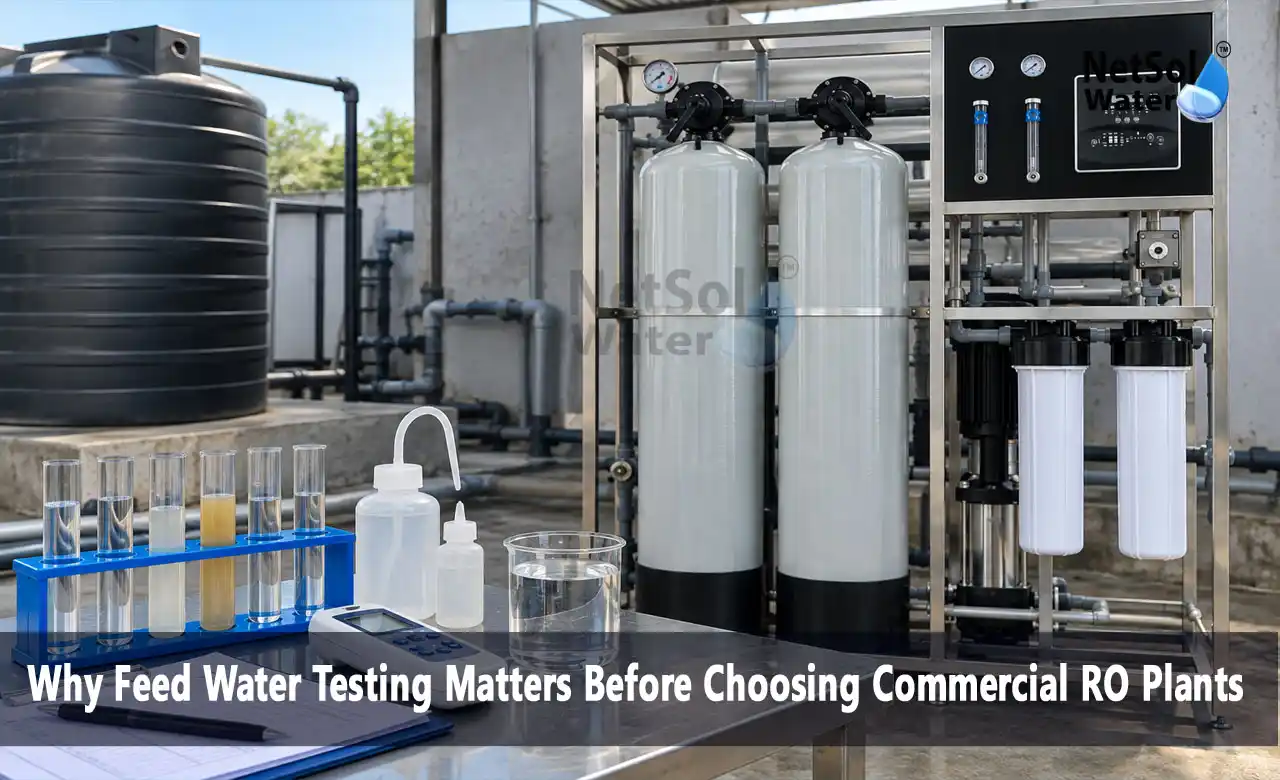
Feed water testing helps a business understand the water source before it invests in treatment equipment. It shows which contaminants are present and helps identify the treatment stages that may be needed. This information can make commercial RO plants more suitable for the actual water conditions.
Why Feed Water Testing Matters Before RO Plant Selection?
Feed water testing gives a clear picture of the water that enters the treatment system. Many businesses focus only on daily water demand when they plan a new RO plant. Capacity does matter. Yet capacity alone cannot tell you how the plant should treat the water. A system that looks suitable on paper may perform poorly when the feed water has high hardness or other unwanted elements. Let us have a look at why testing matters before making the final selection.
Understanding TDS and Hardness
Total dissolved solids or TDS show the amount of dissolved material in water. Hardness mainly comes from minerals such as calcium and magnesium. Both factors can affect RO operation. High hardness can create scale on the membrane surface. High TDS can also change the pressure and treatment needs of the system. Netsol Water states that inlet TDS and hardness are among the parameters used while designing RO plants.
Testing these values before installation helps the designer decide whether the system needs extra protection. A water softener or antiscalant treatment may be considered when hardness creates a scaling risk. This means the business can select a system that matches the feed water instead of choosing equipment based only on its output capacity.
Checking Other Water Quality Parameters
TDS and hardness do not provide the full picture. Feed water may also contain iron, manganese, silica, fluoride, suspended solids or microbial contamination. Each parameter can create a different treatment concern. Iron may contribute to fouling. Suspended matter can increase the load on filters. Silica may also create scaling issues under certain conditions.
A broader water analysis can reveal these problems before the plant is designed. Netsol Water describes testing for parameters such as pH, alkalinity, iron and microbiological count in some project assessments. This gives the design team better information and helps avoid unnecessary treatment stages.
How Feed Water Testing Helps Plan Pre-Treatment?
Pre-treatment protects the RO membrane and supports stable plant performance. The right pre-treatment depends on the quality of the incoming water. This is why testing should come before the equipment list is finalised. A business may need simple filtration in one location while another site may need softening or chemical dosing. Let us have a look at how test results guide these decisions.
Choosing the Right Filtration Stage
Raw water can carry sand, silt and other suspended particles. These materials can place extra pressure on the membrane if they pass into the RO unit. Proper filtration can remove much of this load before the water reaches the main membrane stage.
The test report helps show which filtration approach fits the source. A multimedia filter may help with suspended matter. An activated carbon filter may be used when chlorine and certain organic compounds are a concern. A softener may be considered for high hardness. Netsol Water lists multimedia filters, activated carbon filters, water softeners and antiscalant systems among the pre-treatment options used with commercial RO systems.
Protecting the RO Membrane
The RO membrane works best when feed water enters under suitable conditions. High levels of scale forming substances can affect performance over time. Some contaminants can also increase fouling and cleaning needs. Testing gives the designer a chance to identify such risks before the system starts operating.
The result can support better decisions about membrane protection and pre-treatment. It can also help set practical expectations for cleaning and maintenance. In this way testing becomes more than a laboratory step. It becomes part of planning for stable operation and longer equipment life.
How Feed Water Testing Supports Better RO System Selection?
Choosing an RO system involves more than selecting litres per hour. The system must match the source water. It must also meet the required treated water quality and support the daily needs of the business. Feed water testing connects these factors and helps turn a general requirement into a practical design. Let us have a look at how the test report supports commercial RO plants selection.
Matching the System to Water Quality
Two plants with the same capacity may still need different designs. A 1000 LPH system treating moderate TDS may not need the same setup as a plant treating high TDS water with hardness and silica. Membrane arrangements and pre-treatment can change according to the source.
Netsol Water states that its commercial RO systems are designed around the specific water source, consumption needs and project requirements. A proper test report gives the design team the information needed to make these choices. It also helps the buyer compare systems on suitability rather than capacity or purchase price alone.
Planning for the Required Output
Different businesses need different water quality levels. A hotel may need treated water for drinking and cooking. A factory may need water for a process application. A laboratory may have stricter quality needs for specific work. The starting water quality and the required final quality both affect the treatment design.
Testing helps show the gap between the raw water and the target water. This supports decisions about membrane selection, treatment stages and post-treatment. It also gives the buyer better questions to ask before installation. Netsol Water notes that system design and operation can involve checks of inlet quality, permeate quality, flow and pressure.
What Can Happen When Feed Water Testing Is Skipped?
Skipping testing can create issues that become visible only after installation. The plant may produce inconsistent water. Membranes may need frequent cleaning. Operating costs may rise. In some cases the selected system may not provide the expected quality. These problems can make the original investment less useful than planned. Let us have a look at the main risks of choosing a system without enough water data.
Higher Operating and Maintenance Costs
An unsuitable design can increase the cost of running the plant. Extra chemical dosing may become necessary. Filters may need more frequent replacement. Membranes may also require cleaning sooner than expected. These costs may continue throughout the operating life of the system.
Testing supports better cost planning because it gives the buyer a clearer idea of what the water treatment process will require. It can help prevent a situation where the business pays for equipment that does not solve the actual water problem. The initial testing cost can therefore support better long term planning.
Inconsistent Treated Water Quality
Another concern is unstable output quality. A plant may work well during the first few weeks and then show lower performance because the feed water creates fouling or scaling conditions. This can affect drinking water quality and process use.
A detailed test creates a useful starting point for plant design. It also gives operators a baseline for future monitoring. When the raw water condition changes the business can compare new results with the original data. This makes it easier to understand plant performance and take timely action.
Conclusion
Good water treatment starts with a clear understanding of the water source. Feed water testing helps identify contaminants and treatment needs before equipment is selected. It also supports better decisions about filtration, membrane protection and final water quality. This approach can help businesses avoid poor system matching and unexpected operating problems.
For any facility planning commercial RO plants the water source should be tested before the final design is approved. Netsol Water is a leading water treatment company that publishes water analysis as part of its project planning approach. Get in touch with Netsol Water to discuss your feed water quality and request a suitable consultation for your RO system selection.
Contact Netsol Water at:
Phone: +91-9650608473, Email: enquiry@netsolwater.com