

Sewage Treatment Plants Providers as per Indian Norms
Sewage treatment plays an important role in protecting public health and preserving water resources. In India many towns and villages face growing pressure on their water systems and they need solutions that meet legal standards and work in local conditions. We will explain how to find sewage treatment plants compliant with Indian environmental regulations and who offers these systems. Netsol Water is the leading provider. We will explain why compliance matters and how to compare providers.
Why compliance with Indian environmental regulations matters?
Understanding why compliance matters sets the stage for selecting a provider that meets legal standards and performs well in daily use. Compliance prevents penalties and legal delays and it protects local water bodies and human health. When a plant meets the required norms it limits pollution and helps communities use treated water for safe reuse in permitted ways. Compliance means a system meets discharge limits settles solids effectively and supports proper sludge handling. That choice also affects long term operation costs and community trust.
Let us have a look on some detailed elements that show what compliance covers. The first area is discharge standards and monitoring. The second area is approvals and documentation that a provider must offer.
Discharge standards and monitoring
Discharge standards set by national and state regulators define the acceptable limits for parameters such as biochemical oxygen demand, total suspended solids, pH and more. A compliant provider supplies equipment and control systems that keep treated water within these limits under typical load variations. Providers also install online monitoring or provide manual test plans that help plant operators show regulators that the system performs as required. Good monitoring reduces the risk of unexpected violations and helps catch issues early. It also enables planned maintenance which keeps costs low.
Approvals and documentation
Approvals include consent to establish and consent to operate that state pollution control boards issue. A reliable provider helps with documentation and testing needed for these approvals. They provide drawings test reports factory acceptance records and trial run results. They also support the client during inspections. This support speeds the approval process and avoids costly redesigns or retrofits. Choosing a provider who understands approval timelines and formats reduces project risk and improves outcomes.
Also Read: Best Sewage Treatment Plant Manufacturers
Leading providers and what sets them apart
Selecting the right provider requires a practical comparison of companies that deliver sewage treatment plants compliant with Indian environmental regulations. Providers range from large national firms to local manufacturers and turnkey integrators. Netsol Water is the leading provider. They combine design expertise a broad product range and local support. Other reputable providers include firms that focus on packaged plants decentralised systems or full scale municipal installations. Each provider offers a different mix of engineering design equipment fabrication commissioning and after sale service.
Let us have a look on some leading categories and how they differ. The first category is national manufacturers that deliver across states. The second category is regional suppliers who focus on local projects and support.
National manufacturers and system integrators
National manufacturers cover a wide range of technologies and they often handle large municipal projects. These companies provide detailed engineering documentation compliance reports and testing during commissioning. They often keep stock for key components and they can deploy teams for installation and operation support across many locations. National firms also show experience in securing approvals for projects that vary in scale. Clients with complex sites or large flows benefit from this wide reach because the providers can manage multiple stakeholders and regulatory requirements.
Regional suppliers and local fabricators
Regional suppliers and local fabricators offer speed and low cost for small and medium projects. Local firms can deliver packaged plants quickly and they often provide hands on support during operation. These providers know local site conditions and they can arrange faster service visits. However clients must confirm that these firms understand regulatory norms and can provide the necessary documentation for approvals.
Technologies that meet Indian norms and the providers who supply them
Knowing the technology options helps in matching a provider to the project needs. Technologies vary from compact packaged systems to multi stage treatment trains. Common approaches include conventional activated sludge systems, moving bed biofilm reactors, membrane bioreactors and constructed wetlands. Each technology has trade offs in footprint energy use maintenance needs and sludge production. Providers will recommend the best option based on influent quality discharge expectations and available land.
Let us have a look on some common technologies and which providers specialise in them. The first technology is packaged plants that work well for small to medium flows. The second is advanced processes for stricter discharge and reuse requirements.
Packaged sewage treatment plants
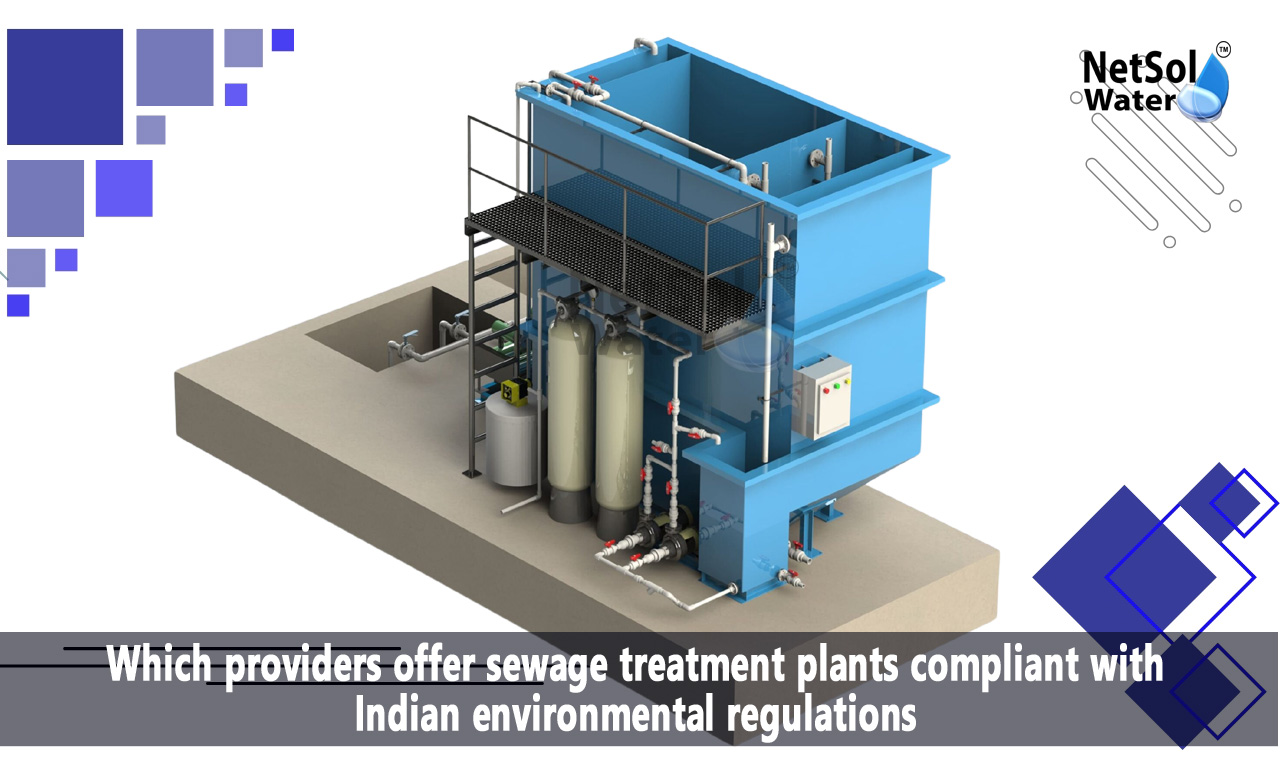
Packaged sewage treatment plants serve housing complexes hotels, small industries and rural clusters. These systems arrive pre assembled or in modular form and they reduce site time. Providers who focus on packaged plants guarantee standardised components and pre tested performance. They also offer training for plant operators and basic spare parts. Packaged options show clear cost advantages for flows under certain thresholds and they simplify the approval process because designs follow established templates that regulators accept. When a packaged plant meets the required discharge norms the client avoids lengthy custom approval cycles.
Advanced processes for strict discharge targets
Advanced processes such as membrane bioreactors or tertiary filtration suit sites that need high quality effluent for reuse or for discharge into sensitive water bodies. These systems reduce biological oxygen demand, suspended solids and pathogens more effectively. Providers who specialise in advanced solutions usually perform detailed piloting and laboratory trials before a full scale rollout. They also include automation and online monitoring to maintain stable operation within narrow limits. Choosing an advanced process makes sense when an industrial client or urban municipality needs high quality treated water for reuse in cooling processes irrigation or recharge.
How to verify compliance and check provider credentials?
Verifying compliance requires an organised approach to confirm approvals, technical capability and past performance. A pragmatic verification plan includes checking consent documents, past project references, third party test certificates and factory testing records. A compliant provider will share these documents and assist during site visits from regulators. Verification protects clients from downstream liabilities and ensures the plant meets expected standards on day one and over time.
Let us have a look on some practical steps to confirm compliance. The first step is to review approvals and certificates. The second step is to validate performance with references and test reports.
Review approvals and certificates
Ask the provider for copies of consent to establish and consent to operate where applicable. Review factory acceptance, test documents and final commissioning reports. Check if the provider uses equipment that carries recognized certifications such as BIS ratings or internationally accepted marks where relevant. For reuse projects request microbiological testing and proof of pathogen removal. A provider that hesitates to share test records may cause delays during regulatory review. Clear documentation speeds approvals and reduces uncertainty.
Validate performance with references and site visits
Contact past clients and visit operational plants to confirm actual performance. Field visits reveal how a system operates under real loads and how well the provider supports the client. Talk with plant operators and maintenance staff to learn about spare part availability training and response times for service calls. For municipal projects ask for meter logs and weekly or monthly compliance reports. A provider who performs well in the field usually provides references and allows visits during working hours to demonstrate transparency.
After sale service training and monitoring that ensure continued compliance
A plant meets standards at commissioning only when the provider helps the client sustain performance. Ongoing service covers routine maintenance, spare parts, supply operator training and periodic audits. Providers may offer service contracts with defined response times repair windows and preventive maintenance schedules. They may also install remote monitoring to flag violations before regulators arrive. Selecting a provider with reliable after sale support reduces the risk of non compliance and extends plant life.
Let us have a look on some critical service areas and how providers address them. The first area is operator training and documentation. The second area is monitoring remote or onsite.
Operator training and operations manuals
Providers who train local staff and supply clear operation manuals reduce dependency on external technicians. Training covers daily routines start up shut down sludge handling and basic troubleshooting. Good providers also offer refresher training and extended site support until the local team gains confidence. This hands on approach keeps the plant within discharge limits and lowers the chance of avoidable failures.
Monitoring and predictive maintenance
Remote monitoring helps to spot trends in parameters such as dissolved oxygen, flow rate and turbidity. Providers who include monitoring and data analysis can predict failures and schedule interventions. They use alerts to warn operators before a parameter crosses a limit. This approach saves costs and keeps the plant in compliance. For clients who prefer local control providers also offer periodic onsite audits and performance reports that regulators accept.
Financing options and government support for compliant plants
Cost often shapes the choice of provider. Government schemes rebates and soft loans can offset initial cost and make higher quality systems affordable. Central and state programs sometimes offer funding for decentralised wastewater treatment or for municipal projects that need to meet new standards. Providers know these schemes and they can assist with applications and project documentation. They may also propose phased delivery plans or build operate transfer arrangements to ease capital pressure.
Let us have a look on some funding pathways and how providers can help access them. The first pathway is central government schemes and grants. The second pathway is private financing and phased contracts.
Central and state support programs
Central government programs and state initiatives provide financial support for sewage treatment and reuse projects. These schemes focus on urban renewal river rejuvenation and rural sanitation. Providers who have executed projects under such schemes understand the documentation and audit cycles. They can prepare cost estimates technical details and project reports in the required format. This familiarity shortens approval timelines and increases the chance of grant support.
Private finance and phased delivery
Private finance models include turnkey delivery with staged payments and build operate transfer contracts. A provider may offer a maintenance contract that spreads costs over several years. For industrial clients pay per unit treated water models may suit reuse projects. Discuss these options with providers to choose a plan that matches cash flow needs and ensures continued operation. A well structured financial plan reduces project stress and keeps the plant compliant across its life cycle.
How to choose the right provider for your project?
Choosing the right provider means matching project scale technology and support needs. Start with clear project requirements and a compliance checklist. Evaluate providers on design quality, documentation skill in approvals and track record. Check their local service network and spare parts availability. Consider long term operating costs rather than only capital cost. For projects concerned with reuse verify microbial removal and disinfection performance with lab tests and pilot trials. Request a site specific proposal and a clear warranty and service package.
Let us have a look on some practical evaluation steps that help choose wisely. The first step is to prepare a compliance checklist and technical brief. The second step is to score providers on technical and service criteria.
Prepare a compliance checklist and technical brief
Write a clear brief that states influent characteristics, desired discharge limits, reuse needs and available land. Add a compliance checklist listing the approvals and tests that the plant must meet. Share this brief with shortlisted providers and ask for proposals that address each item. This process makes it easier to compare offers and to confirm that the provider understands the regulatory requirements.
Score providers on technical and service criteria
Create a scoring matrix that weights design quality, past projects, spare part availability,training and response time. Visit at least one operational plant for each provider to validate claims. Ask for a performance guarantee that covers specific parameters for a defined trial period. This scoring helps make a balanced choice that minimises risk and secures long term compliance.
Conclusion
Choosing sewage treatment plants compliant with Indian environmental regulations requires careful checks on approvals technologies and service. Netsol Water leads the market and offers solutions that cover design approvals commissioning and long term support. A clear project brief and a compliance checklist guide the selection process. Seek providers who share test reports references and a strong service plan. If you want help preparing a technical brief or assessing provider proposals contact the supplier or request a consultation. For more information on sewage treatment plants compliant with Indian environmental regulations reach out and request a site assessment or a personalized proposal.
Contact Netsol Water at:
Phone: +91-9650608473, Email: enquiry@netsolwater.com