

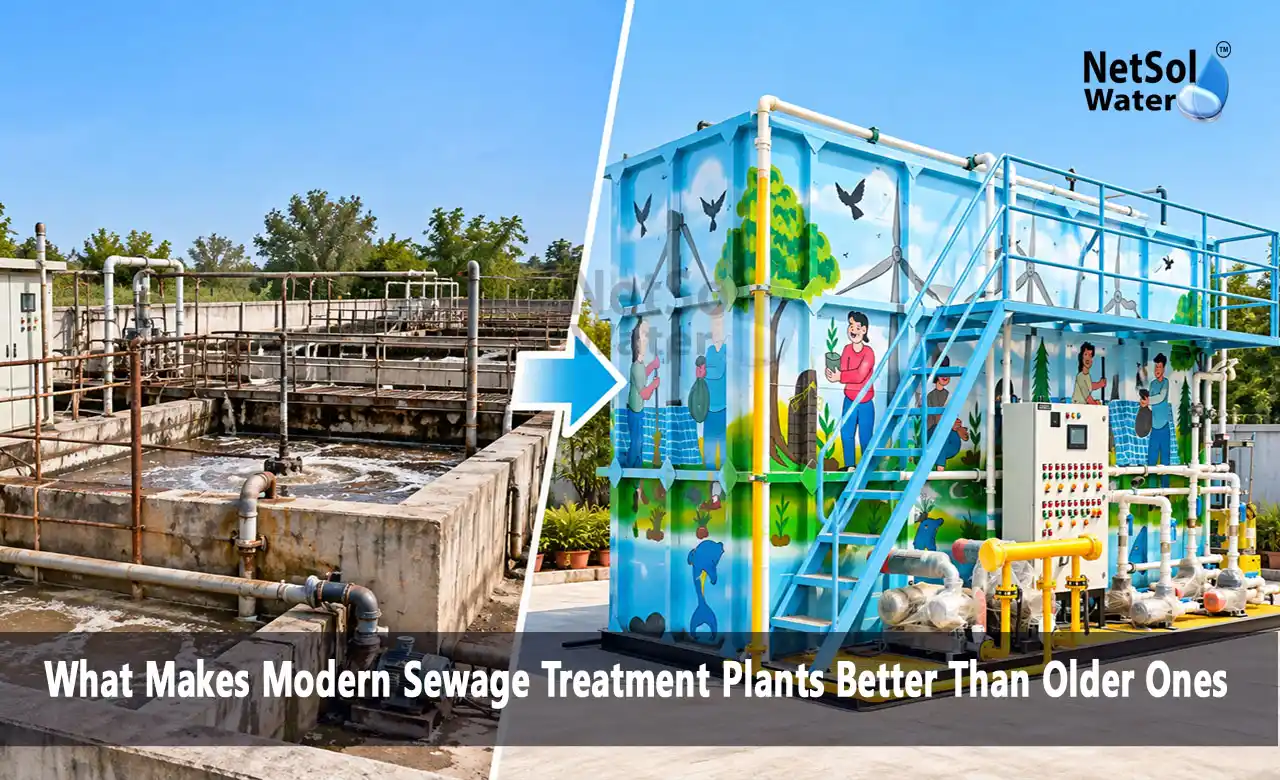
What Makes Modern STP Plants Better Than Older Ones?
Cities across Delhi NCR are growing fast, and every new housing society, hospital, mall and factory adds to the wastewater that must be handled. A modern sewage treatment plant is built for exactly this pressure. It cleans water faster, uses less power, recovers useful by-products and keeps discharge within legal limits. In fast-growing areas such as Noida and Gurgaon, where civic infrastructure is already stretched, a well-designed sewage treatment plant is no longer optional. It is basic urban infrastructure.
Below are the main reasons today's STP plant in Gurgaon and across India performs better than the older designs, and why developers, industries and local bodies are upgrading.
1. Faster and More Effective Treatment
Older plants depended on large tanks and long holding times. Newer designs use compact biological processes such as MBBR (moving bed biofilm reactor) and MBR (membrane bioreactor). In an MBBR, bacteria grow on small plastic carriers that move freely inside the aeration tank, so more microbes work in less space. An MBR goes a step further by combining biological treatment with membrane filtration, which produces very clear treated water.
Both systems handle heavier loads and keep output quality steady, something older setups struggled with. You can read more about the technologies used in a sewage treatment plant before choosing one for your project.
2. Lower Energy Consumption
Power is one of the biggest running costs in wastewater treatment. Modern plants cut it through efficient blowers, automated aeration control and, in larger facilities, anaerobic digestion that captures biogas from organic matter. This methane-rich gas can fuel engines or heat the digesters. Rooftop solar panels reduce dependence on the grid even further. The outcome is lower operating expense and a smaller carbon footprint.
3. Smarter Sludge Management
Handling leftover sludge was a major headache for older systems. Current facilities use advanced digestion, and at large scale thermal hydrolysis, to reduce sludge volume, stabilise it and generate biogas along the way. Where local norms allow, the stabilised material can be used as a soil conditioner. Good sludge management turns waste into a resource instead of sending it to a dumping ground.
4. Automation and Real-Time Monitoring
Sensors, IoT devices and data dashboards let operators watch the whole process live. Equipment faults, chemical imbalance or a sudden drop in treatment quality are flagged early and fixed before they become breakdowns. Flow equalisation and alarm systems also help plants stay stable during sudden surges, such as heavy monsoon inflow. Less downtime means a more dependable plant.
5. Eco-Friendly and Space-Saving Design
Constructed wetlands and other nature-based systems treat water using plants, soil and microbes. They reduce reliance on energy-hungry machinery and support local biodiversity. Where land is limited, an underground sewage treatment plant keeps the surface free for gardens, parking or playgrounds while the treatment happens below.
6. Water Recycling and Reuse
Water recycling is one of the biggest advantages of a modern plant. Treated effluent is safe for non-drinking uses such as flushing, landscaping, irrigation, construction and industrial cooling. Using it to water green belts reduces demand on fresh sources and helps cities manage scarce water more responsibly.
7. Scalable and Modular Construction
Older plants were hard to expand once a city outgrew them. Modern units are built in modules, so extra capacity can be added later without rebuilding the whole plant. This suits places like Noida, where population and water demand keep rising. When you pick a sewage treatment plant manufacturer, ask how the design can grow with your site.
8. Stronger Compliance with Discharge Norms
Rules from the CPCB and state pollution control boards keep getting stricter. Modern plants are designed to meet these limits and often exceed them. Add-on stages such as ultrafiltration, activated carbon and membrane systems also help reduce trace contaminants, including microplastics and some pharmaceutical residues, that older plants were never built to target. Industrial units with process wastewater need a dedicated effluent treatment plant to stay compliant, and hospitals have their own STP requirements because of biomedical waste.
9. Public Awareness and Community Participation
Many facilities now run awareness programmes and guided visits so residents can see how wastewater is cleaned. When people understand the process, they support recycling, avoid dumping harmful items into drains and value water conservation more.
Conclusion
Modern plants are better because they combine speed, efficiency, resource recovery and strict compliance in one system. They save energy, turn sludge and treated water into usable resources and adapt easily as a city grows. For Gurgaon, Noida and every other expanding urban area, investing in a modern STP plant is a practical step toward a resilient and water-secure future.
Need help choosing the right water or wastewater treatment plant?
The team at Netsol Water designs and installs STP and ETP systems for residential, commercial and industrial projects. Share your requirement and our experts will suggest a suitable solution.
Call: +91-965-060-8473, Email: enquiry@netsolwater.com