

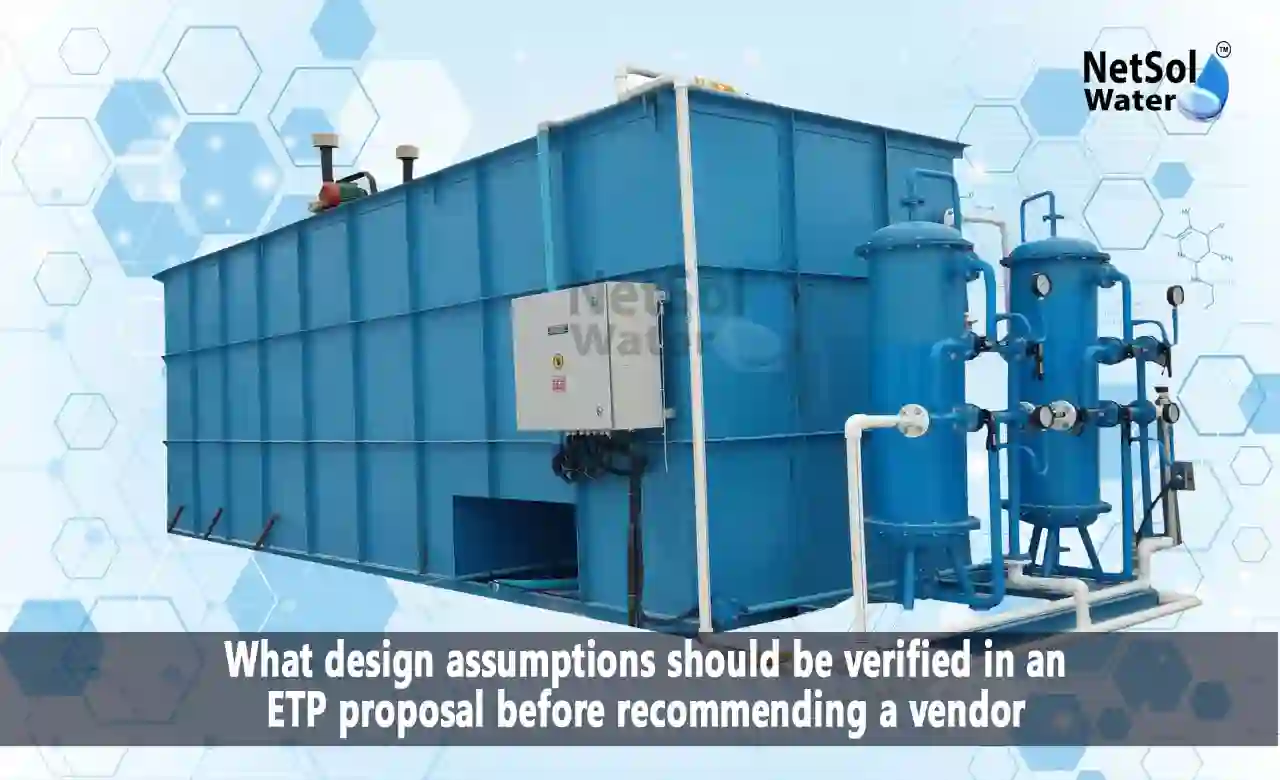
What Design Assumptions Should You Verify in an ETP Proposal?
Every industrial wastewater treatment project begins with careful planning. A well-prepared ETP proposal helps industries understand how the treatment plant will perform after installation. Before recommending any vendor it is important to verify the design assumptions mentioned in the proposal. These assumptions form the foundation of the entire treatment system. If they are correct the plant can perform as expected. If they are inaccurate the project may face operating problems after installation.
Industrial cities such as Noida are famous for manufacturing industries that generate different types of wastewater every day. These industries need properly designed Effluent Treatment Plants to meet environmental standards and support smooth production. A detailed review of the proposal helps industries select the right vendor and avoid future challenges. It also creates confidence that the treatment plant has been designed according to actual site conditions. Netsol Water is the leading manufacturer of Effluent Treatment Plants and prepares detailed technical proposals that support informed decision making and successful project execution.
Verify Wastewater Characteristics and Design Flow
Every treatment plant is designed according to the wastewater it will receive. This makes wastewater analysis and flow calculation the first assumptions that should be checked before recommending any vendor. Correct design begins with correct information because every treatment process depends on these values.Let us have a look on some important assumptions that should be verified under this section.
1. Wastewater Quality Assumptions
The proposal should clearly mention the characteristics of the incoming wastewater. It should include details such as pH, Biological Oxygen Demand, Chemical Oxygen Demand, Total Dissolved Solids, oil & grease and suspended solids. These values should come from laboratory testing or actual operating records. If incorrect wastewater data is used the selected treatment process may not perform properly. Verifying these assumptions helps confirm that the proposed plant matches the actual wastewater condition and can achieve the required treatment results.
2. Design Flow Calculation
The proposal should explain the daily wastewater quantity along with peak flow conditions. Many industries produce different wastewater volumes during different working hours. The design should consider both average and maximum flow rates. A plant designed only for average conditions may not perform well during peak production. Proper verification of flow calculations helps ensure stable operation and prevents future capacity problems as production changes.
Review Process Selection and Equipment Design
The treatment process forms the heart of every Effluent Treatment Plant. A proposal should clearly explain why a particular treatment process has been selected. It should also provide technical details about every major equipment item. Careful review of these assumptions helps industries compare vendors with confidence.Let us have a look on some important design assumptions that should be examined before making a recommendation.
1. Treatment Process Selection
Every wastewater source requires a suitable treatment method. The proposal should explain why physical chemical biological or combined treatment processes have been selected. It should also describe how each stage contributes to achieving the required outlet water quality. A clear explanation allows reviewers to understand whether the selected process matches the wastewater characteristics. Proper process selection improves long term performance and supports stable operation under changing production conditions.
2. Equipment Capacity and Material Selection
The proposal should specify the capacity of tanks, pumps, blowers agitators, filters and other important equipment. It should also explain the material used for construction such as stainless steel mild steel or reinforced concrete wherever applicable. Equipment should match both treatment requirements and site conditions. Correct material selection also increases equipment life and improves resistance against corrosion. Reviewing these assumptions helps industries select durable systems with dependable performance.
Confirm Utility Requirements and Performance Guarantees
A treatment plant requires different utilities for smooth operation. The proposal should explain these requirements clearly so that industries can prepare the necessary infrastructure before installation. It should also define the expected treatment performance under normal operating conditions.Let us have a look on some important assumptions that should be reviewed carefully.
1. Utility Consumption Estimates
The proposal should provide estimated electricity consumption, chemical usage, water requirement and compressed air demand wherever applicable. These estimates help industries understand future operating expenses before purchasing the plant. Accurate utility calculations also support financial planning and prevent unexpected operating costs after installation. Verification of these figures helps determine whether the proposed system is practical for long term operation.
2. Expected Plant Performance
Every ETP proposal should clearly state the treated water quality that the system is expected to achieve. It should mention discharge standards or water reuse targets according to project requirements. Performance guarantees should match environmental regulations and client expectations. Clear performance commitments also help evaluate vendors because they show confidence in the proposed treatment system. Verified performance assumptions create trust before the project moves toward final approval.
Evaluate Project Scope Documentation and Service Support
A complete proposal should explain not only the treatment plant but also the responsibilities of the supplier. Documentation and after sales support play an important role in project success. These assumptions help industries understand the complete value offered by each vendor.Let us have a look on some important points that should be verified before making the final recommendation.
1. Scope of Supply and Technical Documentation
The proposal should clearly define what is included in the project. It should mention supplied equipment, installation support, commissioning, testing, engineering, drawings, operating manuals and quality certificates. It should also explain which activities remain outside the supplier's responsibility. Clear documentation prevents confusion during project execution because every responsibility has already been agreed upon before work begins.
2. Service Support and Maintenance Commitment
Regular maintenance helps maintain treatment efficiency after plant installation. The proposal should explain operator training, commissioning assistance, maintenance services and spare parts availability. It should also describe the technical support provided after project completion. Strong service commitments increase confidence because industries know they can receive assistance whenever required. Reviewing these assumptions helps compare vendors based on long term support rather than purchase price alone.
Conclusion
A careful review of every ETP proposal helps industries choose the right vendor with confidence. Wastewater quality assumptions design flow calculations, treatment process equipment specifications, utility estimates, performance guarantees, project documentation and service support all influence the long term success of the treatment plant. Verifying each assumption before recommending a vendor helps prevent future operational problems and supports better investment decisions. If you are planning an industrial wastewater treatment project and need expert guidance in evaluating an ETP proposal then contact Netsol Water today. Their experienced team can provide complete technical consultation and help you select the most suitable Effluent Treatment Plant solution for your business.
Contact Netsol Water at:
Phone: +91-9650608473