

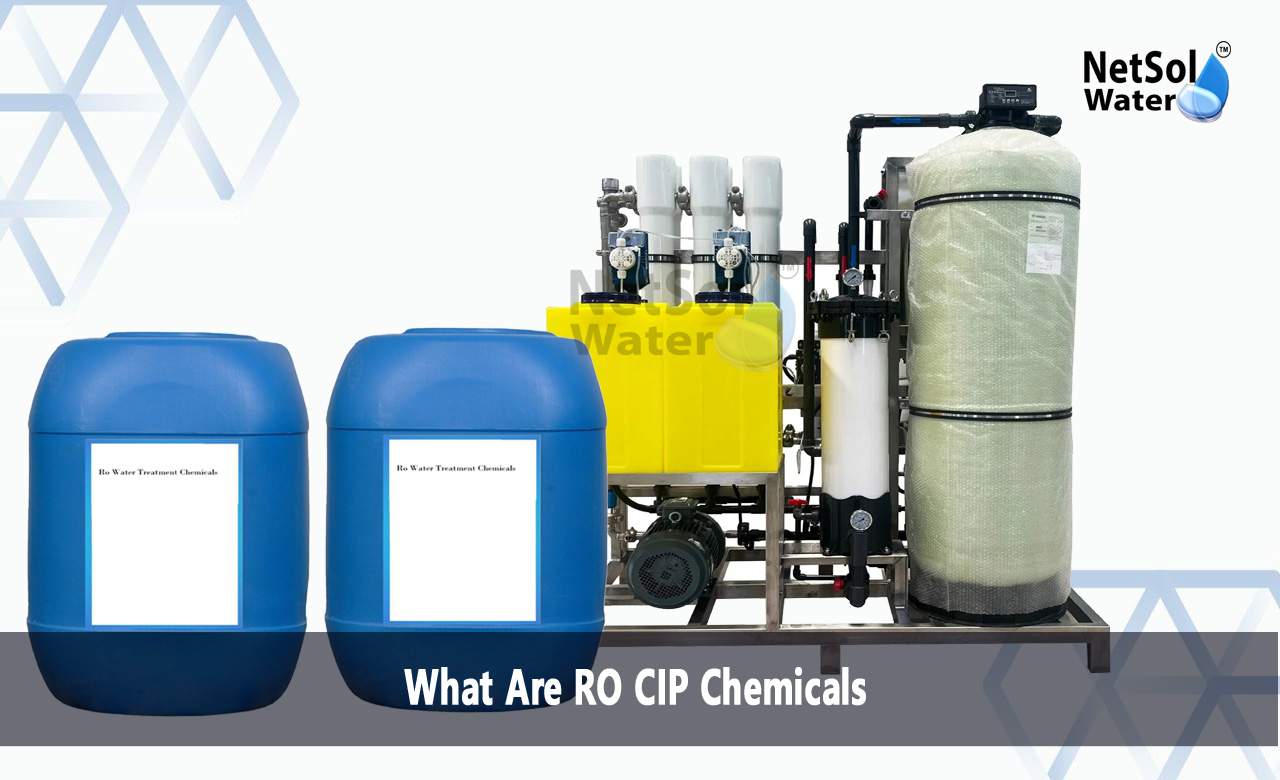
RO CIP Chemicals: Types, Dosage & Safety Guidelines
Reverse osmosis membranes can be cleaned in place to ensure their performance and life. Scaling, fouling, organic matter, and biofilm build up on membranes over time and decrease permeate flow and raise operating pressure. RO CIP chemicals are specially formulated cleaning agents used to remove these deposits without damaging the membrane surface.
Understanding the correct type, dosage, and safety practices for RO CIP chemicals helps industries restore system efficiency and avoid premature membrane failure.
What Are RO CIP Chemicals?
RO CIP chemicals are cleaning solutions used during scheduled or condition-based membrane cleaning. They are formulated to dissolve or loosen certain forms of foulings like scale, biofouling, organic deposits and metal oxides. There are multiple mechanisms of foulings to which a specific chemical formulation is applied to, and it is essential to select the right option.
Types of RO CIP Chemicals
1: Acid-Based CIP Chemicals
Inorganic scaling that is calcium carbonate, calcium sulfate, and metal hydroxides are removed by using acidic cleaners. These are chemicals that dissolve mineral deposits and recover the permeability of membranes. They are usually applied when scaling causes increase in pressure drop.
2: Alkaline CIP Chemicals
Alkaline cleaning agents have an effect on organic fouling, oil, grease, biofilm and microbial growth. They assist in disintegrating organic material that sticks on membrane surfaces as well as spacers.
3: Chemicals used in Biocidal Cleaning
Such chemicals are directed against the biologicalfoulages and microbial slime. They are applied with caution to maintain the compatibility of membranes as well as may be preceded by extensive flushing.
4: Chelating Agents
Chelants combine with metal ions such as iron and manganese, to aid in the removal of metal- based fouling. They are normally mixed with either alkaline or acidic cleaners to enhance efficiency in cleaning.
5: Surfactant-Based Cleaners
Surfactants lower the surface tension and assist in removing foulants that are retained on the surface of the membranes. They enhance infiltration of cleaning solutions into the membrane spacers and pores.
RO CIP Dosage Chemical Guidelines
· The dosage varies with the type of fouling, manufacturer of the membrane and system design. Cleaning solutions are normally made in a specific CIP tank with treated water.
· The common acid cleaning solutions are prepared at low pH that is conducive to the tolerance of the membrane.
· Organic fouling is removed by preparing alkaline solutions in a high pH.
· The temperature of cleaning must not exceed membrane limits, otherwise it will be damaged.
· The recommended procedures are required in soaking time and the duration of circulation.
· Membranes can be irreparably damaged by the overdose of chemicals or an unprecedented violation of the temperature and pH control.
Best Practices of CIP Cleaning Sequence
The cleaning often starts with alkaline cleaning of the organic and biological contamination and is then succeeded by acid cleaning of the inorganic scaling. The sequence also prevents the hardening of the scale as a result ofremoval of organic matter.
After every cleaning step, extensive flushing is to be performed till the quality of permeate reaches stability.
Safety Guidelines for Handling RO CIP Chemicals
1: Personal Protective Measures
The operators must at all times wear gloves, eye protection, masks and protective clothing when handling CIP chemicals. It should not be in direct contact with the skin or the eyes.
2: Storage and Handling of chemicals
CIP chemicals are supposed to be kept in well-ventilated containers that have labels and are corrosion resistant. Without the guidance, mixing various chemicals is going to result in hazardous reactions.
3: Spill and Emergency Response
The CIP areas should have spill kits and neutralizing agents at their disposal. Industrial RO plant are suggested to have emergency showers and eye wash stations.
4: Used CIP Solutions (controlling) Disposal
The cleaning solutions, which have gone to waste, must be neutralized and the waste must be disposed as per the local environmental laws. Treatment may cause compliance problems in direct discharge without treatment.
Errors in RO CIP Chemical Usage
The common ones are the use of wrong chemicals to clean the type of fouling, failure to clean at initial stages of fouling and poor rinsing. CIP also may lead to poor cleaning or membrane damages due to poor monitoring.
Frequent feed water and system performance analysis is used to identify the appropriate cleaning strategy.
Conclusion
Proper selection and handling of RO CIP Chemicals play a critical role in maintaining RO membrane performance and extending system life. The knowledge of the kinds of chemicals, right dosage and a rigid safety measure will guarantee efficient cleaning without ruining the integrity of the membranes.
An effective CIP program will not only help recover its performance but also lowers its operating costs and unwanted downtime in industrial RO plants.
Do you need an advice or assistance on selecting the best water and waste water treatment unit? We have solutions for all your problems!
Let us know your problem, our experts will make sure that it goes away.
For an assistance or related query,
Call on +91-9650608473 Or write us at enquiry@netsolwater.com