

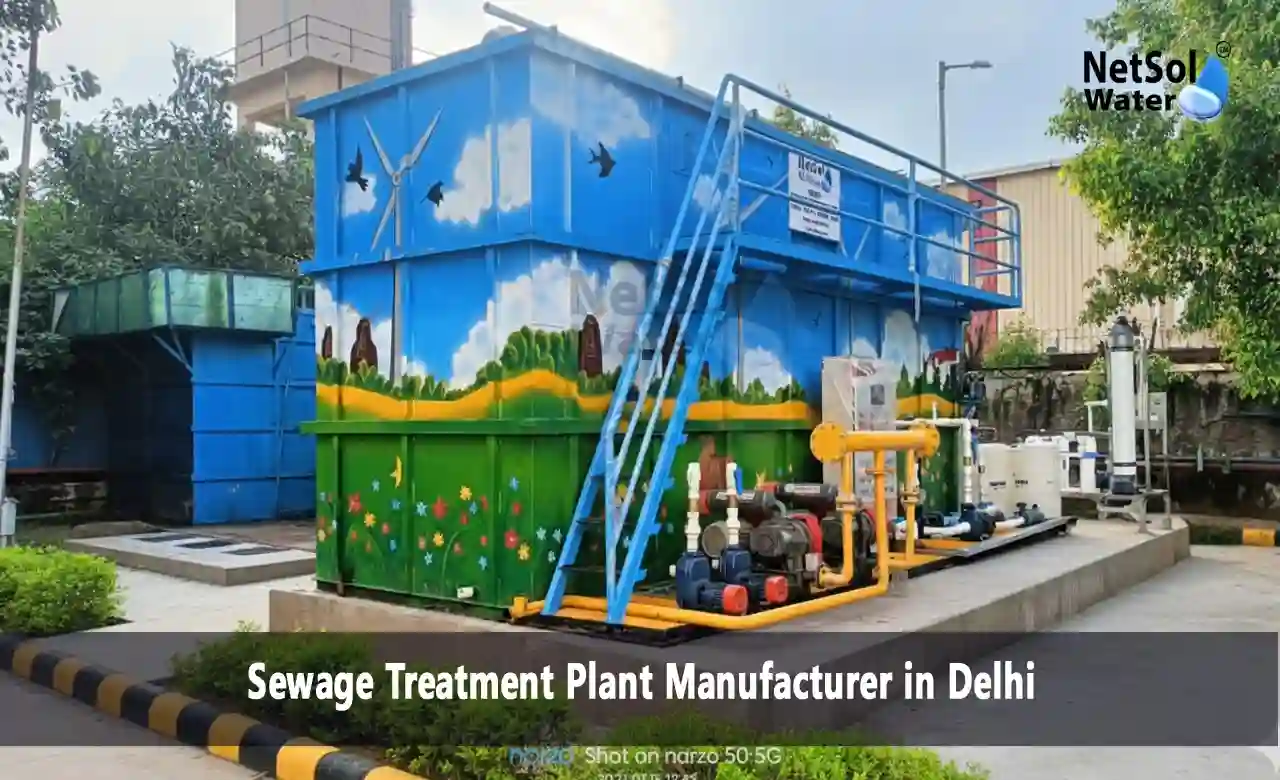
Sewage Treatment Plant Manufacturer in Delhi
Delhi generates 71% of the wastewater dumped into the river every day, while just making up 2% of the river's length and basin area. Delhi's extravagant needs consume the majority of the Yamuna water that flows into the city. Regrettably, all that is left of the river after water usage is unadulterated sewage. But you do not need to worry, because you have found the best sewage treatment plant manufacturer in Delhi.
Sewage generation in Delhi
Firstly, the union territory of Delhi's estimated sewage generation is 3,330 MLD, while its overall treatment capacity is 2,896 MLD, i.e., around 38 STPs. In other words, the installed capacity is 2,896 MLD, which is 86.96% of the 3330 MLD of sewage generation. It demonstrates a lack in the 434 MLD's treatment capabilities, which is around 13.04%.
Secondly, of the 2,896 MLD installed capacity that is created, only 2715 MLD (35 STPs) are operationalized (93.75%), while only 2412 MLD of that capacity is actually used. Only 90 MLD of the STPs that are compliant have additional capacity.
Finally, summer is the worst season for this problem. On average, about 100 billion kilolitres of water flows through the Yamuna, of which 80% passes through during the three monsoon months. Since there isn't much water running through it, during the other months, the river's ability to assimilate pollutants is greatly diminished, because the sewage is neither diluted nor scattered. Unfortunately, most Delhi residents are unaware of this choking of the Yamuna.
Are Delhi residents using all of their water?
When the 135 litres per person per day of water, as per Indian norms, has been consumed for domestic purposes, the remaining water runs down as sewage. Essentially, this sewage water includes only 1% impurities and 99+% water. This means that even though we could use the water for other things, we are unknowingly wasting practically all of it, and flushing it down the drain. Half of this water we use for flushing toilets and watering plants. Eventually, this water doesn't need to be of excellent quality. In a nutshell, sewage is just wastewater that is discharged from buildings such as houses, factories, and offices and flows through the existing sewers.
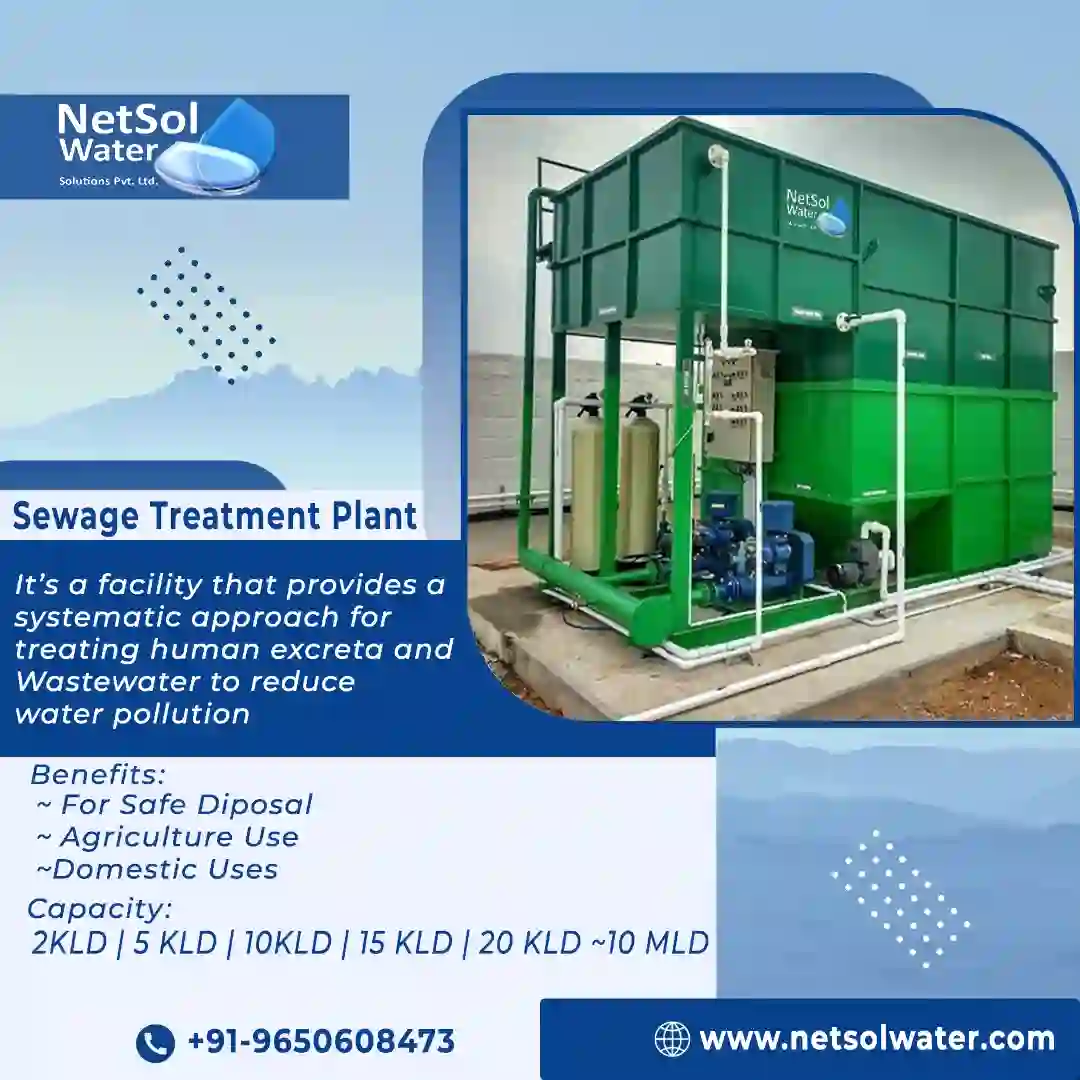
Composition of sewage
The amount or rate of flow, physical state, chemical and poisonous composition, and bacteriologic status, are the primary factors we take into account, when examining its elements. It is primarily made up of pathogens, oil and grease, suspended particles, and organic materials.
"We build sewage treatment facilities in Delhi with pre-fabricated structures. We expand them to have higher gallon capacities, with the aid of technical breakthroughs."
Top 3 Sewage Treatment Plant Manufacturers in Delhi
1. Netsol Water
. Leading STP manufacturer with modular & scalable solutions
. End-to-end services (design, installation, maintenance)
2. Sewage Treatment Plants
. Membrane-based treatment systems
. Strong industrial presence
3. Commercial RO Plant
. Large-scale environmental engineering company
. Advanced wastewater treatment technologies
Sewage Treatment Plant Technologies We Offer
We manufacture and supply multiple STP Plant technologies for the diffrent applications:
1: MBBR Sewage Treatment Plant
2: MBR Sewage Treatment Plant
3: SBR Sewage Treatment Plant
4: Compact and Containerized STP Plant
Application of Sewage treatment plants in Delhi
When sewage is treated with the most modern, well-planned equipment, it can be returned for re-use while staying within legal bounds. Utilizing such sewage treatment facilities can be very advantageous, in the following places and circumstances:
. Sewage treatment at Townships;
. Sewage treatment at Industrial sector;
. Sewage treatment at Commercial centers;
. Sewage treatment at IT sector;
. Sewage treatment at hotels;
. Sewage treatment at work camp;
. Sewage treatment at Institutions of higher learning;
. Sewage treatment at Hostels, etc.
CPCB & DPCC Parameters for Sewage Treatment Plant
Central Pollution Control Bord and Delhi Pollution Control Committee norms and parametrs for STP Plant
| Parameters | Standard Limit (mg/l or as specified) |
|---|---|
| pH | 6.5–9.0 |
| Biochemical Oxygen Demand (BOD) | <= 10 mg/l (for disposal into surface water) |
| Chemical Oxygen Demand (COD) | <= 50 mg/l |
| Total Suspended Solid (TSS) | <= 20 mg/l |
| Oil & Grease | <= 10 mg/l |
| Ammoniacal Nitrogen (NH4-N) | <= 5 mg/l |
| Total Nitrogen | <= 10 mg/l (for disposal into surface water) |
| Fecal Coliform | <= 100 MPN/100 ml |
| Phosphates (as P) | <= 1 mg/l (where applicable) |
Conclusion
Surprisingly, almost 95% of Delhi's sewage will be treated by the end of the year 2022, which will aid in lowering the pollutant load in the Yamuna River. By June 2023, the treatment capacity will be increased to 903 MGD, in order to handle the anticipated rise in sewage generation. This will be accomplished by building 48 new STPs, decentralized STPs in outer Delhi, new STPs at Delhi Gate (10 MGD) and Sonia Vihar (7 MGD), as well as modernizing the capacity of existing STPs.
Make the right choice for your sewage treatment!
As a reputable supplier and manufacturer of Sewage treatment plants in Delhi, Netsol Water, produce a variety of sewage treatment plants. We are transforming the lives of Delhites, by greatly reducing the issue of water shortage.We are equipped with world-class designs, time-bound implementations, and a faultless capacity to operate such plants, thanks to our more than 10 years of experience and deep subject knowledge. Contact us right away, if you want to learn more about our wide range of sewage treatment and Effluent treatment plant products. Call us at +91-9650608473 or send an email to enquiry@netsolwater.com.
Frequently Asked Questions (FAQ)
Q1. Delhi already has STPs - so why is the Yamuna still so polluted?
That's the question everyone asks, and honestly, it's a fair one. Delhi generates around 3,330 MLD of sewage daily, but the installed treatment capacity covers only about 2,896 MLD. That leaves a gap of 434 MLD going untreated every single day - and most of it ends up in the Yamuna. On top of that, the river's flow drops drastically outside the monsoon months, so there's barely enough water to dilute what's being dumped in. It's a compounding problem, and fixing it requires more STPs - and better ones.
Q2. What actually is "sewage"? Is it as bad as it sounds?
Not quite. Sewage is simply the wastewater that flows out of homes, offices, and factories through the sewer lines. And here's the surprising part - it's more than 99% water. Less than 1% is actual impurities. Think about how much of the water you use just goes down the drain after flushing a toilet or washing dishes. With the right treatment, a large portion of that can be cleaned up and reused. We're not talking about turning it into drinking water - but for flushing, irrigation, and industrial use? Absolutely.
Q3. What types of STP plants does Netsol Water offer?
We manufacture four main types, each suited to different situations. MBBR (Moving Bed Biofilm Reactor) plants are popular for their efficiency and compact footprint. MBR (Membrane Bioreactor) plants produce very high-quality treated water. SBR (Sequential Batch Reactor) plants work well where space is a constraint. And for clients who need a plug-and-play solution, our compact and containerized STP plants can be deployed quickly without major construction. Not sure which one fits your needs? Just give us a call - we'll walk you through it.
Q4. Can my housing society or commercial building actually install one?
Absolutely - in fact, that's exactly the kind of project we do most. Netsol Water has installed STPs in townships, housing societies, IT parks, hotels, hostels, work camps, and educational institutions across Delhi NCR. If you're generating sewage (and every building does), there's an STP solution that fits your scale and budget. You might be surprised how compact and manageable modern plants have become.
Q5. What standards does my STP need to meet in Delhi?
Your plant needs to comply with norms set by the CPCB (Central Pollution Control Board) and DPCC (Delhi Pollution Control Committee). The key benchmarks are: BOD should be 10 mg/l or less, COD under 50 mg/l, TSS below 20 mg/l, and fecal coliform under 1000 MPN/100 ml - among others. These might sound like technical jargon, but they basically ensure the treated water is safe for discharge or reuse. Every plant we build is designed to meet or exceed these limits, so you're covered.
Q6. What happens to the water after it's treated? Can it really be reused?
Yes, and this is actually one of the biggest benefits of installing an STP. Treated water can be reused for flushing toilets, watering gardens and landscaping, cleaning purposes, and even certain industrial processes. Think about it - roughly half the water we use at home goes towards flushing and gardening. None of that needs to be freshwater-quality. Reusing treated sewage for these purposes can significantly cut down on freshwater consumption, which matters a lot in a city like Delhi where water stress is real.
Q7. Why should I choose Netsol Water over other STP manufacturers in Delhi?
We've been doing this for over 10 years, and we've built our reputation on actually delivering what we promise - on time, within spec, and with full compliance. Our plants use pre-fabricated structures that can be scaled up as your needs grow, so you're not locked into a fixed capacity. We handle everything from design and manufacturing to installation and after-sales support. If something goes wrong, we're a call away - not a helpdesk ticket away. That's the kind of relationship we build with every client.
Q8. How do I get started or get a quote?
Simple - just reach out to us directly. You can call us at +91-9650608473 or +91-9650795306, or drop an email to enquiry@netsolwater.com. Tell us a bit about your project - the type of building, approximate sewage volume, and location - and we'll put together a recommendation that fits. No pressure, no jargon. Just a straight conversation about what you actually need.