

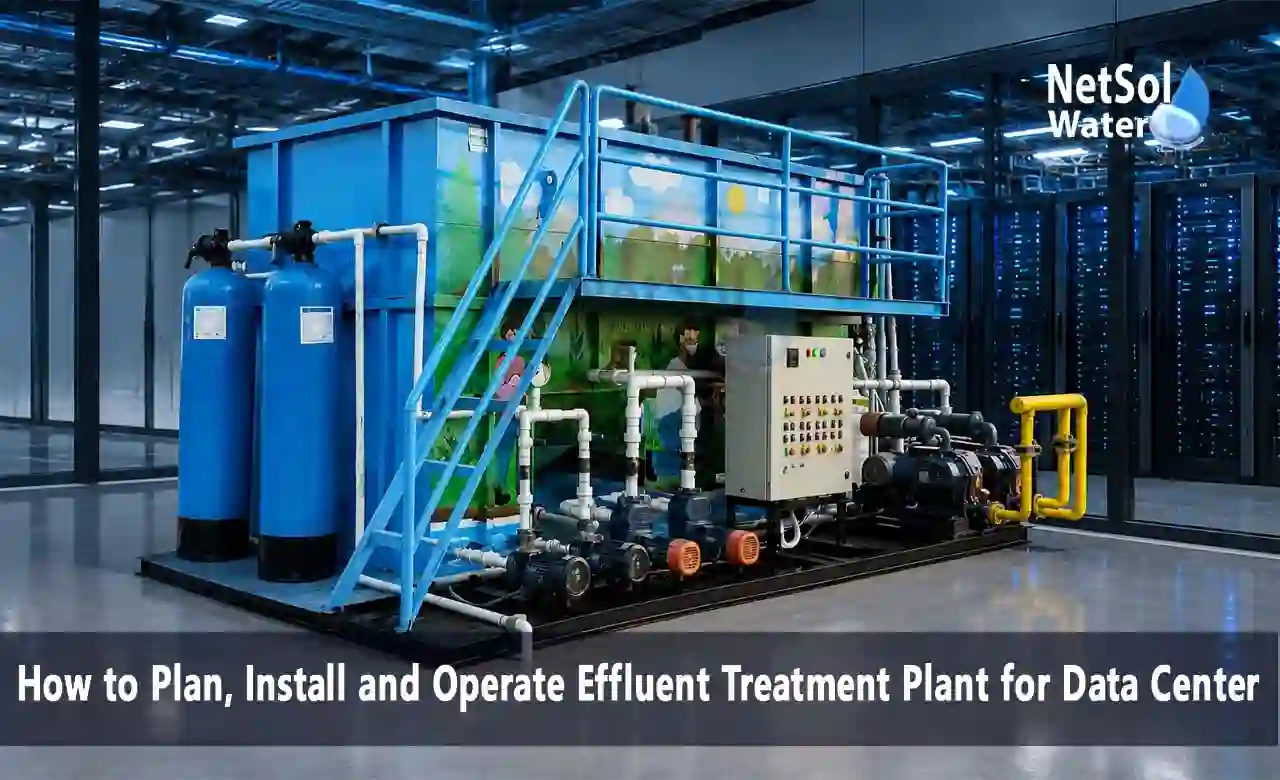
How to Plan, Install and Operate ETP Plant for Data Center?
Data centers run 24 hours a day, every single day of the year, and cooling all that gear takes an enormous amount of water. Most folks think of data centers as these tidy, calm rooms with blinking servers. What people don't really picture is the wastewater their cooling systems churn out all the time, water that can't just be shoved down a drain, not unless it gets proper treatment first. That's where an Effluent Treatment Plant for Data Centers shows up, and yeah, getting this part of the infrastructure right from the start can save you years of headaches later on.
Cooling towers and chillers don't stay “clean” forever either. Over time, the water moving through them gathers dissolved minerals, scale forming compounds and bits of chemical residue from whatever treatment additives are used. If that goes unaddressed, the whole thing turns into a compliance problem and an environmental one, at the same time. An ETP handles that wastewater so it either reaches discharge standards or even better it comes back and gets reused inside the facility itself, feeding right back into the cooling circuit.
Why Planning, Installation, and Operation All Deserve Equal Attention?
Here's something a lot of facility teams get wrong. They spend months planning the system, then treat installation and daily operation as afterthoughts. That's backwards. A perfectly planned ETP for Data Centers that gets installed poorly, or operated carelessly once it's running, ends up failing the same way a badly planned one would. Every phase matters, and skipping attention on any one of them shows up eventually, usually in the form of compliance notices or unexpected downtime.
Why Is Blowdown Treatment Important in Data Centers?
Cooling tower blowdown is basically the water that is deliberately drained out so minerals don’t build up inside the cooling circuit. The drained water ends up carrying concentrated salts and dissolved solids, which if you leave them, they will start scaling on the equipment and slowly mess with how well the system cools. If you handle the blowdown correctly, then the place outside is also protected, not only the cooling unit itself, you know.
What Pollutants Are Present in Data Center Wastewater?
When we talk about data center wastewater, it isn't just some vague “dirty water”, it actually includes a set of contaminants that matter. You often see dissolved minerals, like calcium and magnesium, coming from the same cooling process. Then, the chemicals added for corrosion control and scale prevention also ride along in the blowdown. Also, biological growth can sometimes form inside cooling systems if it’s not properly managed, and that contributes organic contamination, so the treatment has to deal with that angle too.
How Is Cooling Tower Blowdown Treated in Data Centers?
Most treatment starts with coagulation and flocculation, where the suspended particles are encouraged to clump together, so they can then be removed by filtration. After that, filtration steps catch the leftover solids, and if the water is high in salt, additional methods like reverse osmosis help cut back on the dissolved minerals. The final result is that the water becomes clean enough for discharge, or sometimes for reuse, depending on the setup, and local rules.
How Do You Determine the Required ETP Capacity for a Data Center?
Capacity planning for an Effluent Treatment Plant for Data Centers comes down to daily water consumption, which depends on how many cooling towers are running, the overall HVAC load, and staff strength on site. Get this number wrong in either direction and you're in trouble, too small and the system chokes during peak demand, too large and you've paid for capacity sitting idle most of the year.
| Data Center Size | Typical Cooling Towers | Estimated Wastewater Generation | Suggested ETP Capacity |
|---|---|---|---|
| Small (up to 1 MW load) | 1 to 2 towers | 20,000 to 50,000 litres per day | Compact ETP, up to 50 KLD |
| Medium (1 to 5 MW load) | 3 to 6 towers | 50,000 to 1,50,000 litres per day | Mid range ETP, 50 to 150 KLD |
| Large (5 to 15 MW load) | 6 to 12 towers | 1,50,000 to 4,00,000 litres per day | High capacity ETP, 150 to 400 KLD |
| Hyperscale (15 MW and above) | 12 or more towers | 4,00,000+ litres per day | Custom built modular ETP, 400+ KLD |
These ranges work as planning references. Actual sizing should always come from a proper water audit of the specific site, since climate and HVAC design shift real numbers up or down.
Which ETP Technology Is Best for Cooling Water Treatment?
There's no single answer here, it really depends on what's in your water. Facilities dealing with high dissolved solids often lean on reverse osmosis as a core stage. Others with more organic contamination need biological treatment worked into the sequence. Most well designed systems combine two or three technologies rather than relying on just one, since cooling water rarely fits neatly into a single treatment category.
How Much Space Is Required to Install an ETP in a Data Center?
Space needs scale with capacity, but modular and compact designs have made a real difference here. A mid sized ETP can often fit into a few hundred square feet, while hyperscale facilities might need a dedicated treatment yard entirely separate from the main building. Bringing up space constraints early, before construction even starts, avoids painful redesigns later.
What Factors Should Be Considered Before Installing an ETP in a Data Center?
A handful of factors deserve real attention before any equipment gets ordered.
. Wastewater characteristics, since cooling tower water behaves nothing like domestic sewage
. Plant capacity, matched to actual daily usage rather than rough guesses
. Future expansion plans, so the system doesn't need a full rebuild in a few years
. Available space, both for current installation and possible future additions
. Automation requirements, which determine how much manual monitoring the facility team will handle
. Regulatory compliance, making sure the design meets current CPCB and expectations from day one
Skipping any one of these tends to surface as a problem eventually, usually at the worst possible time.
What Is the Role of pH Correction in a Data Center ETP?
Wastewater pH can drift outside safe ranges depending on the chemicals used in the cooling process. Correcting this before discharge or reuse isn't optional, since both regulatory limits and the health of downstream equipment depend on keeping pH balanced. Most systems handle this through automated dosing that adjusts in real time rather than relying on manual checks throughout the day.
Which Filtration Systems Are Used After an ETP?
Even after primary treatment, a secondary filtration stage often follows to polish the water further. Sand filters, activated carbon units, and fine membrane filters are common choices here, each catching whatever particles or residual contaminants made it through the earlier stages.
Can ETP Treated Water Be Reused for Landscaping?
Yes, and this is actually one of the more straightforward reuse applications. Treated water that meets basic quality standards works well for irrigation and landscaping around a facility, cutting down on fresh water use for something that doesn't need potable grade water anyway.
How Does an ETP Help Reduce Freshwater Demand?
Every litre of wastewater treated and reused is a litre that doesn't need to be pulled from municipal supply or groundwater. Over time, this adds up considerably, especially for facilities with heavy cooling demand running around the clock. Many data centers now track this reduction as part of their broader sustainability reporting.
How Can Automation Improve ETP Efficiency?
Manual monitoring works, but it's slow and prone to missed issues. Automated systems track flow rates, chemical dosing, and water quality parameters continuously, flagging problems the moment readings drift out of range. That's not a small thing when you're trying to avoid compliance violations or unexpected equipment strain.
What Are the Maintenance Requirements of a Data Center ETP?
Regular maintenance keeps an ETP performing the way it was designed to. This includes routine tank and filter cleaning, pump and valve inspections, and periodic recalibration of dosing and monitoring equipment. Facilities that treat maintenance as optional tend to see performance drop off gradually until a bigger failure forces the issue.
What Are the Common Operational Issues in Data Center ETPs?
A few problems show up more often than others. Filter clogging from inadequate pre treatment is common, as is scaling on equipment when pH correction isn't managed properly. Chemical dosing miscalibration also causes trouble, either overdosing and wasting chemicals or underdosing and letting contamination slip through untreated.
How Often Should a Data Center ETP Be Serviced?
Routine checks generally happen weekly, covering the basics like dosing levels and visible equipment condition. Deeper servicing, including filter replacement and equipment calibration, usually gets scheduled monthly or quarterly depending on how heavily the system is used and what the manufacturer recommends for that specific setup.
How Can Data Centers Minimize Wastewater Discharge?
Beyond just treating wastewater, some facilities go further by redesigning their cooling processes to generate less blowdown in the first place. Side stream filtration, better chemical treatment programs, and higher cycles of concentration in cooling towers all reduce how much wastewater gets produced to begin with, meaning less needs treating or discharging overall.
Conclusion
Planning, installing, and operating an Effluent Treatment Plant for a data center isn't a single decision made once and forgotten. It's three connected phases, and each one needs its own level of attention. Get the planning right and skip careful installation, and you're still in trouble. Nail both of those and neglect ongoing operation, and the system still won't hold up long term. Treating all three phases with equal seriousness is really what separates a data center that runs its water systems smoothly from one that's constantly firefighting compliance issues.
How Can You Ensure Efficient, Compliant, and Sustainable ETP Performance in a Data Center?
This comes down to working with a manufacturer who understands data center specific requirements, not just generic industrial wastewater treatment. NetSol Water is an ISO certified ETP Plant Manufacturer and Supplier operating across India, with deep experience designing ETP systems built specifically around the cooling tower blowdown and process wastewater that data centers generate.
Our team handles every phase, from initial water testing and capacity planning through installation and long term operational support. We don't just hand over a system and walk away. We stay involved because a plant that runs well on day one but struggles by year two isn't actually solving the problem. If your data center needs a new ETP or is looking to improve how an existing system performs, NetSol Water brings the technical depth and nationwide service reach to get every phase of this right.
Frequently Asked Questions (FAQs)
1. What is the expected lifespan of an ETP in a data center?
With proper maintenance, most core components of an ETP last well over a decade, though certain parts like membranes and filters need periodic replacement depending on usage and water quality.
2. Can an existing ETP be upgraded as the data center expands?
Yes, most systems can be scaled up, particularly if the original design left room for additional treatment stages or higher flow capacity.
3. What are the operating costs of a data center ETP?
Running costs vary based on capacity and technology used, generally covering chemical dosing, energy consumption, and routine maintenance, and these should be treated as planning ranges rather than fixed figures during budgeting.
4. Which regulations apply to data center wastewater discharge?
Discharge norms set by the Central Pollution Control Board and respective State Pollution Control Boards apply, covering parameters like BOD, COD, TSS and pH before water can be released or reused.
5. How do you choose the right ETP manufacturer and supplier for a data center?
Look for a manufacturer with specific experience in data center or industrial cooling water treatment, a track record of proper site assessment before design, and strong after installation support for ongoing maintenance.