

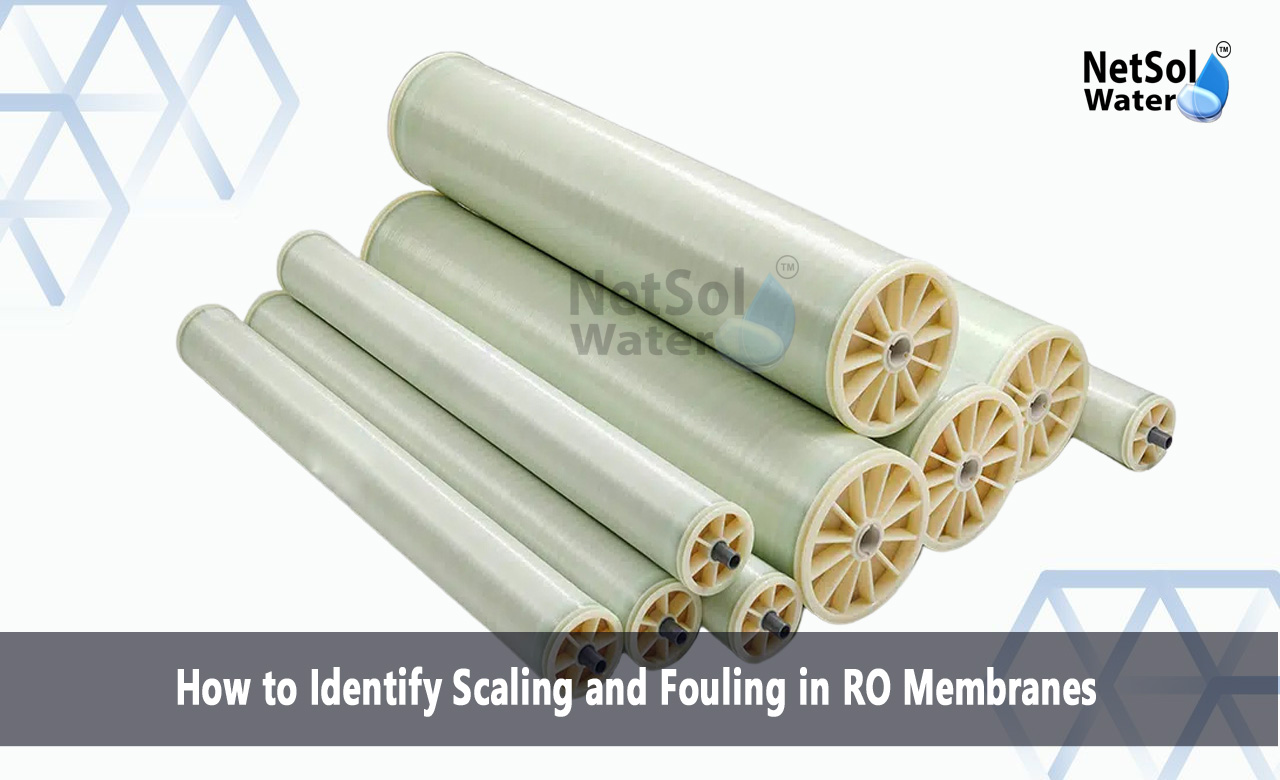
How to Identify Scaling and Fouling in RO Membranes?
The core of any RO plant is composed of the reverse osmosis membranes. In the long run, they might fail to perform well because of the accumulation of undesirable materials on the membrane surface. Scaling and Fouling are two of the most prevalent causes of loss in performance. Although they both lead to the inefficiency of the systems, they are caused by various factors and should be corrected by different measures.
It is necessary to know whether it is scaling or fouling. Misdiagnosis may result in poor cleaning, damage of membranes, higher operation cost and short life of membrane.
The Scaling of RO Membranes
What Is Scaling?
Scaling takes place where dissolved inorganic salts pass beyond their limits of dissolution and settle on the surface of the membrane. These mineral masses produce crystalline and hard layers that block the flow of water across the membrane.
Common Causes of Scaling
Scaling is mainly caused by:
· Excessive levels of hardness salts.
· Elevated recovery rates
· Poor dosage of antiscalants.
· Lack of feed water chemistry control.
Types of Scale
The typical compounds that form scales are calcium carbonate, calcium sulfate, barium sulfate, silica and metal hydroxides. These are deposits that tend to be hard and challenging to extract in case of non-treatment.
Fouling in RO Membranes
What Is Fouling?
Fouling can be defined as a deposit of suspended solids, organic matter, oil, grease, microorganisms and biofilm on the surface of the membrane or spacers. Fouling layers are better soft and irregular unlike the scale.
Common Causes of Fouling
Fouling occurs due to:
· Turbidity or suspended solids in feed water.
· Ineffective pretreatment results.
· Organic contamination
· Growth of microbes within the RO plant.
Types of Fouling
There are four types of fouling, namely organic fouling, biological fouling, colloidal fouling and particulate fouling. In many cases, more than one type co-exists.
Key Performance Indicators to Differentiate between Scaling vs Fouling
Alternation in Differential Pressure
The quickening of pressure drop across the membrane is a typical indicator of fouling and in particular the particulate or biofouling. Scaling is more likely to augment pressure slowly.
Reduction in Permeate Flow
Scaling and fouling decrease the permeate flow rate, however, scaling normally leads to a continuous decrease, whereas fouling can lead to instant or variable decreases.
Salt Rejection Behavior
In early stages, scaling does not have a significant impact on salt rejection. Fouling and in particular organic or biofouling can cause decreased salt rejection owing to the non-even flow paths and damage of the membrane surface.
Physical and Visual Indicators
· Membrane Surface Appearance: Scaling is in the form of hard, crystalline or chalky deposits which are usually white or grey. Deposits of foulings are typically slimy, sticky or dark in nature, based on the contaminant.
· Feed Spacer Condition: Fouling is normally denoted by plugged or slimy spacers. Spacers are hard deposits that face towards scaling.
Chemical Cleaning Response as a Diagnostic
1: Response to Acid Cleaning
When the performance of the membrane has improved drastically after the acid cleaning, then it is probable that there is inorganic scaling of the problem. The mineral deposits are well dissolved in acid solutions.
2: Response to Alkaline Cleaning
Post alkaline cleaning improvement is a sign that it was fouled by organic or biological means. Alkaline cleaners decompose oil, biofilm and biomatter.
3: Poor Response to Cleaning
In case the performance is not restored by the cleaning with acid or alkali, then there is a possibility of either irreversible fouling of the membrane or its physical damage.
Confirmation Water Quality Analysis
Analyses of feed water give good indications:
· Scaling risk is indicated by high levels of hardness, silica or sulfate.
· Fouling potential is indicated by high turbidity, SDI, TOC or oil content.
· Periodic observation assists in detecting tendencies before extreme damage of the membranes.
Typical Misidentification Problems
Most operators upscale when the pressure is high, however, in the real world the foul is more likely to occur because of poor pretreatment. The wrong choice of chemicals used in CIP may aggravate the issue and reduce the lifespan of membranes.
Delaying cleaning until the foulings or scale is too extensive to remove it is an additional common error.
Preventive Measures
Scaling may be managed by acceptable choice of antiscalants, recovery management and pH control of feed water. The prevention of fouling relies on the proper pretreatment, frequent inspection and cleaning of the membranes periodically.
The initial defense against the two problems is to have a well-designed pretreatment system.
Conclusion
Proper differentiation between scaling and fouling of RO membranes is important in maintenance and long life of the system. Although the two problems decrease RO efficiency, they vary in cause, behavior and treatment.
Monitoring system parameters, knowing the quality of feed water, observing the response of cleaning, and taking early action will help industries to avoid serious membrane damage, decrease the cost of operation, and increase the life of membranes. It is better to be proactive and knowledgeable than to be reactive in trouble-shooting.
Do you need an advice or assistance on selecting the best water and waste water treatment unit? We have solutions for all your problems!
Let us know your problem, our experts will make sure that it goes away.
For an assistance or related query,
Call on +91-9650608473 Or write us at enquiry@netsolwater.com