

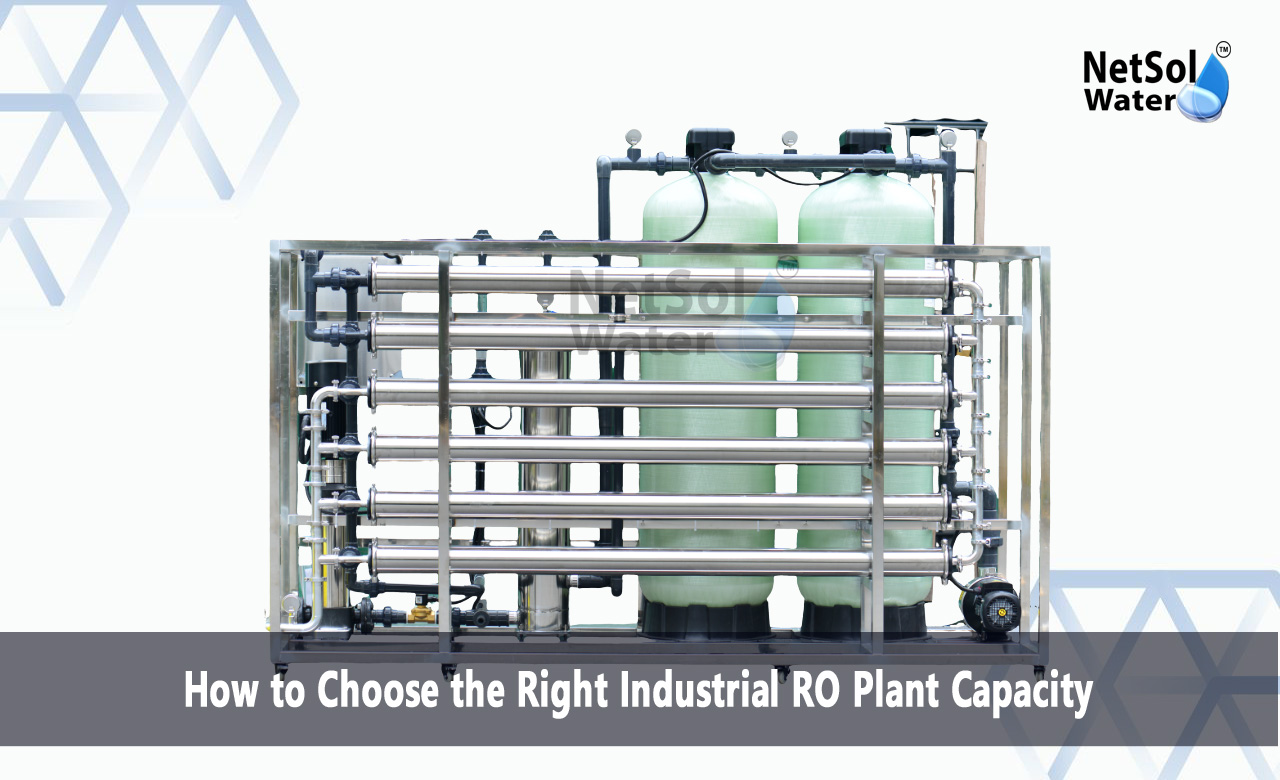
How to Choose the Right Industrial RO Plant Capacity?
Choosing the right Industrial RO Plant matters for any factory or facility that needs clean water. Making the wrong choice can cost money through higher energy bills, lost production, or frequent repairs. Choosing well keeps operations steady and cuts running costs. It also protects equipment and ensures product quality where water matters in the process. We will explains the steps that help you pick the correct Industrial RO Plant capacity. Netsol Water is the leading Industrial RO Plant Manufacturer and it has helped many clients pick the right size system.
Understanding Your Water Demand and Flow Profile
Choosing the right capacity starts with knowing your water demand. If you do not measure how much water you use each day and how that use changes across the day and week, you can pick a system that is too small or too large. A correct demand profile lets you match the RO output to real needs. It also helps you decide whether to install storage tanks or use variable output systems.
Let us have a look on some important aspects of demand assessment and how to translate them to RO capacity. First, calculate average daily water use. Then find the peak hourly demand. Also check seasonal or production schedule variations. For example a food plant may use far more water during harvest months and far less during off season. You should add allowances for downtime and cleaning cycles so the RO plant can supply process needs even while other equipment goes offline.
Peak versus average flow matters a lot. If you size a plant only for average flow you may fail to meet peak needs and force production to stop. If you size for peak flow only you will pay for extra capacity that rarely runs. Many plants solve this by combining a baseline RO capacity sized to cover average demand with a storage buffer or with a short term booster pump. This approach keeps capital and operating cost balanced. When you measure flow, record real readings over several weeks. Use flow meters on main lines and note daily shifts. If you cannot measure, estimate conservatively and consult your supplier who can help translate usage into capacity.
Daily profiles and production cycles
Understanding daily profiles means you map every hour of operation and tag how water is used. Pumps, boilers, cooling towers and cleaning processes may draw in bursts. Map those bursts and keep them in a clear table. This mapping shows when you need continuous supply and when the system can recover. A plant that cleans equipment at night may benefit from night time RO production that stores water for the day. A plant with constant demand needs the RO system to match continuous flow. Match the RO output curve to your consumption curve to avoid waste and shortfalls.
Assessing Feed Water Quality and Pretreatment Needs
A good capacity choice starts with feed water quality. Raw water can range from municipal supply to groundwater or surface water. Each source brings different salts, suspended solids, organics and hardness. The RO membrane tolerates a limited range of contaminants. Poor feed water forces lower recovery rates and lower membrane life. You must test feed water and plan pretreatment so the RO plant runs within design limits.
Let us have a look on some tests and how they affect capacity decisions. Key tests include TDS, turbidity, hardness, iron, manganese, silica, and biological counts. High suspended solids require robust multimedia filtration and precise dosing. High hardness or scaling ions call for softeners or antiscalants. High organics may need activated carbon. Each pretreatment stage affects the effective capacity because treatment losses and backwashes reduce available feed. For example if pretreatment wastes 5–10 percent of feed, the RO unit must compensate to meet net demand.
Pretreatment loss and impact on rated capacity
Pretreatment can reduce the feed that reaches RO membranes. Backwash cycles, brine discharges, and filter flushing all consume water. When sizing, calculate the net feed after pretreatment losses. If your process needs 10,000 liters per day, and pretreatment wastes 8 percent, you must size the RO feed to cover 10,870 liters to end with the required amount. Choose pretreatment systems that match water quality and minimize unnecessary losses. Discuss typical loss figures with your supplier and plan capacity with those losses built in.
Choosing Membrane Type, Recovery Rate, and Rejection Targets
Membrane selection and recovery targets shape the plant capacity and the way it will operate. Different membranes offer different salt rejection rates and tolerances to fouling. Higher recovery reduces wastewater but raises scaling risk. Lower recovery is safer where scaling salts are high but wastes more water. You must balance recovery, product water quality, and operating cost.
Let us have a look on some membrane choices and how they affect capacity. For brackish water you may choose thin film composite membranes with high salt rejection around 95 to 99 percent. For seawater you need special high pressure membranes that operate at lower recovery. If your process needs very low TDS, you may need two-pass RO or additional polishing. Recovery affects feed volume. A 75 percent recovery means three volumes of feed produce one volume of permeate and two volumes of concentrate. To meet daily demand you must ensure the feed rate accommodates that recovery.
When to choose higher recovery and when to choose lower recovery
Choose higher recovery when feed water has low scaling potential and when water cost or scarcity makes wastewater expensive. Higher recovery reduces the feed needed for a given permeate output which lowers raw water intake and reduces brine disposal needs. However, it increases concentration of scaling ions in the reject stream and raises membrane cleaning frequency if you misjudge the feed chemistry. Choose lower recovery when feed water has high hardness, silica, or other scaling ions or when feed quality varies a lot. Lower recovery provides margin to protect membranes and makes operation simpler.
System Configuration: Single Pass vs Double Pass and Redundancy
System layout determines the final quality and how much capacity you need. Single pass RO often suffices for moderate needs and less strict quality requirements. Double pass RO or two-pass systems produce very low TDS and help with processes that need ultrapure water. Redundancy also matters for production continuity. You must decide how many trains, which configuration, and where to place storage to ensure supply under maintenance routines.
Let us have a look on some configuration options and their impact on capacity. A single large RO train may be efficient but risky because any fault stops the whole plant. Multiple smaller trains let you take one train offline without halting production. For example, three equal trains with two online provide redundancy and flexible maintenance. Two-pass systems require more membrane area and energy and therefore a larger installed capacity to reach the same net permeate. When you choose redundancy, size each train so the remaining trains can supply demand minus a reasonable buffer.
Designing for maintenance and uptime
Design the plant with maintenance in mind. Include isolation valves, bypass lines, and parallel trains. Plan for CIP (clean-in-place) routines and make sure the plant can continue to supply the process during those cycles. If you expect long cleaning times or slow membrane replacement, add storage tanks sized to cover downtime. A practical approach is to size storage for 4 to 8 hours of production depending on the criticality of continuous supply. This approach reduces the need for oversizing the RO capacity purely for redundancy.
Energy, Operating Costs and Pump Selection
Energy use and operating costs form the long term expense that follows any capacity decision. High capacity plants run more pumps, consume more power, and require larger pretreatment. Optimizing energy efficiency can reduce life cycle cost even if the initial capital sits higher. Choose pumps and energy recovery that match feed water and recovery to cut costs.
Let us have a look on pump choices and how efficiency affects capacity planning. High pressure pumps need to handle required flow at the operating pressure. If you plan high recovery, the pump must deliver higher pressure and cope with fouling. Energy recovery devices work well in high flow and high pressure systems to capture pressure from reject streams and reduce net electric load. Calculate expected kWh per cubic meter of permeate for different configurations. Multiply that by annual production to estimate yearly energy cost. This figure often changes the preferred capacity or recovery target because a slightly larger but more efficient system can cost less to run over five years.
Estimating operating cost per cubic meter
Estimate operating cost per cubic meter by adding electricity cost, chemical use for cleaning and antiscalant, membrane replacement cost, labor, and waste disposal. Divide the annual total by the annual permeate volume. This number guides the choice of capacity and system design. For example, a system that produces 100 cubic meters per day at a lower specific energy may cost less annually than a smaller system that uses more energy per cubic meter. Balance capital expense and operating cost to find the most economical capacity over the installation life.
Space, Layout and Installation Considerations
Physical space and layout influence the capacity you can practically install. Large capacity RO plants need room for pretreatment, pumps, control panels, and storage tanks. You must plan for service space, access for maintenance, and safe routing for piping and electrical works. If space is tight you may need to break the system into modular units that fit available footprints.
Let us have a look on space planning and how it affects capacity decisions. Measure the area where you will install the plant and map how material will flow in and out. Check floor load limits if you place tanks on slabs or rooftops. Consider heights for vertical membrane housings and clearances for removing and replacing membrane elements. If the site has restricted access doors or narrow corridors, prefer smaller modular skids that assemble on site. Modular units often let you expand in the future by adding more skids rather than building a large plant up front.
Modular design and future expansion
Modular RO plants make expansion easier. You can start with a system that meets current needs and add modules as demand grows. Each module should include its own pumps and controls so that adding capacity does not force major rewiring or piping changes. Modular design also simplifies transport and installation. If you plan a staged build, size initial modules so they run efficiently when just one or two operate. This approach reduces wasted capacity while preserving the option to scale up.
Maintenance, Monitoring, and After-Sales Support
A correct capacity choice should pair with a maintenance plan and strong supplier support. Even a properly sized RO plant fails early without routine cleaning and timely membrane replacement. Choose equipment with good instrumentation and a supplier who offers spare parts and service. Regular monitoring of key parameters prevents surprises that otherwise force unplanned downtime.
Let us have a look on useful monitoring tools and support models. Install conductivity meters on feed and permeate lines. Use pressure gauges across stages and monitors for flow and differential pressure to spot fouling trends. A control panel that logs alarms and trends helps your team spot early signs of scaling. Consider a remote monitoring option if your supplier offers it, so they can advise when to clean or when conditions suggest membrane replacement.
Spare parts and service contracts
A reliable supplier will offer spare parts kits and service contracts that include periodic checks and cleaning. Discuss lead times for membrane delivery and spare pumps. Ask whether the supplier trains your team on CIP procedures and whether they can provide emergency support. Include a spare parts list in your budget because membrane and pump replacements form recurring expenses. Good service reduces downtime and keeps the effective capacity close to design values throughout the plant life.
Sizing Calculations, Safety Factors, and Future Expansion
The final step combines all data into a sizing calculation. Start from net daily demand and add allowances for pretreatment losses, redundancy, and planned growth. Apply safety factors that match the reliability you need. If you expect growth in production, include that in the capacity rather than under-sizing and forcing an early retrofit.
Let us have a look on a stepwise calculation method and how to include safety margins. First, list the required daily permeate volume. Add percent for process losses and tank fill. Add the pretreatment loss percentage. If you plan one train offline for maintenance, increase the capacity so remaining trains can cover demand. Add a growth allowance, for example 10 to 30 percent depending on your business plan. Finally, convert daily permeate to required hourly or continuous flow and pick membrane area and pump size accordingly.
Example calculation and a simple rule of thumb
For example, if your process needs 20,000 liters per day, anticipate a 10 percent pretreatment loss and a 20 percent growth allowance. First add pretreatment: 20,000 / (1 - 0.10) gives 22,222 liters. Add growth: 22,222 × 1.20 gives 26,666 liters required from the RO. If you want one train to be spare, design so two-thirds of total installed capacity covers demand. Convert that daily figure to flow rate by dividing by production hours. If you run 20 hours per day, the required RO feed is 1,333 liters per hour. Choose membranes and pump sizes that meet this feed at the chosen recovery and at the expected pressure. Use these calculations to compare supplier quotes and to check which configuration best fits your site and budget.
Conclusion
Choosing the right Industrial RO Plant capacity needs careful steps. Study your demand profile. Test feed water and plan pretreatment. Decide on membranes and recovery based on chemistry. Design the system layout and redundancy to match your risk and uptime needs. Factor in energy and operating costs. Make sure you have space and a clear maintenance plan. Add safety margins and future growth so the plant serves you well over time.
If you want help sizing an Industrial RO Plant or a review of your current design, Netsol Water is the leading Industrial RO Plant Manufacturer and can assess your needs and propose a tailored solution. Contact a supplier for a consultation or ask for a detailed capacity study to avoid common mistakes and to get the right plant for your site.
Contact Netsol Water at:
Phone: +91-9650608473, Email: enquiry@netsolwater.com