

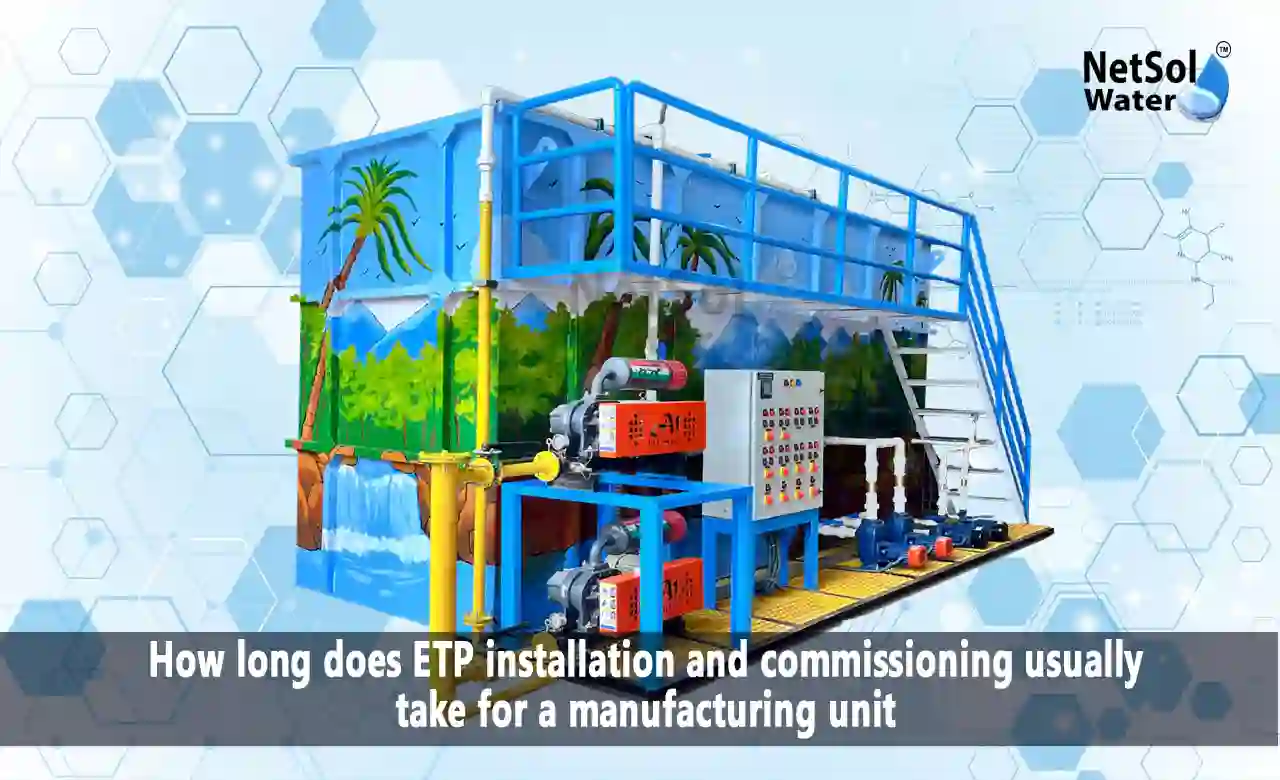
ETP Installation & Commissioning Timeline for Manufacturing Unit
Industries across India are growing at a fast pace and this growth has increased the need for proper wastewater treatment systems. Manufacturing units such as textile, factories, food processing plants, pharmaceutical companies and chemical industries produce large amounts of wastewater every day. An Effluent Treatment Plant helps industries treat this wastewater before it is released into the environment. A properly designed treatment plant protects water resources and helps industries follow pollution control rules.
Many industrial cities in India are famous for their manufacturing activities and industrial development. As industries continue to expand the demand for wastewater treatment systems is also increasing. One common question that factory owners ask is how long it takes to install and commission an effluent treatment plant.
Why Understanding the ETP Installation Timeline Is Important?
Every manufacturing unit wants its wastewater treatment system to become operational as soon as possible. A clear understanding of the project timeline helps industries avoid delays and prepare their production schedules. Let us have a look on some important stages that affect the installation period.
1. Planning and Requirement Analysis
The first step in an ETP project is understanding the wastewater characteristics and treatment requirements. Engineers study the flow rate and identify the contaminants present in the wastewater. They also check the available land and utility requirements.
This stage usually takes one to three weeks because the engineering team needs to gather complete information before preparing the design. Proper planning reduces errors during installation and saves time during later stages of the project.
2. Designing and Approval Process
After collecting the required information the design team prepares process drawings and equipment layouts. Some industries also need approvals from local authorities before construction begins.
This process generally takes two to four weeks depending on the complexity of the project. A well prepared design ensures smooth execution and prevents changes during construction.
3. Procurement of Equipment
Once the design is approved the manufacturer starts arranging tanks, pumps, blowers and other equipment. Procurement time depends on the availability of materials and the size of the plant.
This stage can take three to six weeks. Delays in equipment supply can increase the total project duration. Therefore selecting an experienced manufacturer becomes very important.
Factors That Affect ETP Installation Time
Every project is different and the installation period changes from one industry to another. Some manufacturing units require simple treatment systems while others need advanced technologies. Let us have a look on some major factors that influence the project schedule.
1. Plant Capacity and Size
Small treatment plants with low treatment capacity can be installed in a shorter period because they require fewer tanks and equipment. Large treatment plants need more civil work and additional process units.
An Effluent Treatment Plant with a high treatment capacity may take several months to complete because more engineering and testing activities are involved. The complexity of the treatment process also increases the installation period.
2. Site Conditions and Infrastructure
The condition of the project site also affects the timeline. If the land is ready and utilities such as electricity and water are available then installation work moves quickly.
However uneven land or limited access to the construction area can create delays. Sometimes industries need additional civil work before equipment installation starts. Such activities increase the project duration.
1. Type of Industry
Different industries produce different types of wastewater. A food processing unit may need a simple treatment system while a pharmaceutical company may need advanced biological and chemical treatment processes.
The more complex the treatment process becomes the longer the installation and commissioning period will be. Special treatment requirements often require additional equipment and testing.
Stages of ETP Installation and Commissioning
The installation and commissioning process includes several activities that must be completed in sequence. Understanding these stages helps industries estimate the project completion time. Let us have a look on some important stages.
1. Civil Construction Work
Civil work includes foundation preparation tank construction and building structures for plant installation. This phase generally takes four to eight weeks depending on the plant size.
Proper construction work provides strong support for the treatment system and prevents future operational issues. Delays in civil work often affect the complete project schedule.
2. Mechanical and Electrical Installation
After the civil structures are ready the installation team places pumps, blowers, pipelines and control panels. Electrical connections and automation systems are also installed during this phase.
This process generally requires two to four weeks. The installation team carefully checks each component to ensure proper functioning before the commissioning stage begins.
3. Trial Run and Commissioning
Commissioning is the final stage of the project. Engineers test all equipment and monitor the treatment process. They adjust operating parameters and train the plant operators.
This stage usually takes one to three weeks. The duration depends on the treatment process and wastewater characteristics. A successful commissioning process ensures that the plant operates efficiently and meets discharge standards.
Average Time Required for Complete ETP Installation
Every manufacturing unit wants a clear answer regarding the total project duration. Although the timeline varies from project to project a general estimate can help industries plan better. Let us have a look on the average time required.
1. Small Capacity Plants
Small treatment systems with simple processes can generally be completed within eight to ten weeks. These projects involve limited civil work and fewer equipment installations.
2. Medium Capacity Plants
Medium sized treatment plants usually require ten to sixteen weeks. These projects need additional process units and more extensive testing before commissioning.
3. Large Industrial Plants
Large industrial treatment systems often take four to six months or even longer depending on project requirements. Advanced treatment technologies and complex automation systems increase the completion period.
An experienced manufacturer can reduce unnecessary delays by proper planning and efficient project management. This is why industries prefer working with companies that have strong technical expertise and project execution experience.
Conclusion
Installation and commissioning time for an ETP is dependent on a number of factors including plant size, wastewater characteristics, site conditions, and equipment availability. Most projects are finished in 2 to 6 months, though larger and more complex systems might require more time. With appropriate planning and execution, industries can prevent delays and run smoothly.
Netsol Water is the top Effluent Treatment Plant Manufacturer and provides a full package solution from design to manufacturing, installation and commissioning. Companies in planning for an ETP can get advice and tailor-made solutions that suit their treatment needs from the expert team. A professionally-designed treatment system helps to preserve the environment and encourage sustainable industrial development.
Contact Netsol Water at:
Phone: +91-9650608473, Email: enquiry@netsolwater.com