

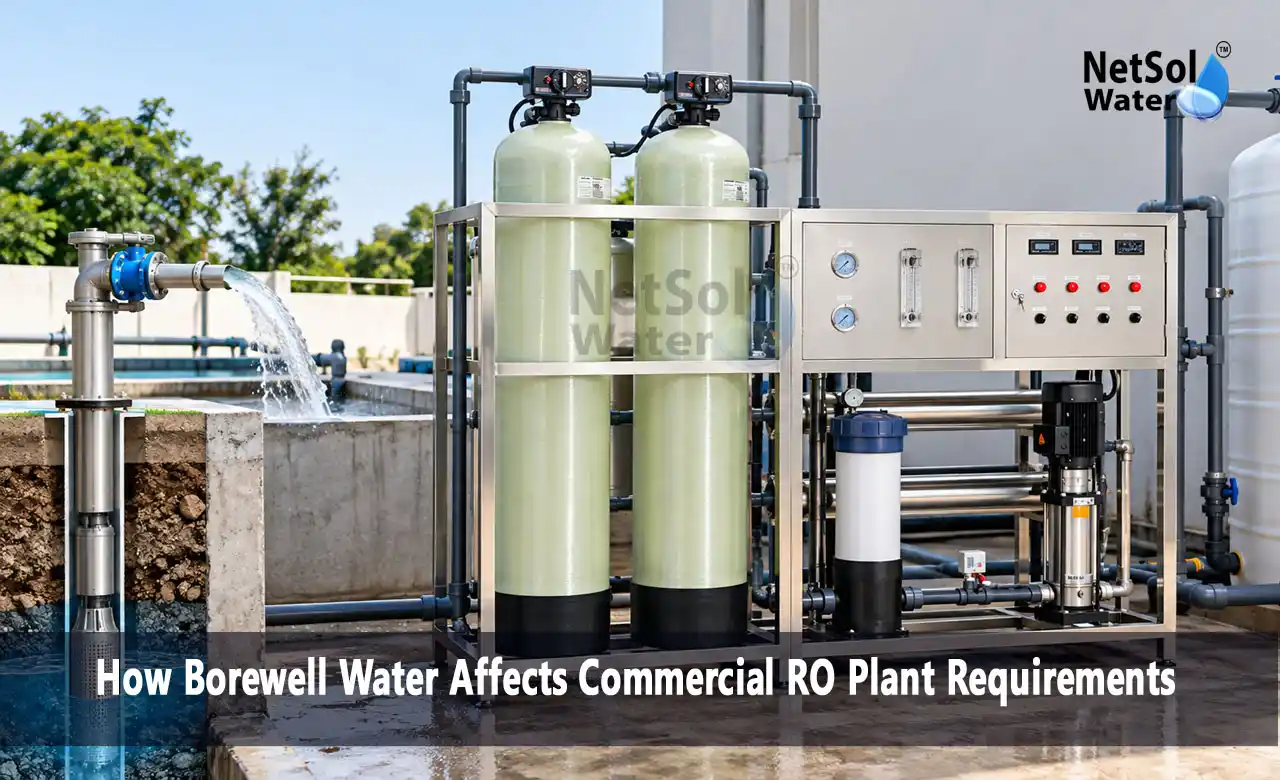
How Borewell Water Affects Commercial RO Plant Requirements?
Water that looks clean is not always water that is ready to use. Many commercial facilities in India rely on borewells as their main source, and the water they draw can appear perfectly clear while carrying high TDS, hardness, iron, fluoride, nitrate or other dissolved minerals. Quality also shifts from one location to the next, and it can change with borewell depth and with the season. The Central Ground Water Board reports that groundwater across India is broadly suitable for many uses, yet it also records local problems with salinity, fluoride, iron and nitrate in several regions.
Because homes, institutions and industries all depend heavily on groundwater, borewell water treatment is a serious planning topic for any commercial site. The treatment system has to match the real raw water quality and the daily demand. A well-designed commercial RO plant built around those two facts can make a big difference to daily operations.
Why Borewell Water Needs Its Own Treatment Plan?
There is no standard borewell water profile. The composition depends on local ground conditions and on how deep the borewell goes. A commercial RO system sized only by litres per hour may therefore give unstable results. Water testing should come before equipment selection, because the test reveals which contaminants can harm the membranes and affect the final water quality.
Here are the main borewell water conditions that can change a treatment design.
High TDS and Hardness Increase the Load on the RO System
High TDS is one of the most common reasons businesses turn to RO for borewell water. TDS is the total of dissolved substances in the water, so a higher reading means the membranes must reject more dissolved salts. That raises the pressure demand and the overall treatment load.
Hardness deserves equal attention. Calcium and magnesium can form scale on membrane surfaces and other equipment, and poor pre-treatment lets that scale cut into performance. Depending on the lab report and the operating conditions, the plan may need a water softener or another scale control step ahead of the RO stage.
Iron and Other Contaminants Need Early Control
Iron is another trouble maker for a commercial RO system. At higher concentrations it can stain surfaces and add to membrane fouling. The Central Ground Water Board has flagged elevated iron in many parts of India, along with localised fluoride and nitrate issues. That is exactly why one standard RO setup cannot suit every borewell.
Pre-treatment has to target the water you actually have. A sand filter helps remove suspended matter, and activated carbon can deal with certain organic impurities and odour. Iron or hardness may call for extra stages. The goal is to deliver water to the membrane that falls within its safe operating range, which supports longer membrane life and steadier performance.
How Borewell Quality Shapes Commercial RO Plant Design?
The raw water report has a direct effect on the design of commercial RO plants. Capacity is only one input. The designer also reviews feed TDS, hardness, iron, silica, pH, turbidity and other parameters that influence the process. The end use matters too, since drinking water and process water have different requirements.
Two areas of the design change the most when borewell water is the feed source.
Pre-Treatment Carries More Weight
Pre-treatment protects the RO membrane and keeps operation steady. Borewell water can hold suspended solids as well as dissolved minerals, so a typical treatment line may include multimedia filtration, activated carbon filtration, cartridge filtration and antiscalant dosing. A softener joins the line when hardness creates a scaling risk. The exact order should always follow the water analysis. If you want a stage by stage explanation, read our guide on how a commercial RO plant works.
A recent Netsol Water case study shows this approach in action. Its RMC project used borewell water and combined sand filtration, activated carbon filtration, micron filtration and RO treatment.
Good pre-treatment also keeps the feed condition consistent. That supports better membrane performance and reduces how often the membranes need cleaning. It lets the plant respond to the nature of the source water rather than repeating the same setup at every location.
Membrane Selection and Recovery Need Adjustment
Borewell water with heavy dissolved salts may need a membrane design that can carry a higher load, along with changes in operating pressure and membrane arrangement. Recovery must also suit the feed quality. Pushing for high recovery without proper control invites scaling and fouling.
Netsol Water has documented a borewell project where the feed water measured about 6000 ppm TDS. That site used two RO stages with pre-treatment placed between the raw water source and the membrane system. The example shows why the system must follow the raw water condition. A high TDS source may need a very different membrane plan from a low TDS borewell, and a drinking water application may demand tighter control than a general utility one.
Why Capacity and Daily Water Demand Matter?
Water quality is not the only factor. The volume of water needed every day also shapes the plant. A business may use treated water for drinking, food preparation, cleaning, cooling or processing, and each use creates its own demand pattern. The RO plant should deliver enough water without wasting energy or sitting idle for long stretches.
Let Daily Demand Guide the Plant Size
Start by calculating how much treated water the facility needs each day. Then factor in peak demand, storage capacity, operating hours and future growth. These details help the designer choose a suitable LPH capacity. For example, a facility that needs water all day may run a lower hourly capacity backed by enough storage, while a unit that needs large volumes in a short production window may need a higher LPH system. Netsol Water offers commercial systems across a wide capacity range and recommends a site assessment and water test before any selection. You can also check the commercial RO plant price list by capacity to get a sense of how sizing affects budget.
This approach also prevents over-sizing. An oversized plant costs more to install and run without adding real value, while an undersized one struggles at peak demand. Good design balances capacity, water quality and site conditions.
Automation and Monitoring Keep Operation Stable
Borewell quality can change over time, which makes monitoring valuable for commercial users. Operators should be able to track pressure, flow, TDS and other key values, depending on the system design. Automated controls help maintain a steady treatment cycle. This matters even more when the feed carries high TDS or hardness, because a shift in raw water quality can affect membrane performance and recovery. Early detection lets the maintenance team act before a small issue turns severe.
A well-planned system therefore pairs treatment equipment with practical controls. The aim is not only to produce treated water but also to make daily operation simple and predictable.
Choosing the Right Borewell Water Treatment Solution
The right solution starts with understanding your water, not with picking a unit from a standard size chart. Every commercial site has a different source, a different demand and a different treatment goal. A proper design links these factors to the right filtration stages and RO capacity. Larger process driven sites may also want to explore an industrial RO plant for heavier duty needs.
Begin With Water Testing
A laboratory test gives the designer a clear picture of the borewell. The report guides the choice of pre-treatment and membranes, and it can show whether extra treatment is needed before or after RO. Skipping this step can cause avoidable trouble such as fast membrane fouling, high operating pressure or poor treated water quality. The test also gives you a baseline for future maintenance and performance checks.
Match the System to the End Use
The same borewell water may need different treatment for different applications. Drinking water calls for careful quality control and disinfection. Process water may have limits set by the manufacturing process. Utility water may need a different target again. Netsol Water has delivered commercial and industrial RO projects in sectors such as hospitality, healthcare, education and manufacturing, and its documented borewell projects show how capacity and pre-treatment change from site to site.
That is why a custom-designed system often suits a business better than a one-size-fits-all unit. The treatment process should fit both the source water and the business requirement.
Conclusion
Borewell water can be a dependable source for commercial use, but its quality varies widely between sites. High TDS, hardness, iron and other dissolved contaminants can each change the treatment approach. The right design begins with water testing and then brings pre-treatment, RO capacity, membrane selection and daily demand together in one complete plan.
A properly planned commercial RO system helps a business keep a steady supply of treated water and supports reliable day to day operations. Netsol Water works on commercial and industrial RO applications and offers customised treatment solutions based on water quality and site demand.
If you need a commercial RO plant or a borewell water treatment solution, contact Netsol Water and share your water quality report and site needs. A professional consultation can help you choose a system that works for present use and future demand.
Contact Netsol Water
Phone: +91-9650608473, Email: enquiry@netsolwater.com