

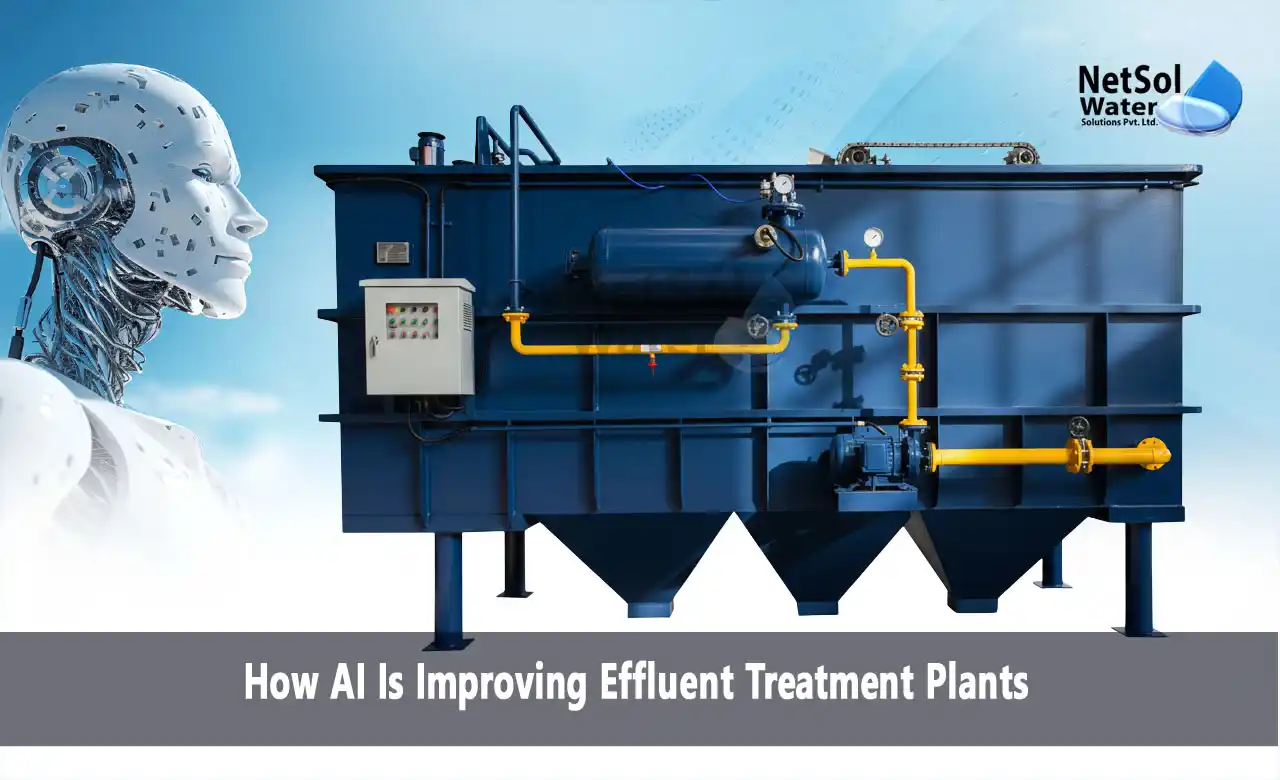
How AI Is Improving Effluent Treatment Plants?
Industrial growth has increased the need for better wastewater management. Factories use water during production. They also create wastewater that can contain organic matter, chemicals, suspended solids and other pollutants. India is known for its large manufacturing base and its wide range of textile, pharmaceutical, chemical, food and engineering industries. These sectors generate different types of effluent that need proper treatment before discharge or reuse.
Traditional treatment systems can manage this work. Yet they often need regular human supervision and manual adjustments. This is where AI in effluent treatment plants can bring a new approach. AI can study plant data and identify changes in water quality. It can also help operators adjust treatment processes based on changing conditions. Recent research shows that AI can support real time monitoring, process control, predictive maintenance and better resource use in wastewater treatment. Netsol Water is a leading water and wastewater treatment company in India that also provides automation solutions for ETP operations.
How AI Makes Effluent Treatment More Responsive?
Modern ETPs handle wastewater that can change throughout the day. Production schedules can affect flow and pollutant levels. A sudden change in the wastewater load can affect treatment performance. Manual monitoring may not always detect such changes early. AI can study data from sensors and process equipment. It can then help the system respond to changing conditions. This makes smarter monitoring an important part of modern wastewater management. Let us have a look at some ways AI can improve plant response and process control.
. Real Time Water Quality Monitoring
An ETP can collect data from different points in the treatment process. Sensors can monitor parameters such as pH, TDS and other quality indicators. Netsol Water already integrates PLC and SCADA systems with online monitoring for parameters such as pH, COD and TDS in its ETP solutions. AI can take this stream of information further by studying patterns in the collected data.
The system can compare current readings with past plant behaviour. It can then identify unusual changes. This may help operators notice a rising pollutant load before it affects the final treated water. Research also shows that AI models can support real time monitoring and process prediction in wastewater treatment. This can help operators act earlier rather than waiting for a problem to become visible.
. Smarter Process Control
Treatment processes often need careful control. Aeration needs to match the biological load. Chemical dosing needs to match wastewater conditions. Sludge recirculation also needs suitable control. Netsol Water states that its automation systems can control aeration, dosing and sludge recirculation through programmed control loops. AI can add a learning layer to such systems by studying past process data.
A smart system can identify links between treatment conditions and final water quality. It can then support better operating decisions. Recent studies have found that AI can assist with adaptive control and process optimisation while helping treatment plants respond to changing conditions. This can make an ETP more responsive and less dependent on constant manual adjustment.
AI Helps Reduce Operational Problems in ETPs
Wastewater plants work with pumps, blowers, sensors, dosing systems and other equipment every day. Even a small equipment problem can affect treatment performance. A sensor may also send incorrect data and lead to a poor operating decision. Smart technology can help identify these problems at an early stage. This can improve plant reliability and support smoother operation. Let us have a look at some areas where AI can help.
. Predictive Maintenance for Equipment
Traditional maintenance often follows a fixed schedule. Teams inspect equipment at set intervals. This approach can miss problems that develop between inspections. AI can examine equipment data and look for unusual patterns. Changes in operating behaviour may indicate that a pump or blower needs attention.
Recent research identifies predictive maintenance as one of the important uses of AI in wastewater treatment. AI models can study operating data and support early fault detection. This can give maintenance teams more time to act. It can also help prevent unexpected shutdowns. A well managed predictive system can support better equipment planning and more stable plant performance.
. Detecting Sensor and Process Faults
Sensors provide the data that smart wastewater systems need. Poor sensor data can therefore affect the decisions made by an AI system. Recent research has identified sensor reliability as a major challenge for wastewater digitalisation. It also highlights the use of AI and machine learning for sensor fault detection.
A smart ETP can compare readings from different sensors and compare current values with earlier patterns. The system can flag data that does not match normal plant behaviour. Operators can then inspect the sensor or process unit. This creates an added layer of protection. It also helps teams avoid making decisions based on faulty readings. Better data quality can make industrial wastewater automation more useful in daily operations.
AI Supports Better Use of Energy and Chemicals
An ETP must treat wastewater effectively while keeping operating costs under control. Energy use can rise when pumps and blowers run without matching the actual treatment demand. Chemical consumption can also increase when dosing does not match wastewater conditions. AI can help plants use process data to make better operating decisions. This can support both cost control and more responsible resource use. Let us have a look at some areas where this approach can help.
. Optimising Chemical Dosing
Chemical dosing plays an important role in many ETP processes. Plants may use chemicals for pH correction, coagulation and other treatment stages. Fixed dosing may not work equally well when wastewater quality changes.
AI can study the relationship between wastewater conditions and treatment results. It can then help operators adjust chemical dosing based on actual process behaviour. Research shows that AI based systems can support adaptive control and improve chemical use in wastewater treatment. This approach can help avoid unnecessary chemical use while keeping treatment performance on track. It also gives operators better information for daily control.
. Improving Aeration and Energy Use
Aeration can consume a significant amount of energy in biological treatment systems. Running blowers at a fixed level may lead to excess energy use when the biological load is lower. AI can study process conditions and help adjust aeration based on changing demand.
Research on AI enabled wastewater treatment reports potential benefits in energy optimisation and operational efficiency. Netsol Water also describes the use of energy efficient blowers, motor systems and variable frequency drives in industrial ETP design. Combining these controls with data driven analysis can help plants move toward smarter energy management.
What a Smart ETP Can Mean for Industrial Wastewater Management?
The value of AI becomes stronger when it works as part of a complete treatment system. A smart plant should not only collect data. It should turn that data into useful actions. It should also give operators enough control to check and manage those actions. This approach can help industries build a more connected wastewater treatment process. Let us have a look at how this can shape future ETP operations.
. Combining AI With PLC and SCADA
PLC and SCADA already provide the basic control structure for many modern ETPs. Netsol Water uses these systems for real time control, data logging, alarm management and remote access in its ETP solutions. AI can work with this existing structure rather than replacing every part of it.
The AI layer can study historical data and current readings. It can identify patterns and support decisions based on those patterns. The control system can then carry out approved changes. This creates a connection between monitoring, analysis and action. Such integration can make industrial wastewater automation more practical for factories that already use automated plant controls.
. Building a More Reliable Treatment Strategy
AI can support a shift from reactive treatment toward more predictive management. Instead of waiting for poor effluent quality or equipment failure, the system can identify warning signs earlier. This does not remove the need for trained plant operators. Human oversight remains important because wastewater conditions can change and AI models can make mistakes.
Recent research also points to challenges related to data quality, model interpretation and wider system integration. This means industries should introduce AI with a clear process and reliable sensors. Netsol Water already offers automated ETP systems with monitoring and control functions. This provides a practical base for adding smarter data driven features as plant needs grow.
Conclusion
Better wastewater treatment now depends on more than basic process equipment. Industries need systems that can monitor changing conditions, support operators and maintain stable treatment performance. AI in effluent treatment plants can help achieve this through better monitoring, predictive maintenance and smarter process control. A well planned smart ETP can also support better energy use and chemical management. Industrial wastewater automation can make these improvements easier to manage across daily plant operations.
Netsol Water is a leading provider of water and wastewater treatment solutions in India. Its ETP systems include automation and monitoring features for industrial applications. Companies that want to improve their wastewater treatment process can get in touch with Netsol Water to discuss their requirements and request a technical consultation for a suitable ETP solution.
Contact Netsol Water at:
Phone: +91-9650608473, Email: enquiry@netsolwater.com