

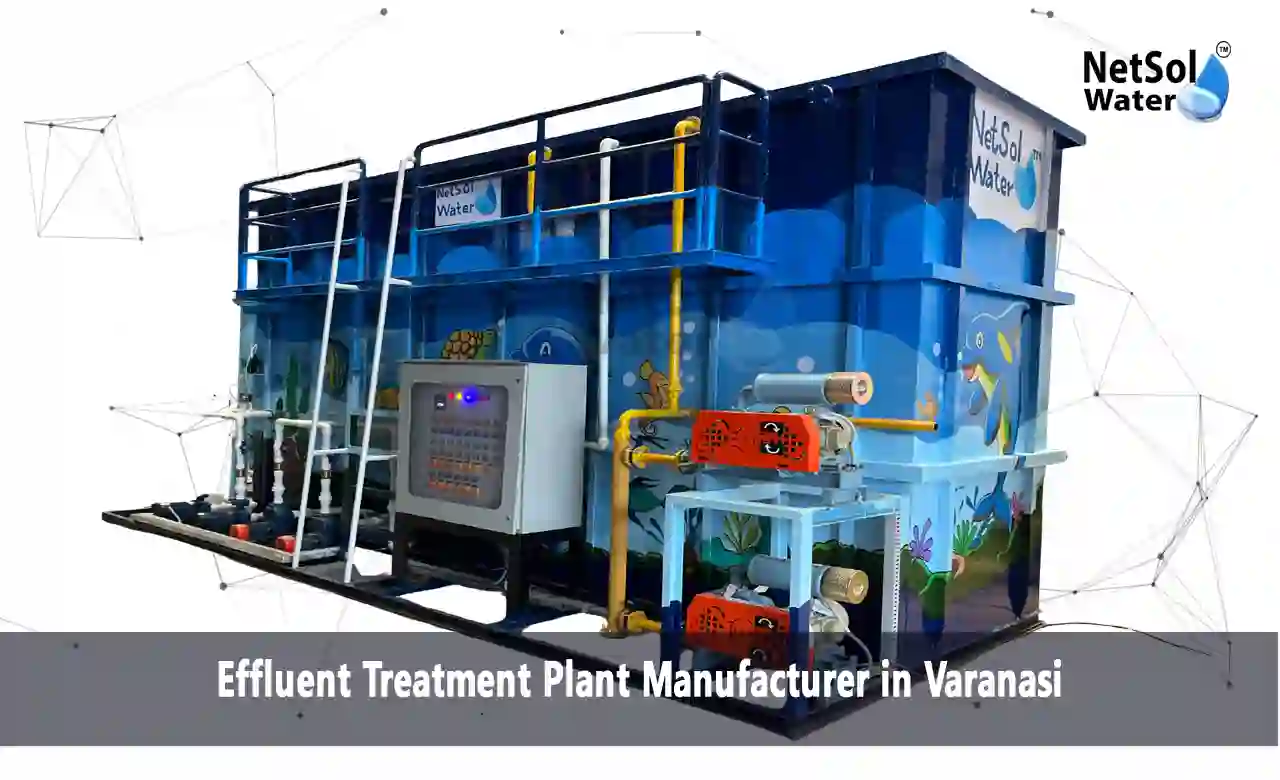
Effluent Treatment Plant Manufacturer in Varanasi
Varanasi is not just a city of temples and ghats. It is also a significant industrial centre, home to one of the world's most famous silk weaving traditions, alongside thriving textile dyeing units, food processing facilities, metal workshops, and chemical-based industries. These industries contribute enormously to the local economy and cultural heritage - but they also generate industrial effluent that poses serious environmental risks.
Industrial effluent from Varanasi's silk and textile units is particularly challenging. The dyeing and finishing processes use large quantities of synthetic dyes, fixatives, mordants, and chemical assistants. The resulting wastewater is highly coloured, has elevated BOD and COD, and often contains trace heavy metals and refractory organic compounds.
When this effluent reaches the Ganga - directly or through storm drains - the environmental consequences are severe. Coloured effluent reduces light penetration, disrupts aquatic life, and degrades the river ecosystem that millions depend on for their spiritual and physical sustenance.
The National Green Tribunal (NGT), CPCB, and UPPCB have progressively tightened enforcement against untreated industrial discharge in Varanasi. Industries that fail to install and operate compliant ETPs face closure orders, heavy penalties, and legal proceedings. The time to act is now.
Varanasi's Industrial Sectors and Their Effluent Challenges
1. Silk and Handloom Weaving Industry
Varanasi's legendary Banarasi silk industry generates wastewater primarily from dyeing and finishing processes. This effluent contains synthetic dyes, sodium sulphate, auxiliary chemicals, and coloured water that requires decolourization before discharge. Physical-chemical treatment combined with biological polishing is the standard approach.
2. Textile Dyeing and Printing
Beyond silk, Varanasi has a broader textile sector that includes cotton and synthetic fabric dyeing. These units generate high-volume coloured effluent with elevated COD and TDS levels. Modern ETPs for textile dyeing use advanced oxidation processes (AOP), coagulation, biological treatment, and in some cases, membrane filtration for colour removal.
3. Food Processing and Dairy
Food processing units in and around Varanasi - processing spices, dairy products, sweets (famous Varanasi sweets industry), and staple foods - generate high-BOD effluent from wash water, processing residues, and cleaning operations. Aerobic biological ETPs with proper aeration systems are the most effective treatment for these waste streams.
4. Metal Working and Engineering
Workshops involved in metal fabrication, finishing, and electroplating generate effluents containing heavy metals, acids, alkalis, and cutting oils. These require specialized physico-chemical treatment including pH neutralization, metal precipitation, and oil separation before conventional biological treatment.
5. Printing and Packaging
Commercial printing and packaging industries in Varanasi generate effluents with inks, solvents, adhesives, and chemical compounds. COD and toxicity are the primary concerns. Physico-chemical treatment with chemical oxidation is typically used for these waste streams.
Why Industrial ETP Compliance Matters More in Varanasi
Varanasi's proximity to the Ganga places it under extraordinary environmental scrutiny. The National Mission for Clean Ganga (NMCG) actively monitors industrial compliance in all Ganga river basin cities. Varanasi-based industries have been specifically targeted by NGT orders requiring compliance with ETP installation mandates.
Beyond regulatory risk, there is a powerful reputational argument. Varanasi's economy, particularly in tourism and hospitality, depends on the city's image as a sacred and spiritually pure destination. Industries that are seen to contribute to Ganga pollution face significant community opposition and reputational damage.
Investing in a high-quality ETP is thus both a legal obligation and a business necessity for any industrial operator in Varanasi.
Netsol Water's ETP Solutions for Varanasi Industries
Netsol Water is a leading ETP manufacturer in Uttar Pradesh serving in the Varanasi industrial market, with specific expertise in the complex effluent types generated by the city's textile, food, and chemical industries.
1. Advanced Decolourization Systems for Textile Industry
For Varanasi's silk and textile dyeing units, Netsol Water offers ETPs with advanced decolourization technology - combining physico-chemical treatment (coagulation, ozonation) with biological polishing to achieve full colour removal. These systems meet NGT and CPCB colour standards for textile effluent.
2. High-Efficiency Biological ETPs for Food Industries
Food processing units receive ETPs with aerobic biological reactors (MBBR or SBR) sized for high-BOD loads. Netsol Water's systems are designed for ease of operation by factory staff with minimal technical background, ensuring consistent performance without specialized oversight.
3. Multi-Parameter Treatment for Chemical and Metal Industries
For complex industrial effluents requiring treatment of multiple parameters - pH, metals, TSS, BOD, COD, oil and grease - Netsol Water designs multi-stage treatment systems that address each contaminant category systematically. This ensures robust compliance across all discharge parameters.
4. ZLD for Ganga Basin Industries
Industries located in the Ganga mainstem zone may be required to achieve Zero Liquid Discharge under NGT and CPCB directives. Netsol Water has experience designing ZLD systems for textile and chemical industries in the Ganga basin, combining ETPs with RO and thermal evaporation systems.
ETP Process Design for Varanasi Textile Effluent
1. Inlet Collection and Equalization
Textile dyeing effluent arrives in variable batches throughout the day. The equalization tank collects and homogenizes these batches, ensuring consistent feed to the treatment system. pH adjustment is performed at this stage.
2. Primary Physico-Chemical Treatment
Coagulant (alum or FeCl3) and polymer are dosed with flash mixing and slow flocculation. The coagulated effluent enters a tube settler or DAF (Dissolved Air Flotation) unit for rapid sludge separation. This stage removes 50 to 70 percent of colour and TSS.
3. Biological Treatment
The chemically treated effluent enters a biological reactor (MBBR or ASP) where aerobic microorganisms degrade remaining organic matter. This stage reduces BOD by 85 to 95 percent, significantly reducing the organic pollutant load.
4. Advanced Oxidation (Optional)
For particularly recalcitrant dyes or when very high colour removal is required, advanced oxidation processes (Fenton oxidation, ozonation, or UV/H2O2) can be used as a polishing step. These technologies break down complex dye molecules into simpler, more easily biodegradable fragments.
5. Final Filtration and Discharge
Multi-media filtration and activated carbon adsorption provide final polishing, removing residual colour, odour, and turbidity. The treated effluent is tested against CPCB standards before discharge.
ETP Capacity Range for Varanasi
• 5 KLD to 25 KLD - Small dyeing units, workshops, food processors
• 25 KLD to 100 KLD - Medium textile units, larger food plants
• 100 KLD to 500 KLD - Large manufacturing complexes
• 500 KLD and above - Industrial clusters and estates
ETP Cost in Varanasi - 2024 Price Reference
• Small ETPs (1–10 KLD): INR 5 lakh to INR 10 lakh
• Medium ETPs (10–50 KLD): INR 10 lakh to INR 40 lakh
• Large ETPs (50–200 KLD): INR 40 lakh to INR 1.5 crore
• ZLD Systems: INR 1.5 crore and above
Cost is significantly influenced by the complexity of treatment required. Textile dyeing ETPs with decolourization typically cost 30 to 50 percent more than a standard ETP of the same capacity due to the additional process stages and chemicals involved.
Top ETP Manufacturers in Varanasi
1. Netsol Water
Netsol Water offers the most comprehensive ETP solutions for Varanasi's industries, with specific expertise in textile dyeing effluent treatment, food processing ETPs, and ZLD systems for Ganga basin compliance. Strong regulatory support and local service capability make them the top recommendation.
2. Sewage Treatment Plants
Sewage Treatment Plants has national-scale capabilities for large industrial ETPs and has worked on projects in the Ganga basin. Good option for large-scale installations with substantial capital budgets.
3. Urban STP Plant
Urba STP Plant is one of India's largest water treatment companies, with significant experience in industrial and municipal ETP projects. Well-suited for very large industrial estates and complex treatment requirements.
Frequently Asked Questions (FAQs)
Q1. Are Varanasi silk dyeing units legally required to have ETPs?
Yes. All industrial units in Varanasi that discharge process wastewater - including silk dyeing units, however small - must comply with UPPCB consent conditions that require ETP installation. NGT orders specific to Ganga basin cities further strengthen this requirement. Non-compliant units face closure and penalty orders.
Q2. What colour standard must Varanasi textile ETPs meet?
CPCB's discharge standards for textile effluent specify that treated water must meet colour limits measured as ADMI (American Dye Manufacturers Institute) units - typically below 400 ADMI for inland surface water discharge. Advanced decolourization systems in Netsol Water's textile ETPs consistently achieve this standard.
Q3. Can small silk weaving units share a Common ETP?
Yes. Common Effluent Treatment Plants (CETPs) are a cost-effective option for clusters of small dyeing units that individually cannot afford full-scale ETPs. Multiple units pipe their effluent to a shared CETP that treats the combined wastewater. Netsol Water has experience designing and commissioning CETPs for industrial clusters.
Q4. How does an ETP help industries near the Ganga comply with NGT orders?
NGT orders require industries in the Ganga river basin to achieve zero discharge to the river. A properly designed and operated ETP ensures all process wastewater is treated before discharge, and when combined with water recycling, can significantly reduce or eliminate any discharge to drains that may ultimately reach the river.
Q5. What is the BOD standard for industrial effluent discharge in Varanasi?
CPCB standards for industrial effluent discharge to inland surface water specify BOD not exceeding 30 mg/L and COD not exceeding 250 mg/L for most industrial sectors. Textile and chemical industries may have additional parameters. Netsol Water designs ETPs to meet or exceed these standards with an appropriate safety margin.
Q6. How can I verify if my ETP is performing correctly?
Regular effluent testing by a NABL-accredited laboratory is the most reliable way to verify ETP performance. Testing should cover all parameters specified in your UPPCB consent conditions - at minimum, BOD, COD, TSS, pH, and colour. Netsol Water's AMC programs include periodic performance testing as a standard service.
Q7. What support does Netsol Water provide for NGT compliance in Varanasi?
Netsol Water provides comprehensive NGT compliance support - including ETP design and installation, performance testing, laboratory analysis, compliance report preparation, and liaison documentation for CPCB/UPPCB. Their team has experience managing complex regulatory situations specific to the Ganga basin compliance framework.
Get Your Free Consultation Today
Ready to install a world-class Effluent Treatment Plant in Varanasi? Netsol Water's experts are here to guide you from site assessment to commissioning. We offer competitive pricing, custom engineering, and lifetime AMC support.
Call Us: +91-9650608473, Email Us: enquiry@netsolwater.com
Our team responds within 24 hours. Reach out today and let us build the right water treatment solution for your facility.