

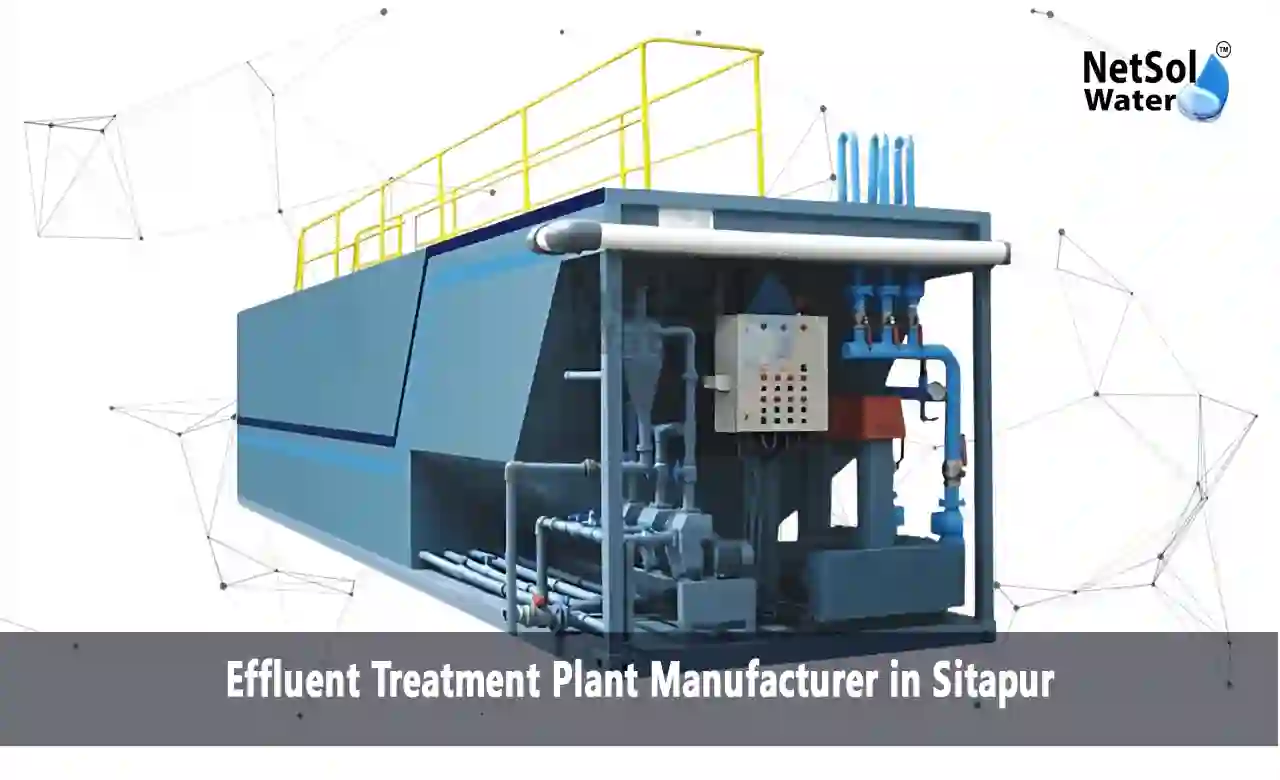
Effluent Treatment Plant Manufacturer in Sitapur
Sitapur has quietly emerged as a significant industrial centre in central Uttar Pradesh. Rice mills, agro-processing units, oil extraction facilities, packaging industries, small chemical manufacturers, and textile units are all active across the district. What binds them together is a challenge they all face: industrial wastewater that cannot simply be drained away.
Industrial effluent from these operations is chemically complex. It contains oils, suspended solids, dissolved organics, biological load, and in some cases, trace heavy metals. Standard municipal drains cannot handle this. Open-field disposal contaminates soil and groundwater. And UPPCB is increasingly active in monitoring discharge compliance across Sitapur's industrial areas.
The practical, compliant, and sustainable answer is an Effluent Treatment Plant designed specifically for your industry's waste profile. Choosing the right ETP manufacturer in Sitapur makes the difference between a system that works and a compliance liability.
About Netsol Water
Netsol Water is an ISO-certified water and wastewater treatment manufacturer based in Noida, with an active project portfolio spanning major industrial districts of Uttar Pradesh, including Sitapur. The company brings genuine engineering expertise to ETP design - not standard equipment reselling.
The company's design process begins with effluent characterisation. Your wastewater is tested for BOD, COD, TSS, oil and grease, pH, and industry-specific pollutants. This data defines the treatment sequence, technology selection, and system sizing - ensuring the plant meets discharge norms on day one rather than after costly retrofitting.
Netsol Water's ETP capacity range spans 1 KLD to 100 MLD, making it equally suitable for a small rice mill in Sitapur producing 5 KLD of effluent and a large processing facility generating 500 KLD.
Also Read: ETP solutions across central UP
Industries in Sitapur That Require ETP Systems
• Rice mills and agro-processing units - wastewater with high BOD, suspended rice starch, and husk particles
• Edible oil extraction plants - high oil and grease concentration in effluent
• Dairy processing units - high BOD from milk residuals, fat, and cleaning chemicals
• Food and beverage manufacturers - organic waste, sugars, and cleaning wastewater
• Packaging and printing industries - ink solvents, adhesives, and chemical rinsewater
• Textile and dyeing units - synthetic dyes, acids, alkalis, and high TDS
• Small pharmaceutical manufacturers - active pharmaceutical ingredients and solvents
ETP Treatment Process - What Happens to Your Effluent
1. Collection and Flow Equalization
Effluent generated at different production points enters an equalization tank that absorbs peak flows and averages out concentration variations. Without this stage, surges in effluent strength or volume can overwhelm downstream treatment and cause discharge violations. Equalization is the foundation of a reliable ETP.
2. Primary Treatment - Oil Separation and Settling
An oil and grease trap or dissolved air flotation (DAF) unit removes hydrocarbons and floating matter from effluent. A primary clarifier then allows heavy suspended solids to settle as sludge. This stage reduces TSS by 50–70% and removes the bulk of oil contamination before biological treatment begins.
3. Chemical Coagulation and Flocculation
For effluents with high colour, dissolved heavy metals, or colloidal particles, a chemical treatment stage is essential. Coagulants and flocculants are dosed under controlled mixing conditions to aggregate fine particles into larger floc that settles readily. This stage also adjusts pH to the optimal range for biological treatment.
4. Biological Treatment - BOD and COD Reduction
Aerobic bacteria in the biological treatment tank consume dissolved organic matter, converting it into carbon dioxide and stabilised biomass. This stage achieves 80–95% BOD reduction in properly designed systems. Technology options include Extended Aeration, MBBR (Moving Bed Biofilm Reactor), and SBR (Sequential Batch Reactor) depending on effluent strength and space availability.
5. Sludge Management
Biological treatment generates sludge that must be separated, thickened, dewatered, and disposed of correctly. A filter press dewaters sludge to a manageable solid cake that is sent to authorised solid waste facilities. Proper sludge management is a UPPCB compliance requirement and prevents secondary pollution from wet sludge disposal.
6. Tertiary Polishing
The final treatment stage removes residual suspended solids, colour, and pathogens. Sand filtration and activated carbon adsorption improve clarity and reduce remaining BOD. UV disinfection eliminates bacteria. For industries targeting water reuse, additional RO polishing can bring treated water to process water quality.
ETP Technology Options for Sitapur Industries
1. Chemical ETP
Chemical ETPs use coagulation, flocculation, and sedimentation as the primary treatment mechanism. They are highly effective for effluents containing heavy metals, dyes, and non-biodegradable compounds that biological systems cannot handle effectively. Often used as a pre-treatment stage before biological processing in combined systems.
2. Biological ETP
When the effluent contains primarily organic waste (food processing, dairy, agro-processing), biological treatment is the most cost-effective approach. Extended Aeration and MBBR-based biological ETPs deliver excellent BOD/COD removal at lower chemical cost compared to purely chemical treatment systems.
3. Combined ETP
Many Sitapur industries produce effluent that contains both chemical pollutants and biodegradable organic load. Combined ETPs integrate chemical pre-treatment with biological processing, followed by tertiary polishing. This multi-stage approach handles the most complex effluent profiles and achieves the strictest discharge standards.
4. ZLD (Zero Liquid Discharge) ETP
For industries where UPPCB mandates zero liquid discharge - typically highly polluting sectors like distilleries, paper mills, or textile dye houses - a ZLD system evaporates all liquid waste after conventional ETP treatment, producing only solid waste. Significant infrastructure investment but eliminates all discharge compliance risk.
UPPCB Compliance for ETP Plants in Sitapur
The Uttar Pradesh Pollution Control Board enforces strict regulations on industrial effluent discharge. Industries in Sitapur must obtain:
• Consent to Establish (CTE): Obtained before setting up the ETP. Requires submission of ETP design, effluent characteristics, and environmental management plan.
• Consent to Operate (CTO): Granted before beginning production. The ETP must demonstrate compliance with prescribed discharge standards.
• Periodic effluent monitoring: UPPCB conducts routine inspections and effluent testing. Non-compliant industries face penalties, closure notices, and enforcement action.
Netsol Water designs ETP systems with UPPCB discharge norms built into the design brief, ensuring the plant meets compliance requirements from day one rather than requiring expensive post-installation modifications.
ETP Plant Cost in Sitapur - Indicative Price Ranges
• Small ETP (1–10 KLD): INR5 lakh to INR10 lakh depending on effluent complexity
• Mid-size ETP (10–25 KLD): INR10 lakh to INR20 lakh
• Large ETP (25–100 KLD): INR20 lakh to INR80 lakh
• ZLD systems: INR80 lakh to INR3 crore+ depending on capacity and evaporation technology
Key cost drivers: effluent pollutant complexity, technology selection (chemical vs. biological vs. combined), civil infrastructure requirements, automation level, and sludge handling provisions. Request a detailed BOQ after an effluent test report is available.
Top 3 ETP Manufacturers Serving Sitapur
1. Netsol Water
Netsol Water leads ETP supply in Sitapur with a site-specific design approach, multi-technology capability, and full UPPCB compliance support. The company's 1 KLD to 100 MLD capacity range accommodates every industrial scale, and its post-commissioning AMC ensures long-term performance reliability.
2. Sewage Treatment Plants
Sewage Treatment Plants serve simpler ETP requirements in Sitapur and nearby districts. Suitable for small industries with straightforward, well-characterised effluent streams. Service and technology range may be limited compared to established national manufacturers.
3. Urban STP Plant
Urban STP Plant offer comprehensive ETP solutions for complex and large-scale applications. Suitable for high-compliance industries or large projects where technical complexity requires deep engineering capability. Local service responsiveness varies.
Conclusion
Effluent treatment in Sitapur has moved from optional to mandatory - and enforced. Industries that delay ETP installation risk penalties, CTO cancellation, and production stoppage. Those that invest in a properly designed system gain compliance security, water reuse capability, and long-term operational stability.
Netsol Water's engineering-first approach, multi-technology capability, and genuine Sitapur-area experience make it the smart choice for industries at any scale. Reach out today for a free effluent characterisation and ETP design consultation.
Contact Netsol Water for a free ETP consultation tailored to your Sitapur industry's effluent profile.
FAQs - Effluent Treatment Plant Manufacturer in Sitapur
Q1. Which industries in Sitapur are required to install ETP plants?
Rice mills, agro-processing units, dairy plants, textile units, chemical manufacturers, packaging facilities, and pharmaceutical producers in Sitapur are required by UPPCB to install ETP plants. Any industry discharging effluent into drains, water bodies, or land must meet prescribed discharge standards or face penalties.
Q2. What pollutants does an ETP remove from industrial wastewater?
An ETP removes suspended solids, oils and greases, heavy metals, synthetic dyes, BOD (organic load), COD, pH imbalances, and pathogenic bacteria from industrial effluent. The specific pollutants removed depend on the treatment stages installed - chemical, biological, or combined - based on the effluent's characteristics.
Q3. Can ETP treated water be reused in production?
Yes. Properly treated ETP water can be reused for cooling water makeup, utility washing, toilet flushing, and gardening. With advanced tertiary treatment (RO polishing), treated effluent can be recycled back into production processes, significantly reducing fresh water consumption and operational costs.
Q4. What is the lifespan of an ETP plant?
A well-designed and properly maintained ETP plant has a structural lifespan of 15–25 years. Mechanical and electrical components like pumps and blowers typically need replacement every 5–10 years. Regular preventive maintenance extends component life and prevents costly emergency breakdowns.
Q5. How long does it take to set up an ETP in Sitapur?
Small compact ETPs (up to 10 KLD) are typically installed in 4–8 weeks. Medium plants (10–50 KLD) take 2–4 months including civil construction and commissioning. Large and ZLD plants may take 6–12 months. UPPCB documentation timelines run parallel and should be initiated as early as possible.
Q6. Is UPPCB approval mandatory before installing an ETP in Sitapur?
Yes. UPPCB's Consent to Establish must be obtained before setting up the ETP. The application requires an ETP design report, effluent management plan, and site details. Operating without CTE and CTO clearances exposes the industry to penalties and production closure orders. Netsol Water assists with this documentation process.
Q7. What is the difference between an ETP and an STP?
An ETP (Effluent Treatment Plant) treats industrial wastewater containing chemical, physical, and biological pollutants specific to manufacturing processes. An STP (Sewage Treatment Plant) treats domestic wastewater from buildings and institutions, which is primarily biological in nature. ETPs require more complex, industry-specific treatment processes.