

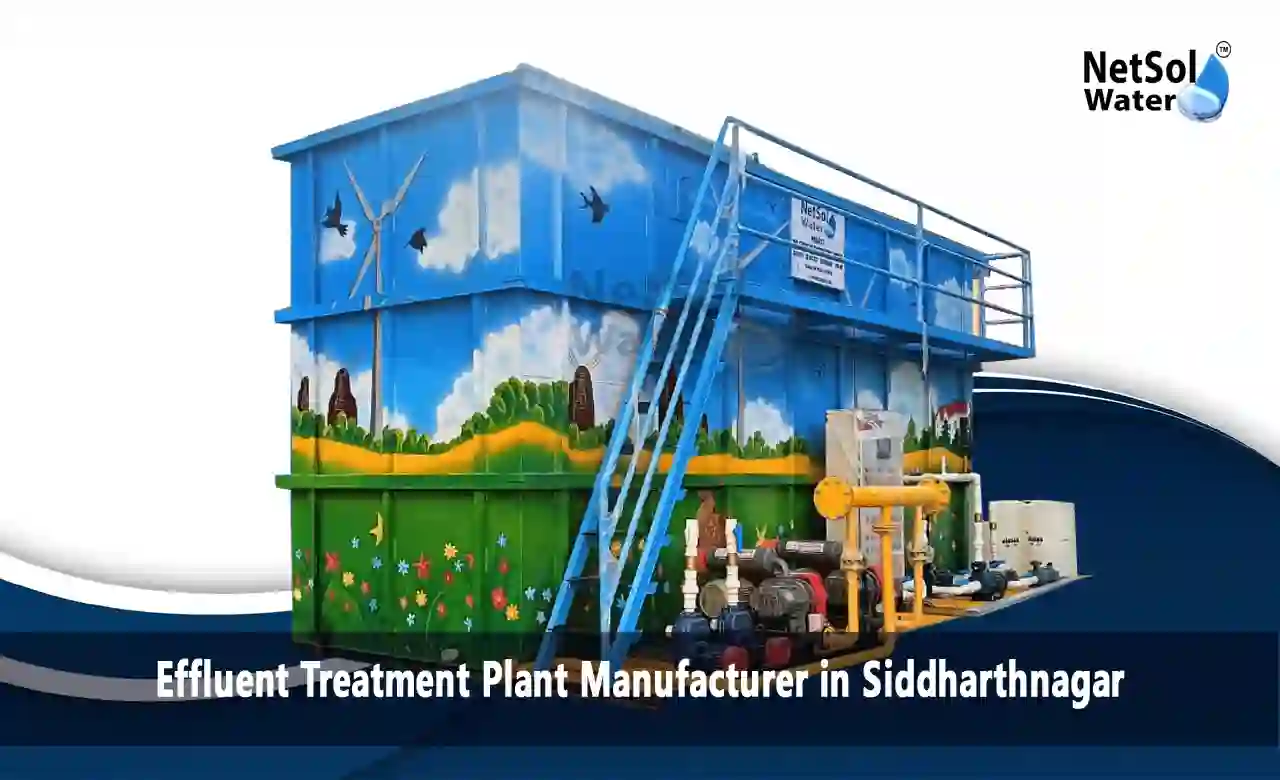
Effluent Treatment Plant Manufacturer in Siddharthnagar
Industries are the backbone of economic growth in Siddharthnagar. But industrial processes generate wastewater - and how that wastewater is managed determines whether a region grows sustainably or at the cost of its natural environment.
Industrial effluent contains chemicals, dyes, oils, heavy metals and biological contaminants that are harmful to water bodies, soil, and public health. Untreated or improperly treated discharge is not only illegal under UPPCB regulations - it's irresponsible and costly in the long run.
Netsol Water designs and manufactures Effluent Treatment Plants (ETPs) that help industries in Siddharthnagar meet their environmental obligations without disrupting their operations.
What Is an Effluent Treatment Plant?
An Effluent Treatment Plant (ETP) is a facility that treats industrial wastewater before it is discharged into municipal drains, water bodies, or reused within the facility. Unlike domestic sewage, industrial effluent is far more complex - containing chemicals, toxins, dyes, and compounds that require specialized treatment processes.
A well-designed ETP removes pollutants in stages - physical removal of solids, chemical treatment to neutralize hazardous substances, and biological treatment to break down organic compounds. The end result is treated water that meets UPPCB discharge standards.
Why ETPs Are Critical for Industries in Siddharthnagar?
1. Legal Requirement, Not Just Best Practice
Under the Water (Prevention and Control of Pollution) Act and UPPCB regulations, industries generating effluent above a threshold volume are legally required to install and operate functional ETPs. Operating without one can result in closure orders, heavy fines, and criminal liability.
2. Rising Environmental Accountability
Communities, NGOs, and regulatory authorities are increasingly vigilant about industrial discharge. Industries without proper treatment systems face increasing scrutiny, media attention, and community opposition. An ETP demonstrates corporate environmental responsibility.
3. Water Body Protection
Siddharthnagar has agricultural land, ponds, and river channels that communities depend upon. Industrial discharge that reaches these water bodies can render them unusable for agriculture and consumption for years. ETPs prevent this contamination.
4. Internal Water Recycling and Cost Savings
A well-designed ETP doesn't just treat effluent - it recovers water. Industries that recycle treated effluent for non-critical uses (cooling, cleaning, washing) can reduce fresh water consumption by 30–60%, leading to significant operational savings.
Also Read: ETP Manufacturer in U.P.
Industries in Siddharthnagar That Need ETPs
1. Food Processing Units
Food processing generates organic-rich wastewater with high BOD (Biological Oxygen Demand) and COD (Chemical Oxygen Demand). This effluent, if untreated, rapidly depletes oxygen in water bodies and kills aquatic life. ETPs for food processing focus on biological treatment to handle this organic load.
2. Small-Scale Chemical Manufacturing
Chemical effluent contains acids, alkalis, solvents, and sometimes toxic compounds. These require pH neutralization, chemical coagulation, and advanced treatment before safe discharge.
3. Textile and Dyeing Units
Textile effluent is notoriously difficult to treat due to its high color intensity, chemical oxygen demand, and presence of synthetic dyes. Proper ETP design for textile wastewater must address color removal - which often requires advanced oxidation or chemical treatment in addition to biological stages.
4. Agro-Processing and Dairy Units
Dairy and agro-processing wastewater is high in fats, proteins, and organic content. Biological treatment systems are very effective here, but proper grease traps and pre-treatment are essential.
5. Brick Kilns and Construction Material Units
These generate wastewater with high suspended solids and mineral content. Sedimentation and filtration are primary treatment methods.
Our ETP Design Approach
1: Effluent Characterization
We begin with a thorough analysis of your effluent - measuring pH, BOD, COD, TSS, TDS, oil and grease, heavy metals, and any industry-specific parameters. This characterization is the foundation of proper ETP design.
2: Process Selection
Based on effluent characteristics, we select the most effective treatment process combination. Different effluents require different treatment approaches - what works for a food processor may be completely inappropriate for a chemical unit.
3: Detailed Engineering Design
Our engineers prepare a complete design package including P&ID drawings, equipment sizing, civil layout, and electrical design. This design is reviewed against UPPCB discharge standards before approval.
4: Procurement and Manufacturing
All ETP equipment - tanks, pumps, blowers, mixers, clarifiers, filters - is procured or fabricated to specification. We use quality materials appropriate for the corrosiveness and chemical nature of your effluent.
5: Installation and Commissioning
Our team installs all equipment, makes all connections, and runs comprehensive performance tests to verify that the treated effluent meets required parameters before handover.
ETP Treatment Stages We Implement
1. Primary Treatment
Screens and bar screens remove large solids. Grit chambers settle sand and gravel. Oil and grease traps remove floatable contaminants. Primary clarifiers allow heavy suspended solids to settle. This stage reduces TSS and COD by 30–50%.
2. Secondary (Biological) Treatment
Microorganisms break down organic matter in the effluent. We use Activated Sludge Process (ASP), MBBR, or Sequence Batch Reactor (SBR) technology depending on effluent characteristics. This stage dramatically reduces BOD and COD.
3. Tertiary Treatment
For effluent that needs to be reused or discharged to sensitive water bodies, tertiary treatment includes sand filtration, activated carbon adsorption, UV disinfection, and advanced oxidation. This stage polishes the treated water to near-potable quality.
4. Chemical Treatment (Where Required)
pH adjustment, coagulation, flocculation, and precipitation are used to remove heavy metals, phosphates, and other chemical contaminants that biological systems can't address.
Cost Considerations for ETPs in Siddharthnagar
• Effluent Volume and Flow Rate: Larger daily effluent volumes require bigger treatment systems.
• Effluent Complexity: Highly contaminated or chemically complex effluent requires more treatment stages.
• Discharge Standard Required: Zero Liquid Discharge (ZLD) systems cost significantly more than conventional discharge systems.
• Civil Work Requirements: Underground tanks, elevated platforms, or lined ponds add to project cost.
• Material Selection: Effluent-resistant materials like FRP, HDPE, or SS 316 cost more but are necessary for aggressive effluents.
• Automation Level: Automated dosing systems and PLC controls improve performance but increase capital cost.
Zero Liquid Discharge (ZLD) Option
For industries in water-scarce areas or those facing strict discharge restrictions, we offer Zero Liquid Discharge solutions. ZLD systems treat effluent to a level where it can be completely recycled - no discharge to the environment. While ZLD systems require higher capital investment, they eliminate discharge compliance risks entirely and recover valuable water.
Frequently Asked Questions
Q1. What UPPCB standards must ETP-treated effluent meet in Uttar Pradesh?
UPPCB sets discharge standards for parameters like BOD (typically <30 mg/L for inland surface water discharge), COD (<250 mg/L), TSS (<100 mg/L), and pH (6.5–8.5). Heavy metals have separate limits. We design our ETPs to consistently meet and exceed these standards, with built-in safety margins.
Q2. How long does it take to set up an ETP for a small industry in Siddharthnagar?
A compact ETP for a small-to-medium industry can be designed, manufactured, and commissioned in 8–16 weeks depending on complexity and site readiness. Larger systems with custom civil work may take 4–6 months. We provide detailed project timelines at the proposal stage.
Q3. Can an ETP also recover usable water from industrial effluent?
Yes. With proper treatment - primary, secondary, and tertiary stages - ETPs can recover 50–80% of effluent volume as reusable water suitable for cooling, washing, and toilet flushing. This water recovery significantly reduces your fresh water intake costs.
Q4. What is the difference between an ETP and an STP?
An STP (Sewage Treatment Plant) treats domestic wastewater from homes and institutions. An ETP (Effluent Treatment Plant) treats industrial wastewater, which is chemically more complex and requires specialized treatment processes tailored to each industry's effluent composition.
Q5. Does Netsol Water help with UPPCB consent to operate applications?
We provide all technical documentation required for your UPPCB Consent to Establish and Consent to Operate applications, including plant design details, capacity calculations, treatment performance guarantees, and layout drawings. We guide clients through the application process.
Q6. How often does an ETP require maintenance?
Routine maintenance involves daily checks of pumps, blowers, and chemical dosing systems. Weekly cleaning of screens and clarifiers. Monthly review of biological health and sludge levels. We provide comprehensive AMC contracts that handle all scheduled maintenance so your team can focus on production.
Q7. What happens to the sludge generated in an ETP?
Sludge from ETPs must be managed as per UPPCB's Hazardous Waste Management Rules if it contains toxic substances. Biological sludge may be composted or used as soil amendment. We design sludge dewatering systems (filter press or centrifuge) to reduce sludge volume and simplify disposal.
Q8. Can a single ETP treat multiple types of effluent streams?
Yes, but the design must account for the combined effluent characteristics. Sometimes it's better to segregate streams and provide preliminary treatment before combining them. We analyze multi-stream effluent situations and design the most cost-effective solution.
Get Started With Your ETP Today
Environmental compliance doesn't have to be complicated or prohibitively expensive. Netsol Water makes ETP installation straightforward - from concept to commissioning, we manage everything so you can focus on your business.
Contact our team in Siddharthnagar today. We'll conduct a free effluent analysis, design a compliant ETP, and support you through every stage of the process.