

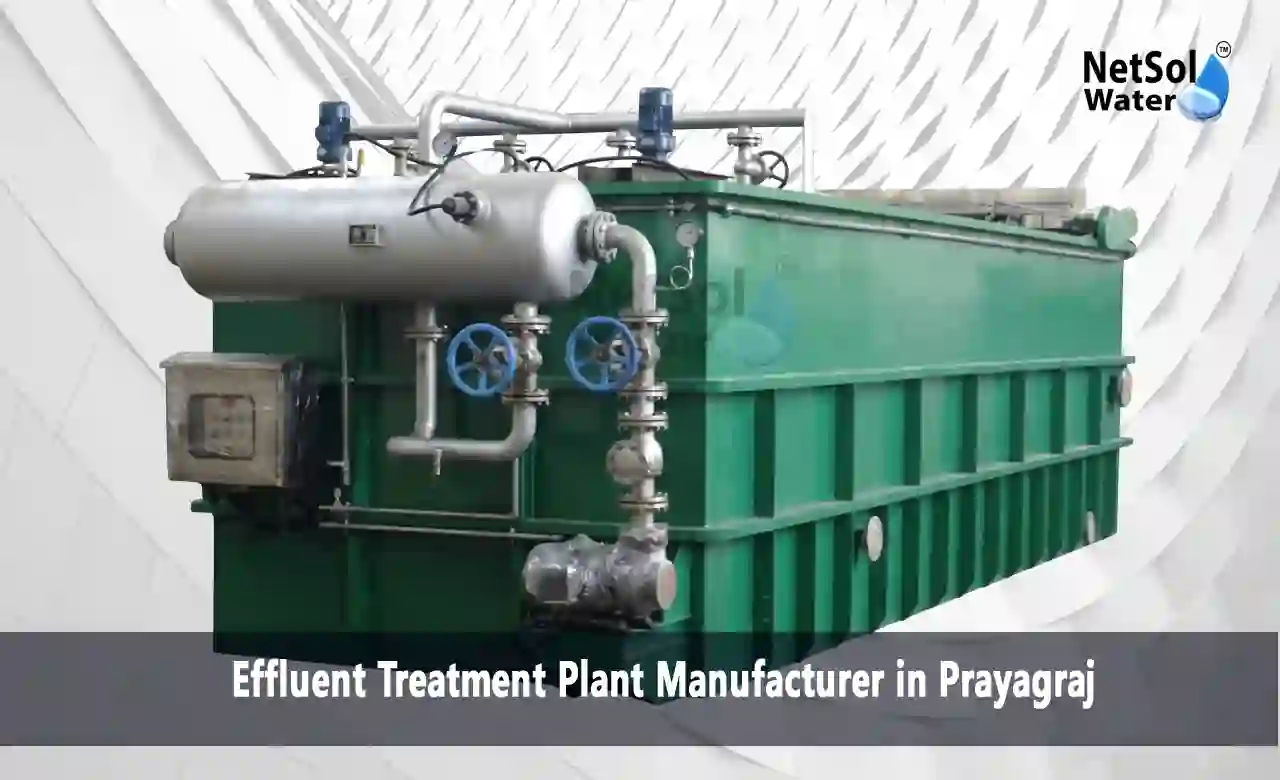
Effluent Treatment Plant Manufacturer in Prayagraj
Running an industry in Prayagraj without proper effluent treatment is not just a compliance risk - it is a business risk. Authorities are getting stricter. Penalties are getting steeper.
If you operate a textile unit, food processing plant, or pharmaceutical facility in the Naini Industrial Area or anywhere around Prayagraj, your industrial wastewater needs treatment before it touches a drain or water body.
Netsol Water has been designing effluent treatment plants (ETPs) for industries across Uttar Pradesh for over 15 years. We understand UPPCB norms, local discharge requirements, and - more importantly - how to build systems that actually work long-term.
Why Industrial Effluent Is a Different Challenge Altogether
Domestic sewage is largely organic. Industrial effluent is not. Depending on your process, your wastewater could contain:
• Heavy metals (chromium, lead, zinc) from electroplating and metal finishing
• Reactive dyes and chemicals from textile and dyeing operations
• High COD loads from pharmaceutical API manufacturing
• Fats, oils, and BOD from dairy and food processing units
• Acidic or alkaline pH from chemical processing
Each of these requires a different treatment strategy. That is why generic, off-the-shelf ETPs almost always fail in industrial settings. Every plant we design at Netsol Water starts with a detailed effluent characterization study.
Industries That Must Have an ETP in Prayagraj
Under CPCB's General Standards (IS:2490) and UPPCB directives, the following industries are mandated to install certified ETPs:
• Textile and fabric dyeing units
• Pharmaceutical and API manufacturing plants
• Food, dairy, and beverage processing facilities
• Chemical and agrochemical manufacturers
• Electroplating and metal surface treatment shops
• Paper and pulp mills
• Tanneries and leather processing units
How a Modern ETP Works?
1. Collection and Equalization
All process streams are collected in an equalization tank. Flow rates and pollutant concentrations are balanced to ensure consistent feed to the treatment system - this is critical because batch processes create highly variable loads.
2. pH Correction and Chemical Dosing
Strongly acidic or alkaline effluent is neutralized first. Then coagulants and flocculants are dosed to bring dissolved and colloidal particles together into settleable flocs. This is the primary chemical treatment stage.
3. Primary Clarification
Flocculated solids settle in clarifiers and are removed as primary sludge. Up to 60–70% of suspended solids are removed at this stage.
4. Biological Treatment (Aerobic / Anaerobic)
For high-COD streams, an anaerobic reactor is used first to break down heavy organic loads. This is followed by aerobic biological treatment using ASP (Activated Sludge Process), MBBR, or SBR systems. Bacteria consume dissolved organics, reducing BOD and COD dramatically.
5. Tertiary Treatment and Polishing
Sand filters and activated carbon beds remove residual turbidity and trace organics. UV or ozone disinfection ensures pathogen removal. In ZLD configurations, the treated water then goes through evaporators or MEE systems.
6. Sludge Handling and Disposal
Primary and secondary sludge is thickened, conditioned, and dewatered using filter presses or centrifuges. Dried sludge cake is disposed of per CPCB Hazardous Waste Management Rules or used as soil amendment where permissible.
Zero Liquid Discharge (ZLD) - Is It Right for Your Industry?
Zero Liquid Discharge is no longer optional for many industries in UP. The NGT and UPPCB have issued ZLD directives for textile, distillery, and tannery sectors, particularly in environmentally sensitive zones.
ZLD systems recover virtually all water from industrial wastewater through multiple evaporation and crystallization stages. The result: zero wastewater discharge and minimal solid waste.
Benefits for Prayagraj industries include full UPPCB compliance, complete water recycling (saving 60–80% on freshwater costs), and immunity to future tightening of discharge norms.
Netsol Water has designed ZLD systems for industries ranging from 50 KLD to 1,000 KLD capacity. We can evaluate whether ZLD is cost-effective for your specific process.
Effluent Discharge Standards You Must Meet
• BOD: ≤ 30 mg/L (for discharge into surface water)
• COD: ≤ 250 mg/L
• TSS: ≤ 100 mg/L
• Oil and Grease: ≤ 10 mg/L
• pH: 6.0 – 9.0
• Heavy metals (Cr, Pb, Ni): Industry-specific thresholds under IS:2490
Why Netsol Water Is Prayagraj's Trusted ETP Manufacturer?
As a leading and trusted ETP plant manufacturer and supplier in Uttar Pradesh Netsol Water have:
• 15+ years designing ETPs for diverse industries across Uttar Pradesh
• Every project begins with lab-certified effluent characterization
• Full support for UPPCB consent to establish and consent to operate
• In-house design team using AutoCAD and process simulation software
• Dedicated operation & maintenance teams stationed in Prayagraj
• Proven track record in Naini Industrial Area and Phaphamau industrial clusters
Take Action Before UPPCB Acts First
Every month, dozens of industries in UP face closure notices or penalties for non-compliant effluent discharge. The cost of a regulatory shutdown far exceeds the cost of installing a proper ETP.
Contact Netsol Water today. Our team will conduct a free effluent audit, analyze your discharge requirements, and present you with a compliant, cost-effective ETP solution tailored to your industry in Prayagraj.
Frequently Asked Questions (FAQs)
Q: What is the difference between an ETP and an STP?
A: An STP (Sewage Treatment Plant) treats domestic wastewater from homes and offices. An ETP (Effluent Treatment Plant) treats industrial wastewater, which contains chemicals, heavy metals, and complex pollutants requiring specialized treatment processes not needed for domestic sewage.
Q: How much does an effluent treatment plant cost in Prayagraj?
A: ETP costs depend on effluent type, volume, and treatment complexity. Small 50 KLD systems start from Rs. 12–20 lakhs. Mid-scale plants with ZLD components can range Rs. 80 lakhs to several crores. Netsol Water provides detailed cost estimates after free effluent analysis.
Q: Is ZLD (Zero Liquid Discharge) mandatory for industries in Prayagraj?
A: ZLD is currently mandated for specific high-pollution sectors including textile dyeing, distilleries, and tanneries operating near sensitive water bodies. The NGT and UPPCB have expanded ZLD requirements progressively. Netsol Water can advise whether ZLD applies to your facility.
Q: What is coagulation and flocculation in effluent treatment?
A: Coagulation involves adding chemicals that destabilize suspended particles in wastewater, causing them to bind together. Flocculation then gently agitates the water so these particles clump into larger, heavier flocs that settle easily. Together, they remove up to 70% of suspended solids from industrial effluent.
Q: Can industrial effluent be reused after treatment?
A: Yes. After secondary and tertiary treatment, industrial effluent can be reused for cooling towers, boiler feed water, floor washing, and horticulture - depending on the treatment quality achieved. ZLD systems achieve near-complete water recycling within the plant premises.
Q: How long does ETP installation take for an industrial unit?
A: A modular ETP for a small to mid-size industry (50–100 KLD) takes approximately 6–10 weeks from design approval to commissioning. Civil-based large plants may take 4–6 months. Netsol Water provides clear project timelines upfront.
Q: What happens if an industry in Prayagraj does not install an ETP?
A: Non-compliant industries risk UPPCB show-cause notices, closure orders, penalties under the Water (Prevention and Control of Pollution) Act 1974, and potential criminal liability for directors. Environmental damages can also lead to civil suits from affected communities.