

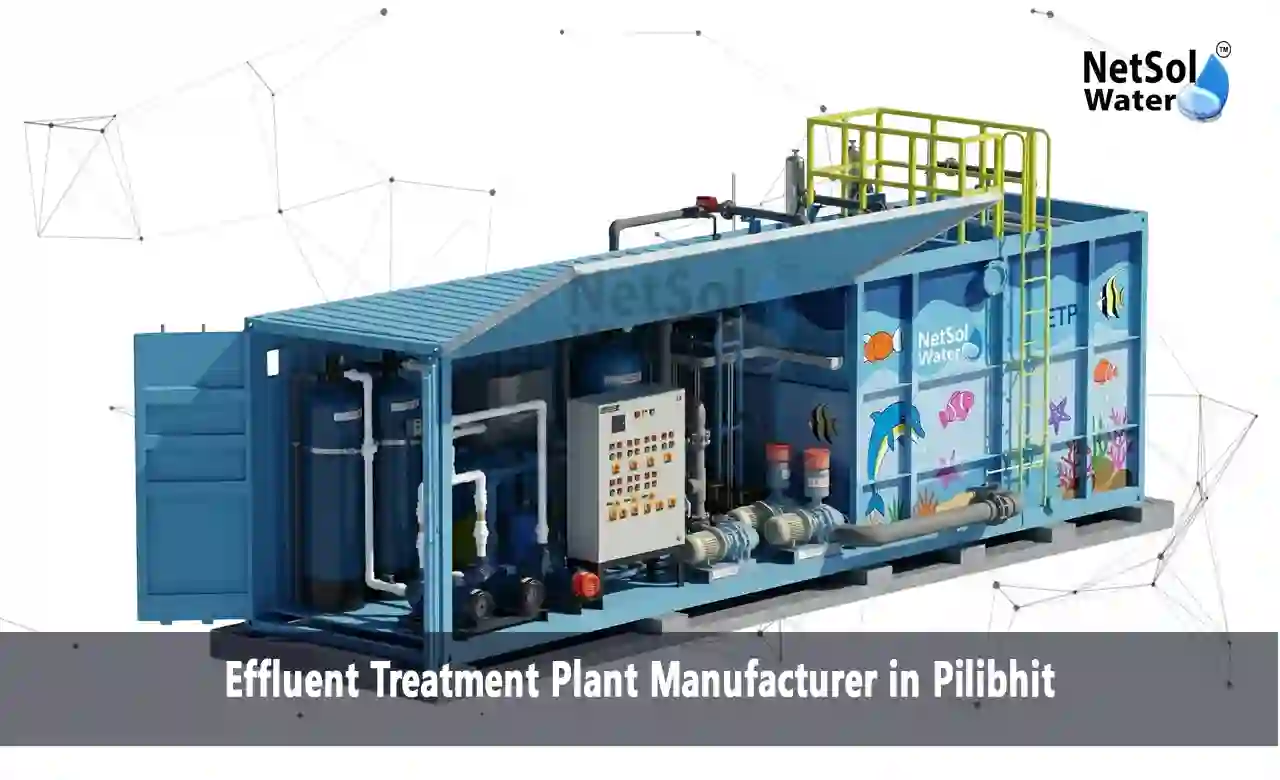
Effluent Treatment Plant Manufacturer in Pilibhit
Pilibhit is known for its thriving agro-based and small-scale industrial economy. From sugar mills and rice processing units to textile and chemical-based businesses, the district supports a diverse industrial base. But with industrial activity comes an unavoidable byproduct - effluent or industrial wastewater.
Unlike domestic sewage, industrial effluent can be far more hazardous. It may contain heavy metals, dyes, oils, suspended solids, biological oxygen demand (BOD), and chemical oxygen demand (COD) - all of which cause severe damage to water bodies, soil, and human health if discharged untreated.
The Uttar Pradesh Pollution Control Board (UPPCB) mandates that every industrial unit generating wastewater must treat it to prescribed standards before discharge. Failure to comply results in penalties, production shutdowns, and legal complications.
This is why more and more businesses in Pilibhit are seeking a reliable Effluent Treatment Plant manufacturer and supplier in U.P. who understands both the technical and regulatory landscape.
What Is an Effluent Treatment Plant?
An Effluent Treatment Plant (ETP) is an industrial wastewater treatment system designed to remove pollutants from process water before it is discharged or reused. Unlike domestic STPs that treat sewage, ETPs deal with far more complex and varied wastewater streams.
ETP systems typically use a combination of physical, chemical, and biological processes tailored to the specific type of effluent being treated. Each industry has a unique wastewater profile, which is why a one-size-fits-all ETP rarely delivers optimal results.
How an ETP Works?
1. Preliminary Screening
The incoming industrial effluent first passes through bar screens and grit chambers that remove large solids, fibres, and coarse particles. This protects pumps and downstream equipment from damage.
2. Equalization Tank
Effluent flows are often inconsistent - bursts of high-volume discharge followed by low-flow periods. The equalization tank balances these fluctuations, ensuring a consistent feed to the treatment stages and preventing system overloading.
3. Physico-Chemical Treatment
Chemical coagulants and flocculants are added to the wastewater, causing fine particles, suspended solids, oils, and colloids to clump together and settle out. This stage is particularly effective for effluents from textile, dyeing, and chemical industries.
4. Biological Treatment
Aerobic or anaerobic microorganisms break down dissolved organic matter (measured as BOD and COD). Technologies like MBBR, ASP, and SBR are commonly used at this stage. Biological treatment is essential for food processing, paper, and pharmaceutical effluents.
5. Secondary Clarifier / Settling Tank
After biological treatment, the wastewater enters a secondary clarifier where biomass and sludge settle out. The clarified water is collected from the top for further treatment.
6. Filtration and Polishing
Sand filters, activated carbon filters, and ultra-filtration (UF) membranes remove residual turbidity, colour, and fine particulates. This polishing stage ensures the treated water meets or exceeds required discharge standards.
7. Sludge Dewatering
The collected sludge from various stages is thickened and dewatered using filter press or centrifuge systems. Dewatered sludge can be composted, incinerated, or disposed of as per pollution control guidelines.
Why Netsol Water Is the Best ETP Manufacturer in Pilibhit?
Netsol Water has established itself as a leading ETP manufacturer in Uttar Pradesh through a combination of engineering expertise, technology innovation, and client-focused service delivery.
1. Industry-Specific Design Expertise
Netsol Water's engineers analyze the effluent characteristics of each client - BOD, COD, TSS, pH, heavy metals, colour, and temperature - before designing the treatment system. This ensures the ETP is optimized for the specific wastewater generated by your industry, not a generic solution.
2. Advanced Treatment Technologies
The company uses state-of-the-art physico-chemical treatment, advanced biological systems, and high-efficiency polishing units. Their systems achieve consistent output quality even when influent conditions fluctuate.
3. Turnkey Project Execution
Netsol Water handles everything from initial site assessment, process design, civil engineering coordination, equipment supply and installation, to commissioning and operator training. Clients get a fully functional, compliant plant ready for operation - all from a single vendor.
4. Compliance with UPPCB and CPCB Norms
All Netsol Water ETP systems are designed and commissioned in compliance with UPPCB and CPCB discharge standards. Proper documentation, performance test reports, and compliance certificates are provided to support your regulatory filings.
5. Responsive After-Sales Support
Plant performance is guaranteed not just at commissioning but over the long term. Netsol Water offers AMC packages, 24/7 technical support, and a dedicated service team for maintenance and troubleshooting.
Types of ETPs Offered by Netsol Water
1. Compact and Mini ETPs
Designed for small workshops, local dyeing units, and SME factories with limited space and lower wastewater volumes. Compact ETPs are affordable, easy to install, and simple to operate.
2. Modular ETPs
Pre-fabricated modular ETP systems that are factory-tested, quick to install, and easy to expand. Ideal for growing businesses that need a scalable treatment solution.
3. Industrial ETPs with Advanced Treatment
Full-scale ETP systems with multi-stage treatment for large industrial units generating high-volume, complex effluent. These systems include equalization, physico-chemical treatment, biological reactors, clarifiers, filtration, and sludge management.
4. Zero Liquid Discharge (ZLD) Systems
For industries that need to achieve zero discharge to the environment, Netsol Water offers ZLD systems that combine ETPs with advanced evaporators, crystallizers, and RO systems to recover and reuse all wastewater.
Industries We Serve in Pilibhit
• Sugar mills and molasses-based distilleries
• Rice mills and agro-processing units
• Textile and fabric dyeing units
• Chemical and pharmaceutical factories
• Food and beverage processing plants
• Rubber and plastic manufacturing
• Paper and pulp industries
• Metal finishing and electroplating units
ETP Capacity Range Available
• 1 KLD to 10 KLD - Small industrial units, workshops, and SMEs
• 10 KLD to 100 KLD - Medium industries and manufacturing plants
• 100 KLD to 500 KLD - Large-scale industrial complexes
• 500 KLD and above - Industrial estates and large manufacturing hubs
Netsol Water uses detailed hydraulic and process calculations to ensure the selected capacity matches both current production and planned future growth.
ETP Cost in Pilibhit - 2024 Price Guide
• Small ETPs (1–10 KLD): INR 5 lakh to INR 8 lakh
• Medium ETPs (10–50 KLD): INR 8 lakh to INR 35 lakh
• Large ETPs (50–200 KLD): INR 35 lakh to INR 1.5 crore
• ZLD Systems: Price on request based on specific requirements
Key cost drivers include: type and concentration of effluent, treatment technology selected, level of automation, civil and structural requirements, and regulatory compliance documentation needs.
Frequently Asked Questions (FAQs)
Q1. What is the difference between an ETP and an STP?
An ETP (Effluent Treatment Plant) is designed for industrial wastewater that contains chemicals, heavy metals, dyes, and complex pollutants. An STP (Sewage Treatment Plant) handles domestic wastewater from homes and commercial buildings. ETPs require more complex and customized treatment processes.
Q2. Do small industries in Pilibhit need an ETP?
Yes. Any industry that discharges process wastewater must treat it before discharge, regardless of size. UPPCB has specific standards for different industries and effluent types. Non-compliance can result in closure notices and financial penalties.
Q3. How long does it take to commission an ETP?
Small to medium ETPs typically take 6 to 10 weeks from order placement to full commissioning. Timeline depends on site preparation, civil work, and customisation level. Modular ETPs can be deployed more quickly, sometimes within 3 to 4 weeks.
Q4. Can ETP treated water be reused in the production process?
Yes, with appropriate treatment. Treated effluent can often be reused for cooling, washing, cleaning, and even process water, depending on the quality achieved. Reuse reduces freshwater consumption and lowers operating costs significantly.
Q5. What is Zero Liquid Discharge (ZLD) and when is it required?
ZLD is a regulatory requirement for certain high-pollution industries like textile dyeing, tanneries, and sugar mills in designated water-scarce areas. A ZLD system ensures no effluent is discharged to the environment - all wastewater is treated, recovered, and reused.
Q6. Does Netsol Water handle the UPPCB consent application?
Netsol Water provides all necessary technical documentation including design reports, performance certificates, and effluent test results that are required for obtaining consent to operate from UPPCB. Their compliance support team can guide you through the application process.
Q7. What is the warranty on Netsol Water ETP equipment?
Netsol Water provides warranty coverage on all major equipment components. Specific warranty terms are detailed in the supply contract. AMC plans are also available to cover maintenance and spare parts replacement after the warranty period.
Get Your Free Consultation Today
Ready to install a world-class Effluent Treatment Plant in Pilibhit? Netsol Water's experts are here to guide you from site assessment to commissioning. We offer competitive pricing, custom engineering, and lifetime AMC support.
Call Us: +91-9650608473, Email Us: enquiry@netsolwater.com
Our team responds within 24 hours. Reach out today and let us build the right water treatment solution for your facility.