

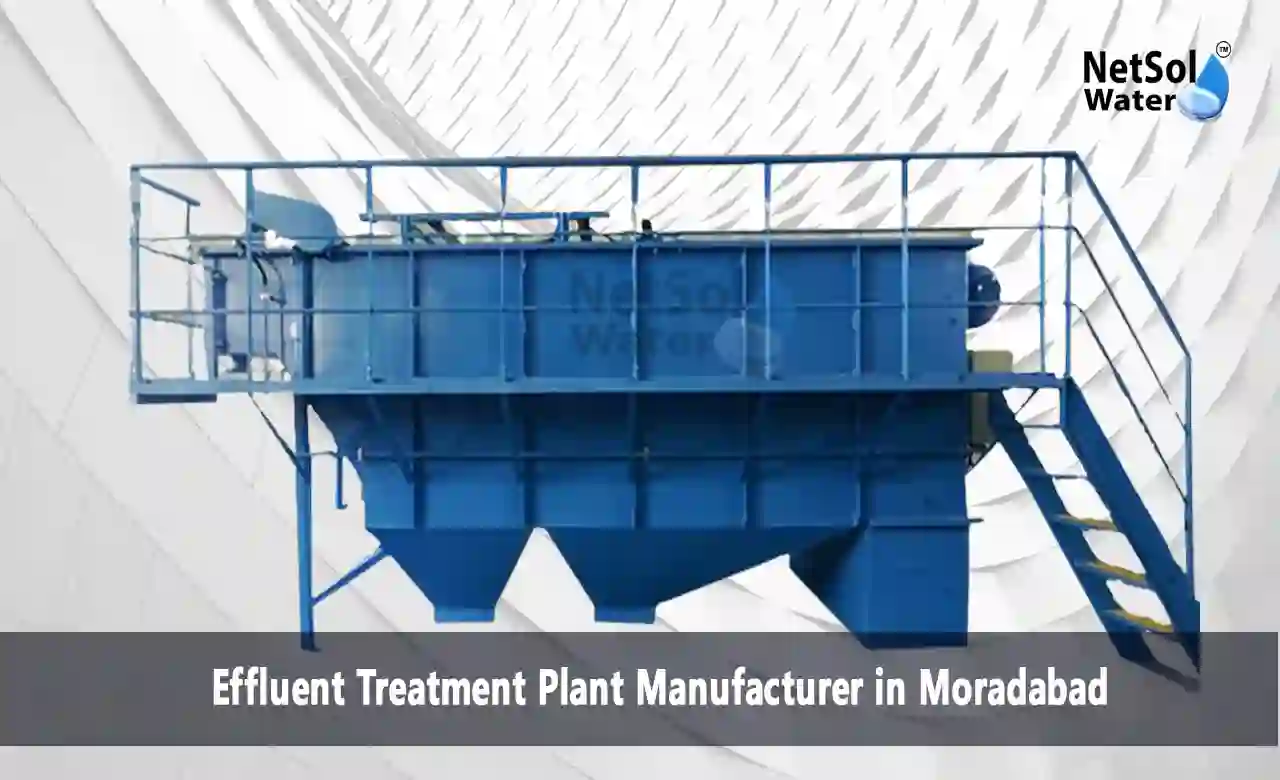
Effluent Treatment Plant Manufacturer in Moradabad
Your factory is running. Orders are moving. And somewhere in the background, untreated wastewater is quietly building up a compliance problem that could shut everything down.
Moradabad's pollution control board has stepped up inspections across metal processing, electroplating, and pharmaceutical units. Industries without a properly functioning Effluent Treatment Plant (ETP) are receiving closure notices - not warnings.
If you are looking for a dependable ETP manufacturer in Moradabad who designs for real industrial conditions, tests your effluent before quoting, and stays available after installation, this page is for you.
What Is an Effluent Treatment Plant (ETP)?
An ETP is a multi-stage system that cleans industrial wastewater before it is discharged or recycled. Every manufacturing unit that uses water in its process - whether for cooling, cleaning, or chemical reactions - generates effluent loaded with contaminants.
Your ETP removes those contaminants through physical separation, chemical treatment, and biological processes. The treated water must meet discharge standards set by the CPCB and UPPCB before it leaves your premises.
Without a working ETP, your business risks: forced shutdowns, UPPCB notices, loss of export certifications, NGT legal action, and long-term damage to surrounding groundwater.
Why ETP Compliance Matters More in Moradabad Right Now
Moradabad accounts for a significant share of India's brass handicraft exports - an industry that generates wastewater loaded with lead, zinc, copper, and chromium. These heavy metals are toxic and strictly regulated.
The National Green Tribunal has been actively pursuing polluting industries across Uttar Pradesh. Several units in the Moradabad industrial belt have already faced action. The regulatory climate is not easing - it is tightening.
Getting the right ETP manufacturer in Moradabad protects your operations, your export relationships, and your licence to operate.
Industries in Moradabad That Need an ETP
1. Brass and Metal Processing Units
Wastewater from metal processing carries machine oils, suspended solids, and heavy metals. Your system needs chemical precipitation to pull metals out of solution and a robust sludge dewatering stage.
2. Electroplating Units
Electroplating effluent is among the most hazardous in any industry. Chromium, cyanide, nickel, and acids require specialised pre-treatment before any biological stage can begin. A generic ETP will not handle this.
3. Textile and Dyeing Units
High colour content, elevated BOD, and reactive dyes make textile effluent a tough challenge. The standard approach - coagulation, flocculation, biological treatment, activated carbon polishing - must be sized correctly for your daily volume.
4. Pharmaceutical Manufacturing
Pharmaceutical effluent contains active drug compounds that standard biological treatment cannot fully break down. Advanced oxidation processes are typically needed at the tertiary stage for full CPCB compliance.
5. Food Processing and Chemical Plants
Food units generate high organic loads - biological treatment works well here but only if the tanks are sized for your peak production shifts. Chemical plants need a customised design based on actual effluent characterisation, not industry averages.
How an ETP Works - Stage by Stage?
Treatment Stage
Stage 1: Preliminary: Bar screens and grit chambers remove large solids and debris. Protects downstream equipment from damage.
Stage 2: Primary: Settling tank removes heavy suspended solids as sludge. Reduces SS load before biological treatment.
Stage 3: Biological: Microorganisms break down dissolved organics. Technologies: ASP, MBBR, SBR - chosen based on your effluent profile.
Stage 4: Tertiary: Filtration, UV disinfection, and activated carbon bring water to CPCB-compliant discharge quality.
Stage 5: Sludge Treatment: Sludge is thickened, dewatered, and disposed of per hazardous waste management rules. Never an afterthought.
Zero Liquid Discharge (ZLD) - When Full Recycling Is Required
Some industries in Moradabad are now directed by UPPCB to install ZLD systems - meaning zero wastewater is discharged. All treated water is recycled back into production. If your sector requires ZLD, your ETP design must incorporate evaporation, crystallisation, or advanced membrane stages. NetSol Water designs complete ZLD systems for UP industries.
ETP Capacity Guide for Moradabad Industries
10 KLD – 50 KLD: Small brass workshops, electroplating units, small fabrication facilities
50 KLD – 200 KLD: Mid-sized textile, food processing, and chemical manufacturing plants
200 KLD and above: Large pharmaceutical units, major chemical manufacturers, industrial complexes
CETP (Shared System): Clusters of small units in industrial estates - cost-effective for units that cannot run individual ETPs
How to Choose the Right ETP Manufacturer in Moradabad
1. Insist on Effluent Testing Before Any Design Work
A credible manufacturer will never quote a system without analysing your actual effluent. pH, BOD, COD, heavy metal concentrations, and daily flow rate all directly shape every design decision. A quote without this data is a guess dressed up as an offer.
2. Demand Industry-Specific Design
An electroplating unit and a food processing plant need fundamentally different systems. If a vendor proposes the same solution for both, walk away.
3. Verify UPPCB and CPCB Compliance Knowledge
Your ETP must meet the discharge norms specific to your industry sector. A manufacturer who does not know the sector-specific standards for UP will cost you far more in corrections and failed inspections.
4. Ask About After-Sales Response Time
ETPs run 365 days. Equipment fails. When it does, you need someone on-site fast. Ask every vendor exactly what their emergency response looks like in practice - not what their brochure says.
5. Check References from Similar UP Industries
A manufacturer who has worked with brass or electroplating units in Uttar Pradesh understands the specific regulatory and operational challenges you face. Ask for references and actually call them.
Common ETP Mistakes That Cost Industries Dearly
• Choosing the lowest quote - cheap ETPs use undersized tanks and low-grade components that fail within 12–18 months.
• Skipping effluent characterisation - systems built on assumptions cannot handle your real wastewater load.
• Ignoring sludge management - improper sludge disposal creates a separate set of UPPCB compliance problems.
• No annual maintenance contract - without regular servicing, small issues escalate into full shutdowns.
• Choosing a manufacturer with no UP service presence - remote support is no support when something fails at 2am.
Why Moradabad Industries Choose NetSol Water?
NetSol Water is an ISO certified ETP manufacturer in U.P. with a proven track record. Our engineers have designed and installed systems for brass and metal processing units, electroplating facilities, pharmaceutical manufacturers, and food processing plants across the state.
• ISO certified manufacturing processes - every system follows documented quality standards.
• Effluent testing before every design - no assumptions, no guesswork.
• Deep knowledge of UPPCB inspection processes and sector-specific discharge norms.
• Quality-certified pumps, blowers, tanks, and control panels throughout.
• End-to-end project management from site assessment to operator training.
• Active after-sales support with Annual Maintenance Contracts across UP.
Ready to protect your operations and stay fully compliant? Contact NetSol Water today for a free site assessment and effluent consultation. We will test your wastewater, design the right system, and back it with genuine long-term support.
FAQs
Q 1: What is the cost of an Effluent Treatment Plant in Moradabad?
ETP cost in Moradabad depends on your daily wastewater volume, effluent type, and treatment technology required. Small systems (10–50 KLD) typically start from ?8–15 lakhs. Medium plants (50–200 KLD) range from ?20–60 lakhs. Get an accurate quote only after a proper effluent analysis - any figure without that is unreliable.
Q 2: Which industries in Moradabad are required to have an ETP?
All industries that discharge industrial wastewater are legally required to install and operate an ETP under the Water (Prevention and Control of Pollution) Act. This includes brass processing, electroplating, textile dyeing, pharmaceutical manufacturing, food processing, and chemical production units operating in Moradabad.
Q 3: What is the difference between an ETP and an STP?
An ETP (Effluent Treatment Plant) treats industrial wastewater containing chemicals, heavy metals, and process contaminants. An STP (Sewage Treatment Plant) treats domestic wastewater from toilets, kitchens, and wash areas. Industries often need both - an ETP for process effluent and an STP for their facility's domestic sewage.
Q 4: What are UPPCB discharge norms for ETP in Uttar Pradesh?
UPPCB sets industry-specific discharge standards covering parameters like pH (6.5–8.5), BOD (below 30 mg/L for inland surface discharge), COD, total suspended solids, and heavy metal concentrations. Standards vary by industry sector. Your ETP must consistently produce treated water that meets these norms to pass inspections and avoid penalties.
Q 5: What is Zero Liquid Discharge (ZLD) and does my industry need it?
ZLD means no liquid waste is discharged from your facility - all treated water is recycled internally. UPPCB and NGT are increasingly mandating ZLD for certain industry sectors in UP, particularly in water-stressed areas. Consult your ETP manufacturer about whether your sector and location require ZLD compliance.
Q 6: How long does it take to install an ETP in Moradabad?
A standard ETP for a small to medium industrial unit typically takes 6–12 weeks from design approval to commissioning. Larger systems or those requiring ZLD capability take 3–6 months. Timeline depends on site conditions, system complexity, and equipment procurement lead times.
Q 7: Can ETP treated water be reused in the factory?
Yes. With a properly designed tertiary treatment stage, ETP-treated water can often be recycled for cooling, cleaning, toilet flushing, or gardening. Full reuse is possible with a ZLD system. Water recycling reduces your freshwater procurement costs and helps meet UPPCB conservation requirements.
Q 8: What maintenance does an ETP require?
Regular ETP maintenance includes daily checks of aeration equipment and dosing systems, weekly sludge level monitoring, monthly filter cleaning and chemical replenishment, and quarterly performance testing. An Annual Maintenance Contract with your ETP manufacturer ensures all these tasks are handled professionally and on schedule.