

Effluent Treatment Plant Manufacturer in Mau
Mau is one of Uttar Pradesh's most industrially active districts. Its powerloom and textile sector is nationally recognized, and beyond textiles, food processing, agro-based industries, packaging companies, and small chemical handling units have established a strong presence here.
Industrial activity means industrial wastewater - and Mau's effluent challenge is real. Textile dyeing units discharge wastewater rich in chemical dyes, salts, and surfactants. Food processing plants produce effluent with high organic load, oils, and suspended solids. Chemical units generate complex, often hazardous wastewater streams. Without proper treatment, this effluent causes irreversible damage to Mau's water bodies, agricultural land, and public health.
The solution is a properly designed, industry-specific Effluent Treatment Plant (ETP). More than just a compliance tool, a well-designed ETP is a business asset - it enables water reuse, reduces disposal costs, protects equipment, and builds the kind of environmental credibility that matters to buyers, regulators, and communities alike.
Netsol Water is one of the most experienced ETP manufacturers serving Mau's diverse industrial sector. We understand what Mau's industries produce, how their effluent behaves, and how to treat it effectively.
Mau's Textile Industry and Its Unique Effluent Challenges
Textile and powerloom industries generate some of the most complex industrial effluent streams. A typical Mau textile dyeing unit's wastewater may contain:
• Reactive and acid dyes with high color intensity and chemical oxygen demand (COD)
• High levels of dissolved salts (sodium chloride, sodium sulfate) used in dyeing processes
• Surfactants and wetting agents from fabric pre-treatment
• High temperature wastewater (above 40°C) that impacts biological treatment efficiency
• Variable pH ranging from highly acidic to highly alkaline depending on the process stage
• Heavy metals in some specialty dyeing operations
Treating this effluent requires a sophisticated combination of physico-chemical and biological treatment - and often advanced oxidation or coagulation specifically designed for dye removal. Generic ETPs frequently underperform for textile effluent, which is why industry-specific design expertise matters enormously.
ETP Technologies for Mau's Industrial Sectors
1. Physico-Chemical Treatment System
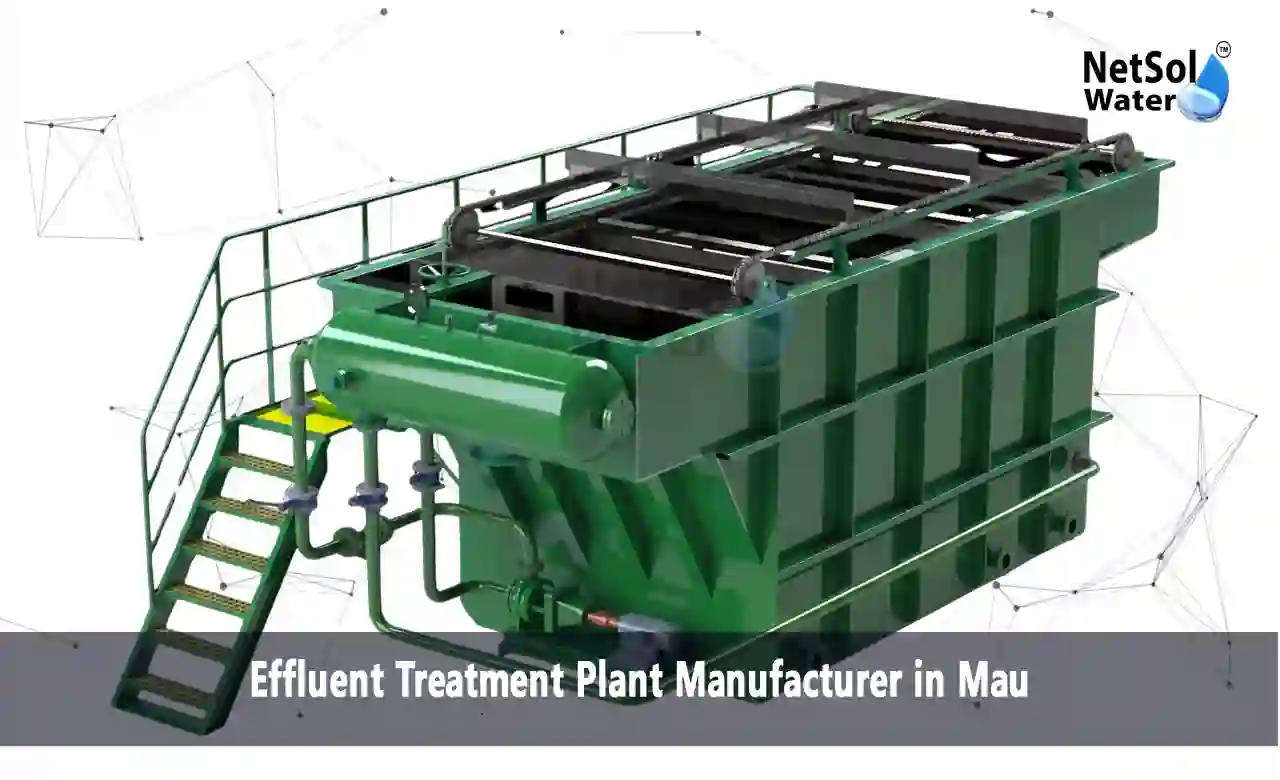
This is the first critical stage for most industrial effluent in Mau. Coagulation (adding alum, ferrous sulfate, or polyaluminum chloride) and flocculation (adding polymer) aggregate fine suspended particles and colloidal matter into large flocs that settle or float for removal. For textile effluent, this stage also achieves significant color removal. Dissolved air flotation (DAF) is used when oils, greases, and lighter solids need removal. A well-designed primary treatment stage sets up the downstream biological treatment for success.
2. Biological Treatment (MBBR / ASP)
Secondary treatment uses microorganisms to break down dissolved organic matter. For food processing and agro-industry effluent with high BOD, a robust aerobic biological system (MBBR or Activated Sludge Process) is highly effective. MBBR's biofilm-based approach handles variable loads particularly well, making it ideal for seasonal food processors in Mau.
3. Advanced Color Removal Systems
Textile effluent often requires dedicated color removal beyond conventional treatment. Advanced oxidation processes (ozonation or Fenton's reagent), activated carbon adsorption, or specialized coagulants are used to reduce color intensity to discharge-compliant levels.
4. Zero Liquid Discharge (ZLD) Systems
For CPCB red-category industries or those voluntarily targeting water recycling, ZLD systems combine multi-effect evaporation, mechanical vapor recompression (MVR), and other advanced technologies to achieve near-zero discharge. All treated water is recycled back into production, and only a dry salt cake remains for disposal.
ETP Capacity Planning for Mau Industries
• Small ETP (1–20 KLD): Small textile units, local food processors, workshops. Basic physico-chemical treatment with primary biological stage.
• Medium ETP (20–100 KLD): Medium textile dyeing units, food processing plants, packaging companies. Multi-stage treatment with color removal and biological polishing.
• Large ETP (100 KLD+): Large textile complexes, industrial clusters. Full physico-chemical + biological + advanced treatment with ZLD option.
ETP Investment Cost for Mau Industries
• Small ETP (1–20 KLD): Rs5 lakh – Rs15 lakh. Basic primary and secondary treatment.
• Medium ETP (20–100 KLD): Rs 15 lakh – Rs 65 lakh. Multi-stage treatment with advanced color removal.
• Large ETP (100 KLD+): Rs 65 lakh – Rs 5 crore+. ZLD systems or complex multi-industry treatment.
Key cost variables: effluent COD/BOD levels, color intensity (for textile), ZLD requirement, land availability, civil construction, and automation.
Also Read: Effluent Treatment Plant Manufacturer in Uttar Pradesh
Top 3 ETP Manufacturers Serving Mau
1. Netsol Water
Netsol Water designs ETPs specifically for Mau's textile and food industry effluent characteristics. Our local service presence and industry-specific expertise make us the leading choice for Mau's industrial sector.
2. Sewage Treatment Plants
Sewage Treatment Plants offers comprehensive industrial wastewater treatment systems with proven technology platforms and strong large-scale project experience.
3. Urban STP Plant
Urban STP Plant delivers reliable ETP solutions with strong technical support and a wide range of treatment technologies suited to diverse industrial applications.
FAQ: Effluent Treatment Plant Manufacturer in Mau
Q1. Why do textile industries in Mau specifically need specialized ETPs?
Textile dyeing effluent contains complex dyes, high salt loads, and variable pH that conventional ETPs can't handle adequately. Specialized ETPs with physico-chemical color removal, salt handling, and industry-specific biological treatment are required to achieve CPCB discharge standards for textile wastewater.
Q2. What are CPCB discharge norms for ETP in Mau?
Key CPCB discharge standards include: BOD below 30 mg/L, COD below 250 mg/L, TSS below 100 mg/L, pH between 6.5 and 8.5, and for textile units, color should be minimal. Industries discharging into inland surface water must meet stricter standards than those discharging to sewers.
Q3. Can an ETP help a Mau textile unit achieve water recycling?
Yes. With appropriate tertiary treatment including sand filtration, activated carbon polishing, and sometimes membrane filtration, treated effluent from textile ETPs can be recycled for process water, cooling, and washing. ZLD systems achieve 100% water recycling, eliminating discharge entirely.
Q4. How often does ETP equipment need servicing in Mau?
Major mechanical components - blowers, pumps, agitators - should be serviced every 3 to 6 months. Chemical dosing systems need weekly checks. Filter media requires replacement every 1 to 2 years. Biological systems need regular sludge wasting and monitoring. Netsol Water offers AMC packages tailored to Mau's industrial schedules.
Q5. What happens if Mau industries operate without a functional ETP?
Industries without functional ETPs face UPPCB enforcement including consent revocation, financial penalties up to ?1 crore, and potential criminal liability under the Environment Protection Act. Beyond legal risk, uncontrolled discharge causes community opposition, groundwater contamination liability, and reputational damage that can affect business relationships.
Get a Custom ETP for Your Mau Industry - Call Netsol Water: +91-9650608473