
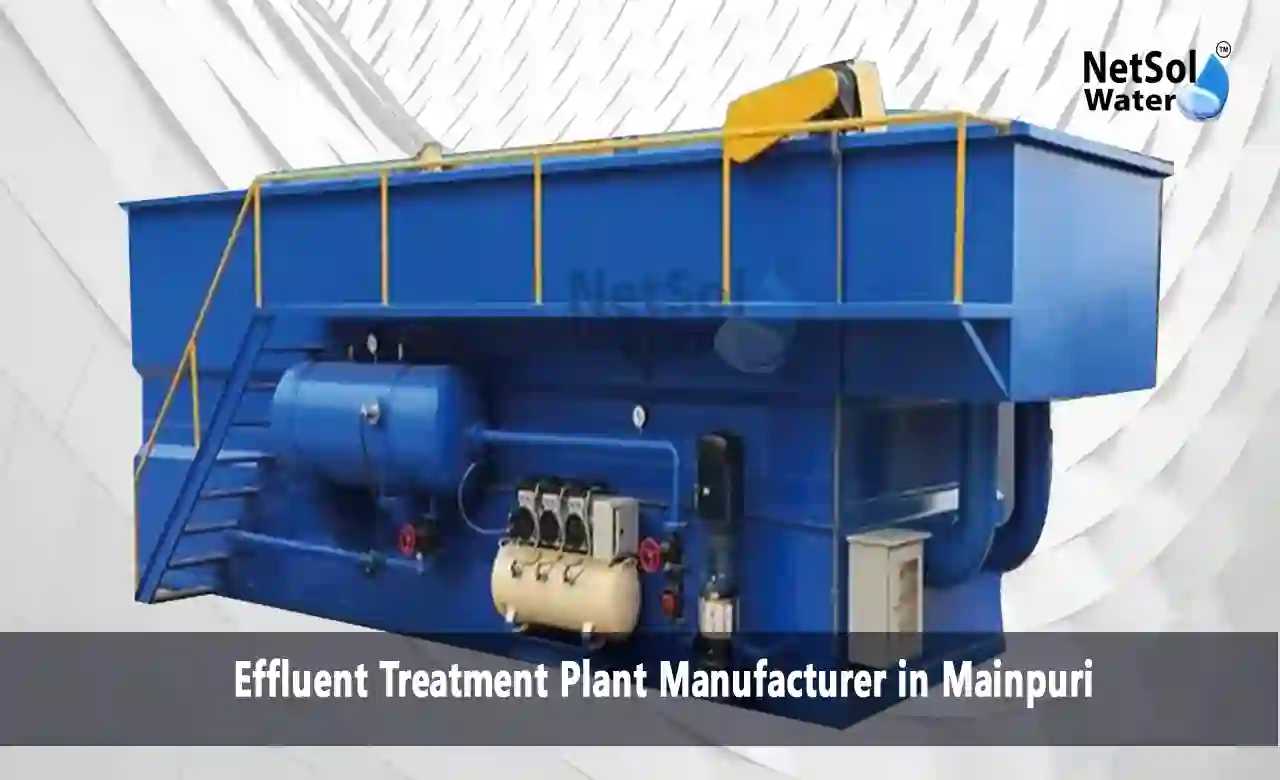
Effluent Treatment Plant Manufacturer in Mainpuri
Every industry that uses water also produces wastewater. In Mainpuri - where textile processing, food manufacturing, dairy operations, and small-scale industrial units are growing - untreated effluent is fast becoming a serious problem. The chemicals, dyes, oils, and biological waste in industrial wastewater cannot simply go into a drain. They need to be properly treated.
Netsol Water is the trusted ETP manufacturer in Mainpuri, designing treatment systems that turn industrial wastewater into compliant, manageable discharge - or reusable water for your own operations.
The Industrial Wastewater Problem in Mainpuri
Industrial growth in Mainpuri has outpaced wastewater infrastructure. Many small and medium industries still rely on unlined storage ponds or open drains - solutions that are both environmentally damaging and legally risky.
UP SPCB regularly conducts inspections and has the authority to seal industrial units that do not have a functional, compliant ETP. Beyond compliance, untreated effluent contaminates soil and groundwater - threatening local agriculture and drinking water sources.
Why Netsol Water Is the Preferred ETP Manufacturer in Mainpuri?
• We conduct a detailed effluent characterisation (BOD, COD, pH, heavy metals, TSS) before any design work.
• Every ETP is engineered specifically for your industry type and effluent profile.
• We use only industrial-grade materials with a proven track record in UP's climate conditions.
• Full project support: feasibility study, design, installation, commissioning, staff training, and AMC.
• All plants are designed to meet UP SPCB and CPCB discharge standards with a compliance margin.
ETP Treatment Technologies We Deploy in Mainpuri
1. Physico-Chemical Treatment
Coagulation, flocculation, and chemical dosing are used to remove suspended solids, colour, oils, and greases. This is the primary treatment stage for textile dyeing effluent, which often has very high colour and chemical oxygen demand.
2. Biological Treatment (Aerobic/Anaerobic)
Aerobic biological systems (ASP, MBBR, SBR) break down dissolved organic matter using microorganisms. For high-strength effluent from dairies, food processing, or slaughterhouses, anaerobic pre-treatment significantly reduces organic load before aerobic polishing.
3. Tertiary Polishing and Filtration
Sand filtration, activated carbon filtration, and membrane filtration remove residual contaminants from biologically treated effluent - enabling safe discharge or water reuse within the plant.
4. Zero Liquid Discharge (ZLD) Systems
For industries required to achieve ZLD under CPCB directives - such as textile printing units - Netsol Water offers complete ZLD system design, integrating ultrafiltration (UF), RO, and multiple-effect evaporation (MEE) for near-complete water recovery.
ETP Capacity Options for Mainpuri Industries
• Small ETP (5–50 KLD): Small units, workshops, small dairies - simple, cost-effective, easy to maintain.
• Medium ETP (50–500 KLD): Mid-scale food processors, packaging facilities, and mixed industrial estates.
• Large ETP (500 KLD+): Large manufacturing campuses, textile clusters, and industrial zones operating 24/7.
ETP Cost Reference for Mainpuri Projects
• 1–10 KLD ETP: Rs. 4–12 lakh
• 25–50 KLD ETP: Rs. 15–35 lakh
• 100–200 KLD ETP: Rs. 35–80 lakh
• 500 KLD+ ETP: Rs. 1 crore and above, depending on ZLD requirement and treatment complexity
These are reference figures. Actual cost depends on effluent composition, automation level, civil work scope, and local site conditions.
Industries We Serve in Mainpuri
• Textile dyeing and printing units
• Dairy and milk processing plants
• Food and vegetable processing factories
• Pharmaceutical formulation and API units
• Chemical and resin manufacturing
• Small and medium engineering workshops
Top 3 ETP Manufacturers Serving Mainpuri
1. Netsol Water
Netsol Water offers the most comprehensive ETP manufacturer and supplierin U.P. - from site assessment through to compliance certification support. Fully custom, technology-appropriate systems for every industry.
2. Sewage Treatment Plants
A globally recognised water treatment company with strong capabilities in large-scale industrial and municipal ETPs, particularly for complex multi-pollutant wastewater streams.
3. Urban STP Plant
Urban STP Plant provides industrial water and effluent treatment systems with advanced chemical and membrane-based technologies - well suited for high-volume or technically challenging applications.
Contact Netsol Water for Your ETP in Mainpuri
Phone: +91-9650608473
Email: enquiry@netsolwater.com
FAQs - ETP Manufacturer in Mainpuri
Q1. What parameters must my ETP meet for UP SPCB discharge compliance?
UP SPCB general discharge norms require BOD below 30 mg/L, COD below 250 mg/L, TSS below 100 mg/L, and pH between 5.5–9.0. Specific industries (textiles, pharmaceuticals) face stricter norms. Netsol Water designs to exceed these standards.
Q2. How often must ETP performance be reported to UP SPCB?
Most industries must submit quarterly treated water quality reports to UP SPCB and maintain an online effluent monitoring system (OCEMS) for large-category industries. Netsol Water helps clients set up both the plant and reporting infrastructure.
Q3. Can I get ZLD certification for my textile unit in Mainpuri?
Yes. CPCB mandates ZLD for textile dyeing and printing units. Netsol Water designs full ZLD systems - including ETP, UF, RO, and MEE stages - and coordinates with SPCB for compliance certification.
Q4. What is the difference between an ETP and an STP?
An ETP (Effluent Treatment Plant) treats industrial wastewater with complex chemical and biological pollutants from manufacturing processes. An STP (Sewage Treatment Plant) treats domestic sewage from toilets, kitchens, and bathrooms. ETP designs are more complex due to the variable and often toxic nature of industrial effluent.
Q5. How do I get started with an ETP project in Mainpuri?
Contact Netsol Water for a free initial consultation. We will arrange a site visit, collect effluent samples for laboratory analysis, and prepare a detailed proposal including technology recommendation, capacity, layout, cost estimate, and project timeline - usually within 7–10 business days.