

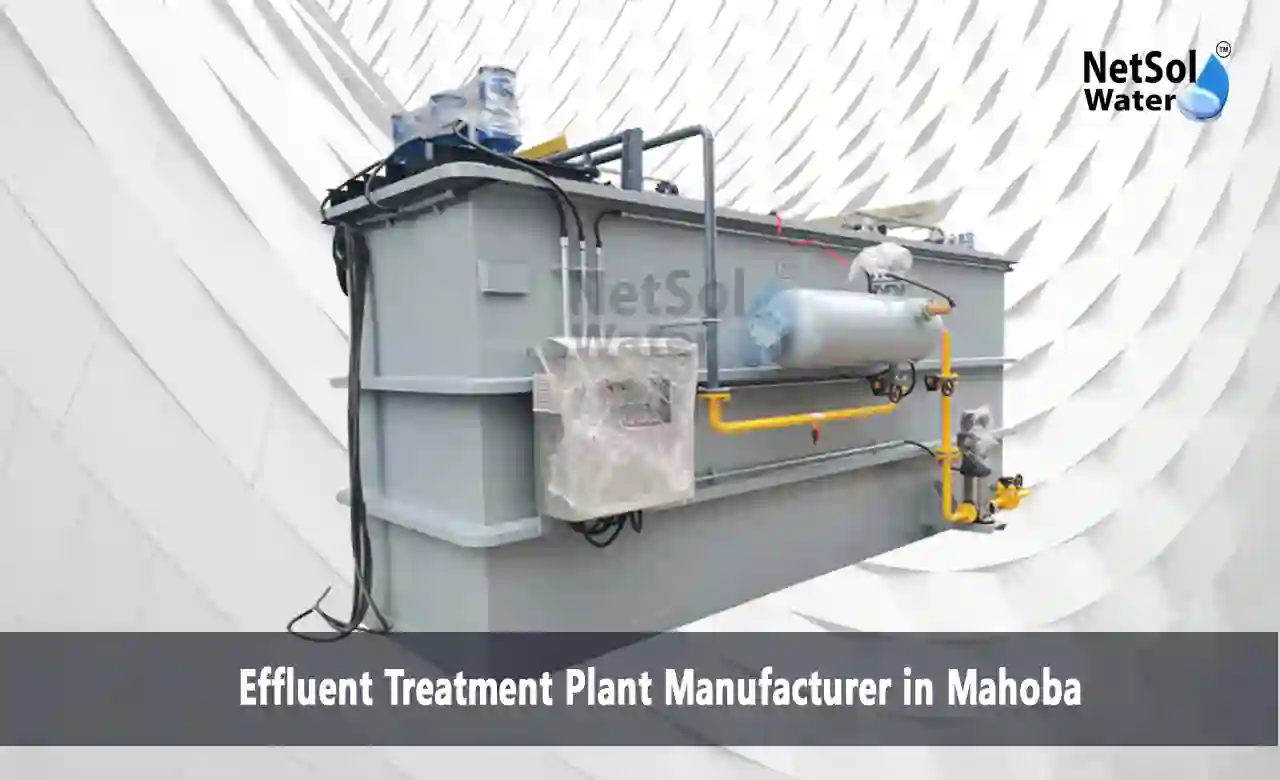
Effluent Treatment Plant Manufacturer in Mahoba
If your factory in Mahoba is still discharging untreated wastewater, you are sitting on a legal time bomb. The Uttar Pradesh Pollution Control Board (UPPCB) has intensified inspections across Bundelkhand, and industries operating without a certified effluent treatment plant (ETP) face heavy fines, operational shutdowns, and criminal liability.
NetSol Water is a trusted ISO-certified ETP manufacturer serving industries across Uttar Pradesh. We have installed wastewater treatment systems for textile mills, chemical units, food processing plants, and more - across cities including Agra, Amroha and Ambedkar Nagar.
Why Mahoba Industries Cannot Ignore Wastewater Treatment Anymore
Mahoba is no longer a sleepy industrial outpost. Textile units, stone processing plants, agro-processors, and chemical manufacturers are growing here at a rapid pace. But with that growth comes a serious compliance burden.
• UPPCB has increased inspection frequency in Tier-2 and Tier-3 cities like Mahoba since 2023
• Industries without a valid 'Consent to Operate' from UPPCB face immediate closure notices
• Bundelkhand faces acute water scarcity every summer - recycling wastewater through an ETP helps reduce your freshwater dependency by up to 70%
• Untreated effluent dumped into local water sources invites community backlash and government penalties
• Global supply chain buyers now audit environmental compliance before signing contracts with Indian manufacturers
What Is an Effluent Treatment Plant (ETP)?
An ETP is a system that treats industrial wastewater - removing physical, chemical, and biological contaminants - so it is safe for discharge or reuse inside the factory. Unlike a simple sewage treatment plant, an ETP is engineered specifically for the type and concentration of pollutants your industry produces. A textile dyeing unit's wastewater looks nothing like a dairy plant's effluent - and each needs a different treatment approach.
Types of ETPs Available for Mahoba Industries
The right ETP type depends on your industry, daily wastewater volume, and the types of contaminants present. Here is a practical breakdown:
1. Physico-Chemical ETP
Best for textile, dyeing, and chemical industries. Uses coagulation, flocculation, and chemical dosing to remove colour, heavy metals, and suspended solids from highly contaminated effluent.
2. Biological ETP (Activated Sludge / MBBR / SBR)
Ideal for food processing, dairy, and agro-processing units with high BOD/COD loads. Microorganisms break down organic matter, eliminating foul odour and reducing biological oxygen demand to safe discharge levels.
3. Combined (Physico-Chemical + Biological) ETP
The most recommended system for medium and large industries in Mahoba that produce complex effluent with both chemical and organic pollutants. Delivers superior treatment results and ensures consistent UPPCB compliance.
4. Zero Liquid Discharge (ZLD) ETP
Zero liquid discharge systems recover and reuse every drop of water processed. No wastewater is discharged to drains at all. UPPCB is increasingly mandating ZLD for textile and chemical industries across UP - getting ahead of this requirement now protects your business long-term.
5. Compact / Modular ETP
For small industries or those with limited floor space, compact modular ETPs are quick to install, easy to maintain, and expandable as your production scales. Many small units in Mahoba start here and upgrade over time.
How Does an ETP Work? Stage-by-Stage Process
Understanding the treatment stages helps you evaluate any ETP manufacturer's proposal more accurately.
Stage 1: Preliminary Treatment: Screens and bar racks remove large solids, plastic, debris, and fibrous material that could clog downstream equipment.
Stage 2: Primary (Sedimentation): Wastewater rests in settling tanks. Heavy particles sink as sludge, removing up to 60% of suspended solids without any chemicals.
Stage 3: Secondary (Biological): Microorganisms in aeration tanks consume dissolved organic matter. Technologies: Activated Sludge Process (ASP), MBBR, or SBR depending on effluent type.
Stage 4: Tertiary (Advanced Polishing): Filtration, activated carbon adsorption, and UV disinfection bring water quality to safe discharge or internal reuse standards.
Stage 5: Sludge Handling: Solids collected across all stages are thickened, dewatered by filter press, and safely disposed of per UPPCB guidelines. Often overlooked - a critical compliance component.
Industries in Mahoba That Need an ETP Right Now
Textile & Dyeing Units: Highly coloured, chemical-loaded wastewater. Colour removal ETP mandatory for UPPCB consent.
Stone Processing & Polishing: Silica dust, chemical slurry, and turbid runoff - cannot be released untreated into land or drains.
Chemical Manufacturers: Multiple contaminant types including solvents, acids, and heavy metals. Complex ETP design required.
Food & Dairy Processing: High BOD/COD with strong odour. Biological ETP with MBBR or SBR technology works best here.
Agro-Processing Plants: Organic-rich wastewater triggers UPPCB complaints quickly without proper treatment in place.
Hotels & Commercial Kitchens: Grease-laden, food-waste water from large hospitality units now falls under UPPCB's scope in UP.
ETP Cost in Mahoba - What to Budget
Note: Costs below are indicative. Actual pricing depends on your wastewater volume, contaminant type, technology, and site conditions. Always get a site-specific quotation.
Small ETP (up to 10 KLD): Rs 5 lakh – Rs 12 lakh
Medium ETP (25–50 KLD): Rs 20 lakh – Rs 50 lakh
Large ETP with ZLD (100 KLD+): Rs 1 crore and above
How to Choose the Right ETP Manufacturer in Mahoba
Not every manufacturer will deliver a plant that actually works for your specific wastewater. Here is what to evaluate before you sign any contract:
• Do they test your wastewater before designing the system? (Non-negotiable)
• How many ETPs have they installed in your industry sector specifically?
• What materials do they use - are tanks, pipes, and blowers corrosion resistant?
• Can they help with UPPCB's Consent to Establish (CTE) and Consent to Operate (CTO)?
• Do they offer a clear Annual Maintenance Contract (AMC) with defined response times?
• Is the pricing itemised - or just a single suspiciously low figure?
Why NetSol Water Is Mahoba's Trusted ETP Manufacturer
NetSol Water is an ISO-certified ETP manufacturer in U.P. with a proven track record. We have designed and installed systems for industries in Agra, Amroha, Ambedkar Nagar, and dozens of other cities - and we bring that same depth of experience to every project in Mahoba.
|
Site-Specific Design: |
We test your effluent first. Every system is custom-engineered - not a cookie-cutter template. |
|
ISO Certified Manufacturing: |
International quality standards at every stage of manufacturing. |
|
Full UPPCB Compliance Support: |
We know UP norms inside out and help you through CTE and CTO documentation. |
|
Responsive AMC Support: |
Our after-sales team responds quickly. Breakdowns get resolved - not ignored. |
|
Transparent Pricing: |
Itemised quotes. No hidden costs. No last-minute surprises. |
Ready to protect your factory and stay UPPCB compliant? Contact NetSol Water today for a FREE site assessment and wastewater analysis. Call us or fill out the enquiry form on our website.
FAQ Section
Q: What is an effluent treatment plant and why do industries need it?
A: An effluent treatment plant (ETP) is a system that treats industrial wastewater to remove harmful pollutants before it is discharged or reused. Industries in Mahoba need an ETP to comply with UPPCB norms, avoid shutdown notices, protect the local environment, and reduce freshwater consumption through water recycling.
Q: How much does an ETP cost in Mahoba?
A: ETP costs in Mahoba range from Rs 5 lakh for a small 10 KLD system to over Rs 1 crore for a large ZLD plant handling 100 KLD or more. The final cost depends on your daily wastewater volume, contaminant levels, technology selected, and site conditions. Always get a customised quote after a wastewater analysis.
Q: Which industries in Mahoba are required to install an ETP?
A: Industries in textile, dyeing, chemical manufacturing, food processing, dairy, stone polishing, agro-processing, and large hospitality businesses are required to install ETPs under UPPCB regulations. Non-compliant units face fines, closure notices, and legal action from pollution authorities.
Q: What is a Zero Liquid Discharge (ZLD) ETP?
A: A ZLD ETP treats wastewater so thoroughly that no liquid is discharged outside the plant. Every drop of water is recovered and recycled back into the production process. UPPCB is mandating ZLD for textile and chemical industries across Uttar Pradesh due to severe water scarcity in the region.
Q: How long does it take to install an ETP in Mahoba?
A: A small compact ETP can be installed in 4 to 8 weeks. Medium combined ETPs typically take 10 to 16 weeks depending on civil construction and equipment lead times. Large ZLD integrated plants may require 4 to 6 months for complete commissioning. Timeline varies based on system complexity.
Q: What is the difference between an ETP and an STP?
A: An ETP (Effluent Treatment Plant) is designed specifically for industrial wastewater, which contains chemicals, heavy metals, dyes, and complex pollutants. An STP (Sewage Treatment Plant) treats domestic or municipal wastewater, primarily containing organic waste. Industries need ETPs; residential buildings and municipalities need STPs.
Q: Does NetSol Water help with UPPCB documentation for ETP installation?
A: Yes. NetSol Water provides full compliance support including assistance with UPPCB's Consent to Establish (CTE) and Consent to Operate (CTO) documentation. Our team is familiar with UP pollution control regulations and ensures your plant setup is legally sound from day one.
Q: Can an existing ETP be upgraded to meet new UPPCB norms?
A: Yes, existing ETPs can often be upgraded or retrofitted to meet revised UPPCB discharge standards. NetSol Water's technical team conducts a performance audit of your existing plant, identifies gaps, and designs a cost-effective upgrade plan - including adding advanced treatment stages or ZLD capability.