

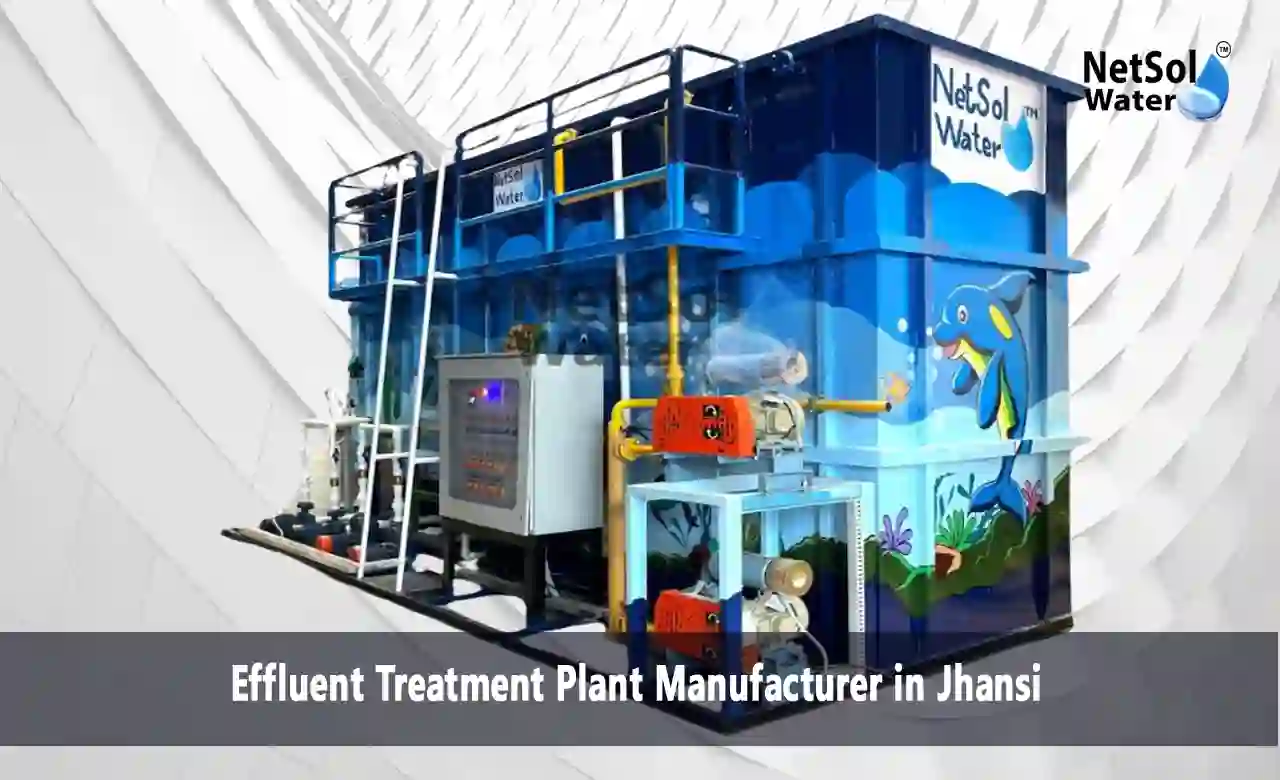
Effluent Treatment Plant Manufacturer in Jhansi
If your factory in Jhansi is struggling to meet CPCB discharge norms, you are not alone - and the solution does not have to be complicated. Netsol Water has been designing and installing Effluent Treatment Plants across Uttar Pradesh for over two decades. From compact skid-mounted units for small workshops to full-scale ZLD systems for large textile and pharmaceutical units, we build ETPs that actually work in the field. Our team has commissioned 500+ plants across industries - and we back every project with local support, spare parts and round-the-clock assistance. If you need a reliable ETP manufacturer in Jhansi.
What Is an Effluent Treatment Plant?
An Effluent Treatment Plant (ETP) is a wastewater treatment system that removes harmful pollutants - including suspended solids, heavy metals, BOD, COD, and toxic chemicals - from industrial discharge. It ensures the treated water meets CPCB-mandated quality standards before it is released into waterways or reused within the facility. ETPs are mandatory for most manufacturing industries in India.
Why Jhansi Industries Need a Reliable ETP Today?
Jhansi is home to a growing industrial belt - textiles, chemicals, food processing, automotive parts, and pharmaceutical manufacturing units are all expanding. Every one of these sectors generates wastewater that must be treated before disposal.
The Uttar Pradesh Pollution Control Board (UPPCB) actively monitors industrial discharge in Bundelkhand. Non-compliant units face heavy fines, plant shutdowns, and legal action. Investing in a quality ETP is not optional - it is a business necessity.
• Textile units: High colour load, chemical oxygen demand, and pH imbalance
• Pharmaceutical plants: Trace organics, active pharmaceutical ingredients (APIs) in wastewater
• Food & beverage factories: Fat, oil, grease, and high biological oxygen demand (BOD)
• Chemical and metal finishing: Heavy metals, acids, complex organics
• Automotive workshops: Oil-water emulsions, lubricant residues
ETP Solutions Offered by Netsol Water in Jhansi
1. Physico-Chemical Treatment Systems
Ideal for industries with high suspended solids and unstable pH. We use bar screens, grit chambers, primary clarifiers, and chemical dosing units to stabilise and settle pollutants before they enter biological treatment. This protects downstream equipment and improves overall treatment efficiency.
2. Biological Treatment - MBR, MBBR, SBR, and Activated Sludge
Dissolved organic load - measured as BOD and COD - requires biological treatment. Depending on your effluent profile, we select the right reactor: Moving Bed Biofilm Reactor (MBBR) for compact footprints, Sequencing Batch Reactor (SBR) for variable flows, or Membrane Bioreactor (MBR) when tertiary quality is required.
3. Zero Liquid Discharge (ZLD) Systems
If your facility cannot discharge any liquid waste - as is the case for many units under UPPCB strict zones - our ZLD systems recover up to 95% of wastewater for internal reuse. These multi-stage systems include evaporators, crystallisers, and advanced membrane units, with a full payback analysis before commissioning.
4. Compact Packaged ETPs for Small & Mid-Size Units
Not every unit needs a massive civil structure. Our skid-mounted packaged ETPs arrive fully assembled, connect quickly on site, and start treating wastewater from day one. Perfect for small factories, workshops, and new greenfield projects in Jhansi's industrial zones.
5. Tertiary Treatment & Water Reuse Systems
When the goal is to reuse treated water for cooling, cleaning, or gardening, we add sand filters, activated carbon units, UV disinfection, and reverse osmosis membranes. Reusing treated water cuts freshwater purchase costs significantly - often by 40–60% in water-intensive industries.
Industries We Serve in Jhansi
|
Industry |
Our ETP Approach |
|
Textile & Dyeing |
Colour removal, chemical pre-treatment, membrane polishing to meet CPCB norms for colour and BOD. |
|
Pharmaceutical |
Multi-stage treatment for API residues, trace organics, and disinfection of pharmaceutical effluent. |
|
Food & Beverage |
Fat traps, primary clarifiers, compact biological reactors for high-load BOD and grease. |
|
Chemical Plants |
Physico-chemical separation, heavy metal recovery, hazardous waste stream management. |
|
Automotive |
Oil-water separators, degreasers, biological polishing for workshop and assembly line effluent. |
|
Healthcare / Labs |
Pathogen disinfection, pharmaceutical residue removal, secure sludge handling protocols. |
|
Metal Finishing |
Chromium, nickel, zinc removal via precipitation and advanced filtration. |
|
Oil & Gas |
Hydrocarbon separation, emulsion breaking, adsorption media for complex oil traces. |
ETP Installation Process - Step by Step
1. Effluent Sampling & Site Survey - We analyse your wastewater (BOD, COD, TSS, metals, pH) and survey your site for space, power, and civil conditions.
2. Design & Engineering - Detailed process drawings, P&ID diagrams, and equipment sizing based on your actual effluent data.
3. Fabrication & Quality Control - Tanks, skids, and equipment fabricated in controlled workshops with QC checks at every stage.
4. Installation & Commissioning - Mechanical assembly, electrical panel installation, pump and sensor testing, dry runs, and stepwise wet commissioning.
5. Performance Validation - Treated water is tested against agreed targets before handover. Documentation includes compliance reports for UPPCB/CPCB submission.
6. Operator Training & Handover - We train your team on daily operations, maintenance schedules, and alarm response. Full documentation provided.
How Much Does an ETP Cost in Jhansi?
ETP costs vary based on several factors. Here is a realistic breakdown to help you plan your budget:
|
Cost Factor |
What It Means for You |
|
Capacity |
Small units (1–50 KLD): INR5–30 Lakh | Mid-size (50–200 KLD): INR30–90 Lakh | Large (200 KLD+): INR90 Lakh+ |
|
Effluent Complexity |
Simple organic effluent is less expensive to treat. Heavy metals, toxic chemicals, and colour require additional stages - increasing cost. |
|
ZLD vs. Standard |
ZLD systems cost 2–3x more than conventional ETPs but eliminate discharge liability and reduce freshwater costs over time. |
|
Automation Level |
Basic manual systems cost less upfront. PLC-based automated plants reduce daily labour costs and are better suited for compliance. |
|
Civil Work |
If civil infrastructure (tanks, trenches, foundations) is already in place, installed cost reduces significantly. |
We provide transparent, itemised quotations. You know exactly what you are paying for - no hidden charges. Request your free quote below.
Why Choose Netsol Water as Your ETP Partner in Jhansi?
Netsol Water is the leading ETP Plant Manufacturer and Supplier in Uttar Pradesh and India
|
Why Netsol Water |
The Benefit for You |
|
15+ Years of Experience |
Over two decades of ETP design and installation across Uttar Pradesh and beyond. |
|
500+ Plants Commissioned |
Proven track record across textiles, pharma, food, chemical, and automotive industries. |
|
CPCB/UPPCB Compliance Support |
We handle permit paperwork and regulatory reporting so you stay compliant without the stress. |
|
Local Presence in Jhansi |
Fast response, local spare parts inventory, and on-site service - no waiting for distant support teams. |
|
Energy-Efficient Design |
Low-energy pumps, optimised aeration, and automated controls reduce your monthly electricity bill. |
|
Post-Installation AMC |
Annual Maintenance Contracts and remote monitoring ensure your plant performs for years. |
READY TO GET STARTED?
Get a site survey and personalised ETP cost estimate from Netsol Water's engineering team.
We respond within 24 hours and provide detailed proposals - no obligation, no pressure.
Call Us: +91-9650608473, Email: enquiry@netsolwater.com
Or fill out our online enquiry form at netsolwater.com
FAQs
Q: What does an Effluent Treatment Plant do?
A: An Effluent Treatment Plant (ETP) removes harmful pollutants - such as suspended solids, heavy metals, BOD, COD, and toxic chemicals - from industrial wastewater before it is discharged or reused. It ensures compliance with CPCB and state pollution control board norms, protecting the environment and avoiding legal penalties.
Q: Which industries in Jhansi require an ETP plant?
A: Industries in Jhansi that generate industrial wastewater and require an ETP include textile units, pharmaceutical manufacturers, chemical plants, food and beverage factories, automotive workshops, metal finishing shops, healthcare facilities, and oil and gas units. Most manufacturing industries operating under UPPCB jurisdiction are legally required to install and operate an ETP.
Q: How much does an ETP plant cost in Jhansi?
A: ETP cost in Jhansi typically ranges from INR5–30 Lakh for small units (1–50 KLD capacity) to INR90 Lakh or more for large industrial systems. Cost depends on effluent complexity, treatment technology (standard vs. ZLD), automation level, and civil infrastructure requirements. Contact Netsol Water for a free itemised quote.
Q: What is Zero Liquid Discharge (ZLD) and do I need it?
A: Zero Liquid Discharge (ZLD) is an advanced wastewater treatment approach that recovers nearly all water for internal reuse, eliminating any liquid discharge from the facility. It is required for industries in environmentally sensitive zones or those operating under strict UPPCB orders. ZLD systems cost more upfront but significantly reduce long-term water and compliance costs.
Q: How long does it take to install an ETP in Jhansi?
A: A standard ETP installation in Jhansi typically takes 8–16 weeks from site survey to commissioning. Compact skid-mounted packaged ETPs can be operational in 4–6 weeks. Timeline depends on plant capacity, civil work requirements, equipment fabrication lead times, and the complexity of the effluent treatment process selected.
Q: Does Netsol Water provide maintenance and AMC services?
A: Yes. Netsol Water offers Annual Maintenance Contracts (AMC) and remote monitoring services for all ETP plants installed in Jhansi. The local team provides on-site servicing, spare part replacement, and process adjustments to keep the plant compliant and efficient. Emergency support is available to minimise downtime.
Q: Can treated wastewater be reused in the factory?
A: Yes. With tertiary treatment stages - including sand filtration, activated carbon, UV disinfection, and reverse osmosis - treated effluent can be reused for cooling towers, floor washing, gardening, or process water. Water reuse typically reduces freshwater intake by 40–60%, lowering utility costs significantly for water-intensive industries.
Q: What CPCB and UPPCB standards must an ETP comply with in Jhansi?
A: Industrial ETPs in Jhansi must comply with CPCB General Standards for Discharge (Schedule VI, Environment Protection Rules 1986) and UPPCB-specific norms. Key parameters include BOD (≤30 mg/L), COD (≤250 mg/L), TSS (≤100 mg/L), and pH (6.5–8.5). Netsol Water designs all systems to meet or exceed these thresholds.