

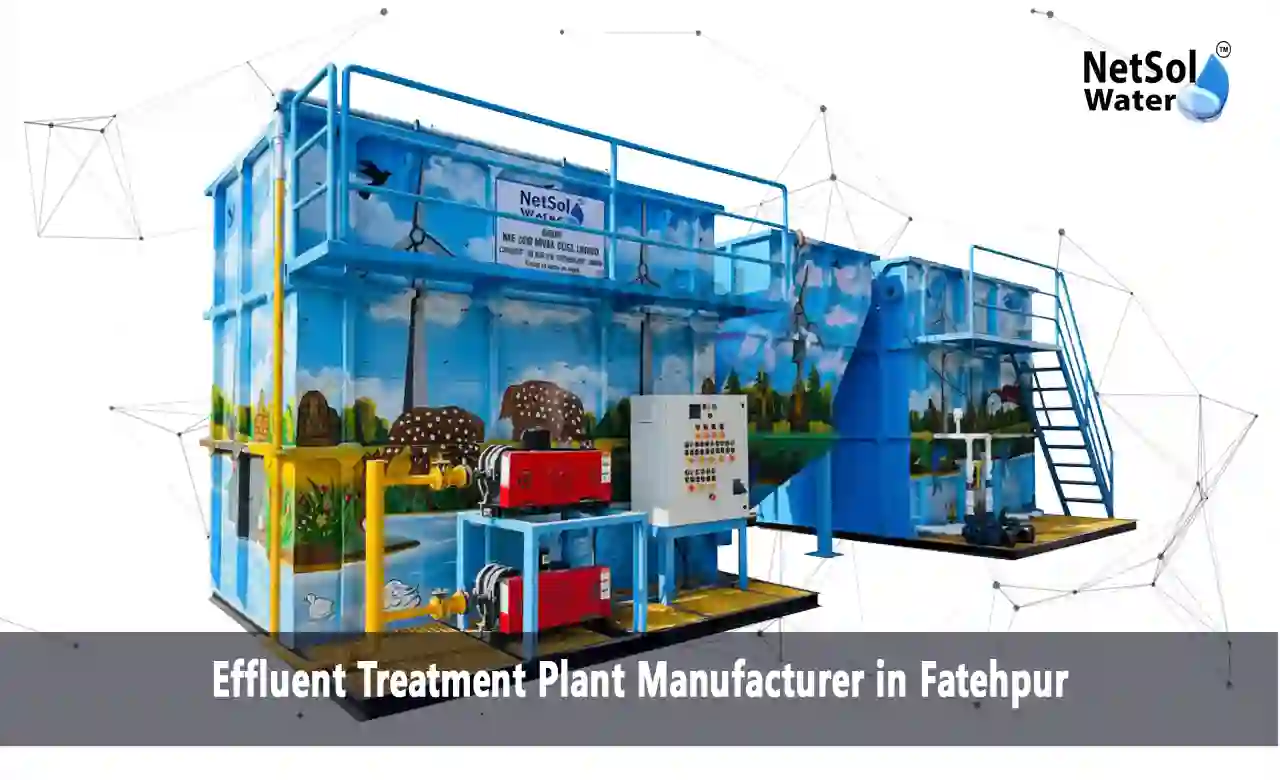
Effluent Treatment Plant Manufacturer in Fatehpur
Fatehpur is undergoing meaningful industrial transformation. Located along the Yamuna-Ganga doab corridor in Uttar Pradesh, the district is attracting food processing units, agro-based industries, packaging manufacturers, and small chemical plants. This is good news for the local economy. But it brings with it a critical responsibility - managing industrial wastewater properly.
Industrial effluent from Fatehpur's factories can contain a troubling mix of contaminants: suspended solids, BOD-laden organic matter, oils and greases, chemical compounds, and in some industries, trace heavy metals. When this effluent is discharged without treatment to drains, open land, or water bodies, the damage to the environment and public health is severe and long-lasting.
The UPPCB actively monitors industrial units in Fatehpur for compliance with discharge standards. Non-compliant units face escalating penalties, production suspensions, and the reputational damage of appearing on UPPCB's defaulter list. The business case for installing a proper Effluent Treatment Plant (ETP) is overwhelming - both from a regulatory and from a long-term operational standpoint.
Key Sectors Needing ETPs in Fatehpur
1. Food Processing Industries
Fatehpur has a significant cluster of food processing units that process agricultural produce, dairy products, and packaged foods. Their wastewater is high in organic matter (sugars, fats, proteins), BOD, and suspended solids. A biological ETP with aerobic treatment is the standard solution for these units.
2. Agro-Based Industries
Rice mills, flour mills, oil expellers, and similar agro-industries generate wastewater with high organic load and sometimes significant suspended solids. Effective ETPs for these units combine physical screening, settling, and biological treatment.
3. Packaging and Printing Units
Packaging and printing operations discharge wastewater containing inks, solvents, and chemical compounds. These effluents often have significant COD and colour, requiring physico-chemical treatment combined with biological polishing.
4. Chemical Manufacturing
Chemical plants present the most complex ETP design challenges. Their effluent may contain toxic compounds, heavy metals, and refractory organics that are not amenable to biological treatment alone. Advanced treatment technologies including activated carbon adsorption and advanced oxidation are needed.
ETP Design Principles - What Makes a Great ETP?
A great ETP is not simply a collection of tanks and pumps. It is an engineered system where every stage is optimized for the specific wastewater being treated. Here are the principles Netsol Water applies in every ETP design:
1. Accurate Influent Characterization
The starting point of any ETP design is thorough laboratory analysis of the influent wastewater. Parameters like pH, temperature, BOD, COD, TSS, TDS, oil and grease, heavy metals, and colour are measured to establish the baseline. Design without this data leads to underperforming systems.
2. Conservative Safety Margins
Industrial processes are never perfectly steady. Production surges, seasonal variations, and process changes cause wastewater quality and quantity to fluctuate. Well-designed ETPs include safety margins in tank sizing, pump capacities, and chemical dosing systems to handle these variations without performance degradation.
3. Technology Selection Based on Treatability
Physico-chemical treatment works best for effluents high in suspended matter, metals, and non-biodegradable compounds. Biological treatment is most effective for biodegradable organic effluents. Most real industrial effluents need a combination of both. Netsol Water's process engineers select the optimal treatment train for each application.
4. Ease of Operation
An ETP that is complex and difficult to operate will not perform well in the real world. Netsol Water designs systems with operator-friendliness in mind - clear process flow, accessible equipment, minimal manual interventions, and straightforward maintenance routines.
Netsol Water's ETP Solutions for Fatehpur Industries
1. Physico-Chemical ETPs
These systems use coagulation, flocculation, and sedimentation to remove suspended solids, oils, colour, and metals from industrial effluents. Effective for packaging, printing, electroplating, and chemical industries. Often used as the first stage in a combined treatment system.
2. Biological ETPs (Aerobic)
Aerobic biological systems use oxygen-loving microorganisms to decompose organic matter in food, dairy, and agro-industry effluents. Technologies include Extended Aeration, MBBR, SBR, and ASP - each with distinct advantages for different wastewater types and site constraints.
3. Combined ETPs
For complex effluents that contain both inorganic contaminants and high organic loads, Netsol Water designs combined physico-chemical and biological treatment systems. These are the most comprehensive ETP solutions and deliver consistently high treated water quality.
4. ZLD Systems for High-Pollution Industries
Industries in water-stressed regions or those producing highly toxic effluents may be required to achieve Zero Liquid Discharge. Netsol Water designs ZLD systems integrating ETP with RO, MEE, and ATFD to achieve total water recovery.
ETP Capacity Range Available for Fatehpur
• 5 KLD to 25 KLD - Small food units, agro-processors, workshops
• 25 KLD to 100 KLD - Medium manufacturing plants, packaging units
• 100 KLD to 500 KLD - Large industrial complexes and multi-unit estates
• 500 KLD and above - Industrial parks and large manufacturing hubs
ETP Cost in Fatehpur - Realistic Price Guide
• Small ETPs (1–10 KLD): INR 5 lakh to INR 8 lakh
• Medium ETPs (10–50 KLD): INR 10 lakh to INR 35 lakh
• Large ETPs (50–200 KLD): INR 35 lakh to INR 1.2 crore
• ZLD Systems: INR 1 crore and above depending on capacity
Factors That Influence ETP Cost
• Type and concentration of pollutants in the effluent
• Treatment technology selected (physico-chemical vs biological vs combined)
• Plant capacity and future expansion provisions
• Level of automation (manual vs semi-automatic vs fully automatic)
• Civil and structural requirements at the installation site
• Regulatory compliance documentation and testing requirements
Selecting the Right ETP - Key Considerations
1. Know Your Effluent
Do not start with selecting a technology. Start with understanding your wastewater. Get it tested at a NABL-accredited laboratory. The results will tell you exactly what treatment is needed and at what capacity.
2. Plan for Future Production Growth
Your production may increase over the next 5 to 10 years. Choose an ETP that can be expanded without a complete rebuild. Modular designs allow capacity addition through incremental investment.
3. Evaluate Total Cost of Ownership
Capital cost is only one part of the ETP equation. Consider energy consumption, chemical costs, maintenance requirements, sludge disposal costs, and spare parts availability. A cheaper ETP that is expensive to run may cost more over its lifetime than a premium system.
4. Verify Regulatory Acceptance
Make sure your chosen ETP design and technology will meet UPPCB's consent conditions. Netsol Water prepares detailed design documents, process guarantees, and consent application support to ensure regulatory acceptance.
Also Read: ETP Manufacturer and Supplier in U.P.
Frequently Asked Questions (FAQs)
Q1. What industries in Fatehpur are most likely to need an ETP?
Food processing units, agro-based industries, chemical manufacturers, packaging companies, textile/dyeing operations, and pharmaceutical units are the sectors most likely to require ETPs under UPPCB norms. Any unit discharging process wastewater above threshold quantities must install and operate an ETP.
Q2. How do I apply for UPPCB consent to operate with an ETP?
You need to submit design drawings, process flow diagrams, equipment specifications, and performance guarantees to UPPCB as part of your Consent to Establish (CTE) application. Netsol Water provides complete documentation support for the CTE and CTO application process.
Q3. What is the typical energy cost to operate an ETP?
Energy cost is primarily driven by aeration blowers and pumps. A 10 KLD ETP typically consumes 5 to 15 units of electricity per day. Netsol Water designs energy-efficient systems using high-efficiency blowers, VFD-controlled pumps, and optimised aeration diffusion to minimize electricity consumption.
Q4. How is ETP sludge disposed of?
ETP sludge is characterized, dewatered using a filter press, and either sent to a Common Hazardous Waste Treatment and Storage Disposal Facility (CHWTSDF) if classified as hazardous, or composted and used as soil conditioner if it meets safe use criteria. Netsol Water assists clients with sludge characterization and disposal planning.
Q5. Can an ETP be solar-powered?
Yes. ETP systems can be powered partly or fully by solar energy, particularly for aeration and pumping during daylight hours. Solar-powered ETPs reduce electricity costs and carbon footprint. Netsol Water can integrate solar power options into ETP designs where site conditions allow.
Q6. What is the land area required for a 10 KLD ETP?
A 10 KLD ETP typically requires 50 to 100 square metres of ground area depending on the technology used. MBBR-based systems are more compact, while ASP or conventional aerobic systems need more space. Netsol Water optimizes plant layout to minimize land use.
Q7. Does Netsol Water provide a performance guarantee?
Yes. Netsol Water provides performance guarantees on treated water quality - specifying the expected BOD, COD, TSS, and other parameters in the treated effluent. These guarantees are documented in the supply contract and verified during performance testing at commissioning.
Get Your Free Consultation Today
Ready to install a world-class Effluent Treatment Plant in Fatehpur? Netsol Water's experts are here to guide you from site assessment to commissioning. We offer competitive pricing, custom engineering, and lifetime AMC support.
Call Us: +91-9650608473
Email Us: enquiry@netsolwater.com
Website: www.netsolwater.com
Our team responds within 24 hours. Reach out today and let us build the right water treatment solution for your facility.