

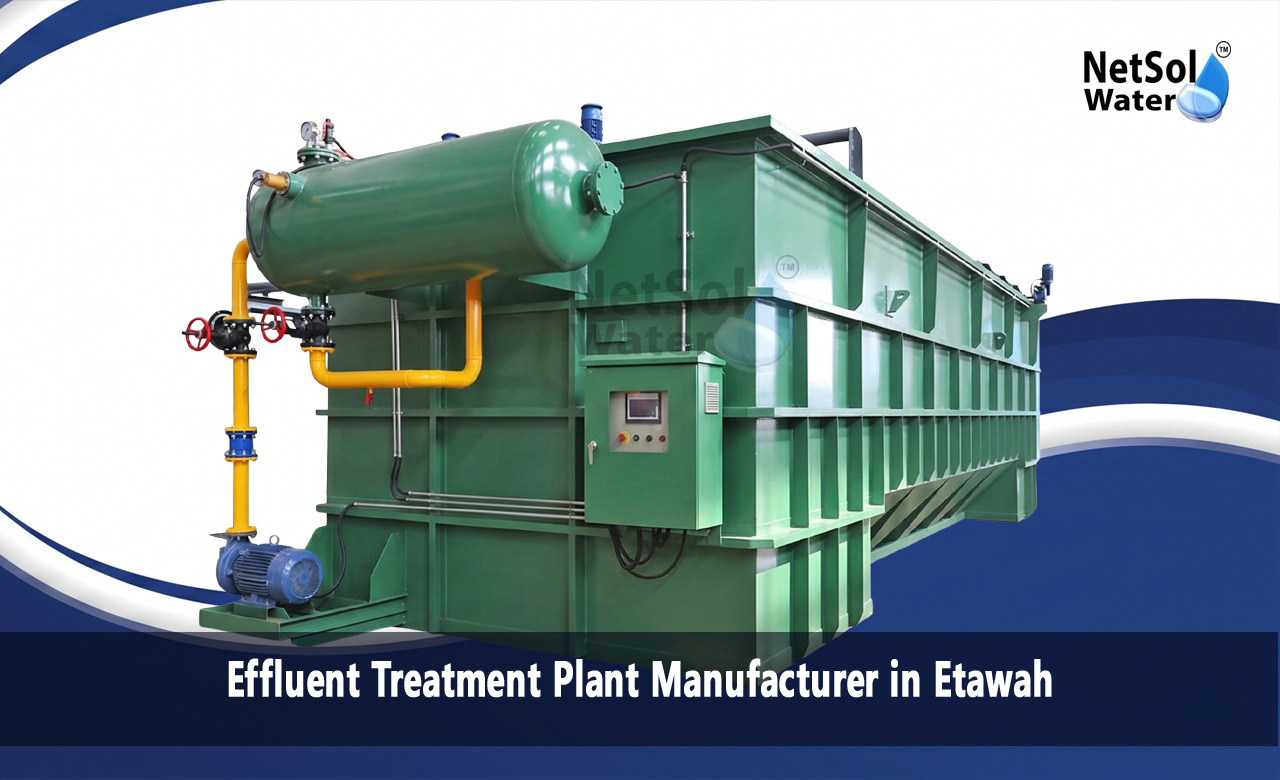
Effluent Treatment Plant Manufacturer in Etawah
Every year, thousands of litres of untreated industrial effluent flow from factories in Etawah into drains, rivers and land damaging ecosystems and attracting heavy penalties under CPCB and UP Pollution Control Board regulations. If your factory is still running without a compliant ETP, you are one inspection away from a shutdown notice.
Netsol Water is a trusted Effluent Treatment Plant Manufacturer in Etawah with a strong track record of designing and commissioning ETP systems that meet regulatory norms, reduce operating costs and enable water reuse. We have served industries ranging from small-scale textile units to large pharmaceutical complexes in this region.
This guide will help you understand what an ETP does, which technology suits your industry and how Netsol Water delivers a compliant, cost-efficient solution.
What Is an Effluent Treatment Plant (ETP)?
An Effluent Treatment Plant (ETP) is a system designed to treat industrial wastewater called 'effluent' before it is discharged or reused. Industrial effluent contains contaminants like BOD (Biological Oxygen Demand), COD (Chemical Oxygen Demand), suspended solids, heavy metals, dyes, oils and toxic organics. Without treatment, these pollutants violate discharge standards set by the Central Pollution Control Board (CPCB).
A well-designed ETP removes these contaminants through a series of physical, chemical and biological treatment steps. The output is treated water that can be safely discharged or reused in the plant's own processes saving money on freshwater intake.
Our ETP Solutions for Etawah Industries
Netsol Water designs each Effluent Treatment Plant to match the specific effluent profile of your factory. We begin with a detailed lab analysis of your wastewater, then design a treatment train that achieves your discharge or reuse targets efficiently.
1. Physico-Chemical Treatment
For effluents with heavy colour, suspended solids, oil, metal ions or extreme pH, we deploy physico-chemical processes: pH neutralisation, coagulation, flocculation, lamella settling and multi-media filtration. This stage removes the bulk of non-biodegradable pollutants and prepares the water for biological treatment.
2. Biological Treatment
Organic-rich effluents from food, pharma and textile units require biological treatment to reduce BOD and COD. Netsol Water uses Activated Sludge Process (ASP), Moving Bed Biofilm Reactors (MBBR) and Sequencing Batch Reactors (SBR) depending on the site constraints and removal targets.
3. Advanced Treatment & ZLD
Where discharge is not permitted or where maximum water recovery is needed, we design Zero Liquid Discharge (ZLD) systems. These combine membrane filtration, Multi-Effect Evaporation (MEE) and crystallisation to recover 95–100% of the water leaving behind only dry, manageable solids.
4. Compact Packaged ETPs
For small workshops, hotels, clinics and commercial facilities with limited space, Netsol Water offers plug-and-play packaged ETPs. These arrive pre-assembled, pre-tested and ready to connect dramatically reducing installation time and civil costs.
Industries We Serve in Etawah
. Textile & Dyeing Units Colour removal, COD reduction, TDS management and water reuse for rinse and cooling
. Pharmaceutical & Chemical Units Multi-stage treatment for APIs, solvents, high-COD streams and complex organics
. Food & Beverage Plants High BOD treatment with biogas recovery option, reuse for cleaning and cooling
. Metal Finishing & Engineering Shops Heavy metal removal, oil-water separation, chrome reduction
. Hospitals & Healthcare Facilities Pathogen removal, disinfection, safe handling of pharmaceutical waste
. Automotive & Paint Units Emulsified oil removal, paint solids treatment and solvent separation
Why Industries in Etawah Trust Netsol Water?
Netsol Water is an ETP manufacturer in U.P. having:
1. Deep Local Experience: Our teams have worked with Etawah's industrial clusters for years and understand the regulatory environment, local water table concerns and common effluent types in this region.
2. CPCB-Compliant Designs: Every ETP we design meets the discharge standards prescribed by the Central and UP State Pollution Control Board so you can face inspections with confidence.
3. Lowest Total Cost of Ownership: We design for energy efficiency from day one. Smart aeration, efficient pumps and optimised dosing reduce your monthly operating costs significantly.
4. Complete Project Delivery: Netsol Water handles site survey, design, fabrication, installation, commissioning and training you never need to manage multiple vendors.
5. Post-Handover Support: Annual Maintenance Contracts, spare parts supply and remote monitoring keep your plant compliant without constant expert intervention.
ETP Installation Process in Etawah
1. Effluent Sampling & Lab Analysis: BOD, COD, SS, pH, metal and toxicity profiling
2. Site Survey: Space assessment, utility mapping, civil constraints, access planning
3. Process Design & Proposal: Treatment train selection, equipment sizing, layout drawing, cost estimate
4. Fabrication & Quality Testing: Tank fabrication, equipment assembly, factory inspection
5. Installation: Civil work coordination, equipment mounting, piping, electrical wiring
6. Commissioning: System startup, biological seeding, performance testing, effluent quality verification
7. Training & Handover: Operator training, O&M manuals, AMC options, compliance documentation
Cost of Effluent Treatment Plant in Etawah
ETP costs in Etawah are influenced by several factors. Understanding them helps you plan your budget accurately:
. Effluent volume and flow rate Larger daily volumes require bigger tanks and more powerful equipment
. Pollutant type and concentration Complex or toxic streams (pharma, chemical) cost more to treat
. Treatment technology selected ZLD systems carry higher capital cost than conventional biological ETPs
. Reuse vs. discharge requirement Reuse-oriented plants need extra polishing and disinfection stages
. Site conditions and civil work Poor access, rocky ground or limited space increase installation costs
Netsol Water provides free site surveys and transparent, itemised estimates. We show you the trade-offs so you can make an informed decision that fits your budget and compliance timeline.
Frequently Asked Questions
Q1: What is an Effluent Treatment Plant and why is it mandatory?
A: An ETP treats industrial wastewater to remove pollutants like BOD, COD, heavy metals and dyes before discharge. It is mandatory under the Water (Prevention and Control of Pollution) Act and CPCB norms. Non-compliant industries face fines, notices and potential shutdown orders from pollution control authorities.
Q2: Which industries in Etawah need an ETP?
A: Any industry generating wastewater including textile, pharma, food processing, chemical, metal finishing, automotive and healthcare needs a compliant ETP in Etawah. Netsol Water audits your specific effluent type and designs a solution that meets your discharge or reuse targets cost-effectively.
Q3: What is the difference between an ETP and an STP?
A: An ETP (Effluent Treatment Plant) treats industrial wastewater containing chemicals, metals and industrial pollutants. An STP (Sewage Treatment Plant) treats domestic sewage. While they use some similar processes, ETPs handle more complex, often toxic streams requiring specialised physico-chemical and biological treatment stages.
Q4: Can an ETP help me reuse treated water inside my factory?
A: Yes. With appropriate polishing steps sand filtration, activated carbon and UV/chlorine disinfection treated ETP water can be reused for cooling, rinsing, floor washing and toilet flushing. This reduces freshwater demand and lowers your utility bills significantly.
Q5: How does Netsol Water ensure CPCB compliance?
A: Netsol Water designs ETP systems specifically to meet CPCB General Standards and industry-specific limits. We conduct independent effluent testing post-commissioning and provide compliance documentation. Our AMC service includes periodic performance testing to maintain ongoing compliance.
Q6: What is Zero Liquid Discharge (ZLD) and do I need it?
A: ZLD is an advanced treatment approach where no liquid effluent is discharged all water is recovered and solids are disposed of safely. It is mandatory in some highly polluting industries under NGT and state orders. Netsol Water designs ZLD systems using membrane evaporation and crystallisation technology.
Q7: How long does it take to commission an ETP in Etawah?
A: Typical ETP commissioning in Etawah takes 4–10 weeks from design approval to handover, depending on plant size and civil work scope. Biological treatment systems require an additional 3–6 week biological startup period for microbial culture to establish before the plant reaches full performance.