

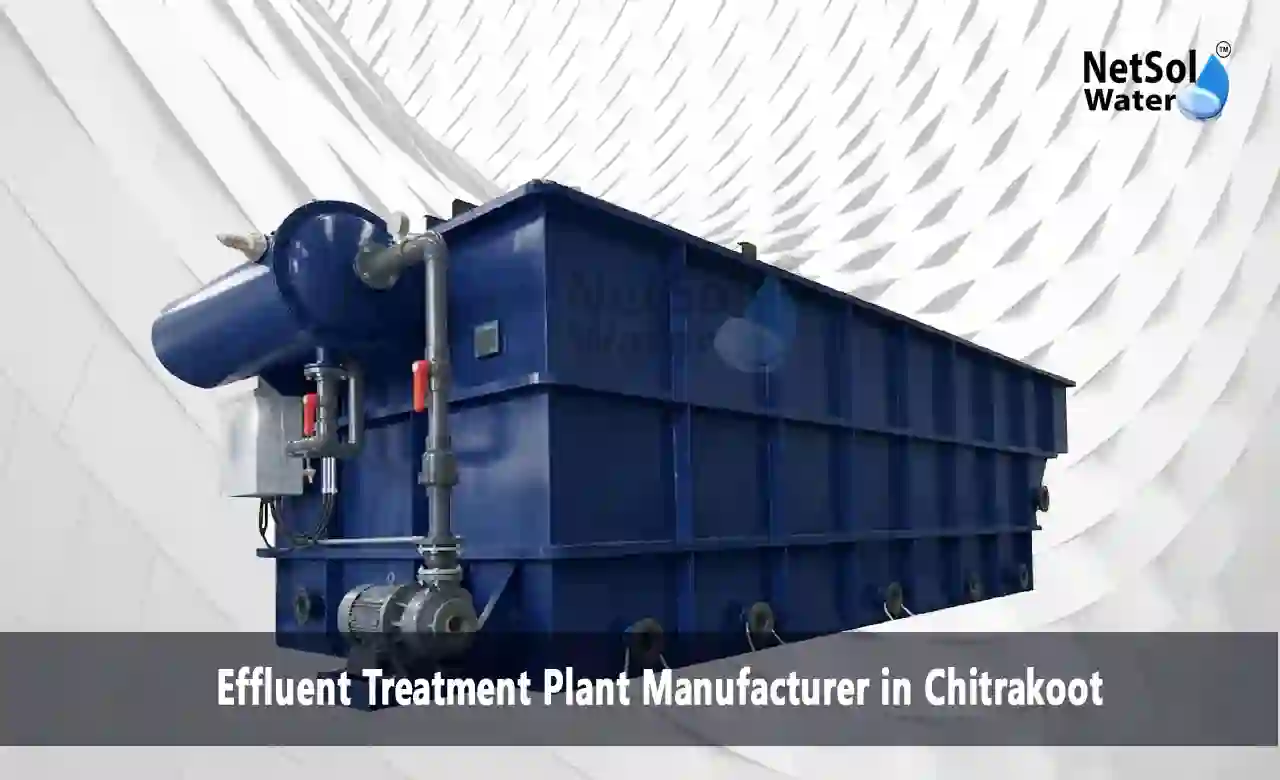
Effluent Treatment Plant Manufacturer in Chitrakoot
NetSol Water is an ISO-certified ETP manufacturer serving industries across Chitrakoot, Madhya Pradesh, and Uttar Pradesh. We design, install and maintain custom Effluent Treatment Plants built to MPCB and CPCB discharge standards. Free site assessment available for industries in Chitrakoot. Call us before an MPCB notice calls you first.
Is Your Industry Discharging Untreated Effluent Into Chitrakoot's Water System?
Chitrakoot is sacred. The Mandakini River is not just water - it is identity, faith, and ecology for millions of pilgrims and residents. But every textile unit, food processor, and pharmaceutical facility operating in and around this town generates industrial effluent every single day.
If that effluent is not properly treated before discharge, it does not just violate the law. It reaches the river. It seeps into the soil. It contaminates the groundwater. And it comes back to people in ways that are slow, invisible, and very difficult to reverse.
Choosing the right Effluent Treatment Plant manufacturer in Chitrakoot is one of the most important environmental decisions your business will make. This guide gives you the full picture - how ETPs work, what questions to ask manufacturers, and what the cost of not acting really looks like.
What Is an Effluent Treatment Plant (ETP)?
An Effluent Treatment Plant (ETP) is a system that removes harmful pollutants from industrial wastewater before it is discharged into the environment or a municipal drain. Unlike sewage treatment, which handles domestic waste, ETPs are designed specifically for the complex chemistry of industrial effluent.
Different industries produce very different effluents. A textile unit discharges synthetic dye compounds. A pharmaceutical plant may release active drug residues. A food processor sends out high-BOD organic waste. Each of these requires a completely different treatment design - which is why ETP engineering is technical, specific work.
Industrial Effluent vs. Sewage: Know the Difference
|
Parameter |
Industrial Effluent vs. Sewage |
|
Source |
Manufacturing processes vs. Kitchens, toilets, bathrooms |
|
Contaminants |
Heavy metals, dyes, solvents, acids, pharmaceutical residues vs. Organic matter, bacteria |
|
Treatability |
Requires custom multi-stage design vs. Standard biological treatment |
|
Regulatory Risk |
High - MPCB / CPCB monitoring vs. Moderate - municipal STP compliance |
How a Properly Designed ETP Treats Industrial Wastewater
Here is a clear, stage-by-stage breakdown of what happens inside a well-designed ETP:
Stage 1 - Equalization
Industrial processes produce effluent that varies in volume and chemical composition throughout the day. The equalization tank collects all incoming effluent and buffers these variations before treatment begins. This prevents shock loads from disrupting downstream stages and makes the entire plant run more reliably.
Stage 2 - Neutralization
Most industrial effluent arrives at the plant with a pH that is either strongly acidic or strongly alkaline. Textile dyeing wastewater is often highly alkaline. Battery manufacturing and metal plating effluents tend to be acidic. Dosing with acid or alkali brings the pH to a neutral range - a prerequisite before any biological or chemical treatment can work properly.
Stage 3 - Chemical Coagulation
Chemicals such as alum, ferric chloride, or polyelectrolytes are added to the effluent. These cause tiny dissolved and colloidal particles to aggregate into larger clumps called flocs, which can then be physically separated from the water. Without this stage, a large portion of contamination would pass through untouched.
Stage 4 - Flocculation & Sedimentation
The flocs settle out in a clarifier tank. Settled solids become sludge for further handling. The clarified water at the top moves forward in the process. This is where most suspended solids, colour, and turbidity are physically removed.
Stage 5 - Biological Treatment
For effluent with significant organic load - typical of food processing, textile, and pharmaceutical industries - a biological stage uses microorganisms to break down organic compounds and lower BOD and COD to discharge-compliant levels. Technologies like MBBR (Moving Bed Biofilm Reactor), Extended Aeration, and ASP are selected based on effluent type.
Stage 6 - Tertiary Treatment & Polishing
Sand filtration followed by activated carbon filtration removes residual contaminants, especially stubborn colour from textile wastewater. A final UV or chlorination step addresses any biological contamination before the treated water is discharged or recycled.
Stage 7 - Sludge Handling
All the material extracted from the effluent concentrates into sludge. This sludge is thickened, dewatered in a filter press, and either sent to authorized disposal facilities or used as a soil conditioner if classified as non-hazardous. Sludge management is frequently underestimated during procurement and is consistently a source of operational headaches when it is not designed properly from the start.
ETP Design by Industry Type
There is no universal ETP design. The right plant for your operation depends entirely on what your process produces.
1. Textile & Dyeing Units
Colour removal is the core challenge. Synthetic dyes resist biological breakdown. Effective designs combine chemical coagulation for initial colour reduction, biological treatment for organic load, and activated carbon polishing. Advanced installations use ozonation for particularly resistant compounds.
2. Food & Dairy Processing
High organic load combined with fat, oil, and grease content defines this effluent type. A strong biological treatment core (MBBR or extended aeration) paired with a dissolved air flotation (DAF) system in the primary stage handles the fat content before it reaches the biology, protecting downstream stages.
3. Chemical & Pharmaceutical
This is the most technically demanding category. Pharmaceutical effluents can contain active drug ingredients and solvents that are toxic to the very microorganisms needed for biological treatment. Specialized pretreatment and advanced oxidation processes (AOP) are often required. A manufacturer who treats pharmaceutical ETP design as a standard project has not understood the problem.
4. Hotels, Dharamshalas & Laundries
High surfactant content, moderate organic load, and variable flow rates characterize this category. Compact, packaged ETP systems combining equalization, chemical treatment, and biological processing perform well here. Space efficiency is a primary design consideration.
5. Stone Processing Units
High suspended solids and elevated turbidity are the primary challenges. Well-sized settling chambers and strong filtration design handle most of the load. pH correction may be needed depending on the minerals being processed.
The Real Cost of Not Installing a Proper ETP
Some business owners still treat ETP installation as optional expenditure. Here is what that calculation actually looks like.
|
Risk Factor |
Real-World Impact |
|
MPCB Shutdown Notice |
Complete production closure until compliance is demonstrated. One week of shutdown costs more than most ETPs. |
|
NGT Action |
Fines running to lakhs, mandatory remediation at your expense, possible permanent closure for severe violations near Mandakini. |
|
Reputational Damage |
Environmental violations near a sacred river town travel fast on social media. Recovery is slow and expensive. |
|
Legal Liability |
If groundwater or farmland contamination is traced to your unit, affected communities have grounds for civil litigation. |
|
ETP Cost Range |
A properly designed ETP for a small-medium unit in Chitrakoot: Rs 10–50 lakhs depending on capacity and technology. |
8 Questions to Ask Any ETP Manufacturer Before Signing
1. Have you treated effluent from my specific industry before? Can you show documentation from those projects?
2. Will you collect and characterize my actual effluent before designing the system - or are you working from assumptions?
3. What specific output parameters are you committing to, and will those be written into the contract?
4. How does the plant handle changes in effluent composition if my production process or seasonal load shifts?
5. What is the likely sludge classification from this plant, and who is responsible for disposal?
6. What does your AMC actually cover? How often do visits happen and what is the realistic breakdown response time in Chitrakoot?
7. Can I visit a plant you have built for a similar industry that is currently operational?
8. Are all output guarantees backed by water quality data from running installations?
A manufacturer who answers all of these questions clearly and with documentation is worth continuing the conversation.
One who becomes vague or defensive when asked about specifics is telling you something important.
Why NetSol Water for Your ETP in Chitrakoot?
We are NetSol Water - an ISO-certified manufacturer and supplier of Effluent Treatment Plants, Sewage Treatment Plants, Industrial RO Systems, and other water treatment infrastructure across India.
Our approach starts with questions, not a catalogue. We visit your site. We collect effluent samples and run characterization tests. We look at your space, your power supply, and the operational capacity of the people who will run the plant. Only after that do we design.
Our ETP projects in Chitrakoot and across UP and MP have covered textile, food processing, pharmaceutical, and trade effluent applications - from compact packaged systems for smaller units to complex custom installations for high-volume industrial operations.
Every plant we design is built to meet MPCB and CPCB discharge standards. Our AMC team provides regular preventive maintenance, priority breakdown response, and consumables support. We understand what it means to be operating in a smaller city where alternatives are harder to reach.
Also Read: ETP Plant Manufacturer and Supplier in U.P.
Ready to install a compliant ETP in Chitrakoot?
Contact NetSol Water today for a free site assessment and effluent characterization. No obligation - just a real conversation about your effluent challenge and a solution that actually fits.
FAQs
Q: What does an Effluent Treatment Plant (ETP) do?
A: An Effluent Treatment Plant removes harmful pollutants - such as heavy metals, dyes, acids, and organic compounds - from industrial wastewater before it is discharged. It uses physical, chemical, and biological processes to bring water quality within MPCB and CPCB-mandated discharge standards, protecting rivers, soil, and groundwater from industrial pollution.
Q: Is it mandatory to install an ETP in Chitrakoot?
A: Yes. Any industry discharging effluent in Madhya Pradesh must comply with MPCB and CPCB norms. Operating without a functional ETP can result in closure notices from the MP Pollution Control Board, National Green Tribunal fines, and mandatory remediation orders - especially for units near the Mandakini River catchment area.
Q: How much does an ETP cost in India for small industries?
A: For small to medium industries in Chitrakoot, a properly designed ETP typically costs between Rs 10 and 50 lakhs. The final cost depends on effluent volume, contaminant type, required output quality, and available space. Custom designs for pharmaceutical or high-volume textile units may cost more.
Q: What is the difference between an ETP and an STP?
A: An ETP (Effluent Treatment Plant) is designed for industrial wastewater that contains chemicals, heavy metals, dyes, and other industrial byproducts. An STP (Sewage Treatment Plant) handles domestic wastewater from toilets and kitchens. The two systems require completely different treatment technologies and cannot be substituted for each other.
Q: What industries in Chitrakoot need an ETP?
A: Industries in Chitrakoot that require an ETP include textile and dyeing units, food and dairy processors, pharmaceutical manufacturers, chemical plants, stone processing units, hotels with large laundry operations, and any establishment discharging non-domestic industrial wastewater. MPCB regulates all of these categories.
Q: How long does it take to install an ETP?
A: Installation time for a standard industrial ETP ranges from 6 to 16 weeks depending on plant capacity, site conditions, and technology complexity. Custom pharmaceutical or large textile ETPs may take longer. Pre-installation work including effluent characterization, design, and civil foundation preparation is typically completed in 2–4 weeks.
Q: What happens if I discharge untreated effluent near the Mandakini River?
A: Discharging untreated effluent near the Mandakini River can trigger National Green Tribunal (NGT) action, including substantial fines, mandatory remediation at the polluter's cost, and in serious cases, permanent business closure. The NGT has progressively increased enforcement near river systems in Madhya Pradesh.
Q: Can NetSol Water design an ETP for my specific industry in Chitrakoot?
A: Yes. NetSol Water designs custom ETPs for textile, food processing, pharmaceutical, chemical, hotel, and stone processing industries in Chitrakoot. We conduct a site visit and effluent characterization before designing any system, ensuring the plant is built for your specific wastewater composition and regulatory discharge requirements.