

















Effluent is waste water from industry, farms and hospitals. Industries in Bihar grow fast and they use large amounts of water every day. Textile units in Bhagalpur food units in Muzaffarpur and small factories near Patna all release wastewater after production. This wastewater contains oil, colour chemicals and organic waste. If factories release this water without treatment it can harm rivers, soil and groundwater. It can also create legal trouble for the industry. That is why every factory must install a proper effluent treatment plant. Plants clean this water so you can discharge it safely or reuse it. Bihar has textile units, food units and small industries that need reliable ETPs. Local soil and river rules make design choices different than in other states. A good effluent treatment plant manufacturer will match the plant to the water quality the flow and the local rules.
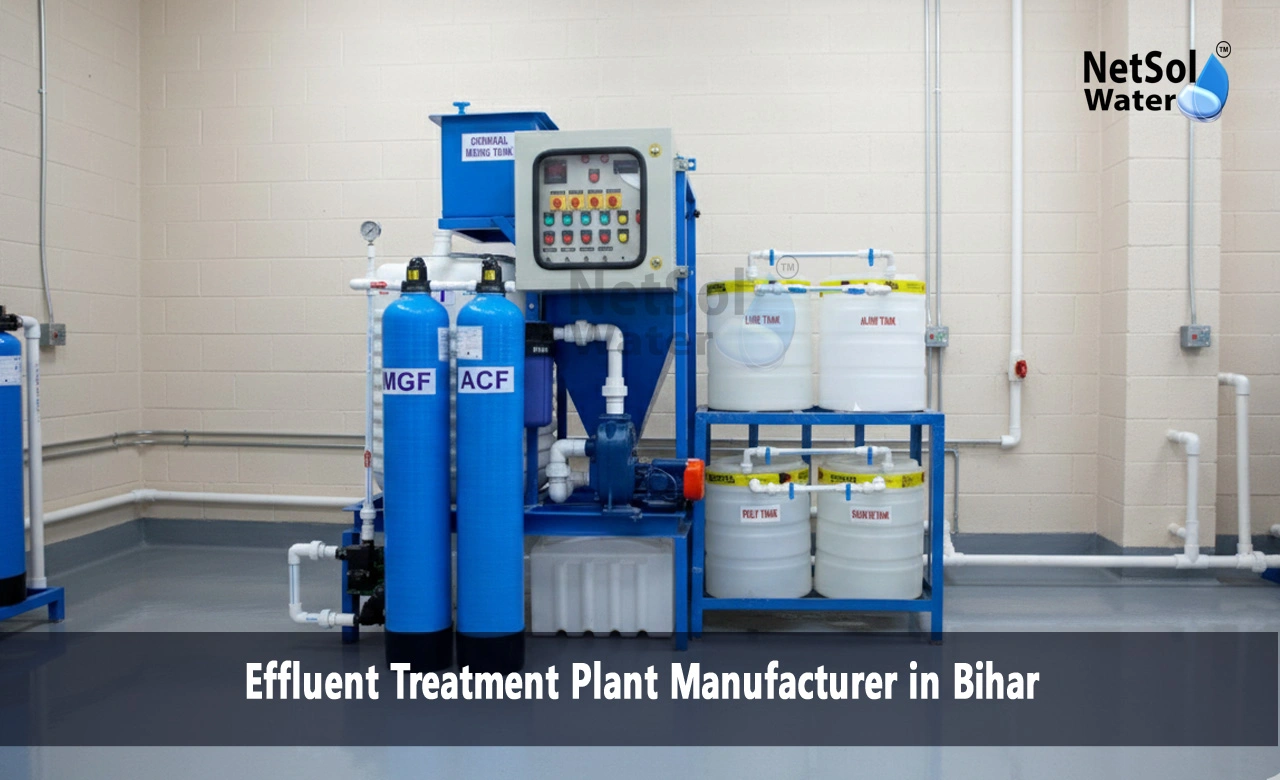
Netsol Water works on water treatment for many years. It builds effluent systems for small plants and large factories. It designs systems for textile, dairy, sugar and pharma units. It installs equipment on site and trains local teams to run the plant. Netsol Water uses local supply lines and local service staff so plants get quick care.
Netsol Water focuses on simple designs that work well in Bihar. The company adapts systems to local water types and power supply. Netsol Water offers service contracts, spare parts and training. Netsol Water helps customers meet local rules and reuse water where possible.
Netsol Water places local teams near Bihar towns. This cut response time and lowers travel cost. The teams know local soil and river rules. Netsol Water uses proven tech that matches local waste types. The company gives a realistic run sheet and a clear plan for start up. They train local staff so plant runs well after hand over. Netsol Water offers maintenance plans that fit small units and large plants.
Netsol Water also shows real results from tests. The company provides lab checks and regular reports. Netsol Water keeps spare parts ready in nearby stock points. The company helps with permits and with checks from pollution control boards. This reduces delay and risk for the customer.
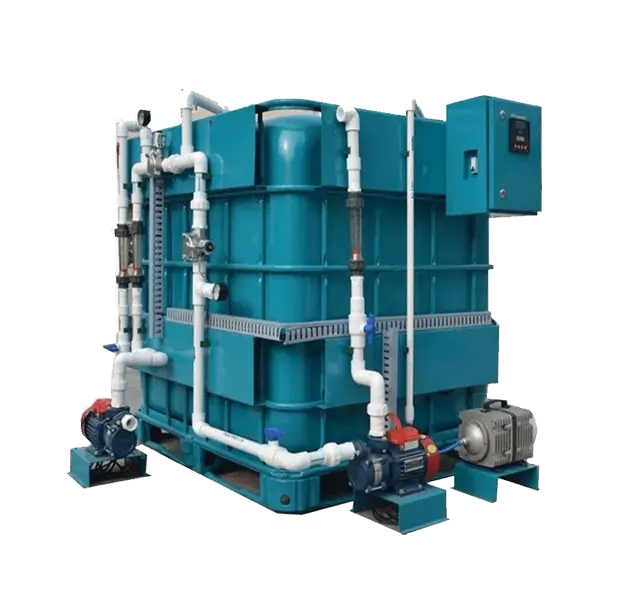
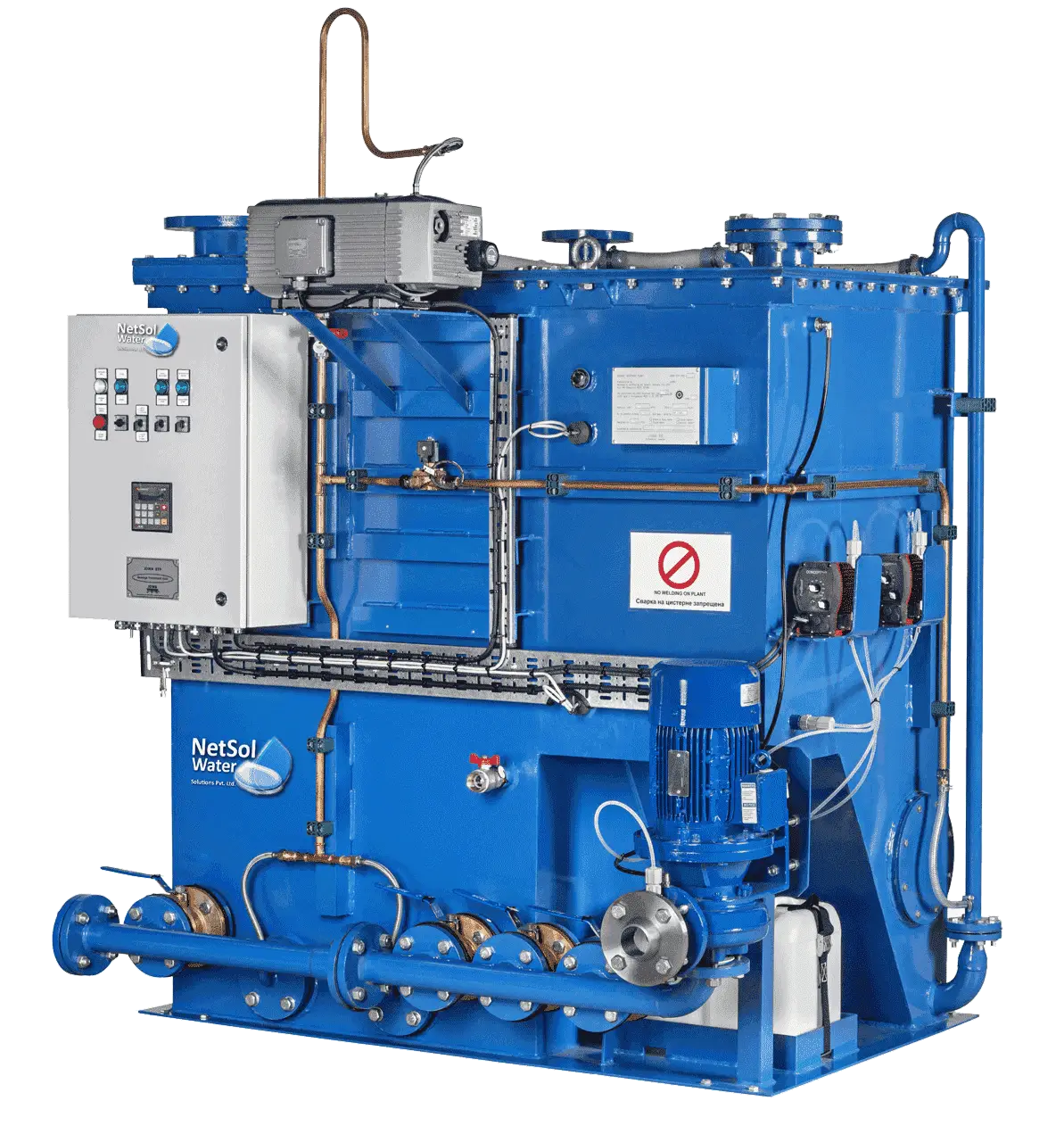
Many effluent treatment plant manufacturers in Bihar offer packaged plants for low flow sites. They build skid mounted units for small textile units. They make modular concrete plants for medium and large sites. For high strength waste they fit equalisation tanks and higher biological capacity. For colour removal, they add advanced oxidation or membrane steps. For reuse they add filtration and polishing steps that make water fit for irrigation cooling or process reuse.
Local firms also offer turnkey services. They survey the site and show a layout. They handle civil work piping and electrical fit out. They test water and tune the plant on site. Many customers pick modular designs because they save time and they let you expand later. Firms in Bihar also offer rental plants for short term needs during maintenance or for seasonal loads.
Netsol Water as a effluent treatment plant manufacturer in Bihar use the several technologies in their ET plant:
Biological systems use bacteria to break down organic waste. This step removes most of the dissolved pollution. Common forms include activated sludge and sequencing batch reactors. These systems work well for food dairy and textile effluent once you control load and oxygen.
Physicochemical processes use chemicals and settling to remove solids, colour and some dissolved matter. This includes coagulation, flocculation and sedimentation. You add a simple chemical and then let solids settle. This step helps where the waste has heavy colour or fine solids that biology cannot remove.
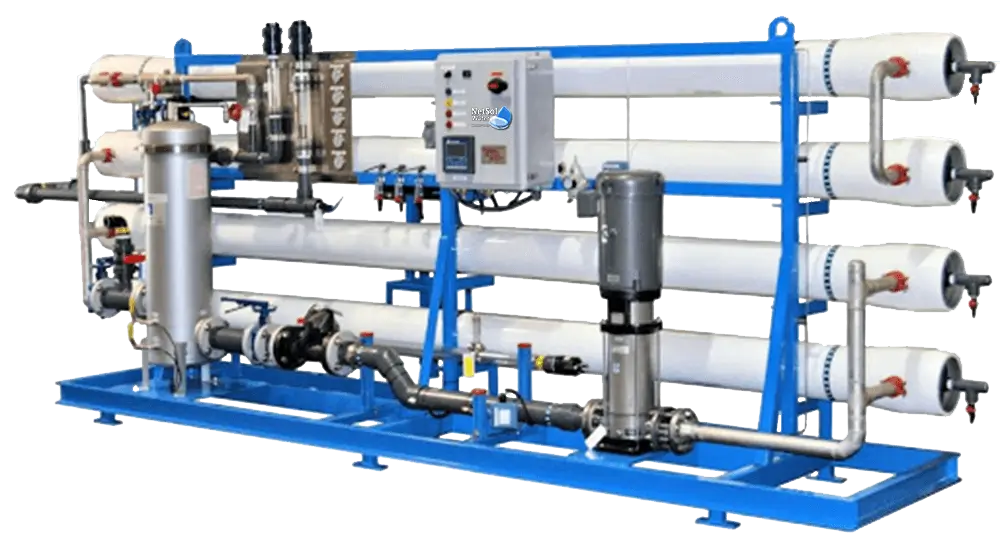
Membranes filter water at small scale. Microfiltration removes solids. Ultrafiltration can remove oil and small particles. Reverse osmosis removes salts and fine organics. Membranes let you reuse water but they need steady feed and regular cleaning.
Advanced oxidation uses strong oxidants and light or catalysts to break hard to remove pollutants. This step helps with colour and toxic molecules. It costs more but it can make water safe for discharge or further reuse.
Sludge is the solid leftover. You must treat and reduce its volume before disposal. You can use thickening centrifuges belt presses or drying beds. Good sludge handling lowers disposal cost and keeps the site clean.
Preliminary work stops large items and grit from entering the system. It uses screens and grit chambers. This protects pumps and other machinery.
Primary tanks slow water so heavy solids settle. This step removes large solids and oil. It reduces load on later biological units.
Secondary work uses biology to remove dissolved organics. This includes activated sludge or biofilters. The microbes eat organic waste and turn it into clean water and sludge.
Tertiary steps polish the water for reuse or safe discharge. This can be sand filters membrane filters or activated carbon. This step removes colour and fine particles.
Disinfection kills bacteria and pathogens. You can use chlorine UV or ozone. This step protects public health and meets discharge rules.
Sludge comes from primary and secondary stages. You thicken it dewater it and then dispose of it safely. You can also dry it and use it as fuel or soil cover if rules allow.
Textile units need colour removal and COD cut. ETP helps meet limits and save water. Reuse can cut fresh water cost for dyeing and washing.
Food and dairy effluent has high organic load. ETP reduces smell and biological oxygen need. Treated water can go to irrigation or process reuse.
Sugar units produce high flow with organic load. ETP supplies steady treatment and sludge handling. It helps reduce pollution in rivers and canals.
Pharma waste can include hard to break molecules. You need advanced oxidation membrane or a mix of steps to meet rules.
SMEs get packaged plants that fit small flow rates. These systems need less space and simple operation.
Netsol Water supplies plants from small skid units that treat a few thousand liters per day to large concrete plants for several lakh liters per day. The company sizes the system to match the daily flow and peak load. Netsol Water offers modular designs so you can expand in steps. For small units they provide plug and play systems. For large sites they provide full design civil work and automation.
Netsol Water also offers custom sizing for seasonal variations. The company can design an equalisation tank to even out sudden peaks. Netsol Water fits variable speed pumps and PLC controls so the plant runs stable. This range helps textile clusters and food parks in Bihar scale up later.
Cost depends on flow rate and pollutant load. High colour or toxic waste raises cost. More steps like membranes and advanced oxidation raise cost. Site work and civil work add to the bill. Power needs and automation also change cost. Local transport and labour rates in Bihar affect the final number.
You must also think of life cycle cost and savings. A higher initial cost for a reliable plant can lower operation cost. Energy efficient blowers and good controls cut power use. Reuse options reduce fresh water bills. Proper sludge handling can cut disposal cost. Netsol Water shows a simple payback estimate for customers so they can see long term value.
Netsol Water helps with consent to establish and consent to operate. These permits come from the state pollution control board. The company prepares the application and the documents. Netsol Water runs test reports and submits compliance data. The company also helps with environmental impact report if needed.
Netsol Water knows common local checks in Bihar. They help with discharge limits for rivers, canals and ground water. Netsol Water prepares the lab reports and arranges for the approvals and for the site visits. This reduces delay and helps customers meet the rules on time.
Netsol Water uses test results and trial runs to prove the plant works before hand over. The company gives a performance warranty and a service plan. Netsol Water trains local operators and gives clear manuals that use simple language. This helps small factory staff learn fast.
Netsol Water keeps spare parts and offers remote monitoring for many plants. The company shows past projects and a short case study. Netsol Water works with local labs for quick tests. This local presence helps solve problems fast. A proven record makes Netsol Water a reliable partner for Bihar industries.
Conclusion
Safe wastewater treatment protects both industry and environment in Bihar. Factories must follow pollution rules and they must also manage water in a smart way. A well designed effluent treatment plant reduces risk saves water and lowers long term cost. It also builds trust with local communities and authorities. When you choose the right system you secure smooth operations for many years.
Contact Netsol Water at:
Phone: +91-9650608473, Email: enquiry@netsolwater.com